‘The Murder of Sacco and Vanzetti’ by Robert Minor from The Communist. Vol. 6. No. 6. September–October, 1927.
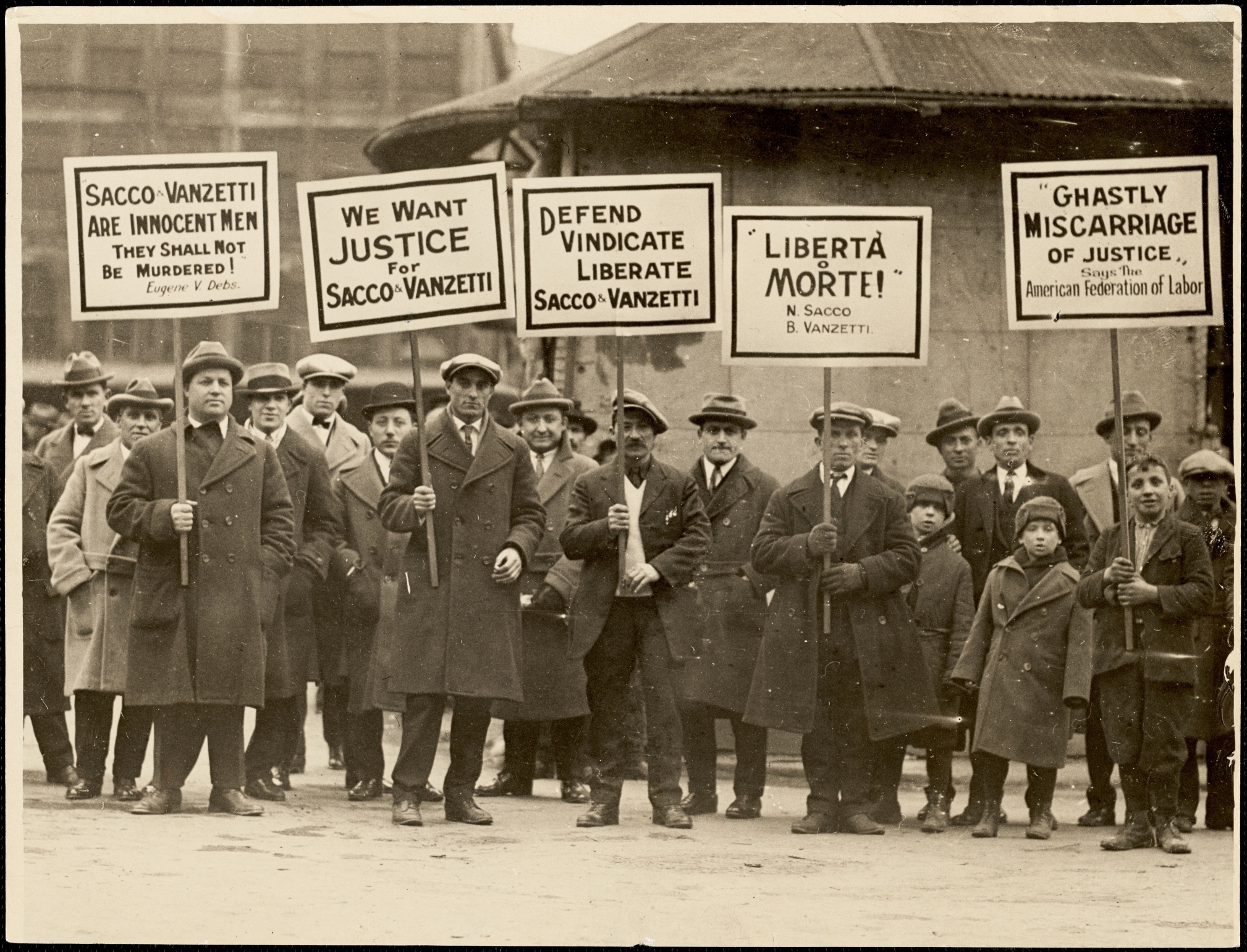
A SMALL section of the American bourgeoisie seven years ago began the action which is officially known as the “execution of two murderers and pay-roll bandits”. But the Sacco-Vanzetti case has since then shaken a whole world with political turmoil; in half a hundred different countries, on seven continents police and troops have been massed, industrial processes have been slowed up, traffic impeded, diplomatic messages exchanged, lawmaking processes influenced, while tens of millions of workers have passed through psychological experience, the tendency of which is to push working class history forward. And the end of the Sacco-Vanzetti case has not come, and there will be no end to it as long as history lasts.
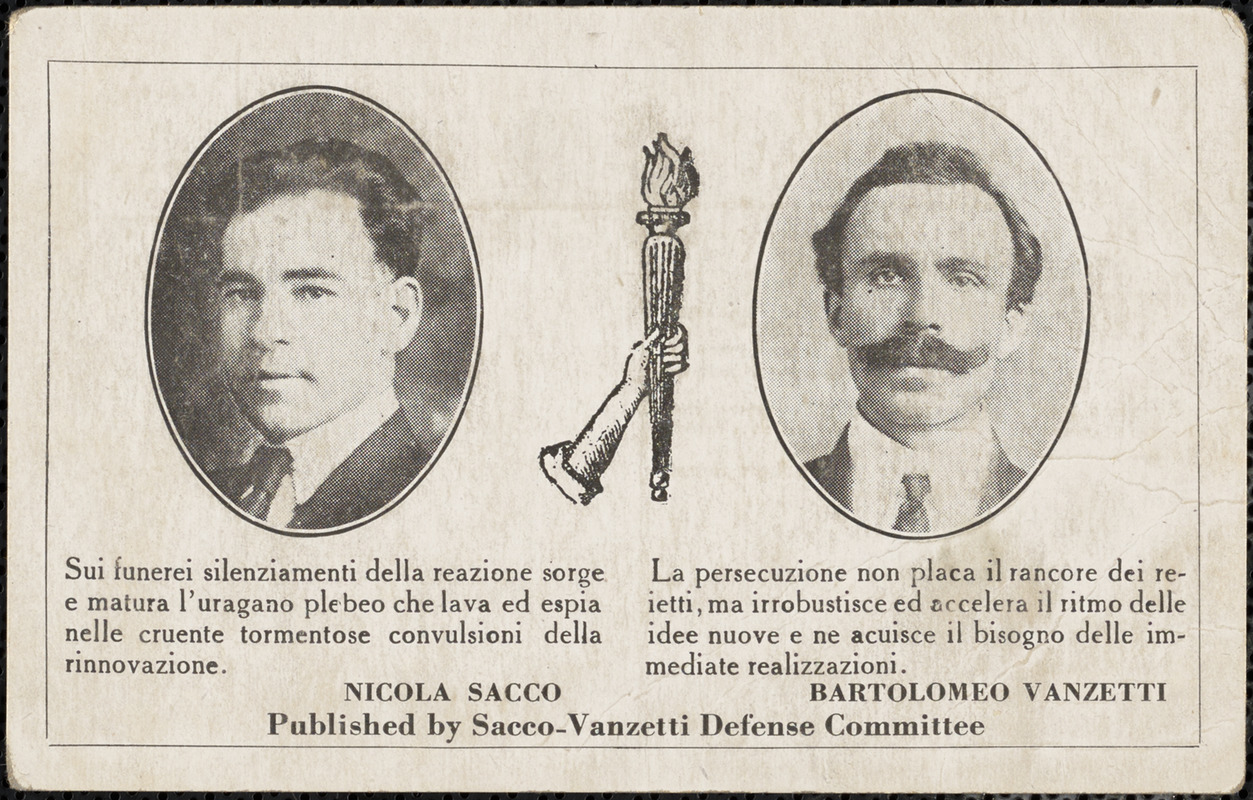
Certainly Sacco and Vanzetti were not pay-roll robbers or murderers; they had nothing to do with the crime which served as the legal basis for their conviction and execution. But certainly, also, the established innocence of Sacco and Vanzetti was only a secondary factor in the tremendous political movement which burst forth through the channel of the case. The noble and courageous action of the “two obscure Italian anarchists” in going to their death, thinking at the last moment not of themselves but of the best manner to serve the mass movement of which their names were the symbol, certainly helped to give a magnificent spirit to the mass movement. But, further than this, Sacco and Vanzetti had very little to do with the world event which is called the Sacco-Vanzetti case. The anarchist movement, to which they were passionately devoted, served to bring to the case its first small publicity, but certainly the vast turmoil of political movement was not an anarchist movement. The anarchist movement, at least in the years covered by this case, is not revolutionary in any sense, but Sacco and Vanzetti, themselves fired with revolutionary spirit, became symbols of revolution. Their cause became the cause of a world-wide struggle between the bourgeoisie and the working-class revolutionary forces. Everywhere Sacco-Vanzetti demonstrations became in name and in fact “bolshevistic’”’.
The affair which the bourgeoisie called the “execution of two pay-roll bandits and murderers” became a world-wide political struggle of the working class with the capitalist class—and particularly with the capitalist imperialism of the United States of America.
LEARNING TO HATE AMERICAN IMPERIALISM.
Through the Sacco-Vanzetti case, countless millions in all quarters of the world, for the first time learned to hate the capitalist United States, consciously, articulately, with an undivided class will. The features of the American Legion convention in Paris served as the best example. The American Legion convention was a world-celebration, staged with all the political effectiveness that two world powers, with the aid of virtually every printing-press and other social and state agency, could give it. And yet the first news and the last news and almost the only interesting news of the event, had to do not with the doings of 20,000 American fascists in the Capital of Continental Europe, but with the actions of the masses of workers of France in dragging before that convention the bodies of two dead Italian laborers. Every plan, every movement of the horde of American militarists, every utterance of official France, was influenced by the reactions of French workers to the legal murder of Sacco and Vanzetti. The “triumphal” entrance into Paris of General Pershing, the “man who won the world war’, had to be converted into a miserable back-door entrance because Sacco and Vanzetti had been murdered by the capitalism that Pershing represented. The American Expeditionary Force on its second visit to the France it had “saved” had to be protected with massed troops and police from insult by the “saved” populace. Throughout Europe and Latin America, United States embassies and consulates became in the eyes of the toiling masses, “houses of shame” which had to be protected by police and military from expressions of contempt by the most numerous sections of the populations.
Such phenomena must have some meaning deeper than any questions of the life or death of two persons, guilt or innocence, “mistakes of justice’, etc.
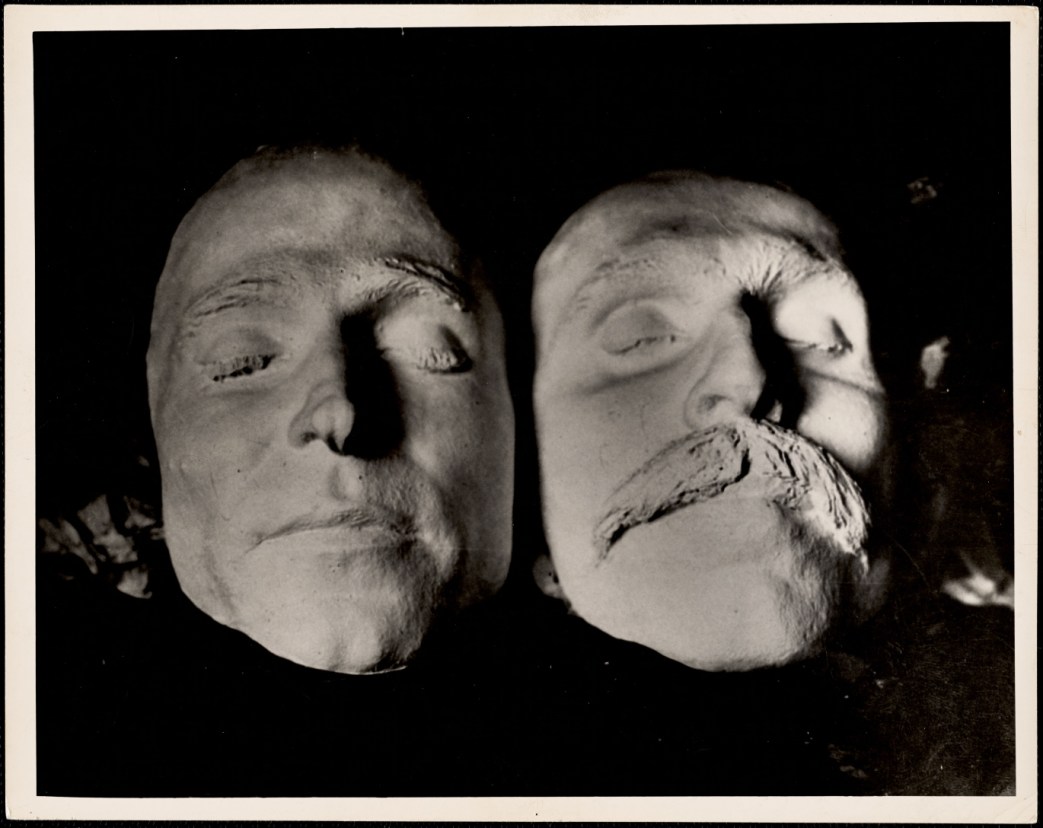
The execution was a calculated, ruthless murder. We are not moralizing here. The vast majority of the American ruling classes which supported the execution undoubtedly was convinced that correct public policy called for the execution. In their own terminology, the bourgeois were convinced that this was “right” and “justice”. From the bourgeois point of view there was no “miscarriage of justice’. But we know that the execution of Sacco and Vanzetti was one of the most conscious and deliberate acts of the American bourgeoisie. It was a demonstrative act. It was a purposeful demonstration to the world. And if we examine the present position of the American bourgeoisie, we begin to comprehend what that something was, which this bourgeoisie demonstrated.
A NEW-BORN GIANT TRIES HIS MUSCLES.
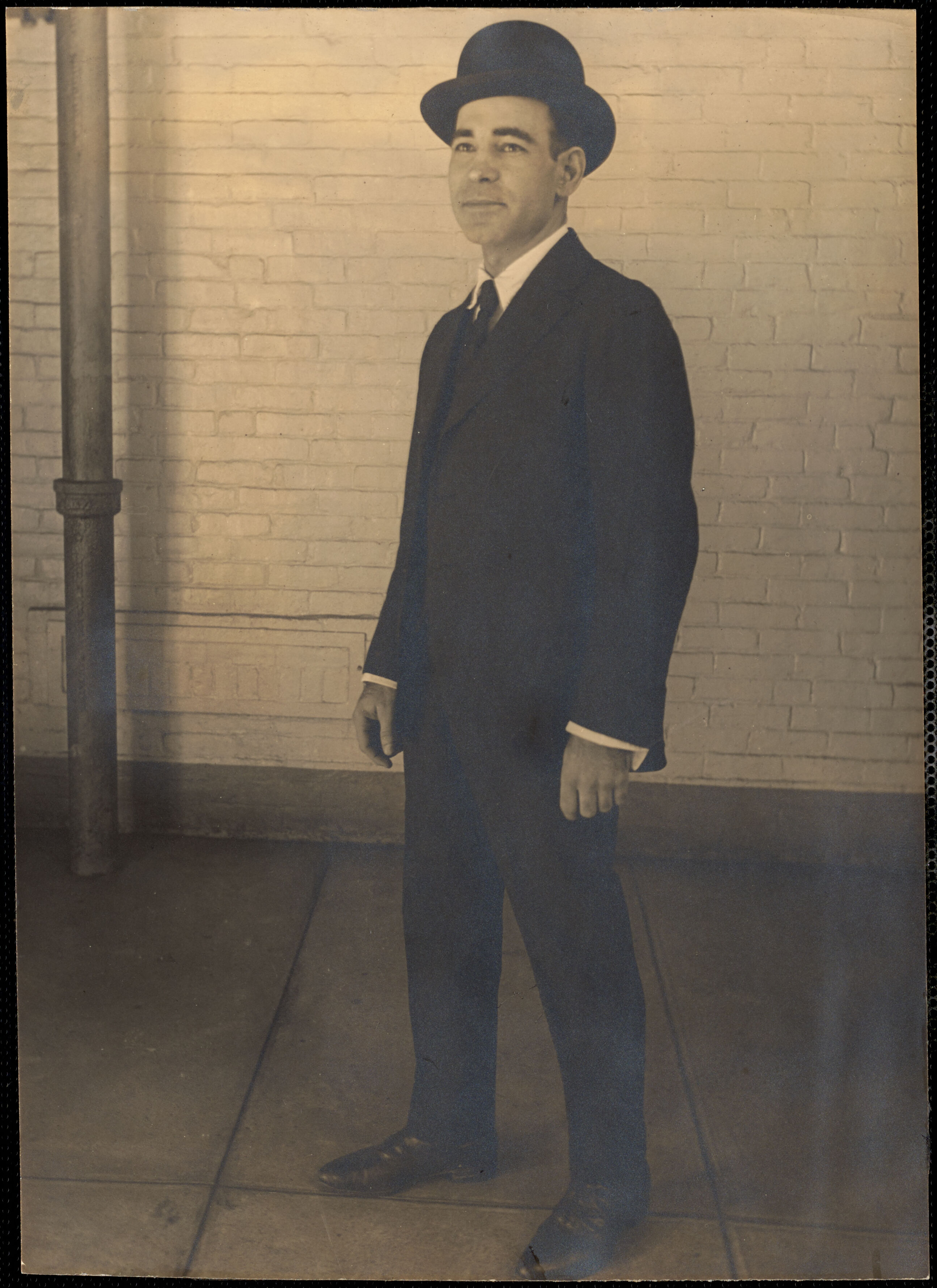
It is not an empty coincidence that the Sacco-Vanzetti case was produced in the United States of America; nor is it an accident that it came to its bloody climax in exactly the summer of 1927. The “strange” phenomena of the case fall into a certain consistency as soon as they are considered in relation to time, place and circumstance. For instance, the original arrest of Sacco, Vanzetti and several of their associates was only an incident in a series of thousands of arrests in the unbridled reaction and repression of 1920. Before anyone dreamed of connecting them with any robbery crime, the United States department of justice had given them its attention as “reds”; had set its detectives after them, and these detectives had already arrested one of the group, Vanzetti’s comrade Salsedo, as a “red”, and had murdered Salsedo. The arrest of Sacco and Vanzetti was made in connection with the effort of the department of justice to suppress the meetings of Italian workers which Vanzetti was conducting in which he planned to make a public protest against the murder of Salsedo by federal detectives in New York where Salsedo had been found dead after seven weeks of daily administration of the “third degree”. When arrested, Sacco and Vanzetti were questioned, not ‘about a pay-roll robbery and murder, but about their opinions and activities as “reds”. The dropping of the federal charge against them as “reds” and the beginning of the murder case against them came only after a newspaper exposé of the mysterious killing of Salsedo had made the case embarrassing for the federal government. I cite all of this detail in order to show that there was nothing strange or unaccountable about the arrest of Sacco and Vanzetti. They were arrested as a part of the “red raids”, their prosecution, conviction and execution are, with any consistency, traceable only to their being revolutionary labor agitators.
After the arrest, in each of its ups and downs the course of the case was responsive to the influence of changes in the class struggles at home and abroad. The conviction occurred while the reaction was in process. When the reaction slowed up, the course of Sacco and Vanzetti toward the electric chair slowed up. During the upward surge of the revolutionary movement (factory occupation) in Italy, where the Sacco and Vanzetti defense had become the basis of some agitation, the defense of the case looked “hopeful”. When the period of factory occupations by workers in Italy gave way to the coup d’etat of Mussolini, the legal technicalities of the courts of Massachusetts began to exhibit aspects more difficult for the defense. But still the case dragged on in the “seven years’ delay” of which the bourgeois press now speaks so unctuously. If we look at the record of other events in the United States, we find that an upward swing of the labor party movement occupied a certain portion of the “seven years’ delay” of the Sacco-Vanzetti case, and that the act of bringing the case to a bloody conclusion during that period could not have been politically expedient on the part of the ruling class. Conditions in Europe, where the case had gained still more currency, the period of doubt about the acceptance of the Dawes plan, the period of delicate operations for stabilization, the flux of militancy in the European labor movement, the British general strike,—all of this went to create a world-political atmosphere in which the ruling authorities in fact did not push forward as rapidly as would have been possible the execution of the two Italian workers in Massachusetts.
THE REACTION RETURNS WITH THE ELECTRIC “GUILLOTINE”.
But the world situation and the domestic situation of the United States underwent a change. Relative stabilization of capitalism in Europe was accomplished, the general strike in England came to its defeat. The betrayal of the Chinese revolution presented a picture of seeming “collapse” of revolution in Asia, promising a heydey of world-reaction and at the same time an advance in the developments which lead toward world war. These and other incidents, such as the suppression of the Vienna workers’ revolt, created a general tone of reaction.

With the tightening of its hold on Europe and the apparent success of the effort to dull the edge of the militant labor movement there and in Asia, the consciousness of security in its dominant position grew in the American bourgeoisie. It is not accidental that this capitalism which has within ten years risen from the “rank and file” of debtor nations into the position of most powerful lord of nations, should at last begin to exercise and to flaunt its new power with some “little” incident of ruthlessness which, without obvious connection, nevertheless serves as a ringing challenge to the world—a demonstration of the autocratic power which this imperialism feels. America, as the overlord of the world, takes on the “dignity” befitting her wealth and position. That that “dignity” is manifested in the slaughtered bodies of two working-class agitators is not out of accord with the picture. To the bourgeoisie nothing is more dignified than ruthless action toward its class enemies.
It must not be forgotten that the American bourgeoisie feels itself especially to have a free hand because of the subserviency of the official labor movement in the United States. Later we will speak of the astonishing way in which this subserviency was manifested in this particular case; here we speak only of the general character of the trade union bureaucracy as militant servants of capitalism. In every other country of the world the labor bureaucracy (even when suppressing a Berlin uprising or a Vienna demonstration,. or breaking a British general strike) makes some sort of formal pretense of aiming to substitute a socialist system for the capitalist system. The American trade union bureaucracy has for decades boasted of its role as defender of capitalism. But, -even more than this,— in the past several years this bureaucracy has been, and still is, moving to the right and plunging into class-collaboration schemes, systematic strike-breaking, aggressive imperialism and militant reaction in general to a degree never before seen or dreamed of anywhere in the world.
We must bear in mind that these and connected circumstances have in the past ten months brought about a nationwide offensive against the labor movement in the United States. The execution of Sacco and Vanzetti was carried through at the height of a smashing offensive against the needle trades workers in New York City, in which offensive the employers, the police and all government agencies, the trade union bureaucracy and the socialist party bureaucracy were united to destroy a group of trade unions which represented a key position of militant workers. At the same time a less dramatized but even more significant struggle, with more or less the same line-up of forces, was and is being carried on in the coal fields, where the employers and bureaucracy fight to emasculate or destroy trade unionism.

In the midst of this reactionary offensive,—with the official labor movement not resisting the reaction—the execution of two militant revolutionary figures was not at all out of harmony with the prevailing psychological atmosphere. Turning the current on the electric chair was easily a part of the general offensive against all that spelt militancy and conscious revolutionary principle in the labor movement.
It was “all in the picture” just at that moment to give the small revolutionary section of the American working class a heart-sickening example of what the American bourgeoisie will do toward revolutionaries.
In this light it was a conscious, deliberate—a demonstrative act against the American working class.
And toward the working class of the whole world, and toward all elements being drawn into the anti-imperialist movement against the United States, it was a demonstrative act of defiance, a declaration of the coming of age of an overlord of the world.
THE WORLD PROLETARIAT ACCEPTS THE CHALLENGE.
The proletariat of the world accepts the challenge.
American imperialism had succeeded in dulling the edge of working class militancy in Europe. In a thousand ways the social-democratic auctioneers had been “selling” the United States to the European proletariat, as the A. F. of L. bureaucracy through such means as the Pan-American Federation of Labor had been “selling” the benevolent United States imperialism to all of Latin America. As against this were piled up evidence after evidence of the enslavement of the European toilers and the expropriation of certain strata of petty-bourgeoisie as a result of the working of the Dawes plan and other American schemes in Europe, and, in Latin America the criminal assault upon Nicaragua, the bullying of Mexico, the fluke of Tacna-Arica, the tightening of the rope around the necks of Haiti and Santo Domeingo, etc., were making the “benevolence” of United States imperialism more and more difficult fiction to maintain. A dramatic demonstration of a sort that would cut across all arguments and furnish the whole world with a simple expression of the fact that United States Imperialism was the coldest-blooded imperialist bully was required. When the Sacco-Vanzetti agitation neared its climax, it was clear that this agitation took its deepest roots in exactly those spots of the world where hatred of American imperialism was most due.
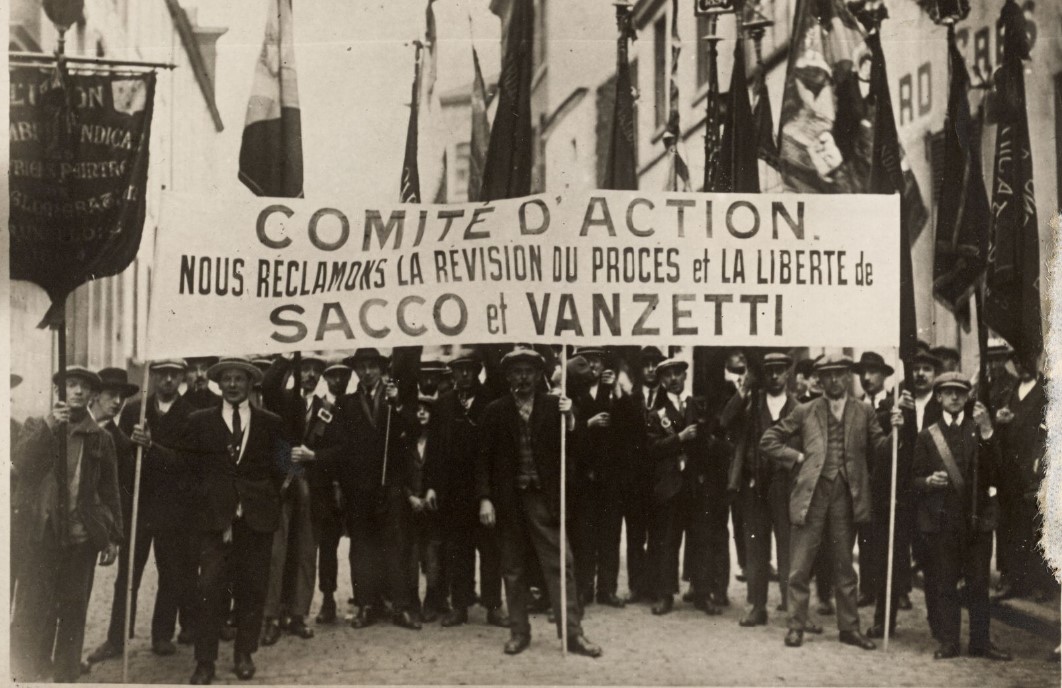
The Sacco-Vanzetti movement is essentially an anti-imperialist movement. Other classes than the proletariat were also swept into the mighty stream. A horde of ruined and semi ruined petty bourgeois in Germany and France, dimly sensing the cause of their expropriation but dumb in expressing it, suddenly found a way in which clearly, logically, unanswerably and even bravely to express their hatred of the capitalist United States. Even a large part of the press of the big bourgeoisie in European countries found the possibility of reflecting the mass clamor. In France there was already a situation leading toward a tariff struggle with American capital; from the point of view of French capital it was not inconvenient to have a background ready-made of mass agitation against American capitalism on the basis of an American “Dreyfus case”. Thus the flood mounted high and for a moment even crossed not only national borders, but also class lines. This made more difficult than ever the task of the reformist labor leaders who had taught the social-democratic masses to follow the petty-bourgeoisie. The formation of a United Front of the working class was realized to certain extent in many places. Efforts of Social-Democratic leaders to sabotage or to prevent the united front were unsuccessful in many countries other than the United States. Since the Russian October revolution, a network of numberless obstructions to international actions of the proletariat has been built up. All the cleverness of the bourgeoisie and the social-democratic reformist bureaucracy has been expended for ten years to rebuild the water-tight bulkheads of separation between the national sections of the working class. The betrayal of the general strike in England and the counter-revolutionary suppression of the workers of Vienna by the social-democratic trade-union bureaucracy had been characteristic phenomena casting the European proletariat into a general mood of defeat. Suddenly, with the cry of “Save Sacco and Vanzetti’’, a new and irresistible wave of international working class militancy swept over the world, overflowing all the barriers. A vast international class movement arose and spread throughout Europe, Asia, South Africa, Australia and North and South America, and this movement was directed against the ruling class and government of the United States. This dramatization of the American bourgeoisie’s attitude toward the working class—and toward two foreign-born members of the American working class—was too strong and clear not to awaken the logical anti-imperialist attitude. It suddenly became possible to express through the Sacco-Vanzetti case the relationship of the American imperialist bourgeoisie to the working class of a half hundred countries in which American imperialism is, or begins to be, in an exploiting position.
It had been hard to express this before.
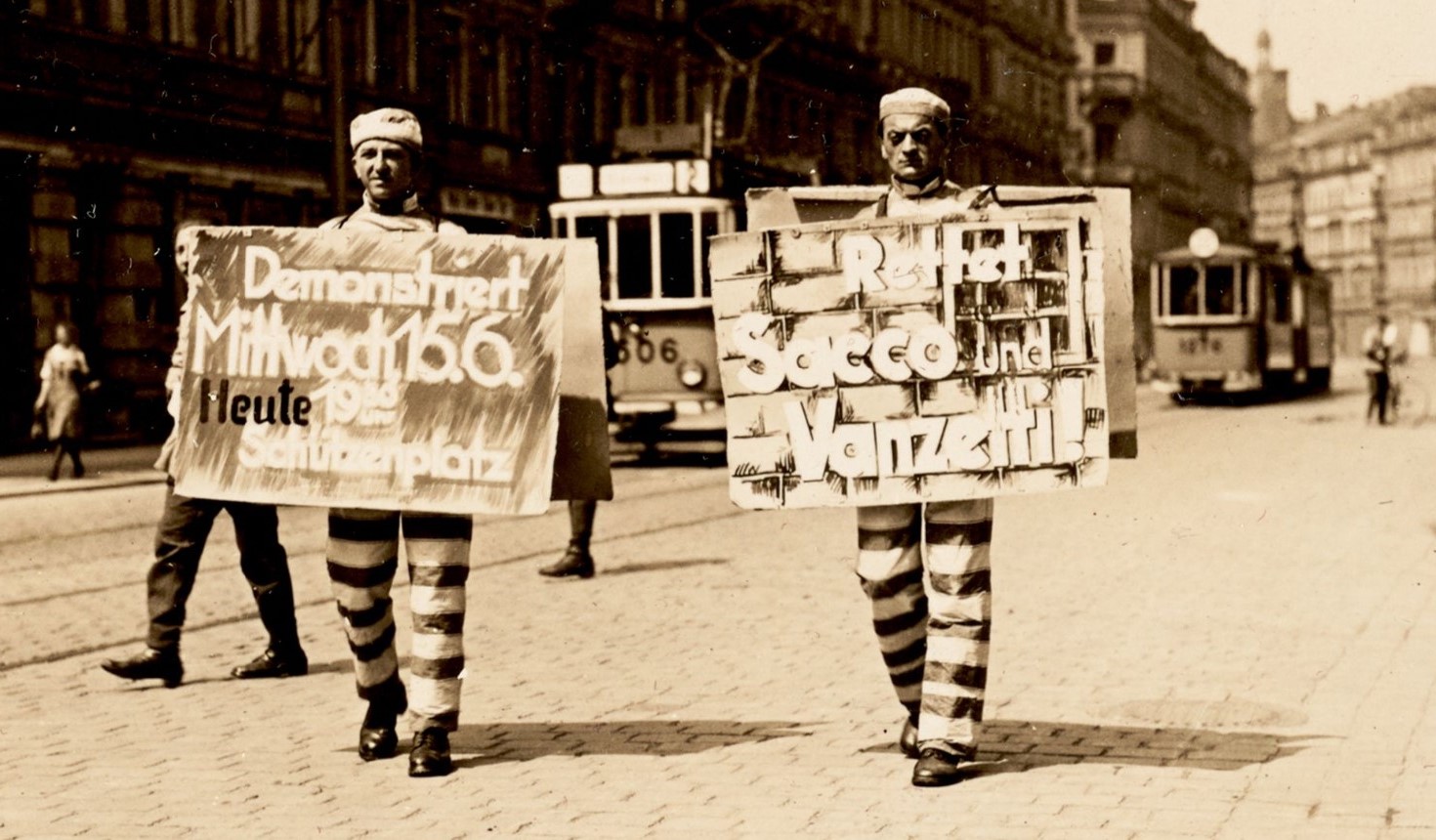
As the tenth of August, the date set for the execution, drew near, the international agitation climbed to its apex. If we leave out of consideration the October revolution, it is safe to say that the attention of the working class of the world had never before been so unitedly and sharply fixed upon one object, its psychology so completely unified. The execution on August 10th would have caught the protest movement at full tide, and this would not have been good policy from the point of view of the American bourgeoisie. Therefore and therefore alone, the machinery of the state postponed the execution until confusion and doubts of the outcome, reawakened illusions, could break the unity of the movement. As soon as this tremendous world movement was shaken with hesitation, the electric switch was closed and Sacco and Vanzetti burned to death.
HOW THE “LABOR” FRIENDS HELPED.
The role of William Green and the A. F. of L. bureaucracy was too subtle a role, relative to the level of understanding of the American labor movement, to appear clearly to the masses. The belief is general that William Green interceded for Sacco and Vanzetti. In fact William Green helped to electrocute them. It was done in this way: Green asked for the commutation of the death sentences; the plea was made in such a way as to imply that there could be no question of the integrity of the courts, that of course the verdict of a court of law sustained by the higher courts must be regarded with respect, but that the guilty men should be treaty with leniency. Of course Green knew that there could be and would be no leniency, that the only case for Sacco and Vanzetti was on the basis that they were not guilty of any crime, but were victims of class justice, were “guilty” only of being revolutionists; Green knew that the only hope lay in the pressure of the working class and organized labor against the actions of the State machinery and in denunciation of the court verdicts. Green’s whole action “in behalf” of Sacco and Vanzetti, therefore, as the head of the organized labor movement, was to use the prestige of the A. F. of L. to help turn on the electric current. His plea for commutation, virtually a plea for their life imprisonment, apart from its brutal meanness, was practically a statement that they were guilty; and in such a statement made as the head of the labor movement, Green belied the position of even the backward membership of the A. F. of L.
Of course the basis of Green’s action was the purpose of holding back the masses of the trade unions as much as possible from the radicalizing process, taking the vitality out of the movement and at the same time creating the illusion of supporting it.
The role of the socialist party here, like that of the social democracy abroad, contained the same essence as that of Green, but adapted to slightly different necessities. The fundament of the socialist party’s policy was to keep up the impression that it was fighting for Sacco and Vanzetti, and at the same time to prevent the movement from obtaining any mass united front basis upon which it would become radicalized, leading in the Communist direction. The statement of Mr. August Claessens, spokesman for the socialist party, that the proposal for a general strike for Sacco and Vanzetti was a proposal of the Communist alone and that the call for the strike should not be heeded, was a strike-breaking act which helped to minimize the size of the strike and therefore to promote the execution. The statement of J. Ramsay MacDonald, then on a visit in the United States, that the approaching execution of Sacco and Vanzetti was a purely internal affair of the United States, and that therefore he could not comment on it, was a sharp shock to some of the naive members of the socialist party. And yet the attitude of the socialist party was in the same spirit: there must be no united action of the masses of workers because this would result in a movement toward Communist methods and the Communist party; there can be petitions to the governor, which would be quite constitutional, but there must be no political strikes which would put outside pressure on the courts and which thereby lead in the bolshevistic direction.

The uniformity of the role of the social-democratic parties of the world is indicated by the plea of the Berlin “Vorwaerts”’ that the conviction was an error of justice, and by the general refusal to make a united front with the Communists for a world-wide campaign of defense.
However, one feature of the actions of the social-democracy was very little noticed: Just at the height of the movement for saving Sacco and Vanzetti, the social-democratic parties all over the world began an intensive and extensive campaign against the Soviet Union on the ground of the execution of certain white-guardist terrorists in Soviet Russia. Thus the social-democratic leaders did the thing of all things best calculated to confuse and sabotage the mass movement, and to turn the historical balance in favor of reaction. The social-democratic leaders the world over helped the bourgeoisie to come through the Sacco-Vanzetti affair with as little as possible revolutionizing of the psychology of the masses.
The legal murder of Sacco and Vanzetti has left a permanent deposit, which remains among the present and future factors of history. The working class of the world has been to a certain extent stirred out of a lethargic mood, has been further internationalized, and in the fast approaching events of world war against the Soviet Union and the Chinese revolution, American Imperialism will hear a thousand million times the names of the two Italian laborers whom it murdered in Massachusetts.
PDF of full issue: https://www.marxists.org/history/usa/pubs/communist/v06n06-sep-oct-1927-communist.pdf
 Revolution's Newsstand