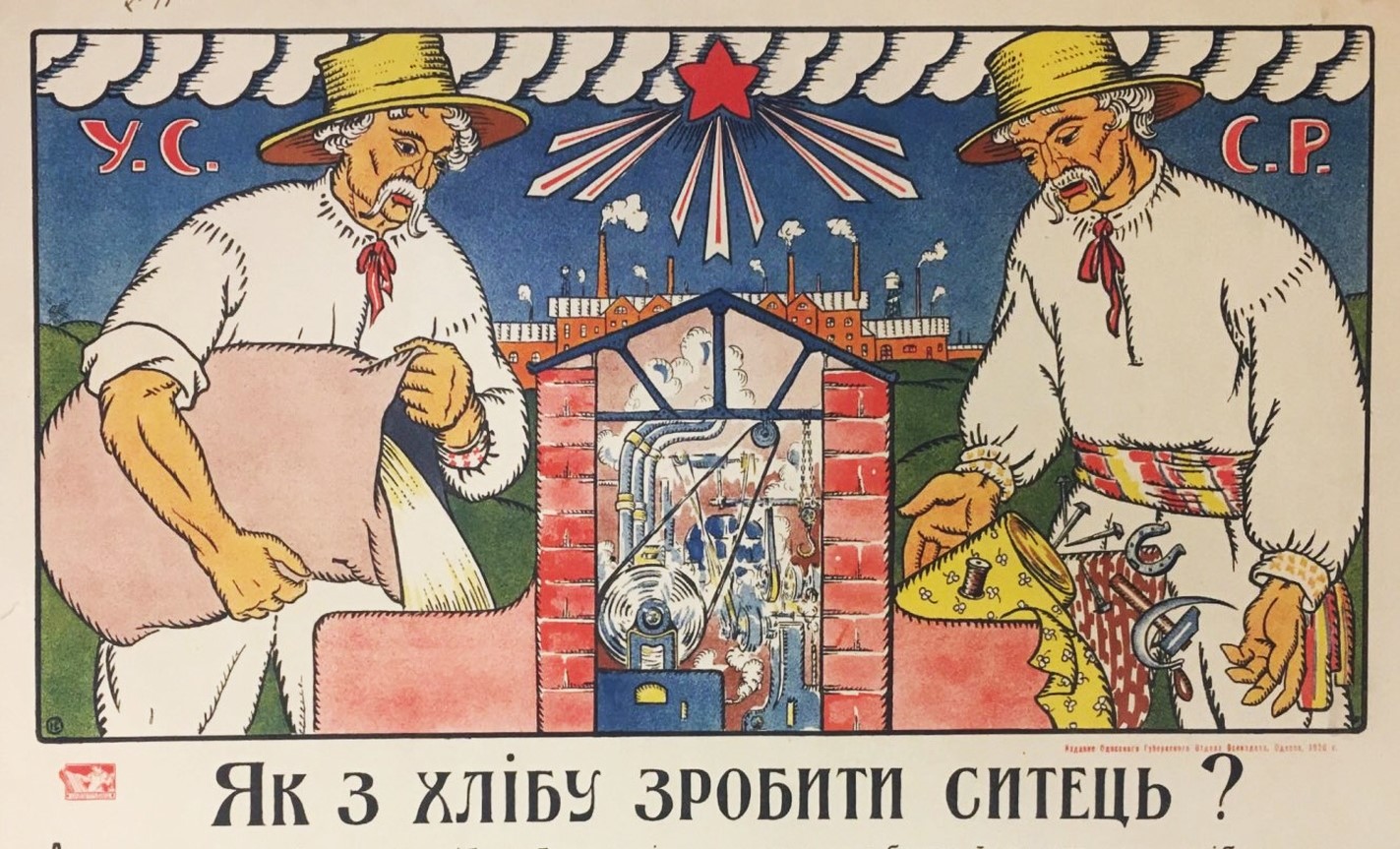
‘Dividing Up vs. Communistic Production’ by Nikolai Bukharin from The Toiler. No. 133. August 20, 1920.
We already know that the root of the evil of wars of conquest, of the oppression of the working-class; of all the savagery of capitalism, consists in the fact that the world has been farmed out by a few bourgeois cliques organized in the form of national governments, who administer as their own property all the good things of the earth. The property interest of the capitalistic-class in the means of production that is the “first cause” which will explain to us all the barbarism of present-day society. To take away from the rich their power by taking from them their wealth that is the first task which the working class and the workers’ party the Communist Party, have set themselves.
Some may think that that which has been taken away from the wealthy should be, in a “God-like,” just, and equal manner, divided among all, and that then all will be well. Each, according to this attitude, would have only just as much as everyone else; all would be equal, and all would be free from inequality, oppression, exploitation. Everyone will look after his own interests, having everything at his disposition, and the power of man over man will disappear by reason of this equal division, general redistribution, and allotment of wealth among the poor.
But the Communist Party does not view things this way. It holds that such an equal distribution would not be of any good or lead anywhere else than to confusion and to a reestablishment of the old regime.
And such is the case. In the first place, there are a lot of things that simply cannot be distributed. For instance, what would we do with the railroads t Suppose one should under the bolts; a fourth would seize the cars, for fire-wood; and a fifth would smash the mirrors in order to shave himself by the reflection of their fragments; and so on: it must be clear to everyone that such a division would not only not be equal, but would lead merely to an insane destruction of useful objects, which might have served many purposes. Similarly, it would be silly to divide up a single machine in this way. Suppose one man should take the driving-wheel, another the piston rod, and other persons should take the remaining parts, the machine would cease to be a machine: it would become mere scrap-iron. And it would be similar with all complicated devices, which are more important than anything else in the prosecution of our work. Merely consider for a moment the telegraph instruments, the instruments for chemical works, etc. It is clear that only a complete fool or a downright enemy of the working-class could recommend such a division.
But such a division would not be harmful only for the above reason. Let us assume that by some miracle someone and succeeded in dividing up, more or less equally, everything that had been taken away from the wealthy. Even then nothing particularly useful would result. For what does such a division mean? It would mean that we should have substituted a number of small owners for a few big ones. It would not signify the abolition of private property, but the extension of it; we should have petty ownership instead of large ownership. And yet the time of petty ownership is already past. We know very well that capitalism and the big capitalists arose out of the dissensions of the petty owners with one another. If by our division we had succeeded in increasing the class of small owners, the following result would be observed: A part of them (a very large part) would on the very next day dispose of their gains in some junkshop and their property would in this way soon fall into the hands of the more well-to-do owners; among the others there would arise conflict for the sale of their materials, and in these conflicts, the well-to-do would get the best of the poorer. The poor would become still poorer and would by this process be converted into true proletarians, while the richer would become still richer and would gradually be transformed into true capitalist. Thus we should finally return, after some time, that very structure of society which we have just destroyed. We should very soon find ourselves once more confronting the self-same trough of capitalistic exploitation.

The division into private (petty) property is not the ideal of the worker or of the country-serf. It is an ideal of the petty shopkeeper, who is oppressed by the big shopkeeper, but who wishes to become a big shopkeeper himself. How to become “one of the bunch”, by getting all he can into his possession, that is the philistine’s dream. To think of others, to think of the final results of this scramble, that would be asking too much of the shopkeeper; all he wants is to fed more coins jingling in his own pocket. It is no threat to him, when you tell him that we shall simply come back to the capitalist regime; you will simply arouse his hopes that perhaps he, plain Sidor Petrov, may became a capitalist. And what harm is there in that?
But the course of the working-class ought to be, and is, quite different. The working-class is interested in such a reconstruction of society as will make a return to capitalism in conceivable. A mere dividing up will throw capitalism out by the front door, to admit it a little later through the rear entrance. The only solution of this difficulty is a, fraternal (communistic) society of workers.

Under a communistic order, all wealth will belong, not to separate persons or to separate classes, but to all society. All society will then be as one great labor-union. There will be no master over them. All will be equal workers. There will be no classes, neither capitalists who hire workers, nor workers who are hired by capitalists. All will work together, on a schedule of work carefully planned and elaborated. The Central Statistical Bureau (Bureau of Accounts), will estimate what quantities of boots, trousers, sausages, blackings, wheat, flax, etc., need to be produced each year; they will calculate what number of comrades must work for this purpose in the fields, in the sausage-factories, in the great tailoring establishments of the social workshops, and in this manner the necessary number of hands will be distributed to the proper places. All production will proceed on a strictly prepared, carefully tested plan, on the basis of an accurate census of all machines and instruments, of all raw materials, of all the workers, at the disposal of society. Accurately the annual needs of the society will be calculated. The product produced will be allotted to the social stores, from which they will be distributed through the worker-comrades. They will work only in the largest factories, at the best machines, for they save the most labor. The direction of production is the most economical every superfluous expense is a single general plan governing all production. It is impossible that there should be any such thing as conducting business in one way in one place and in another way in another place; formerly the right, hand knew not what the left hand did. On the contrary, the new system takes a full view and census of the world: cotton will be produced only at the place where there are the most favorable conditions for its production; the production of coal will be concentrated in the largest existing mines; the iron manufactures will be established in close proximity to the coal and the ore; and whore there is land suitable for wheat, we shall not build great cities with vast houses, but will sow the grain. All, in a word, will be so distributed, as to put each form of production in the place most suited for it, where the work will proceed most smoothly, whore the materials are most accessible, and where human labor will be most productive. And all this can only be realized and attained according to one single plan, with a complete unification of all society into one great labor-union.
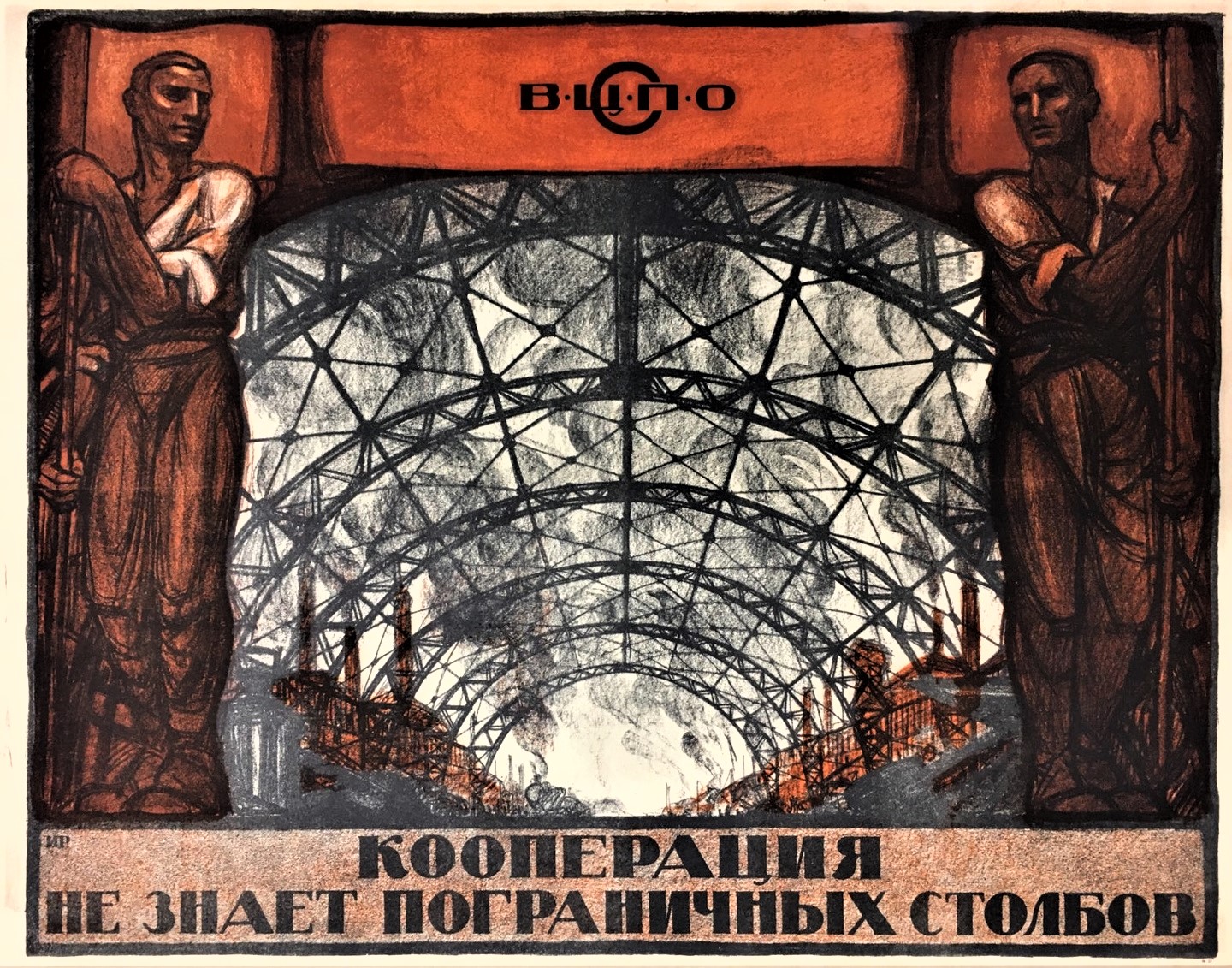
In this communistic society, people will not be sitting on each other’s necks. There will be no rich and no fleeced, no rulers and no subjects; society will not be divided into classes, one of which rules over the others. And once there are no classes, there are no longer several kinds of people (poor and rich), some of whom are gnashing their teeth at the others, the exploiters against the exploited, the exploited against the exploiters. Therefore there will be no such organization as the State, for there will be no governing class which would need to keep up a special organization for the maintenance of its privileges against its class opponents. There will be no government over people and no power of man over man: there will only be a control over things, over machines, a power of human society over nature. The human race will not be divided into hostile camps: it will be united by a common cause, the common struggle to master the forces of nature. Boundary posts are overturned and separate fatherlands annihilated. All mankind without distinction of nationality will be united in all parts, and organized in one single whole. All the peoples will then constitute one great fraternal laboring family.
The Toiler was a significant regional, later national, newspaper of the early Communist movement published weekly between 1919 and 1921. It grew out of the Socialist Party’s ‘The Ohio Socialist’, leading paper of the Party’s left wing and northern Ohio’s militant IWW base and became the national voice of the forces that would become The Communist Labor Party. The Toiler was first published in Cleveland, Ohio, its volume number continuing on from The Ohio Socialist, in the fall of 1919 as the paper of the Communist Labor Party of Ohio. The Toiler moved to New York City in early 1920 and with its union focus served as the labor paper of the CLP and the legal Workers Party of America. Editors included Elmer Allison and James P Cannon. The original English language and/or US publication of key texts of the international revolutionary movement are prominent features of the Toiler. In January 1922, The Toiler merged with The Workers Council to form The Worker, becoming the Communist Party’s main paper continuing as The Daily Worker in January, 1924.
PDF of full issue: https://www.marxists.org/history/usa/pubs/thetoiler/n133-aug-20-1920-Toil-nyplmf.pdf
 Revolution's Newsstand