Four years had elapsed since the 5th Comintern Congress in 1924 and its 6th in 1928. In that time, the Comintern had changed enormously, both in terms of the ‘Bolshevization’ of the older parties, and with many new parties, particularly from the colonial and neo-colonial world joining the International. In anticipation of the 6th Congress, the Comintern published a volume with reports from its constituent members on their work the previous years. This is the report of the Chilean Communist Party, founded in 1922. The picture presented here is reflected in the events of September 11, 1973.
‘Report of the Communist Party of Chile’ from The Communist International Between the Fifth and the Sixth Congresses, 1924-28. Published by the Communist International, 1928.
THE ECONOMIC SITUATION.
WITH the “settlement” of the political crisis by means of a military dictatorship, the native bourgeoisie as well as the Anglo-American interests hoped to overcome the economic crisis.
The economic crisis reached its climax in 1926-27, and was felt above all in the saltpetre industry, which is the most important industry of the country. The output of that industry in 1926 was 40,340,000 cwt., as compared with 50,520,000 cwt. in 1925. The crisis is even more clearly expressed in the export fizures. In 1925 practically the whole output of the saltpetre industry was exported (50,340,000 cwt.), while the 1926 export was only 32,240,000 cwt., or 80 per cent. On the other hand, the stock of saltpetre increased from 17,620,000 cwt. at the end of 1925 to 25,580,000 cwts. at the end of 1926. As a result of this crisis, 69 out of 93 plants had to close down. Unemployment was constantly increasing, and at the end of 1926, 35,122 workers with their families left the country.
The crisis in the saltpetre industry was closely connected with the crisis in the coasting trade, which also affected other branches of economic life, being particularly acute in the coal industry, which only recovered during the coal strike in Great Britain. In 1926 the government had a deficit of 201 million paper pesos, and a considerable deficit is estimated also for 1927.
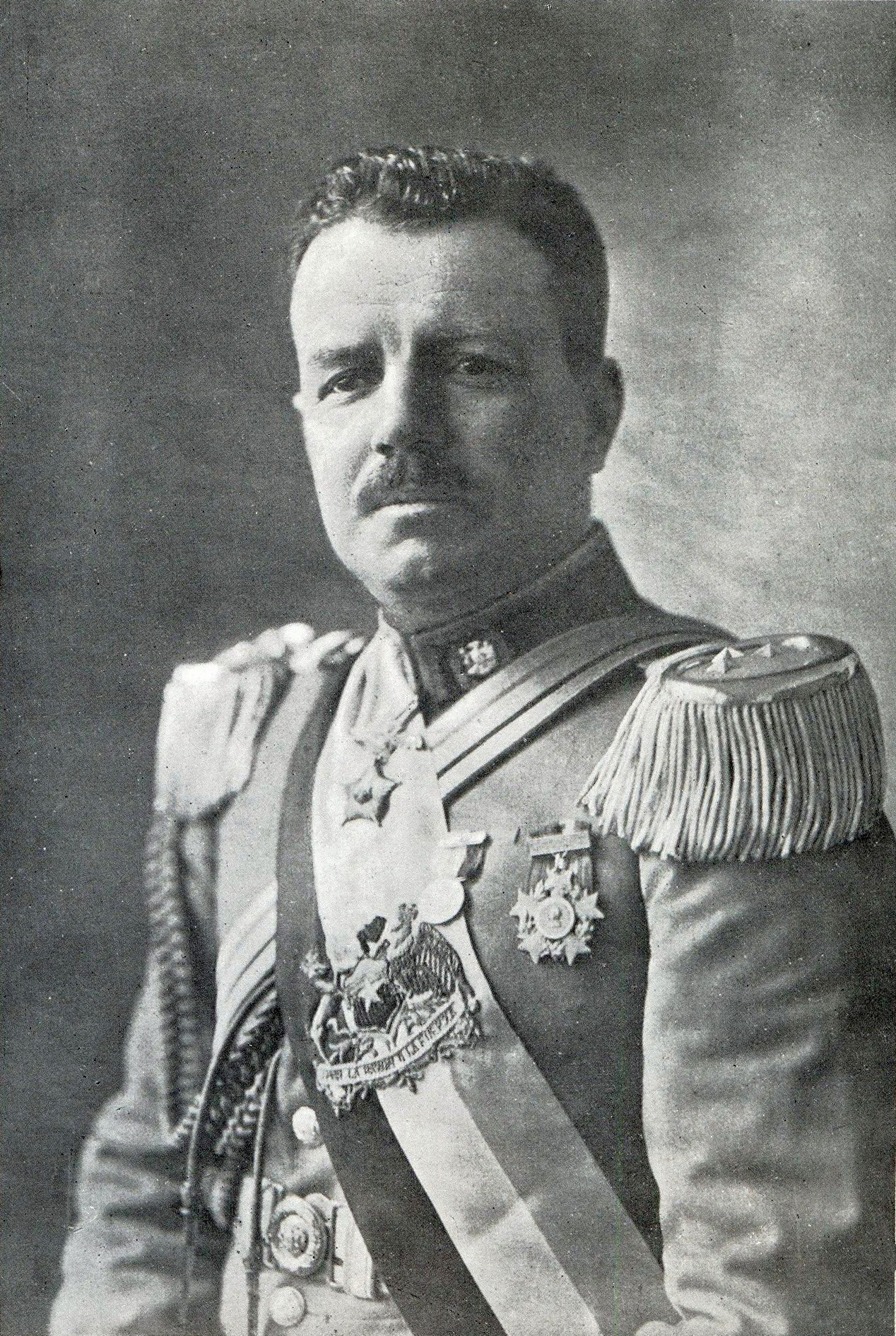
The prolonged crisis in Chile produced among the bourgeoisie a demand for a “strong hand,” and that strong hand they see in General Ibanez. Ibanez organised two coup d’états, and, after his victory, he launched a general attack on the Communist Party and the revolutionary labour movement. The bourgeoisie took advantage of this attack to worsen the economic conditions of the workers. The government introduced certain measures of economy which increased unemployment; it also raised new sources of taxation, and thereby caused a rapid impoverishment of the workers and the petty bourgeois sections of the population.
The law permitting the free sale of saltpetre revived industry somewhat in 1927, but the military dictatorship did not succeed in overcoming the economic crisis. This led to the emergence of a bourgeois opposition to the dictatorship, against which the latter was forced to take measures, as a result of which the ex-President, Allessandri, was exiled at the end of 1927.
The acute situation in Chile as utilised by Anglo-American imperialist interests to strengthen their position there. The capital invested by the United States increased from 35 million dollars in 1908 to 360 millions in 1927. At the same time the British investments increased only from 446,400,000 in 1914 to £61,600,000. In addition, America granted a loan of 85 million dollars to the government, and to several states.
In general, there is no industry in Chile which is not either wholly or partly financed by foreign capital. In the copper, saltpetre, textile, sugar and explosive industries, in commerce and in transport, everywhere can be seen British or American interests and domination. French capital plays a considerable role in the leather industry alone (50 per cent. of the 80 million pesos in that industry are controlled by French capital).
United States imperialism is directed not only against the native bourgeoisie (in which connection Pablo Ramirez, the spokesman of native capitalism, had to resign his post as Finance Minister), but also against British imperialism, which is constantly losing ground. This intensifies the struggle between the two imperialistic powers.
General Ibanez is nothing but a tool of North American imperialism. American finance capital secured a victory by the “free sale of saltpetre” law, for which it had been fighting for many years.
British imperialism has on its side the urban and rural landowners who constitute the only bourgeois political opposition.
POLITICAL SITUATION.
The border conflicts instigated by American imperialism play «a considerable role in the politics of Chile. In these conflicts the United States plays the part of “arbitrator.” Border conflicts broke out a few years ago between Chile, Bolivia and Peru on the question of the Tacna-Arica territory. The U.S. Government wanted Tacna to be given over to Bolivia, and Arica to become a free port. Although the American Government insisted on an agreement, the conflict has not yet been settled. With the help of these same imperialists all these countries are arming for war.
Ibanez’s dictatorship has succeeded in subduing all other bourgeois parties within the country, not one of which dares to come out openly against the government. There is only one bourgeois opposition paper, which represents the interests of the landowners, and it is under strict censorship. The nationalist “Avanguardia” and the “Party of Wage Workers” are not parties, but small groups of corrupt elements, the tools of Tbanez’s dictatorship.
The Communist Party, as well as the entire revolutionary movement of Chile, made good progress in the course of 1925-26. The Party and the Federation of Labour (revolutionary unions) succeeded in winning over the broad masses, and in addition influenced the struggle against the native bourgeoisie and against Anglo-American imperialism. This development of the revolutionary labour movement caused the bourgeoisie, with the help of foreign imperialism, to launch an attack against the Communist Party and its sympathetic organisations.
In the middle of 1925 came the first big provocation. It began in the North, in the provinces of Tarapaca, Antofagasta and Iquique, where the closing down of several enterprises, which refused to pay the workers what was due to them, resulted in a general strike under the leadership of the Communist Party. The movement spread like wildfire, and the workers took possession of the factories. Within a few days they obtained control of the situation in the northern district. The armies of General Ibanez, which came from the South, surrounded the factory dwellings and set them on fire, whilst the workers and their families, who tried to save themselves, were shot down by the troops, about 800 being killed and several hundred wounded. Over 10,000 were arrested and deported to the Mas-Afuera Island. The bourgeoisie was, however, still weak at that time; and the Party was strong enough to recover immediately, and replied to this terror by increased activity. At the end of the same year, in November, 1925, the Party, despite the terror, elected seven deputies and two senators to parliament. Even in places where the terror was fiercest (Tarapaca and Antofagasta), and in the semi-agrarian districts, the Party succeeded in securing the election of its candidates.
The Seventh Party Congress took place in Santiago at the beginning of 1927. At this Congress measures were taken to shevise [sic] the Party. General Ibanez (who became Minister-President in 1927 and later proclaimed himself President of the Republic) outlawed the Communist Party, thereby driving it underground. Several hundred Communists and trade union leaders were again arrested and banished. Government hirelings smashed the Party printing office. Many trade unions were closed down and were unable to continue their work. This wave of terror resulted in surrender on the part of the vacillating and opportunist elements. Some of them went over directly to the service of the bourgeoisie and the government. With the help of these traitors, “Government trade unions” were organised. Some of the old trade unions also fell into their hands, as, by means of demagogic tricks, they succeeded in winning over some sections of the working class. Some of these traitors joined the “Party of Wage Workers,” which advocated harmony between capital and labour, the persecution of the revolutionary labour movement, and which, together with the bourgeoisie, supported General Ibanez’s candidature fog the presidency.
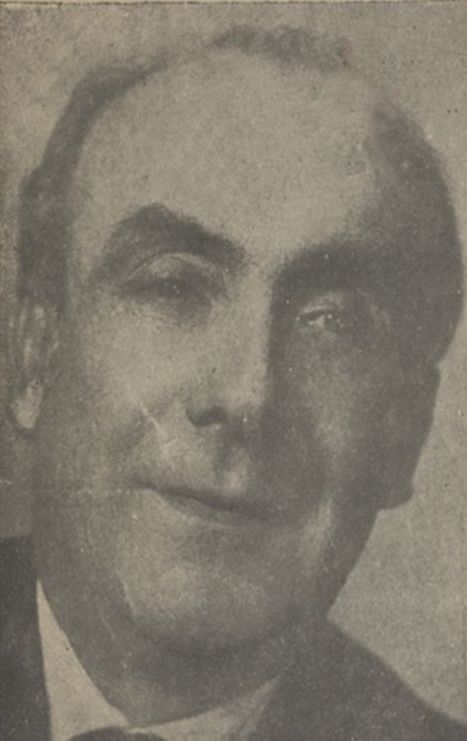
The Communist Party of Chile was the only organisation which put up an opposition candidate, the General Secretary of the Revolutionary Trade Untin Federation, Comrade Lafertte, who was then banished to the Mas-Afuera Island. Despite the terror, and notwithstanding the fact that the votes given for Lafertte were in many cases not even counted, the bourgeois press had to admit that the labour candidate received 10,000 votes.
The various phases of Party development can be summarized as follows :—
In 1924-25, certain opportunist deviations were to be observed on the part of the majority of the C.C. Those who led this opportunist fraction are now the leaders of the Nationalist Avangarde.
With the formation of a new Central Committee in 1926, the Party undertook the work of revolutionizing its organisation. But during the period of 1926-27 the Party suffered through lack of a sufficiently strong leadership.
Before the period of illegality, the Party had five papers: “Justicia,” “La Reveil des Travailleurs,” “El Comunista,” “La Jornada Communista,” and “La Defensa Obrero.” It also published several weeklies and magazines. Since it has been underground the Party has only issued a bulletin.
The present period of illegality confronts the Communist Party with new tasks and calls for greater activity among the Party members. The opportunities for revolutionary activity are as great as ever before. The economic crisis, particularly in the two most important branches of national economy (in the saltpetre and mining industries) still continues. The poverty of the masses increases. Since Dictator Ibanez has been recognized by American imperialism, British imperialism is trying to incite the agrarian bourgeoisie and the urban petty bourgeoisie against his regime. It is even organising coups d’état which, naturally, will not in any way improve the workers’ conditions.
The government’s labour policy only succeeded in discrediting certain labour leaders, and gave rise to a revival of the mass labour movement.
It is the task of the Communist Party of Chile to build up its illegal organisation, to organise the nuclei in the big factories, to fight both the government policy and the treachery of the social democrats, and thus to win over the masses of workers and peasants to its side. The Communist Party must know how to fight for the daily economic demand of the workers and how to link this fight up with the struggle for political freedom. Against the dictatorship of the bourgeoisie and the policy of enslaving the working masses by means of Anglo-American imperialism, the Party can only advance the slogan of a Workers’ and Peasants’ government.
Work inside the independent trade unions, as well as in the unions organised by the government, is still one of the chief tasks of the Party.
In order to make further progress the Party must reorganise the Young Communist League and take over its political leadership.
 Revolution's Newsstand