‘Open Letter to Negro Ford Workers’ United Auto Workers-Congress of Industrial Organizations Leaflet. May, 1941.
“Always you stood with your hand out, now you can stand with your head up!”
In my mind, this is among the most important documents in Black labor history. A full-page ad in Detroit’s foremost Black newspaper, The Tribune, calling on Black Ford workers to vote for UAW-CIO representation.

It was signed by some of the most impressive activists and leaders in Black Detroit, including church, political and labor leaders, National Negro Congress and community activists. Some names may be familiar, others that should be. Not a few of them were later persecuted under McCarthyism and HUAC.
Ford was one of the most powerful persons in the country who, not unlike a few plantation owners, considered himself a patriarchal, and benevolent benefactor to Black workers. He was also one of the few large employers of Black labor in the industrial north and cultivated, if not loyalty, dependence.
An historic election won through the victorious April, 1941 strike that finally broke Henry Ford’s decades long, sometimes violent resistance to unionization, a resistance which constantly fostered racial division, was called.
It was a choice between Henry Ford’s preference of “union” representation, the conservative, compliant, often racist, UAW-AFL (American Federation of Labor), or the representation of the progressive, anti-racist and militant UAW-CIO (Congress of Industrial Organizations) who had waged the winning strike.
This document also represents a maturing of a mass Black politics begun in the mid-1930s that, by 1941, could challenge the leading, and sometimes, only industrial employer of Black labor, “King Henry,” and say to him “Bandanna days are OVER!”
The appeal also rests on a new kind of labor organizing, one that rejected that conservative American Federation of Labor approach to union organizing for the industrial, anti-racist and social unionism of the CIO.

Black labor and labor in general those years approaching World War Two had developed a militancy, and an attitude of confidence, of determination, and of radical self-reliance that opened up the most powerful union in the country, even if by necessity, to Black leadership.
And that leadership also knew, that “as Ford is beaten back, the Black Legion and the Ku Klux Klan are beaten back.”
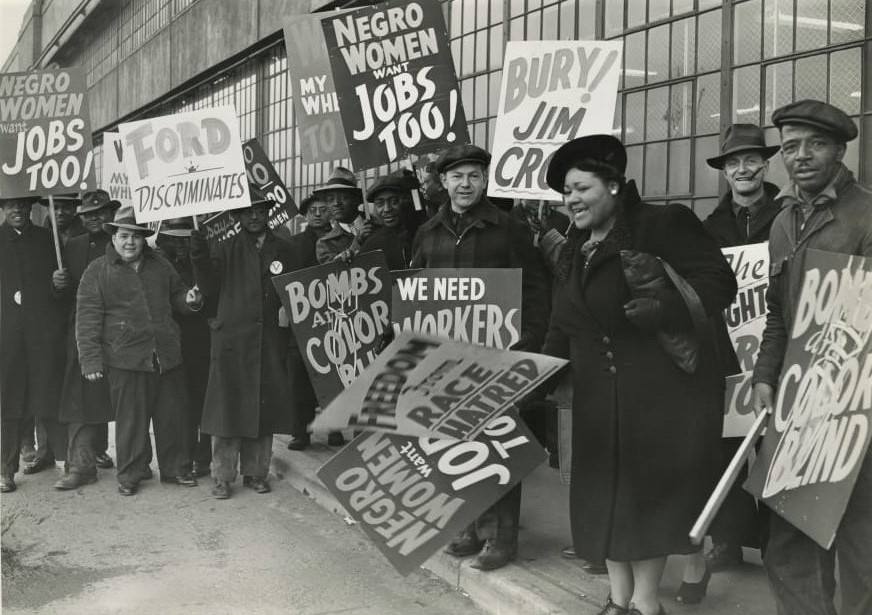
The vote was victorious, winning over 70% of the vote, though with only a large minority of Black workers voting CIO. Ford signed a contract with the CIO on June 20, 1941. Local 600 of the UAW was born and the UAW grew exponentially over the following decade, and played a leading role in the struggle against racism and discrimination during World War Two, helping to win overwhelming Black support for the UAW-CIO by the end of the war.
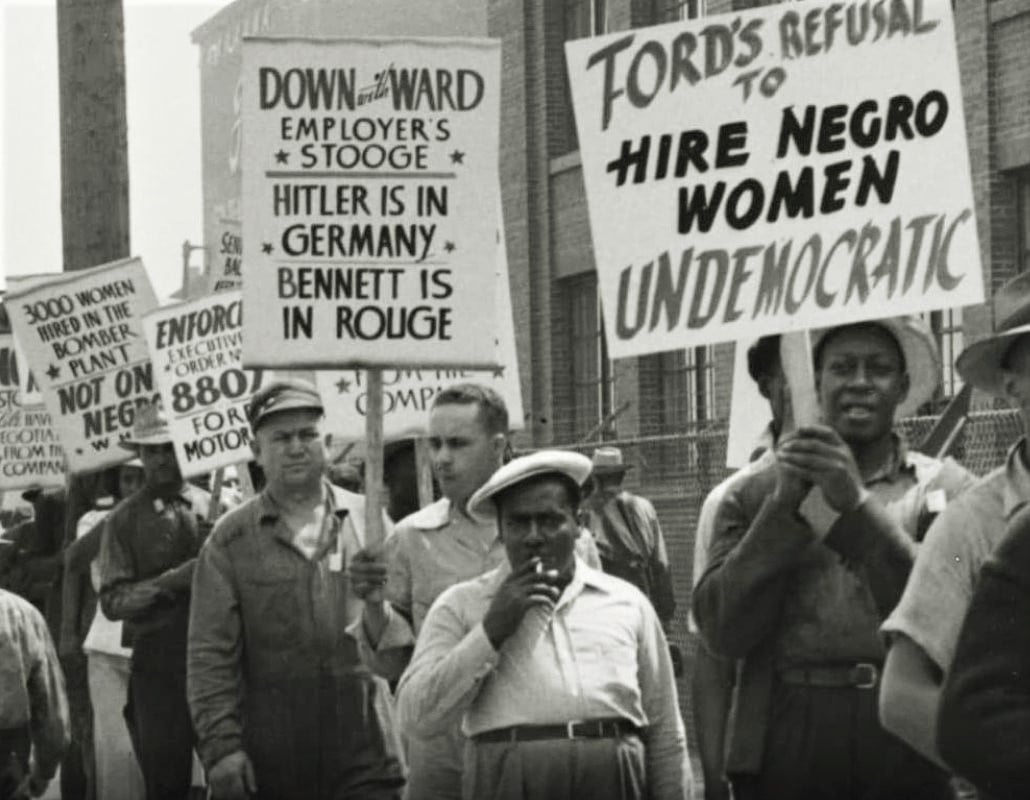
Without Black leadership and support, the victory at Ford would have been impossible. It was Black workers organizing Ford that transformed the US labor movement and helped to change the world.
The rise of the UAW-CIO brought Black people to political power for the first time in Michigan and elsewhere. This is precisely the tradition that Detroit Mayor Coleman Young came from as did Congressman John Conyers, and many others. Conversely, the UAW and labor’s decline have also seen the decline of Black political power in Michigan.
 Revolution's Newsstand