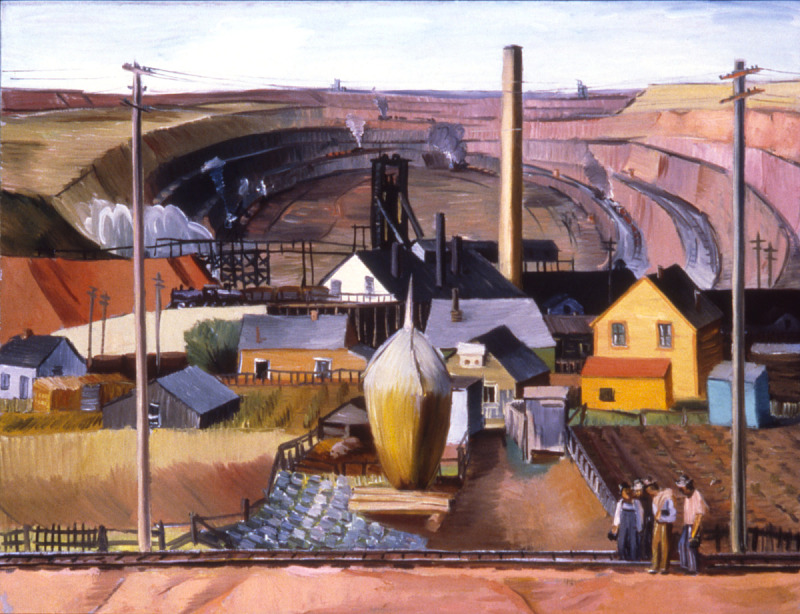
Charles Hathaway looks at the political economy of Minnesota’s Messaba Iron Range.
‘Fifty Years on the Messaba Range’ by C.A. Hathaway from Workers Monthly. Vol. 4 No. 12. October, 1925.
The presence of iron ore was first discovered in what is now known as the Lake Superior ore district (comprising the Vermillion, Messaba and Cuyuna ranges in Minnesota, the Marquette and Menominee districts in Michigan and the Gogebie range in Michigan and Wisconsin) near the present site of Negaunee, Michigan, in 1844, by a government surveying party. From that time on groups of prospectors explored the wilderness in search of ore in marketable quantities. Their efforts resulted in the discovery of rich deposits in several parts of the territory, including the high grade ore in the vicinity of Lake Vermillion, Minnesota, on July 20, 1875. These hardy pioneers in most cases were unable to exploit their discoveries because of the undeveloped state of the territory. There were no railroads or even wagon roads over which mining equipment could be brought in or iron ore shipped out. The blast furnaces were then as now located in the east and lake transportation was but slightly developed at that time.
By 1885, however, eastern capitalists had become convinced of the profitableness of investing their money in this Railroads were built from the mines to lake ports. loading docks were built from which to load the ore into lake steamers and intensive mining operations were started, with the mines financed and controlled by eastern bankers and steel-mill owners. By 1886, the whole Vermillion property, including mines, land grants, the Duluth and Iron Range Railroad and the docks at Two Harbors, had passed into the hands of the Minnesota Mining Company which became the property of the United States Steel Corporation upon its organization. Thus until recently the early pioneers were completely forgotten.
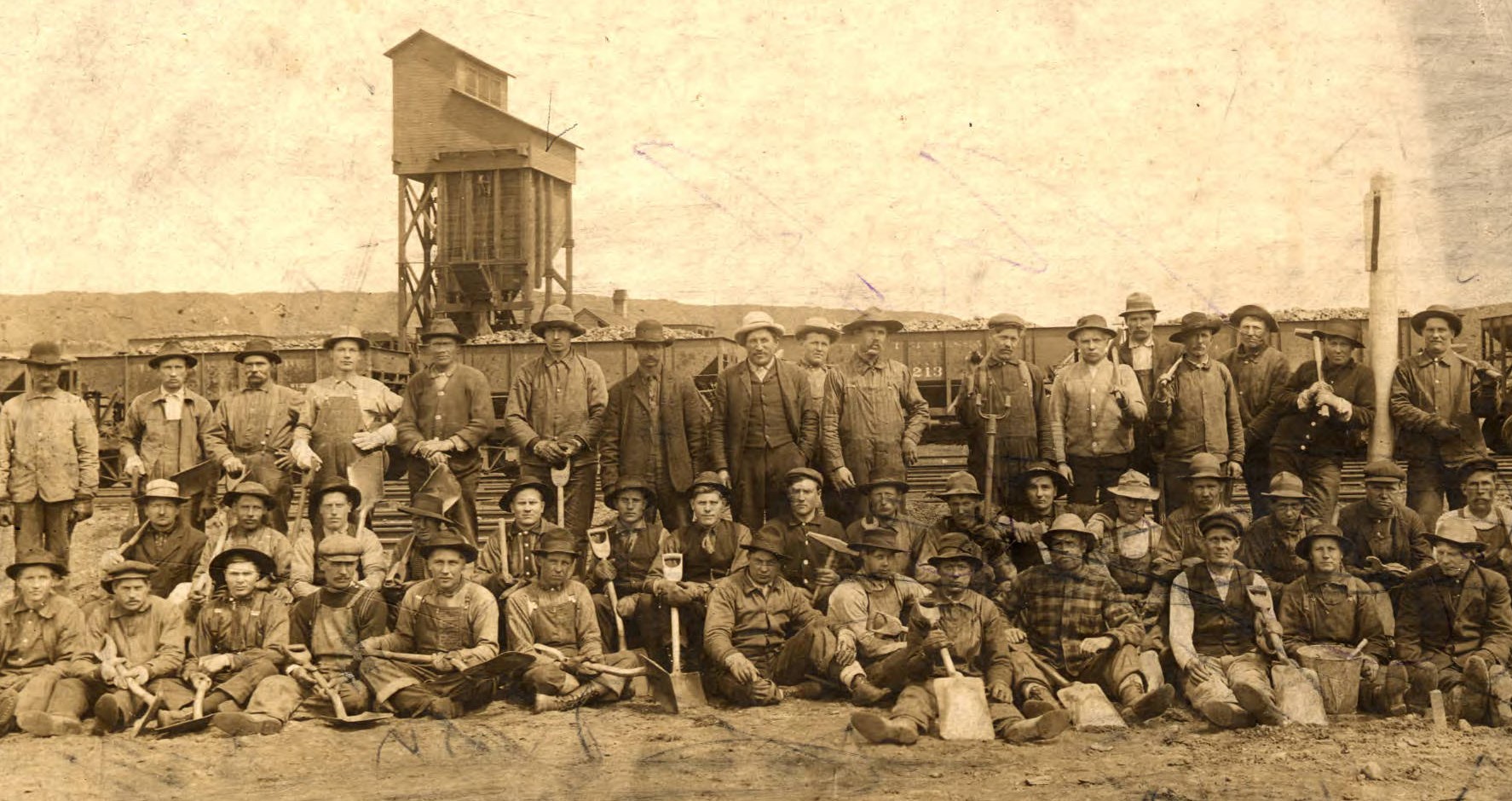
During the week of July 20, this year, an “Exposition of Progress and Iron Ore Jubilee” was held in Duluth, Minnesota, organized and promoted by the mining company officials, the bankers, and the petty bourgeoisie of the iron territory. From the petty storekeepers to the mine owners, they are all dependent on iron, and on the willingness of the mineslaves to work, for their wealth and power. They have suddenly become very appreciative of the rugged prospectors who discovered this wealth and just to prove their appreciation they are conducting a manhunt (to use their term) throughout the country for any of those pioneers who may still be alive, and just think—any who are found are going to be made guests of honor at an elaborate banquet which is to be given as a feature of the exposition. Surely from now on we will have to admit the benevolence of capitalism.
Importance of Discovery.
American capitalism is justified in celebrating an “Iron Jubilee” for by the discovery of the rich ore beds in the Lake Superior district, the United States became the world’s largest producer of the most important of all metals—iron. The average yearly production from this district is in excess of sixty million tons of ore, the average analysis of which show 52 per cent natural iron. The total iron produced in this district since mining operations started in the eighties has been in excess of one billion tons (tons as used here are of 2,240 pounds). Of this huge total, the Messaba range alone has produced over six hundred million tons although mining was not started here until 1893. The yearly production of the Messaba range at the present time runs from 35 to 45 million tons, depending on the market demand.
There are on the Messaba range 125 active producing mines and a total known ore reserve, according to the geological survey made by the Minnesota Bureau of Mines, of 1,400,000,000 tons. In addition to the production figures given above, it is estimated that nine million cubic yards of “lean” ore have been put in stockpile by the Oliver Iron Mining Company alone, simply because there was more profit in handling only the “rich” ore at the present time. The total stripping and lean ore excavated to date on the Mesabi range would cover approximately 400 city blocks with a blanket 300 feet thick, almost twice the total of the excavation for the Panama Canal.
The ownership or the operation (a few are still owned by the state and leased on a royalty basis) of most of these mines have passed into the hands of the United States Steel Corporation or its subsidiaries. The development of more intensive mining operations is each year causing independent producers to either close down their mines or consent to be swallowed by one of the big companies. Not only is the ownership of. the mines passing to the hands of the big producers, but the railroads which haul the ore to the ports, the loading docks, and the lake boats are likewise under their ownership or control. Of a total of approximately 400 boats engaged in the ore carrying trade in 1919, the Pittsburgh Steamship Company, a Steel Corporation subsidiary, owned and operated 106 boats.
According to a statement prepared by the American Society of Mining and Metallurgical Engineers in August, 1920, Lake Superior ores supply all the furnaces in western New York, western Pennsylvania, Ohio, Illinois, Indiana, Michigan, Wisconsin, and Minnesota.
Machinery Displacing Men.
Not only should capitalists be jubilant over the quantity and quality of the ore in this district but above all they should appreciate its accessibility. The major portion of all the ore on the Messaba range lends itself to “open pit” mining which requires but a comparatively small number of men; with the exception of steam shovel operators, they are classified and paid as common laborers. The average wages paid to the men in the open-pit mines is $4 per day of ten hours. In addition to the ten hours spent in the pit many of these men have to spend another two hours getting back and forth from home to work.
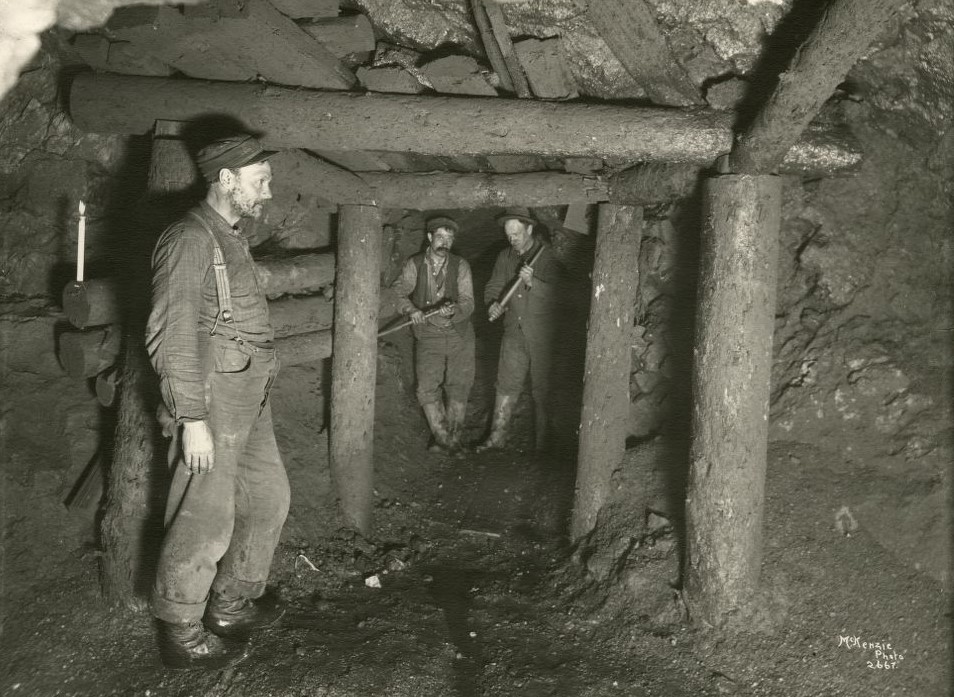
In the underground mines the men work nine hours a day at depths ranging from 250 feet on the Messaba to 2,000 feet on some of the other ranges. Including the time necessary to get down to the working face the miners figure that they put in just as much time as do the men in the openpit mines. entirely.
The underground men work on a contract basis They are paid by the ton and out of their earnings they must buy their own powder, fuses, shovels, picks, lamps, etc. The average earnings of the men are about $5.50 per day after these deductions are made. If by any chance they become too ambitious and produce enough iron to give them a higher wage the superintendent assumes that the price is too high and cuts the price per ton. Their earnings are also determined by the “richness” of the face. The price in each case is set by the company and because of lack of organization the men can either accept the price offered or quit.
Unemployment is rapidly developing into a serious problem for the range miners. This is due first to the rapid introduction of improved mining machinery and second, to the growing tendency on the part of the companies to close down the less profitable mines whenever market conditions permit, without regard for the welfare of the workers.
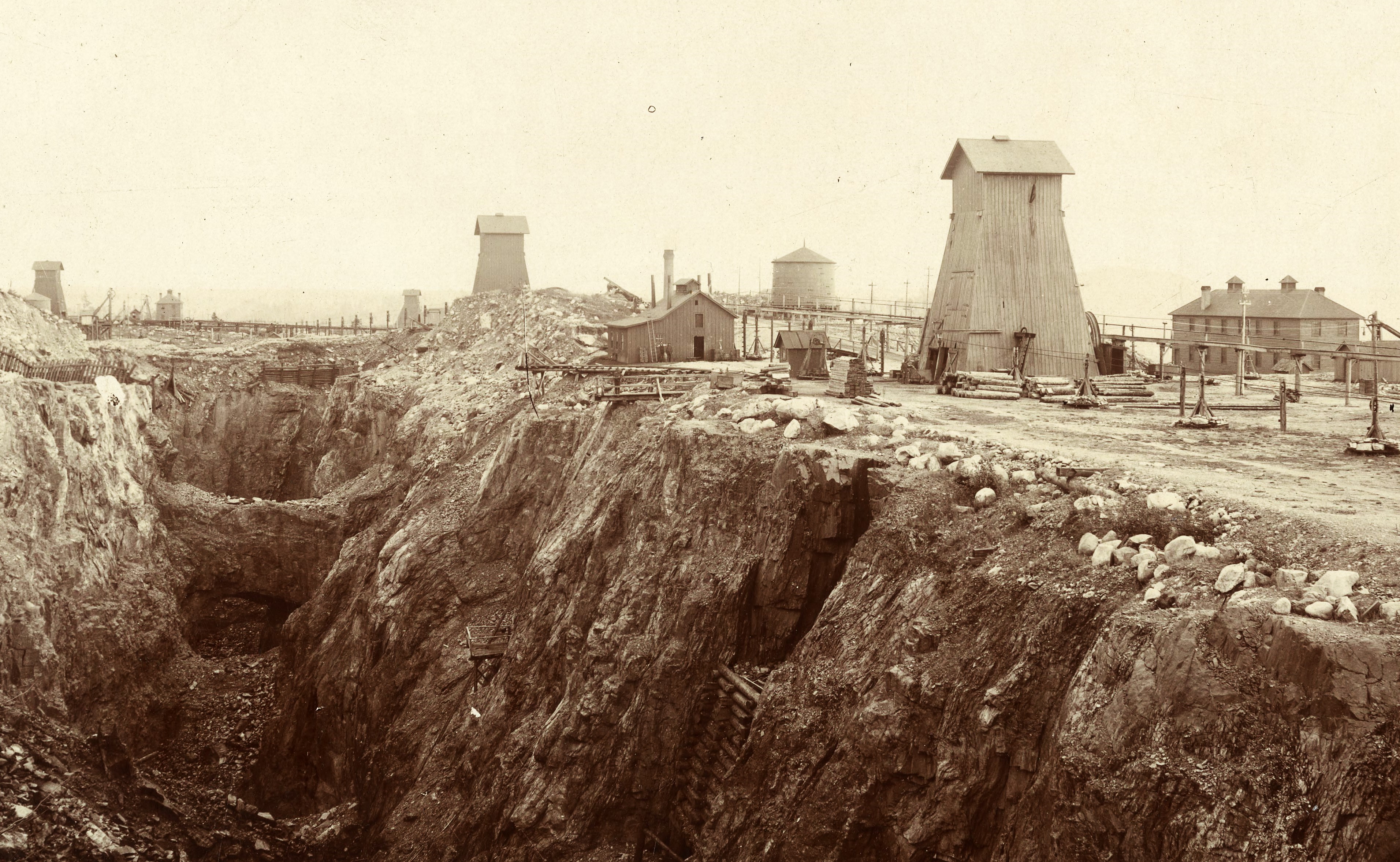
When mining operations were first started on the range the crudest methods were used. Operations were carried on with picks, shovels, hand drills and wheel barrows, the ore being hoisted in buckets by means of a horse winch and hauled to the stock pile in a horse-drawn wagon.
Today the huge open-pit mines are being operated by the most improved machinery. Giant 300-ton steam shovels capable of cutting a hole 120 feet wide and 40 feet deep and of loading the ore in the dump cars on top of the 40-foot bank have displaced the hand shovelers. One hundred-ton locomotives, pulling nine and ten steel cars, each with a capacity of 30 cubic yards of ore, have displaced the old horse-drawn wagons. The modern steam-shovel bucket has a capacity of 16 tons of ore almost every minute as compared with one ton every half-hour for the old bucket method. Mechanical devices have even been introduced to shift tracks and tamp down ties for the dinky railroads that must be built in the »pen-pit mines.
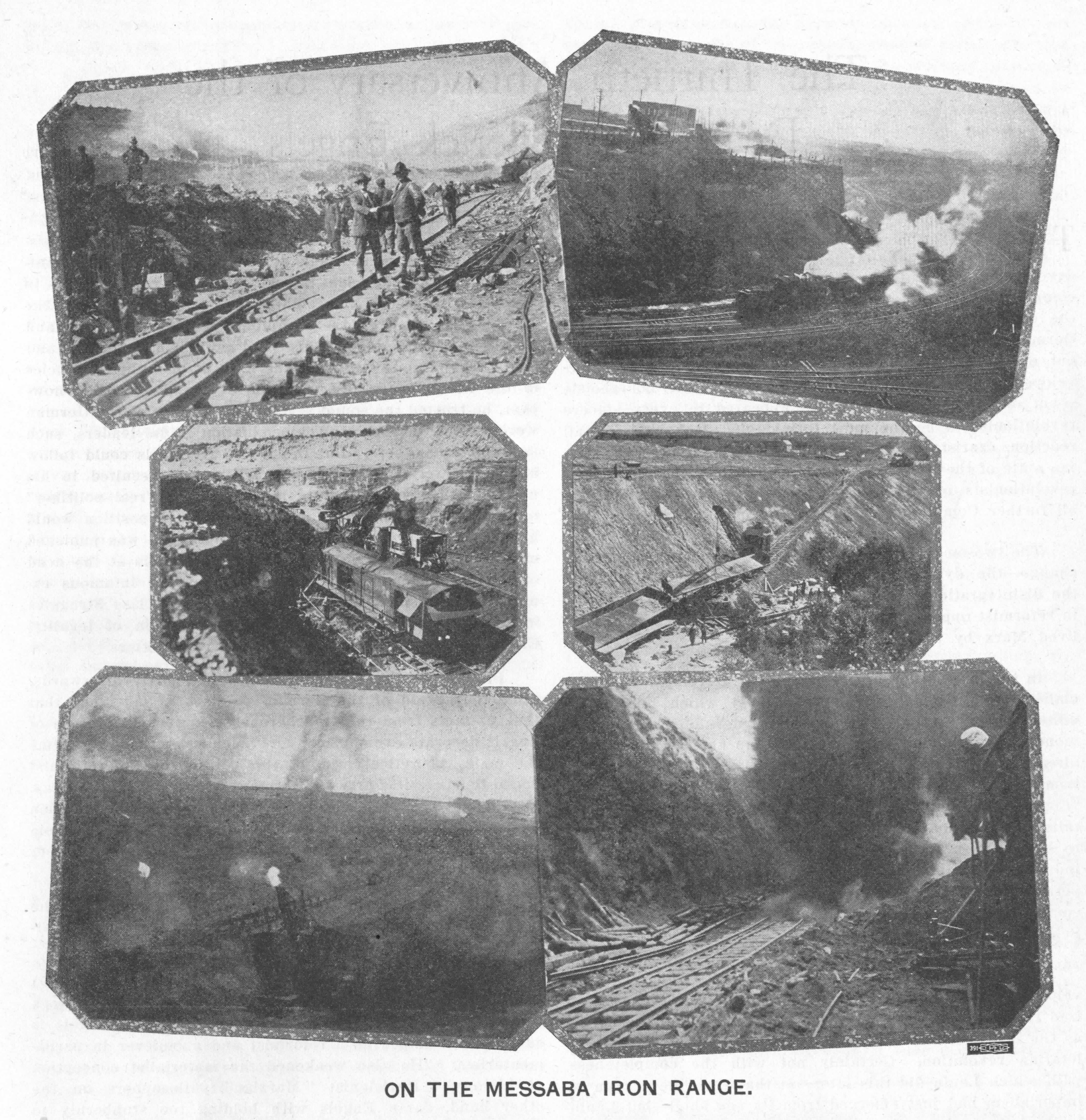
In the underground mines similar revolutionary changes have taken place, but of course, not of the spectacular nature of the changes made in the open-pits.
Iron Miners Must Organize.
As has frequently been the case in other industries, the iron miners first resented the introduction of improved machinery. When the first shovel was put to work loading stockpile ore in the Soudan Mine, it had to be guarded by company police to prevent its destruction by the scores of men who were displaced from their job of loading this ore by ind. Instead of organizing their forces for the struggle to control the machine, these men could only see benefit to themselves by bringing about the destruction of these more modern devices.
The introduction of this machinery has up until now, however, benefited only the companies. Large numbers of men have been displaced and turned into a standing unemployed army which is being used to keep down the wages, living standards, and working conditions of those who are fortunate enough to have a job.
During the war period iron ore was in great demand with the result that every mine was operating to its fullest capacity. The production records were greater during that period than they ever were before or after the world slaughter. This also tended to draw more workers into the Messaba district, many of whom established homes there and are now compelled to satisfy themselves with intermittent employment. Many of the large industrial establishments such as the International Harvester Company own their own mines and in such cases the mine is only operated long enough each year to supply the needs of the owning company. This increases the intermittency of employment and reduces the yearly average wage far below that necessary to insure a decent standard of living.
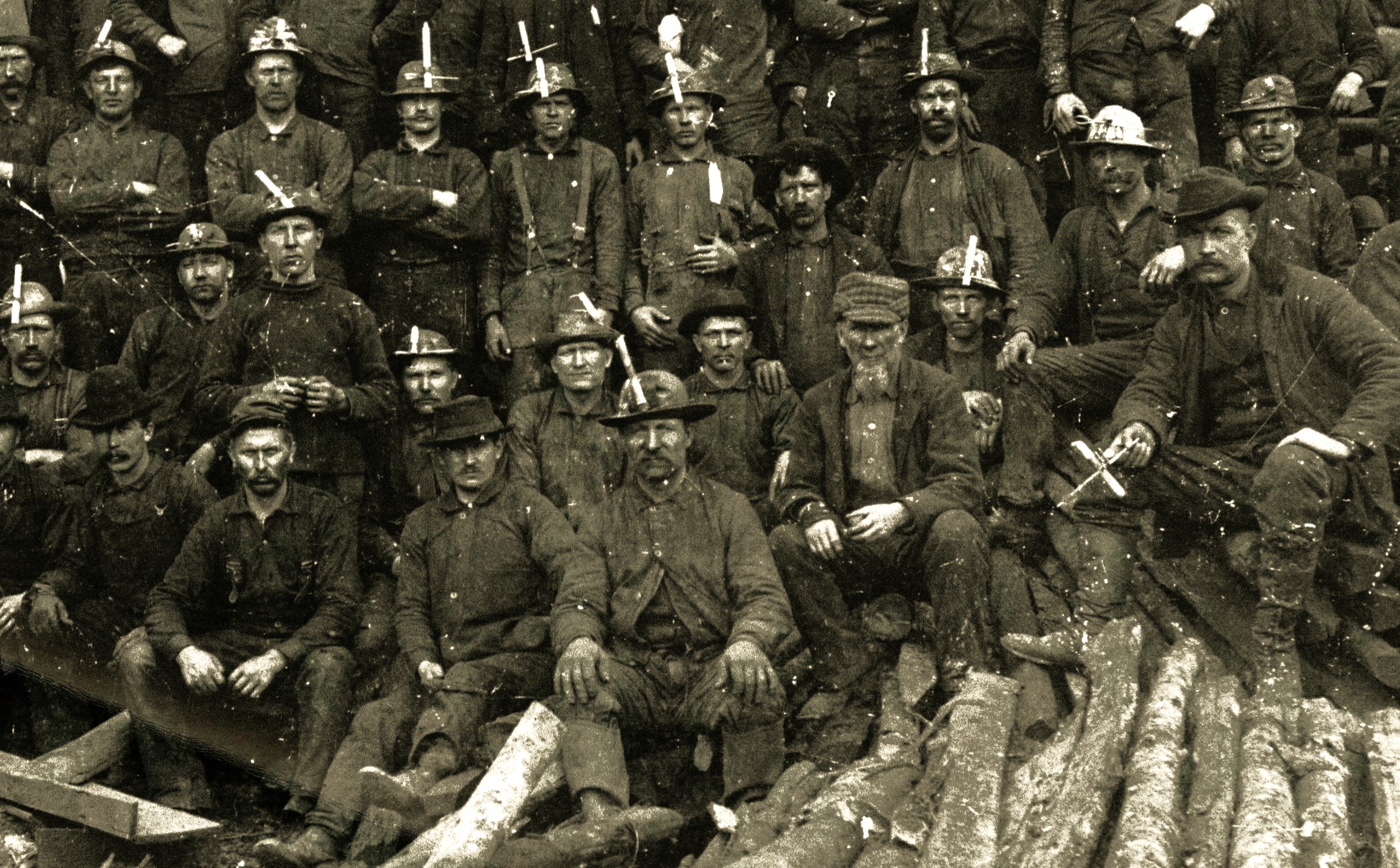
The mines are operated almost entirely by foreign-born workers, Slavic, Finnish and Italian workers predominating. The steel companies use every method within their power to prevent these workers from getting together, religious and racial differences are kept alive, language clubs are started, led by company agents and finally an intensive “Americanization” campaign is conducted to teach these workers the “benefits” offered by American capitalism.
The companies are not willing to trust their interests to propaganda campaigns alone. They have a lurking fear that the iron miners may break out again as they did in the famous Messaba strike of the spring of 1916. The companies now maintain an extensive crew of private detectives, gunmen and police that watches every move made by the workers. If a mass meeting is held in one of the mining towns, the “dicks” are stationed at the hall to give those entering the “once over” and if they are recognized as mine slaves they are given their time the next morning. These men hang around the pool halls and all the other places where the men congregate and “stool” for the mine companies. The Steel Trust police are probably unsurpassed by any industrial police force in America.
All of the abuses to which the miners are compelled to submit can be overcome only by working-class organization and the miners on the iron range are beginning to realize that fact. Although no definite revolts have taken place ani no organizations have come into existence, conversation with the mine workers will convince the most skeptical that the time is not far distant before the Messaba will again be heard from.
The thing that is most needed on the range is, first, an organization with a fighting program and a leadership that will inspire the confidence of these workers. The leaders of the State Federation of Labor, Hall and Lawson, aided by A. F. of L. organizers have failed to get a hearing for their “milk and water” brand of unionism. The three or four branches of the I.W.W. that exist on the range as a leftover from the big strike days, have not participated in the struggle of the miners. At no time have they issued a program that would appeal to the workers in the mines nor have they done anything to try to bring them into their organization. Up until a few months ago, while their union was steadily declining in both membership and influence, their leaders seemed to be under the impression that they were ordained by “God” to save the miners from Communism and from the influence of Moscow.

On May 1st this was overcome to some extent when the Communists went directly to the rank and file with a plea for a united-front demonstration. The rank and file responded and a mass meeting was held in Hibbing, Minn., on May 1st, a work day, attended by over five hundred workers who stayed away from the mines to celebrate labor’s international holiday. It is to be hoped that the above is the foreshadowing of a future unity between the two organizations that will lead to the unionization of the thousands of iron miners in Minnesota, Wisconsin and Michigan into a militant, fighting unit that will play its part in the struggle against the Steel Trust and finally in the struggle to build a Communist society.
Today the capitalists on the iron range have all the cause in the world to celebrate an “Iron Ore Jubilee,” but with the creation of a militant organization under revolutionary Communist leadership the next jubilee held on the iron range will be one for the workers to celebrate their victory over capitalism. And now, as the bosses celebrate, is the time for workers to take the first step in preparation for their jubilee by organizing their own forces for the immediate struggle for a decent standard of living for the iron miners.
The Workers Monthly began publishing in 1924 as a merger of the ‘Liberator’, the Trade Union Educational League magazine ‘Labor Herald’, and Friends of Soviet Russia’s monthly ‘Soviet Russia Pictorial’ as an explicitly Party publication. In 1927 Workers Monthly ceased and the Communist Party began publishing The Communist as its theoretical magazine. Editors included Earl Browder and Max Bedacht as the magazine continued the Liberator’s use of graphics and art.
PDF of full issue: https://www.marxists.org/history/usa/culture/pubs/wm/1925/v4n12-oct-1925.pdf
 Revolution's Newsstand