‘Imperialism and the American Working Class’ by Jay Lovestone from Workers Monthly. Vol. 5 No. 5. March, 1926.
What are the influences of imperialism upon the American working class? What has the development of imperialism brought to the American workers? What has it meant for them? The Aristocracy of Labor.
The influence of imperialism on the American proletariat is twofold. One section of the working class, consisting of several millions of workers—the labor aristocracy—imperialism bribes, debauches and corrupts. With what results? We find that this upper stratum, this aristocracy of labor, these highly skilled and privileged workers, become, in effect, part and parcel of the bourgeoisie, standing in antagonism to the rest of the workers—to the great masses of the unskilled proletariat. Mr. Green is in effect a member without portfolio in the Coolidge cabinet.
The Masses of the Proletariat.
On the other hand, the great mass of the working class imperialism oppresses, exploits, and never ceases to force down in their standards of living. To these workers at the bottom imperialism is an ever present threat. These masses of workers fight bitterly for the least economic improvement. But they fight more often and even more intensely for the most elementary social rights and freedom—freedom of speech, the right to organize and the like. It is among the skilled workers who have already won these rights in many instances that we find increase in wages to be the principal cause of strikes and industrial struggles. The great mass of workers in the imperialist stage of capitalism tends more and more to go to battle with the exploiters for the elementary social rights, for even the most basic and elemental prerequisites to their self-development as a class.
The Role of the State.
It is here that the role of the bourgeois state stands out with especial significance. What is the objective of the state? Primarily to ensure capitalist control of national production; to enforce discipline on the workers. The state is continually extending its influence and power in order to perpetuate the hegemony of the capitalist class. That is why in struggles where great masses of workers are engaged in defence of their elementary social rights the state interferes so ruthlessly and with such despatch. The intervention of the state in the struggles of the workers against the employers reaches its most consummate and brutal form in these battles of the great masses of the unskilled.
Imperialism and the Standard of Living.
It is also entirely wrong to make the sweeping statement that imperialism has been undermining the standard of living and is responsible for the reduction of the wages of all the workers of the United States. We must not fail to see two tendencies in the consequences imperialism has for the American working class. On the one hand, as we have seen, imperialism corrupts and buys out a section of the working class—the labor aristocracy; on the other hand, imperialism degrades, oppresses and exploits the decisive majority of the proletariat, the great mass of the unskilled workers. These two basic economic forces, or rather basic economic effects, reflect themselves in tremendous political consequences. The political consequences may be slow in maturing but their trend is unmistakable.
The Wages of the American Working Class.
If we examine the situation we find that it is entirely too sweeping a contention to maintain that the wages of the whole American working class have been going down. The absolute wages of a certain section of the working class have been increasing. The absolute wages of the highly skilled workers have gone up with the development of American imperialism. There is considerable truth in the jokes about the spread of the radio, the phonograph, the telephone, the automobile, among a certain section of the workers. The radio and the telephone, the phonograph and the automobile translate themselves into very significant political effects; or rather they have very great political significance tho we may not see it very clearly in all instances. Of course the relative share of the working class in the United States —that is, of nearly every section of the working class—has decreased insofar as wage increases proportionally have not kept up with the increases of production. In other words, the increase in wages has not at all kept pace with the increase of production as a result of the constantly increasing production efficiency of the American worker and industry.
Imperialism and the Corruption of Leading Stratum of the Proletariat.
But perhaps the greatest blow that imperialism deals to the working class is the removal from its ranks of some of its best material that usually serves as a source of leadership for it in its struggles. The workers who are best qualified to be leaders of the proletariat, the workers who are the best organized, who are the best educated, who are the best disciplined only too often come from the upper stratum of the working class. Because these elements are so corrupted by the imperialist super-profits of the bourgeoisie, we find ourselves losing our hold on this source of proletarian leadership. Such was the situation in England for a long time. In the United States this condition still exists to a large extent. And we know how serious it is.
Imperialism and the Trade Union Burocracy.
On the other hand, as the other side of the medal, the rapidly developing American imperialism has produced a strong trade union burocracy that has developed as quickly to become an organic part of the apparatus of the imperialists in maintaining their hold over the workers. As imperialism develops, the trade union burocracy also develops and assumes new functions. New stages of development give rise to new demands and the trade union burocracy and the upper strata of the labor aristocracy have to meet these new demands. The root of these developments, the reasons for the appearance of new demands and the assumption of new functions by the trade union burocracy are to be found in the pressure that is being brought to bear upon the burocracy by the rank and file of the working class, primarily the great mass of the unskilled, the proletariat in the basic industries.
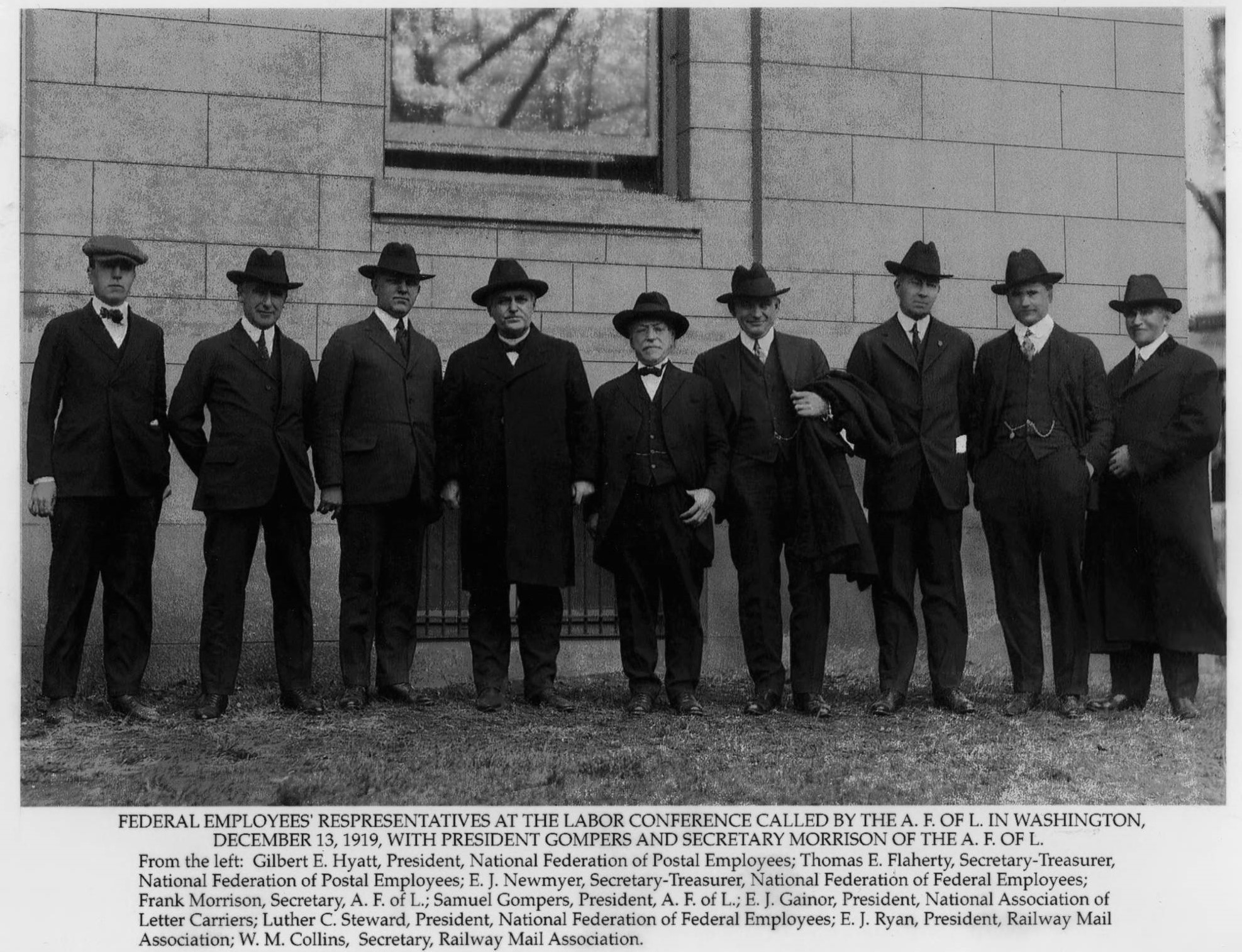
Naturally new needs give rise to new functions and new functions require new agencies. Gompers’ methods and general line are being continued today with, of course, the variations due to the gradually developing new situation. The role of Green & Co. is no different from the last phases of the role of Gompers & Co.— agents of American imperialism. Under ever new forms the trade union burocracy is playing its unchanging part as an integral part of the imperialist apparatus.
Take, for example, the fact that certain renegades from the Socialist Party are coming over to the trade union burocracy and are being hired by the officialdom. This is a new fact since pre-war days, since 1914. We remember how Mr. Gompers proved ready, as soon as war was declared, to hire these socialist renegades and assign to them the increasing duties which his group, which the trade union burocracy, had to fulfill for the bourgeoisie. Do we not recall how Chester Wright and William English Walling and Stokes and other renegades of this type were employed by Mr. Gompers after they broke with the Socialist Party which had adopted the St. Louis resolution against the war? Mr. Green now continues this policy of Mr. Gompers. Mr. Green continues this general orientation adopted by Gompers immediately after the war broke out under pressure of the special task his burocracy was compelled to fulfill under the strenuous war conditions.

It was the same tendency—the same necessity for responding to new needs and new tasks in defense of imperialism—that caused the A. F. of L. burocracy to endorse the Workers Education Buro as far back as 1919. Of course, this is a new trend in the American labor movement and in the tactics of the burocracy. It reflects the effects of the world war upon the American working class. But this trend was initiated by Gompers and Mr. Green is now only following in his footsteps.
The “Two and a Half International Tendency” Among the Burocracy.
It is therefore a mistake to see in these attempts of Green & Co. to adapt themselves to the pressure of the masses and to the new tasks imposed upon them by the bourgeoisie, by the intensified development of American imperialism anything tending towards a 2 1/2 International tendency. For what is the 2 1/2 International tendency? Ideologically, the 2 1/2 International tendency in America would be that of a group of workers, or, if you please, in this case, trade union burocrats, for whom the Socialist Party is not sufficiently militant, not sufficiently progressive, not sufficiently revolutionary—while the Communists are taboo because they are too radical, too militant, too revolutionary. It is evident that the trade union burocracy in this country is not developing in this direction. The movement of the trade union burocracy in America is towards the right. The movement towards class collaboration certainly does not have in it a “2 1/2 International tendency.” Nor is the employment of socialist renegades a “2 ½ International tendency.” The 2 1/2 International tendency in this country is a real fact and an ever-present danger—but at this time it must be sought for elsewhere than in the trade union burocracy.
There is considerable danger in the 2 1/2 International tendency for the American workers. But this danger does not grow out of the fact that Green is utilizing a greater number of liberals with a Socialist tinge. The fact of the matter is that today the whole Socialist Party is practically, in so far as its roll in the class struggle goes, in the place where Spargo and Walling and the other renegades were in 1917. The whole Socialist Party has moved to the extreme right. Green & Co. have not moved to the left. We should analyze specifically the manifestations of American 2 ½ Internationalism in order to combat its dangers. Any other method will prevent us from meeting the realities and overcoming the difficulties confronting us.
What is mistaken as encouraging forces for “2 1/2 Internationalism” are really the attempts of the burocracy to give an answer to the movement of large masses of the rank and file towards the left. It is simply new methods of warfare, new methods of maintaining reaction in the saddle, and not progress; above all not even the first signs of militancy among the labor burocracy.
Take the slogan of “unity” that is now and has been very recently raised by a whole number of burocrats, for example, as raised by Green at the last convention of the International Ladies’ Garment Workers’ Union. What does this slogan mean? The slogan of unity when it is thus raised by the burocracy is not a concession of these burocrats to the need for a united labor front against capitalism. Nothing of the kind! It is the slogan of unity against the Communists and against those who demand militancy and are for the class struggle. It is a slogan to drive all progressive and left elements out of the trade unions. Is this anything new? Is this “2 1/2 Internationalism”? It is simply a new form, an intensification of the campaign waged by the agents of the imperialists in the labor movement against the ever-growing militant proletariat in the trade union organizations. Mr. Green is as much and no less the servant of imperialism than Mr. Gompers was. The difference is—Mr. Green is serving American imperialism in 1926. Mr. Gompers’ period of service dated several years before 1926—particularly since 1917.
Imperialism and the Revolutionization of the American Proletariat.

The development of imperialism of course throws the workers into new struggles. But we should not speak abstractly of workers preparing for new struggles. It is useless to speak of a new wave of resistance unless we find the economic basis of our conclusions. What are the causes likely to lead to the development of discontent amongst the masses? In our opinion, one of the most important of these factors is the development of a challenge to American imperialism on the part of other imperialist powers, particularly European imperialist powers, as a result of the tendency towards the unification of European capitalism against America’s policy of aggressive exploitation of Europe.
Under the leadership of Great Britain we find European capitalist powers beginning to unite to resist the menace of the financial hegemony of American capitalism in such countries as Germany, Poland, and Czecho-Slovakia. This means a sharpening of the conflict between Great Britain and the United States. This means a growing challenge to American imperialism—a challenge that must, sooner or later, translate itself into an open clash. American imperialism has not yet been undermined by this challenge. It has not yet been even weakened. But—all signs point to a revival of intense competition. This means that we are facing a condition in which the American bourgeoisie will not be able to give many privileges to the upper stratum of the working class as they have given and as they are still giving in this period while their domination is undisputed. But the moment American imperialism is seriously challenged, the moment the beginning is made in effectively undermining its present role of domination of the world economic situation, that moment will mark the beginning of the revolutionization of the working class in this country.
So it was in England. Of course we need not in this country spend so much time, go thru such a long period as England did before it arrived at the present stage of development of the working class. In the present stage of capitalism events move much faster. Today we are still in many respects in the state which the English working class has already gone thru and when American capitalism becomes as shaken up as British imperialism is today, then we will see an even sharper development towards political consciousness in the ranks of the American workers than we see among the British workers today. That moment will mark the beginning of the sharp radicalization of the American working masses. That moment will mark rapid strides in the development of the Workers (Communist) Party as a mass Communist Party—as the leader of the American proletariat.
The Workers Monthly began publishing in 1924 as a merger of the ‘Liberator’, the Trade Union Educational League magazine ‘Labor Herald’, and Friends of Soviet Russia’s monthly ‘Soviet Russia Pictorial’ as an explicitly Party publication. In 1927 Workers Monthly ceased and the Communist Party began publishing The Communist as its theoretical magazine. Editors included Earl Browder and Max Bedacht as the magazine continued the Liberator’s use of graphics and art.
PDF of full issue: https://www.marxists.org/history/usa/culture/pubs/wm/1926/v5n05-mar-1926-1B-WM.pdf
 Revolution's Newsstand