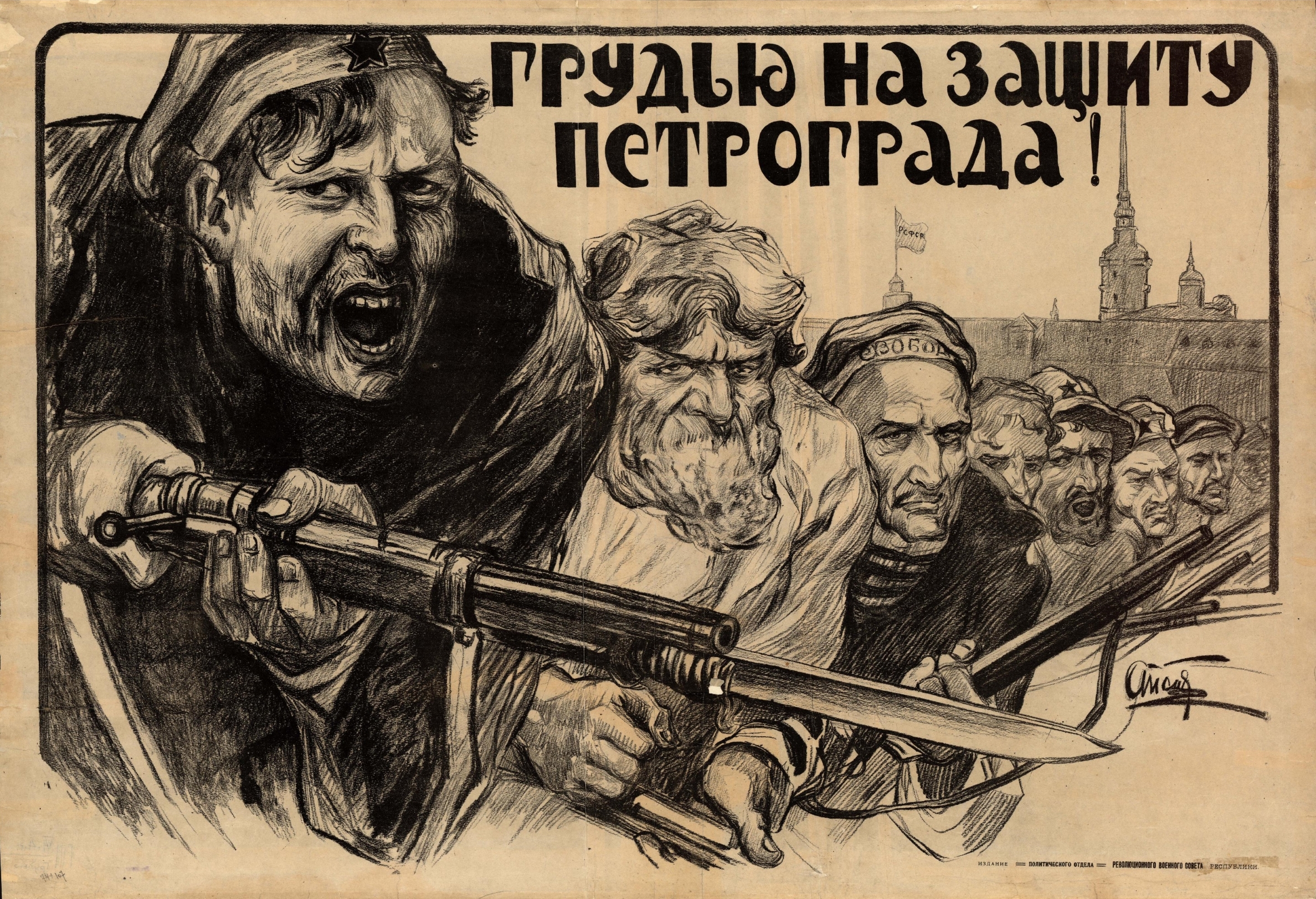
‘The Year Two: A Calendar of the Russian Revolution’ from International Press Correspondence. Vol. 2 No. 96. November 7, 1922.
As part of celebrations for the fifth anniversary of the October Revolution the official voice of the Communist International printed this invaluable day-by-day account of the Revolution’s progress through those years. Here is Year Two, which saw the formation of the Red Army, the start of the Civil War, the S.R. risings, the German and Hungarian Revolutions, and much more. Year One here.
JANUARY 1918.
The Red Army is formed.
1. Decree forbidding the purchase and sale of land in the cities.
3. Decree on the formation of Revolutionary Tribunals.
5. Decree on the simplification of orthography.
6. Reform of local administration: settling of the rights and duties of the local Soviets.
8. Arrival of the Russian Peace Delegation at Brest-Litovsk.
9. The Rada proclaims the Ukraine an independent republic.
10. The Don proclaims the Soviet Republic.
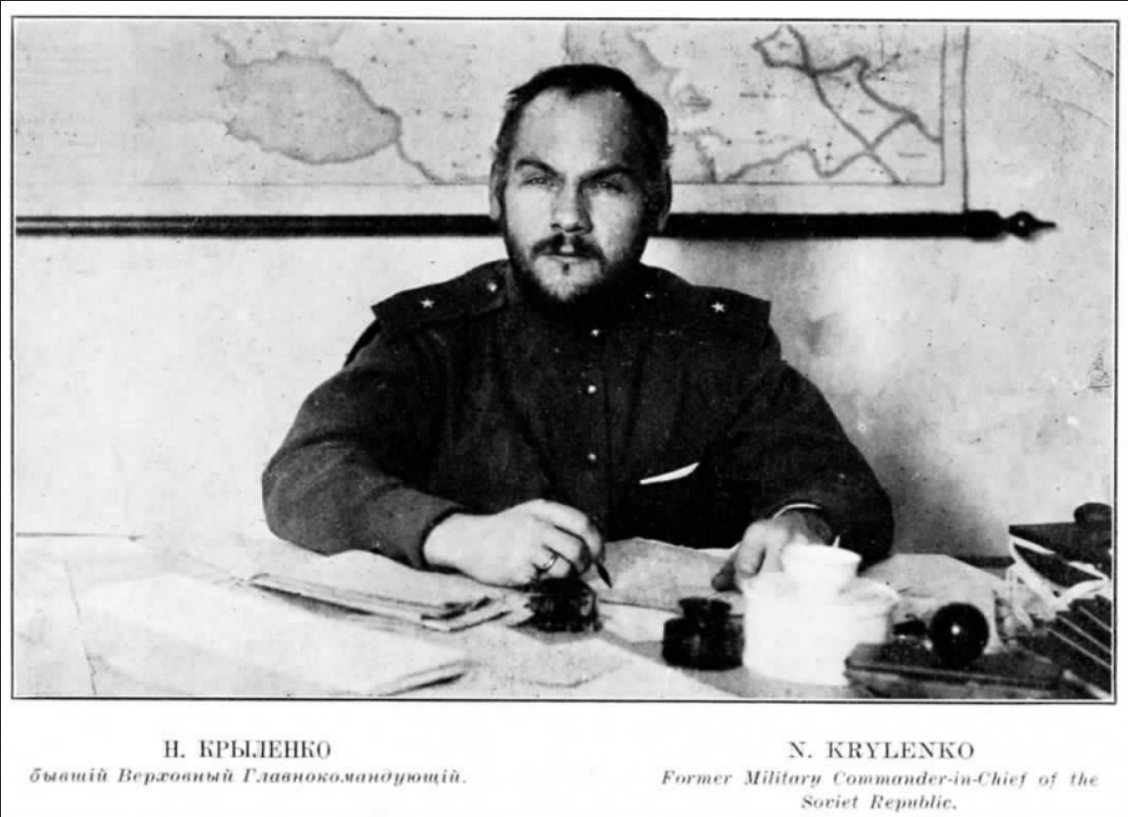
11. Appeal of the Commander-in-Chief of the Armies, Krylenko, for the formation of a Red Army.
17. Decree creating the State Library.
18. Opening and dissolving of the Constituent Assembly, in which the Right S.R.’s have the majority.
28. Decree creating the Red Army to be formed of volunteers. Proletarian Revolution in Finland.
FEBRUARY 1918.
5. Decree on the separation of Church from State, of School from Church.
8. Decree on the introduction of the European calendar in Russia.
Decree on the confiscation of private banks. Decree on the nationalization of the merchant marine.
10. Repudiation of Russia’s foreign debts. The Russian Delegation at Brest-Litovsk refuses to sign the imperialist demands of the Central Powers, does not sign the peace but declares the discontinuance of the war, and announces the demobilization of the Russian forces.
11. Repression of the counter-revolutionary conspiracy of the Esthonian rural nobility.
14. Resolution of the All-Russian Central Executive Council of Soviets on the organization of the Red Navy.
18. Germany declares the armistice at an end and begins an offensive against Russia.
19. Decree on the socialization of land.
23. All educational institutions are placed under the direction of the Commissariat for Public Education, by decree. The Council of People’s Commissars decides to sign the plunder peace of Brest-Litovsk.

MARCH 1918.
Germany imposes upon Russia the imperialist peace of Brest-Litovsk.
3. The Russian Delegation signs the treaty of Brest-Litovsk without further discussion.
7. Decree on the tribunals.
8. The Seventh National Congress of the Bolshevik Party adopts the name “Communist Party”, and modifies the program of the Party, adapting it to the necessities of the transition period from Capitalism to Communism.
10. formation of the Council of People’s Commissars of the Northern Provinces.
11. The capital of the Soviet Government is transferred to Moscow, Petrograd being menaced by the Germans.
14. Opening of the Fourth All-Russian Congress which is to ratify the Treaty of Brest-Litovsk.
17. Second Pan-Ukrainian Congress of Soviets.
20. A Revolutionary Tribunal, formed to decide matters of urgency, begins to sit at Moscow.
24. foundation of the Tartar-Bashkir autonomous Republic. The troops of Kornilov are annihilated at Kuban.
30. Congress of ·the Kuban Soviets.
31. Second Workers’ Cooperative Congress.

APRIL 1918.
Allied Intervention.
1. A Commission is charged to draw up the Soviet Constitution.
3. German troops land in Finland to suppress the Proletarian Revolution.
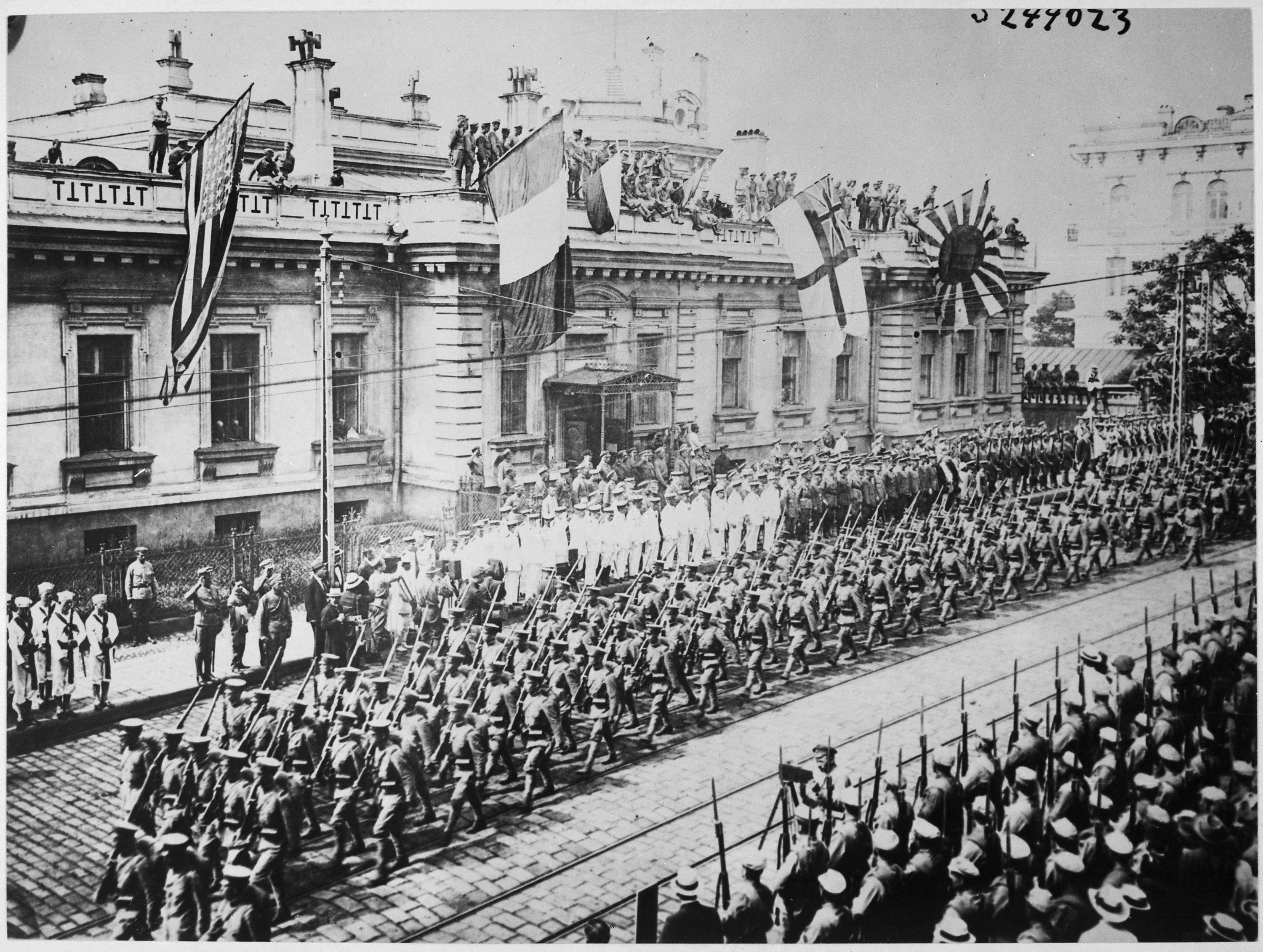
5. The Anglo-Japanese descent on Vladivostok.
6. Joffe is named ambassador to Berlin.
7. The All-Russian Executive of Soviets invites Siberia to form a Red Army, to defend herself against reaction and against Japanese intervention.
9. The Germans enter Kharkov.
10. Decree on the right of asylum of political and religious refugees in Russia.
12. First news of an English landing at Murmansk.
13. Decree instituting the Consumers’ Communes (immense cooperatives assuring the provisioning of entire cities).
18, General Kornilov is killed near Ekaterinodar.
21. First Women Workers’ Conference in Moscow:
22. Decree monopolizing foreign commerce.
23. Arrival of the German Ambassador, Count Mirbach, in Russia.
26. Decree on the obligatory military training of all citizens from 16 to 40 years. Decree on obligatory military service for a period of six months.
28. Third All-Russian Congress of P.T.T. Workers.
MAY 1918.
The Grain Requisition.
1. Decree abolishing inheritance.
2. Nationalization of the sugar industry.
11. All-Russian Congress of International Social Democrats.
12. Decree on the fight against corruption.
14. Decree of the All-Russian Soviet Executive on the requisition of surplus wheat, on the wheat monopoly, on the pitiless fight against speculation, on legally fixed prices. Decree forming the Committee of State Enterprises under the Supreme Economic Council. The Petrograd Soviet consents to the formation of a coalition government.
18. Decree instituting the inspection of labor.
23. Second Congress of Labor Commissars.
25. Decree giving citizens the right to change their names.
26. First All-Russian Congress of Economic Council.
30. Discovery of the relations existing between secret counter-revolutionary societies of Moscow (directed chiefly by the S.R.’s.) and the White insurrections m Saratov, Siberia, and the Don. The All-Russian Soviet Executive orders the Commissariat of War to mobilize within 8 days several classes at Petrograd, Moscow, in the Don, and Kuban.
31. The Education Commission establishes compulsory education (mixed schools for boys and girls).

JUNE 1918.
Conspiracy, Assassination, Intervention.
1. Discovery of the conspiracy of the Union for the Fatherland and Liberty (Moscow). Arrests. Recognition of Georgian independence.
2. The Congress of the Kuban Soviets approves the policy of the Moscow Government.
5. Death of G.V, Plechanov.
6. The Baku Soviet and the Congress of Mussulman Peasants votes for union with Revolutionary Russia. Decree nationalizing the Tretiakov Museum of Moscow.
11. The Council of People’s Commissars decides to mobilize five classes in the provinces threatened by counter-revolution, to crush the counter-revolution and to open the great Siberian routes. (Czecho-Slovakian insurrection and S.R. Government of the Volga.)
12. Decree on the organization of peasant relief.
13. Repression of the Finnish Revolution continues. It is learned that nearly 80,0000 workers have been arrested.
14. Exclusion of the Mensheviks and of the Right S.R.’s., accomplices to the counter-revolution, from the All-Russian Executive of Soviets.
16. Suppression of the local Council of People’s Commissars of Moscow.
18. Creation of the Socialist Academy of Social Sciences.
20. Assassination of the Commissar for Agitation and Propaganda in Petrograd, Volodarsky, by a member of the Soc. Rev. Party.
23. Proclamation of the Azerbeidjan Republic.
28. Protest of the Soviet Government against the English landing at Murmansk.
30. Decree on the nationalization of the large industries and of wholesale commerce.

JULY 1918.
The Coup d’état of the Left S.R..’s.
2. Conference of the new Social Democratic Revolutionary Party of the Left (Internationalist).
4. Opening of the 5th All-Russian Congress of Soviets.
6. By order of the Central Committee of the S.R. Party of the Left and in the hope of provoking war between Russia and Germany, Count Mirbach is killed. Insurrection of the Left S.R.’s (Spiridonova, Kambov, Alexandrovitch), who attempt to seize power, and to govern alone. The insurrection is suppressed the next day.
10. The Fifth Soviet Congress adopts the Soviet Constitution. The Left S.R. Party splits. Many militants of this party join the Communist Party.
12. Muraviev, commander of the Red Troops of the Eastern front (Volga-Ural) attempts to pass over to the enemy, and failing, kills himself. Vatseitis replaces him. Decree on the creation of the Socialist Academy.
13. Fifty officers who refused to fight against the Soviets at Omsk are shot.
16. Nicolas II is shot by order of the Provincial Soviet of the Ural.
19. Decree on the nationalization of the property of the Imperial family and of the Court.
20. Railroad strike in the Ukraine (then occupied by the Germans).
21. Counter-revolutionary insurrection of Yaroslav, organized by Boris Savinkov, and set in motion by Noulens, is suppressed.
22. Decree calling to arms all citizens from 18 to 45 years, hitherto not subject to military service (The Red Army having at the beginning composed exclusively of workers and peasants).

AUGUST 1918.
The S.R. Crimes.
2. A decree opens the institutions of higher learning to all citizens over sixteen years.
11. The workers’ organizations are called to take part in the grain requisitions.
17. Defeat of the Czecho-Slovaks, on the Bieloya.
23. Introduction of the system of “rationing by classes” in which the bourgeois classes are allowed a much smaller share than the working-class.
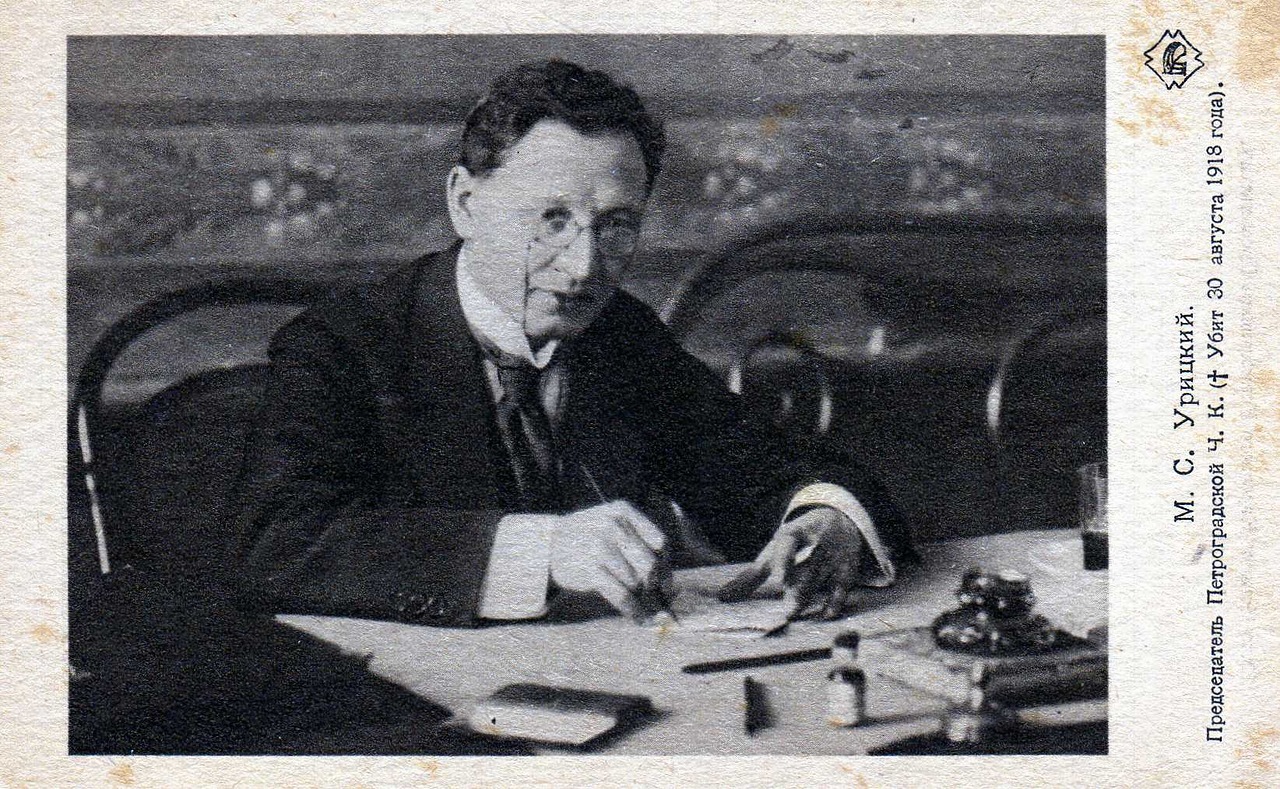
23. Fanny Kaplan, Right S.R. seriously wounds Lenin with two revolver shots. The President of the Extraordinary Commission for the Suppression of Counter-Revolution, Uritsky, is killed in Petrograd by a Popular Socialist.
29. The Soviets repudiate the treaties concluded by the Tsar with Germany and Austria.
31. Decree abolishing real-estate ownership in the cities.
SEPTEMBER 1918.
The Red Terror.
1. Commissariat of the Interior orders the arrest of hostages from the bourgeois class. The Red Terror sets in.
11. The Red Army takes Simbirsk.
20. Creation of the Order of the Red Flag, and decree on the insignia of the ranks in the Red Army.
21. Landing of Italian troops in the Extreme North of Russia.

OCTOBER 1918.
10. Decree compelling non-workers· to furnish themselves with a workman’s time book.
16. Decree on the Unified Vocational School (reform of primary education).
18. The Ataman Krasnov, ruler of the Don, is defeated by the Reds.
20. First Congress of the Russian Communist Youth.
30. Revolution in Austria.
31. Revolution in Budapest.

NOVEMBER 1918.
The German Revolution.
2. Decree on the revolutionary extraordinary tax.
6. Opening of the Sixth Congress (extraordinary) of Soviets. The Russian Workers propose immediate peace to the Allies.
9. (Abdication of William II, and German Revolution).
11. (Armistice between the Allies and the Central Powers. Formation of a Workers’ Council at Munich).
12. (Proclamation of the Soviet Republic in Bavaria, At Vienna, abdication of the Emperor Charles I.).
13. Decree annulling the treaty of Brest-Litovsk.
16. All-Russian Congress of Women Workers at Moscow.
17. Formation of the Reval Soviet (Esthonia).
18. Latvia proclaims itself an independent democratic republic.
24. (The Allies threaten Germany with invasion if the Workers Councils should take over the power there).
24. Aided by the counter-revolution (S.R.’s and Mencheviks), the English occupy Baku. The Omsk Government entrusts Admiral Koltchak with the dictatorship.
28. (Beginning of the Spartacist insurrection in Germany).

DECEMBER 1918.
11. First All-Russian Congress of all rural organizations (Committees of the Poor, Agricultural Communes, etc.).
14. Overthrow and flight of Skoropadski, placed in power in the Ukraine by the Germans.
16. A proletarian government is formed in Vileika, Latvia.
18. The Minsk Soviet decides to unite White Russia with Great Russia.
19. Second Congress of the Economic Councils in Moscow.
22. Decree on the inventory of technical resources of Russia. The Central Committee of the Russian Communist Party declares itself opposed to the reconstruction of the Second International.
27. The Soviets seize power in Riga.
31. Separation of Finland.

International Press Correspondence, widely known as”Inprecorr” was published by the Executive Committee of the Communist International (ECCI) regularly in German and English, occasionally in many other languages, beginning in 1921 and lasting in English until 1938. Inprecorr’s role was to supply translated articles to the English-speaking press of the International from the Comintern’s different sections, as well as news and statements from the ECCI. Many ‘Daily Worker’ and ‘Communist’ articles originated in Inprecorr, and it also published articles by American comrades for use in other countries. It was published at least weekly, and often thrice weekly.
PDF of full issue: https://www.marxists.org/history/international/comintern/inprecor/1922/v02n096-nov-07-1922-inprecor.pdf
 Revolution's Newsstand