
‘The Revolutionary Movement in Africa’ by George Padmore from The Negro Worker. Vol. 1 No. 6. June, 1931.
The revolutionary movement in Africa is rapidly assuming new forms of a higher political character. The anti-imperialist struggle is passing over from the agitational stage to open mass demonstrations of the workers and peasants, as well as armed clashes with the military forces of imperialism.
South Africa
The revolts which have broken out in various sections of Africa, during the past year show the wide extent to which the militancy and radicalisation of the Black toiling masses is taking place. For example, in the Union of South Africa, the struggles between the native population and the British and Boer imperialists are more acute today than ever before. Several armed clashes have occurred in the most important industrial centers of the country between the black workers and the armed forces of South African fascist dictatorship.

These struggles culminated in one of the most militant demonstrations in Durban on Dingaan’s Day (December the 16th, 1930). Despite the attempt of the police to prohibit the workers from demonstrating, thousands of natives headed by the Communist vanguard bearing a red banner defied the police and took possession of the streets. Hundreds of police re-enforced by armed bands of fascist-hooligans made a vicious assault upon the demonstrators who stood their grounds and retaliated, blow for blow.
East Africa
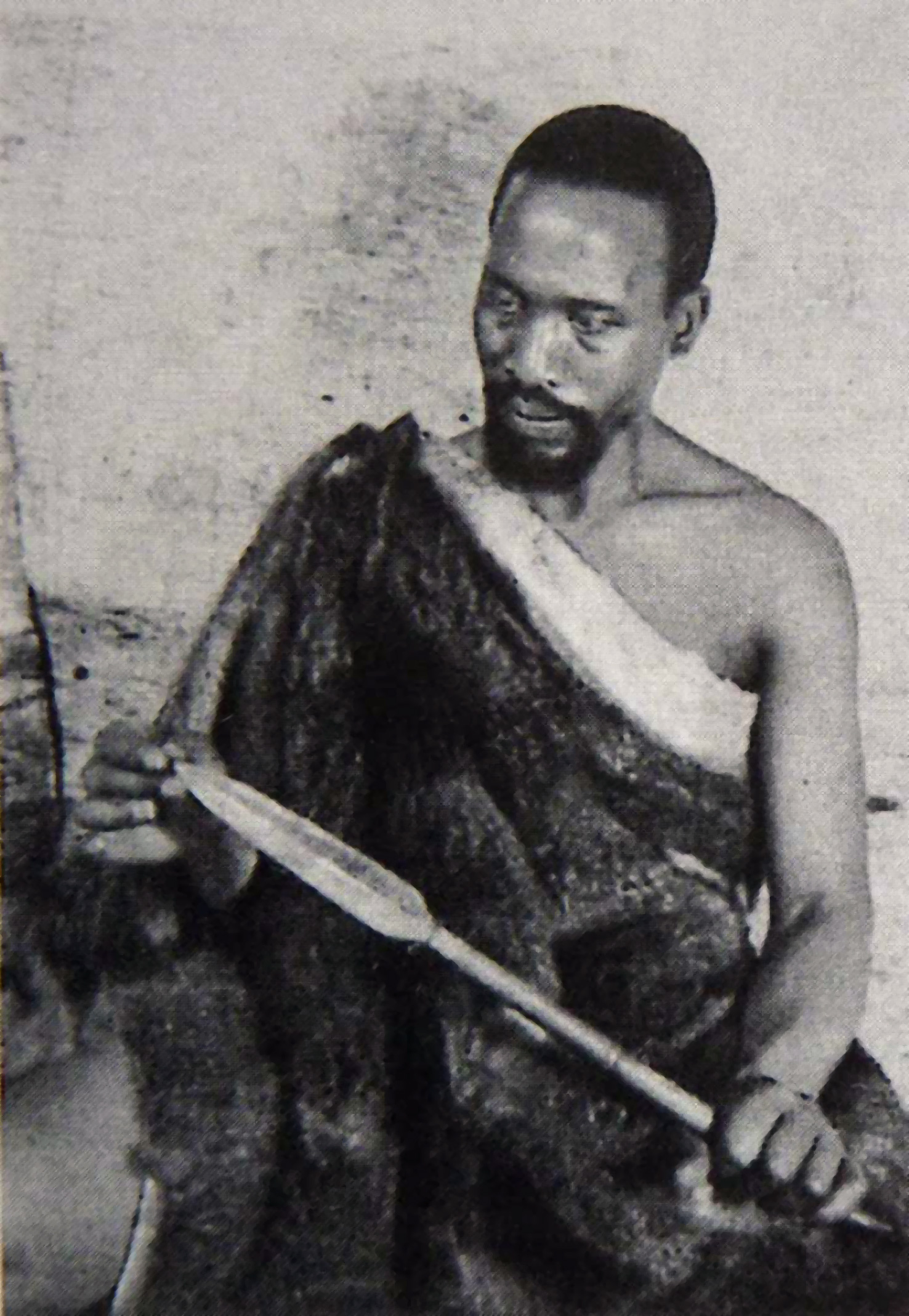
Revolutionary ferment is also assuming wider and wider proportions in East Africa. The British so-called Labour Government tries to conceal its repressive colonial policy with “left” phrases about “paramouncy of native interests”, but the conditions of the toiling masses in Kenya and the other colonies is hardly any better than slavery. The Kenya Government tries to crush all manifestations of political awakening among the natives by suppressing their organizations oi struggle, but the revolutionary movement continues to bring in increasing masses of toilers. Because of this general unrest, the British “Labour” Government through its colonial minister, Lord Passfield, has recently enacted a law which makes it a criminal offense for natives to collect funds for any purpose except religious. The object of this law is to prevent the workers, especially the agricultural labourers, who are semi-serfs on the plantations of the white landlords from developing any effective organized methods of struggle.
For instance, the Kikuyu Central Association, the only revolutionary political organization among the natives of Kenya has been declared illegal. Yet in the face of this open imperialist terror and oppression, MacDonald has the nerve to talk about “trusteeship of native interests”, in the recently published White Papers. The Africans, however, can no longer be fooled by such hypocritical gestures of the social fascist, the open defenders of British imperialism. The East African toilers are still carrying on agitation on the plantations and on the reserves, and will find new forms and methods of organizing their forces in order to drive the landlords and the official representatives and agents of British imperialism out of their country.
British West Africa
In order to find a solution of the present financial situation the British colonial governments, as well as the various commercial interests who dominate the economic life of West Africa are cutting their African staffs, while at the same time the governments are increasing taxation on the toiling population. This led to a revolt in the South Eastern province of Nigeria, in December 1929. The peasant women refused to pay the special tax which the government attempted to impose upon them. Over 30,000 women demonstrated and drove the tax collectors away from their villages. Native soldiers commanded by European officers were used against the demonstrators. About 83 women were shot and 87 others wounded before the uprising was suppressed.

The most recent peasant outbreak occurred in Sierra Leone during the middle of February 1931. This was one of the most serious outbreaks which has broken out the West Coast since the crisis. Despite the attempts of the British Government to suppress all information about the uprising, the native petty-bourgeois press of Sierra Leone openly writes that the principal causes for the revolt were economic. Hundreds of natives led by a battalion of 50 men armed with guns invaded the Kambia District in Sierra Leone which lies next to the neighbouring French colony of Guinea, In February the peasants under a man called Hydare, a Negro moslem leader who is reported to have had tremendous influence over the natives of Kambia, thousands of whom he converted to Mohamedanism, organized an anti-imperialist movement against the British government. After arming his followers Hydare raised the standard of revolt by calling upon the peasants to refuse to pay their hut taxes and to drive the British officials away from the province. Hydare also demanded that all crown land in the protectorate of Sierra Leone be confiscated and divided up among the landless peasants in order that they might be able to grow food to feed themselves in view of the fact that the palm kernels industry which is their chief source of income, has completely collapsed due to overproduction. In order to avoid starvation the peasants are turning their attention to the cultivation of food crops, such as rice, but the government officials are opposed to this and are demanding the immediate payment of taxes. Hydare’s agitation had tremendous influence throughout the Kambia province. The British Government attempted to arrest him, but the natives threatened death to all Europeans who entered their territory. The situation became so alarming that the Central Government in Free-Town ordered a detachment of the Royal West African Frontier Force to the scene of the rebellion. The soldiers, mostly natives drawn from the other sections of Sierra Leone, commanded by British officers, while attempting to embark in Kambia were fired upon by the insurgents. Skirmishes followed during the course of which several natives and soldiers were killed including Hydare and Captain H.J. Holmes, the English officer in command of the troops. After several days of lighting the soldiers thanks to their overwhelming numbers and superior arms were able to put down the revolt. After this the most repressive campaign was launched. Hundreds of huts of natives who took parts in the uprising were burnt to the ground, and men and women arrested and thrown into jail or deported from the territory.
Task of International Revolutionary Labour Movement.
The international revolutionary movement, especially the Communist Party of Great Britain and the Britain Section of the League Against Imperialism must render every possible assistance to this growing revolutionary movement in Africa.
First called The International Negro Workers’ Review and published in 1928, it was renamed The Negro Worker in 1931. Sponsored by the International Trade Union Committee of Negro Workers (ITUCNW), a part of the Red International of Labor Unions and of the Communist International, its first editor was American Communist James W. Ford and included writers from Africa, the Caribbean, North America, Europe, and South America. Later, Trinidadian George Padmore was editor until his expulsion from the Party in 1934. The Negro Worker ceased publication in 1938. The journal is an important record of Black and Pan-African thought and debate from the 1930s. American writers Claude McKay, Harry Haywood, Langston Hughes, and others contributed.
PDF of full issue: https://www.marxists.org/history/international/comintern/negro-worker/files/1931-v1n6-jun.pdf
 Revolution's Newsstand