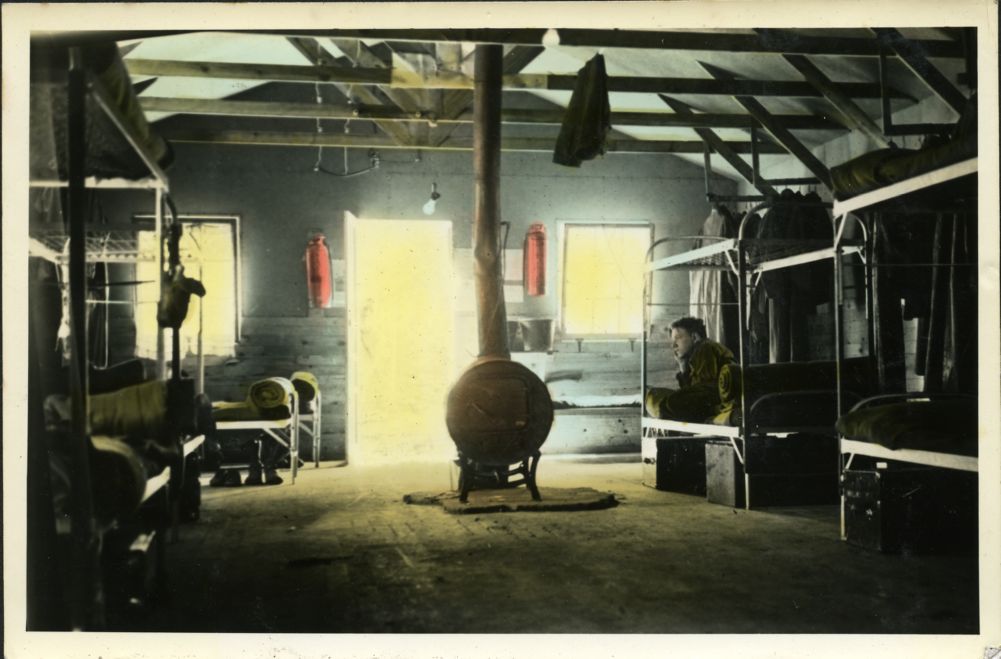
As the much-mythologized Civilian Conservation Corp camps got going early in the New Deal the Daily Worker carried frequent reports of conditions, strikes, repression, and militarization happening inside. On one day in July, 1933 the Daily Workers carried a page full of reports from ‘camp correspondents’ writing from Massachusetts, New York, Michigan, California, and elsewhere on everything from uncomfortable beds to riots. A sampling below.
Rebellions in the C.C.C. Camps from the Daily Worker. Vol. 10 No. 172. July 19, 1933.
STRIKES IN MANY CALIF. C.C.C. CAMPS.
48 Hr. Workweek, Bad Food Cause Protests Throughout State
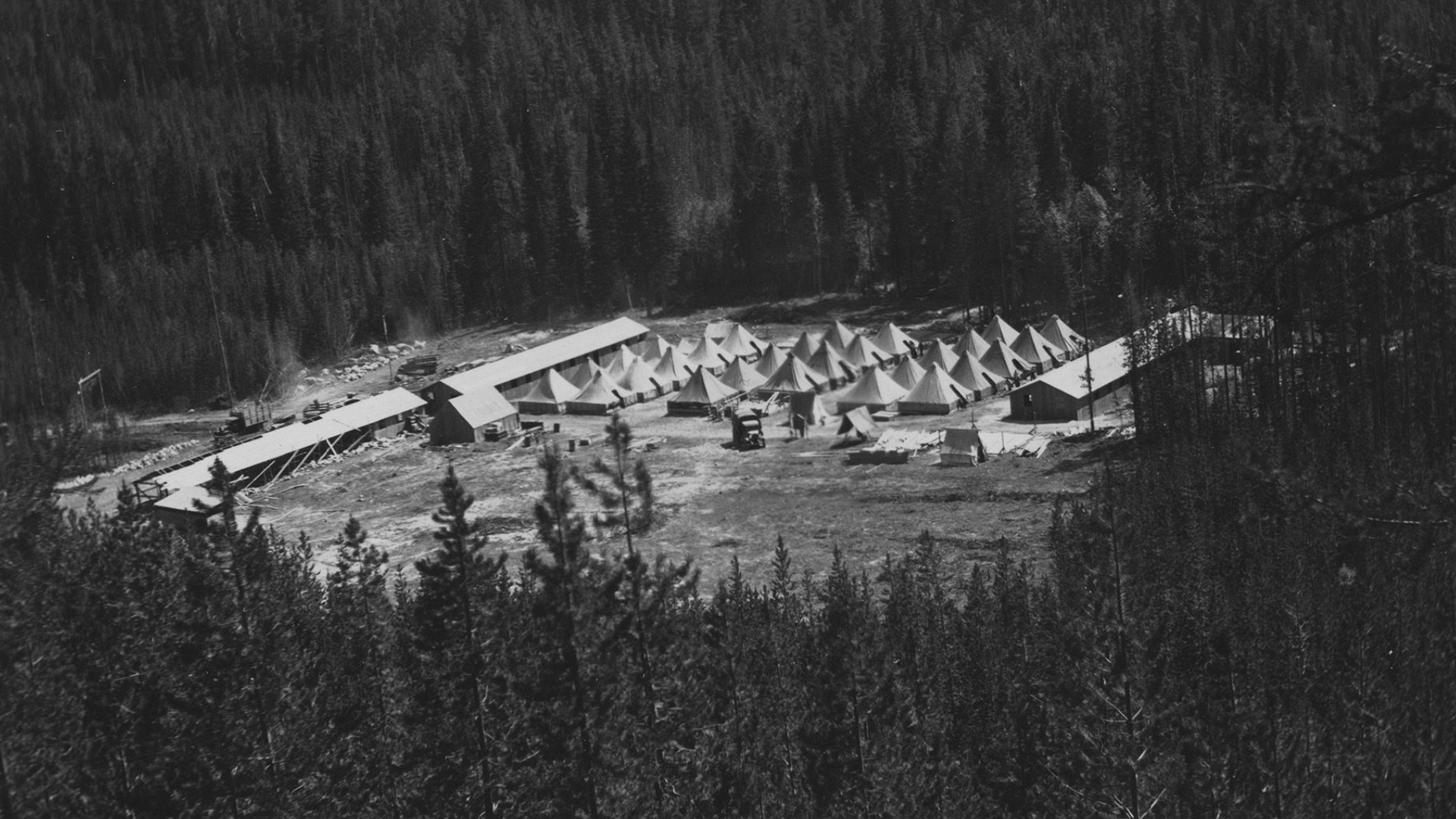
YUCAIPA, Calif. —California has the largest number of C.C.C. camps of any state in the Union. These camps as a whole are built comfortably. Modem camp mess halls have been built and tents have wooden floors in them. However there are some predominating grievances among the men that have brought out some striking examples of organization and unity. The fellows are willing to do their share of work and comply with regulations, but any action on the part of officers or rangers in charge to impose on their rights meets with resistance on the part of the majority of the men.
Immediate Reaction to Infringement of Rights
At the beginning of the camps, an effort was made to make the men work on Saturday in violation of the contracts, which call for a 5-day week. There was an instantaneous reaction to strike, and groups of men went to the officers protesting and refusing to work on Saturday. In Company 511 the fellows were forced to work and their complaints ignored, in Company 538 the officers attempted to fool the men into working by saying it was temporary and that the more they worked the sooner the camp could be completed and would be a better place to live in.
Can’t Fool the Workers
This, however, did not fool the fellows and they were insistent on a 40-hour week. As a result the company commander compromised and the men who wanted to worked on Saturday and Sunday, but got an extra day leave for every 8 hours of work put in.
“If You Don’t Like It, Go Home, Say “Camp Terror” Authorities
CAMP TERA. Bear Mountain. N.Y.—This is what I found upon arriving here two days ago and food is as follows: Breakfast—oatmeal, coffee, toast, no eggs; lunch—some stew, potatoes, indescribable desert, jello, cold tea; dinner—tough corn beef, looks like leather, potatoes, piece of cabbage, desert, cold tear. We get meat twice a day. Why girls don’t leave right and left, I don’t know. Today four of them left. One told the woman in charge. Miss Tinker, straight out the food was making her sick. The other three lied that they have a job in New York. This is the reason for this; Miss Tinker threatens them if they complain. She tells them to go home and if they decide to do so, she says all forms of relief will be cut off for anyone that goes home through pure dissatisfaction. There is a Miss Mills in charge. Both these women are very tough looking. Both appear at meal times and make the most sugary speeches, also designed to quiet down those who are likely to complain. All about co-operation and we are doing all we can with the money at our disposal, etc. Of course we don’t know how much is spent, but we’ve got to take her word for it. She claims most of us are husky and therefore we don’t need any milk. However, those who do will see the nurse, who will prescribe it for the anemic. So several go to see the nurse, who finds there are so many anemic that she puts a halt to it and tells them, “You should not be here. So many chronic girls come out. You eat what you get.” And, as for co-operation, when you see them individually it is a different tone, “If you don’t like it, go home.” So obviously much has to be done. They are all dissatisfied with the food. Next day for lunch, baked beans, no milk, no fruit. They probably get meat for nothing, that is why they serve it so much. Of course due to the scattering of the cabins it is hard to get them together. It is a big place, yet a very well watched one.

36 Leave in Week At Foxboro, Mass. Camp
FOXBORO, Mass.—Just a line to let you know what the conditions are in the vets reforestation camp here. Conditions and the food are so lousy that 36 men have left camp in the last eight days. After they tell the officer they want to quit, he makes them wait in camp for transportation and puts guards at meal time to see that they don’t eat a meal before they leave. As a rule they pay a fine of $3 to $6 for quitting. Most all the men are dissatisfied and waiting to see what the next few weeks will be, as most of the men have given up the idea of sticking it out six months, as it is too much like a workhouse here.
Heavy Camp Work Causes Rupture
DETROIT, Mich.—There were food strikes carried on by Company 662 at Kenton City, in the Ottawa National Forest of the Upper Michigan recently. But the boys will have to struggle on and put demands before the camp authorities to force them to provide adequate treatment and more proper medical care and attention to all boys who became disabled from the hard work imposed upon them. We must compel the government to retire these boys on a regular army pension or a disability compensation, because the reforestation project of faker Roosevelt has made them useless for life.
A young man who recently passed his 21st birthday at the camp is going home to his parent next Sunday, a finished product from the Ottawa National Forest, at Kenton City. A healthy boy, so pronounced by the doctor who examined him at Fort Wayne, in Detroit, he was sent to Camp Custer for two week, from which he was transferred to the forests. Today he is a victim of Roosevelt’s reforestation work. He is ruptured from lifting heavy logs at the camp and other hard work that has strained him. When he was ruptured, he was sent to Sault St-Marie, to the hospital theme, and then he was brought back to Kenton City. This lad was ruptured before and was operated on. and was well when he was sent to the camp by the Welfare Department. At the hospital he was given such humanitarian treatment that an animal would have received better care at the hands of a veterinarian. When the hospital tents were filled with sick youth, he was forced to spend three weeks sleeping on blankets on the hospital porch, after spending one week in the camp hospital tent. Later he was brought back to Kenton City, because the porches became overcrowded.
Three More Ruptures
Three other fellows also are ruptured. One has a heart rupture, and the other two boys have abdominal ruptures similar to what this boy has. This boy has done every job in the forest camp. Lifting logs, chopping trees, and finally ended up with planting trees.
Compelled by Welfare To Go To Camp
The welfare compelled him to go to the forest camps. His family was on the welfare for six months. His father at the present time has resumed work in the automobile factory and is off the welfare rolls. The family, before they were stricken off the welfare rolls, were receiving $12, 30 quarts of milk, half a ton of coal and one sack of flour every two weeks. When their boy was taken to camp, they were supposed to live on $25 a month, below the budget the welfare department allowed to this family monthly, which amounted to about $40 a month. This is “solving’’ the unemployment situation. Cutting off relief, on one hand, and conscripting you indirectly, to undergo military preliminary training of six months, under the guise of peaceful civilian reforestation work.

Thugs Beat Workers in Forced Labor Camp
N–, N. Y.—The conditions here are very bad. disgraceful. The food is bad and not sufficient. Since we boarded the train, we have been eating canned corned beef and hard biscuits. On Wednesday one group (we are divided into groups of about fifty when we go to work) refused to eat the stuff and returned it in a body to the captain. Anyway, today we had no corned beef, but the food was insufficient and bad. With our leaders gone, not openly but secretly, we can do nothing right now. The captain and the major constantly threaten us with blows. They have picked out about 10 or 15 fellows to be the leaders and foremen. They are all ex-pugs or strong-arm man. Some of them carry knives or clubs. About one fellow a day gets a beating from them. Accidents are frequent, one serious one each day. The worst so far is the toe completely chopped off. The place is very unsanitary, dirty, and freezing at night. Your blankets and a heavy overcoat are insufficient. During the day it is very hot.
Military Training At Spectator, N.Y. Camps
SPECULATOR, N. Y.—When we got up here there was an advance guard of 25 who were already here. These 25 had been given military training for eleven weeks previous. They were a picked bunch from a gang of about 2,000. All are a bunch of bruisers.
Bullied by Bruisers
They bossed us around, and one day when we lined up for eats they smacked one of the bunch of fellows I was in. We were going to rush them, but they flashed guns. We went to the captain, and as a result they have to get in line for eats.
Work Is Very Hard
They work us like hell for about six hours a day. You must be in bed by 10 pm. The boys are sore and inasmuch as we are getting our pay Friday, a bunch of boys are quitting. I tried to get them to stay, but I couldn’t.
Better Food Won By Camp Protest
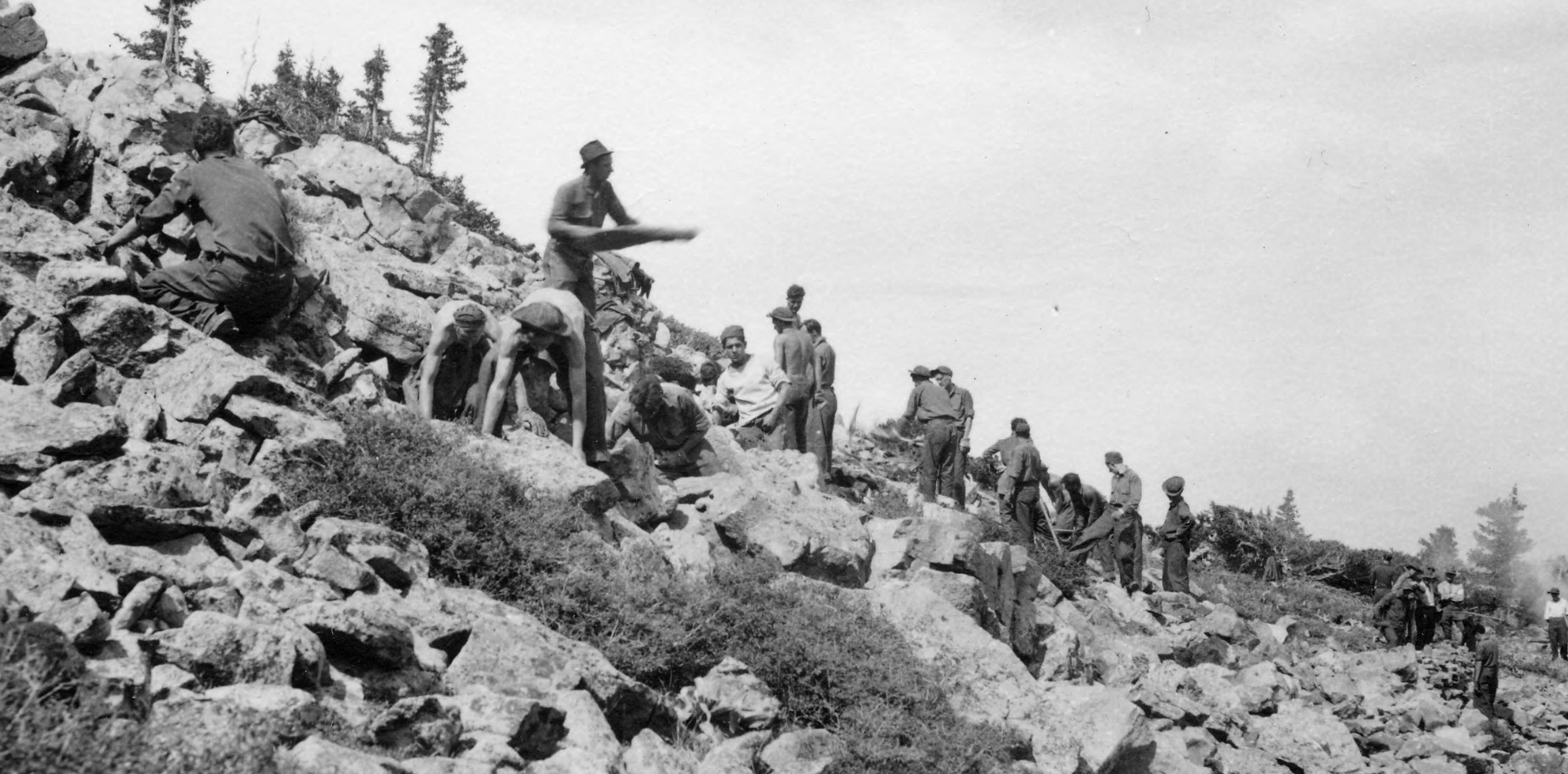
Our camp is still very far from perfect, being crude in structure and lacking in sanitary necessities. We are still without showers, and we have been here over a month. Our toilet is very crude and does not have a drainage system. Lime is used for disease prevention.
Meeting Results In Better Food.
A week ago we had a meeting in our camp, due to the meals we had been getting. In my estimation, there is much graft going on, which is taking the food out of our mouths. During that meeting we refused to work unless we got better treatment. The captain threatened us with imprisonment, as this was a federal offense. He said if we have any grievances, we should consult him in a pleasant manner. If anybody did consult him. he would order him to leave. But he promised better treatment in the future. The result was we are getting much better food than previous.
Three Sandwiches for Dinner.
The men that work far away from the camp are only given three sandwiches for dinner. One is imitation jelly, one is peanut butter, and the other is boloney. What do you think of that for a hard-working man’s dinner? We have had quite a few rainstorms recently, which makes living here rather a hardship. But Still I am determined to stick it out. I have served one-fourth of my time. I was informed that the government spends $2.23 on each man per day, this includes salaries and all other expenses. All of our clothes are seconds. We must make 40 working hours a week, regardless of weather conditions. I term these camps as modern slavery.
BETTER FOOD WON IN CAMP REVOLT
Demolish Tent, Soak Officer in Food Protest at Windy River
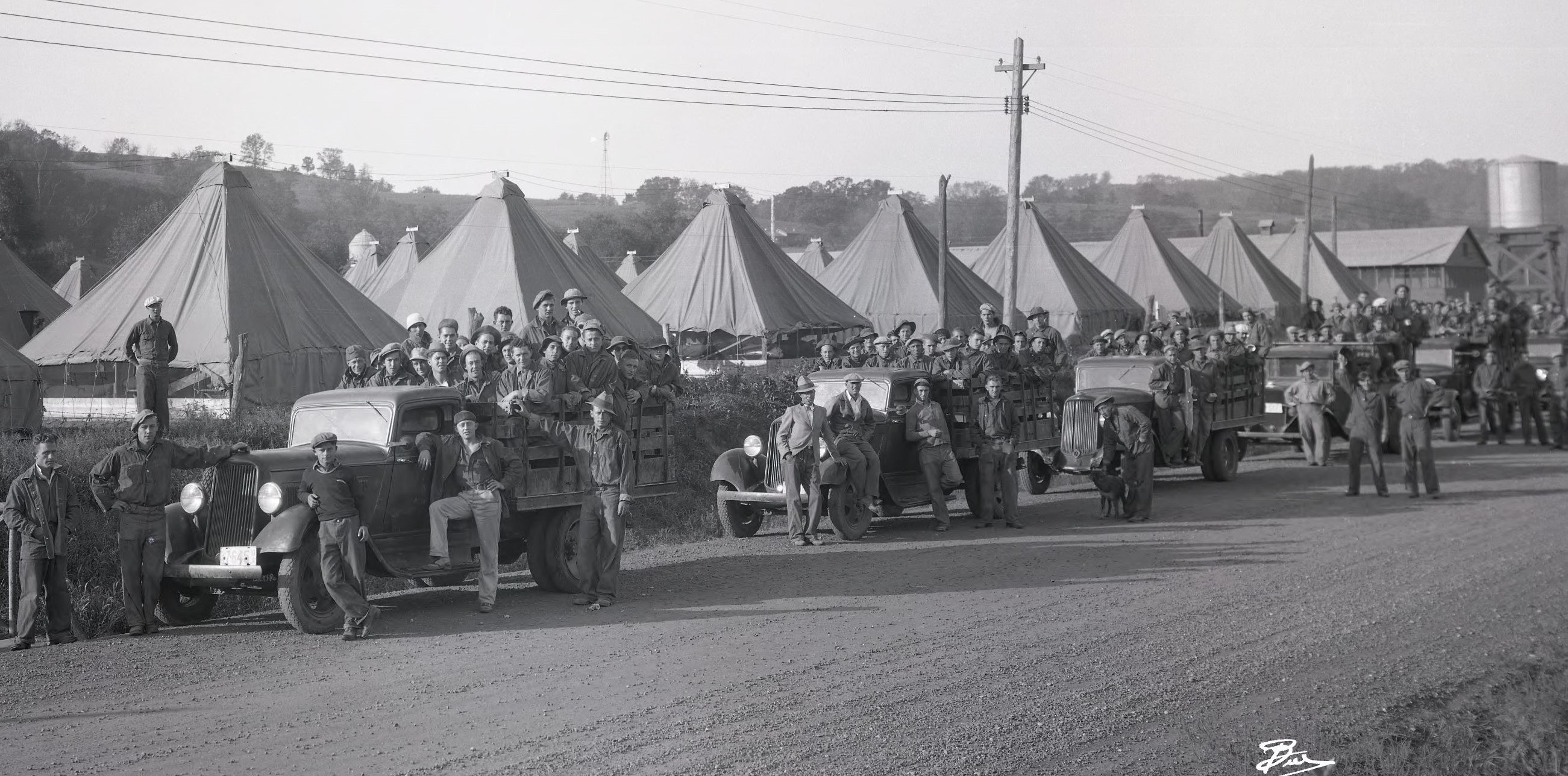
CAMP HEMLOCK, Stabler, Wash. This place is seventy miles from Portland. Oregon. It is almost on the Columbia River. We aren’t planting any trees as the popular belief happens to be. I had better explain about this country before I go further. We are in the Wind River Valley, and this vicinity is about the most dry spot in the state. The forest fires start in this valley and spread to all the timber land throughout the state. We are here to save whatever timber is left, by felling giant snags and by fighting forest fires.
We had a riot in camp on Thursday. The cause was the rotten meals the mess sergeant tried to give us. When we got here, the mess sergeant acted very hard-boiled, but though we resented his actions, we didn’t do anything about.it —at first. He gave us excellent meals, so we ignored him. Somehow, because we are from Chicago, he got the idea that we were nothing but riff-raff or convicts who would not dare to speak up.
The lunch came. Imagine the crust of the mess sergeant. He sent up two corned beef sandwiches, nothing else, with the warning not to waste any food! The beef was old and stale, and the bread hard. There were fifty of us, and a half of our squad started to bawl the Officer out, and, since he didn’t seem to be interested, we chopped our axes and walked over to the lunch and said:
“Boys, it’s about time we stood up for our rights and put the mess sergeant in his place.”
When we got to camp, we got the rest of the camp to join us and all of us took our food, walked over to the kitchen and threw the food in the mess sergeant’s face. We knocked the kitchen apart, pulled the tent down and took the sergeant and soaked him in the Wind River. When we got through with him, we said:
“You had better give us a good supper and feed us good from now on, or there won’t be any mess sergeant!” The king pins did the apologizing, and they let us have Saturday and Sunday off, with the right to stay in town over the week-end, and promised better food.
The Daily Worker began in 1924 and was published in New York City by the Communist Party US and its predecessor organizations. Among the most long-lasting and important left publications in US history, it had a circulation of 35,000 at its peak. The Daily Worker came from The Ohio Socialist, published by the Left Wing-dominated Socialist Party of Ohio in Cleveland from 1917 to November 1919, when it became became The Toiler, paper of the Communist Labor Party. In December 1921 the above-ground Workers Party of America merged the Toiler with the paper Workers Council to found The Worker, which became The Daily Worker beginning January 13, 1924. National and City (New York and environs) editions exist
PDF of full issue: https://www.marxists.org/history/usa/pubs/dailyworker/1933/v10-n172-NY-jul-19-1933-DW-LOC.pdf
 Revolution's Newsstand