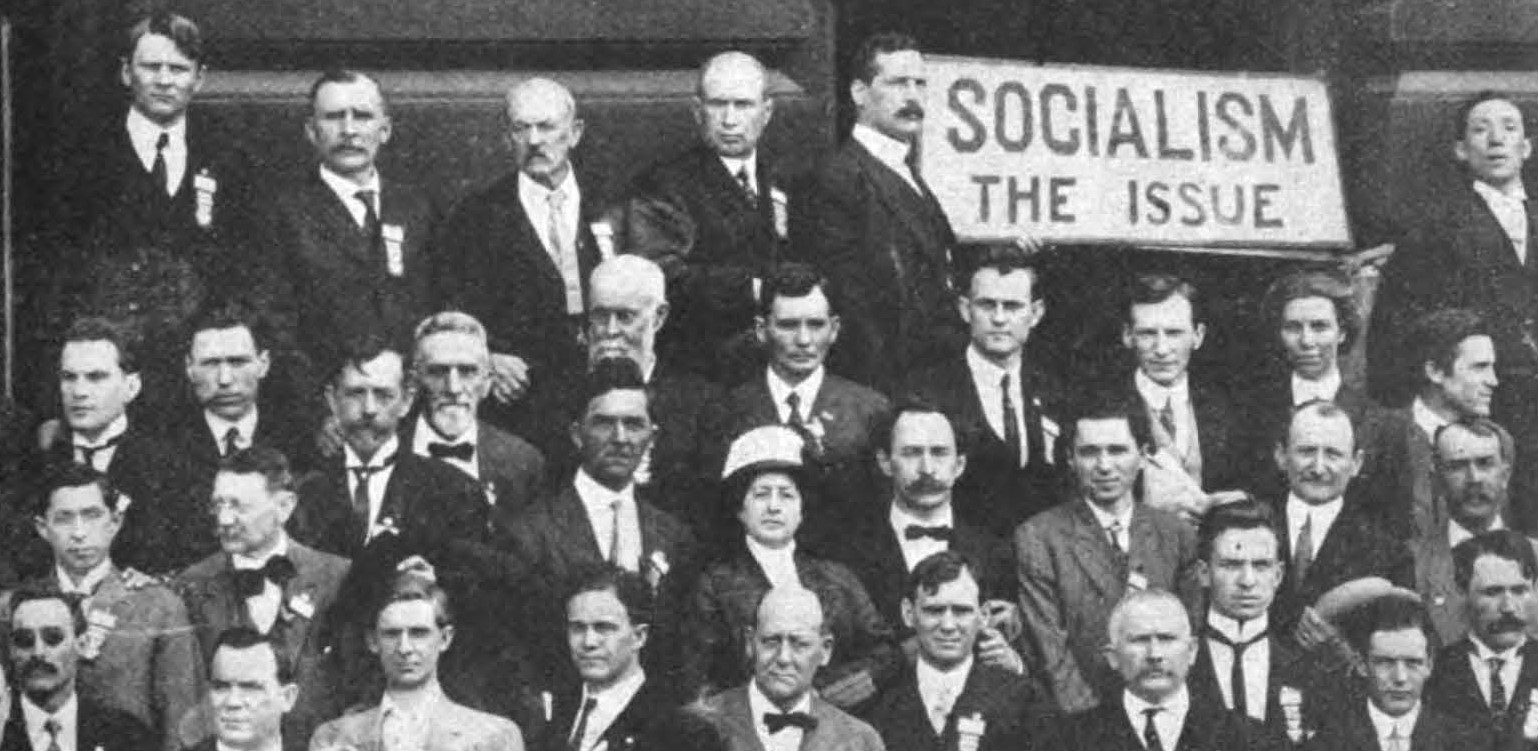
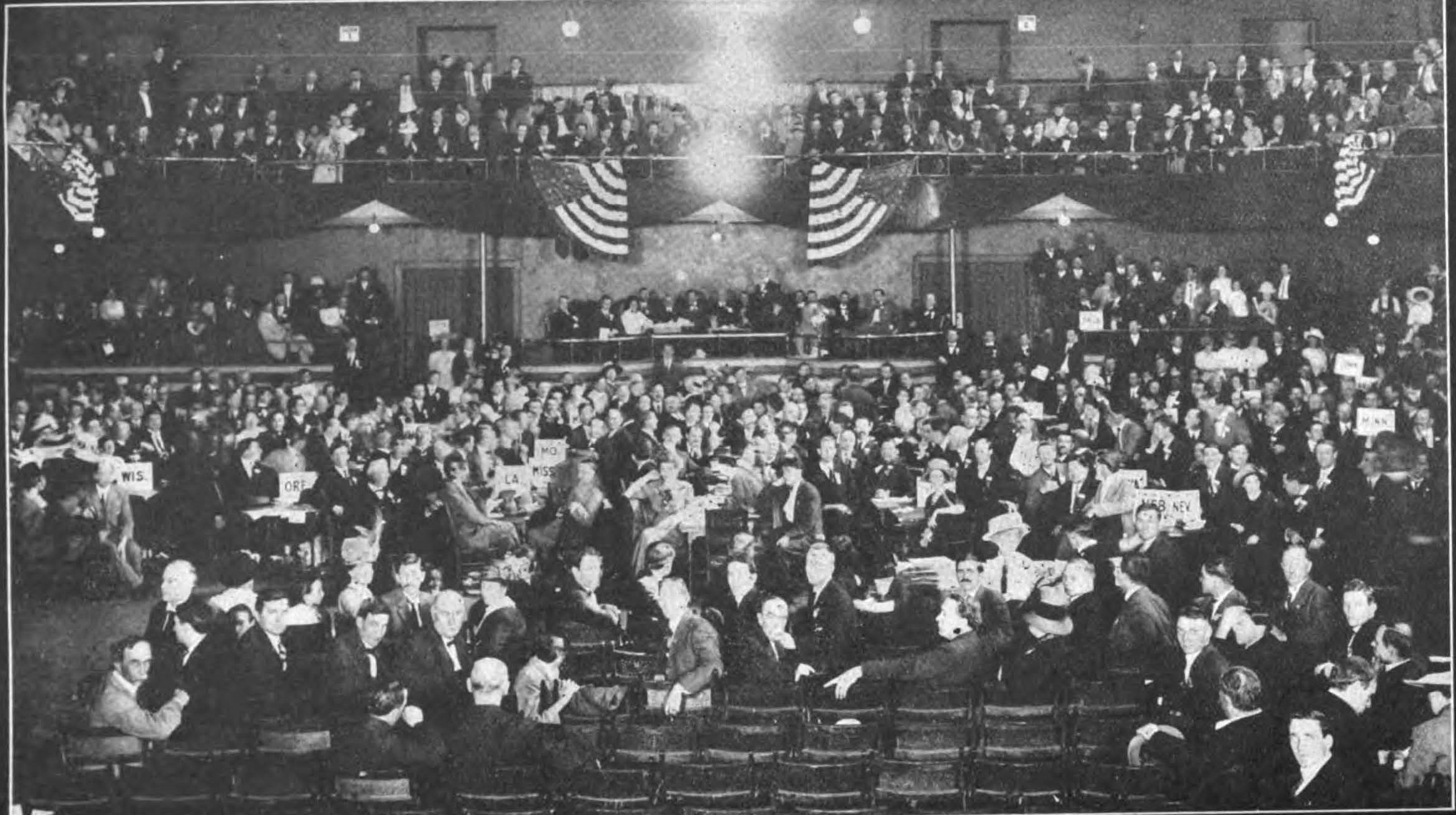
Delightful, sometimes bitter, partisan observations from veteran Left Winger Henry L. Slobidin on the Socialist Party’s 1912 National Convention and the personalities there. Held in Indianapolis and attended by 287 voting delegates and 8 non-voting delegates from 47 states as well as the Language Federations, the Convention was a hard loss for the Left. about a third of the Convention. The Right passed a constitutional amendment requiring support of electoral politics and banning advocacy of sabotage, ending a long running battle in the organization. In the aftermath many Left Wing activists quit the Party with more than a few moving to the I.W.W.
‘Convention Notes’ by Henry L. Slobidin from the International Socialist Review. Vol. 12 No. 12. June, 1912.
State Secretary Green was the tallest man at the Convention, being six feet five and onehalf inches in his stockings. Within the last 60 days Comrade Green has sent to the National office over 181 charters for new locals in Texas. This is a reflex of the Industrial Renters’ Union. Congratulations Green. This is the work that counts! A lot of good men come from Texas.
Pettigrew of Canada addressed the Convention and everybody is talking about it yet.
Delegate Lindgren opposed co-operatives in the party because he said they drew activity ‘better employed along revolutionary lines. Furman of Brooklyn told how his local had fallen to pieces because all the members spent so much time nursing the co-operative. Frank Prevey called co-operatives an attempt ae little heaven in the midst of capitalist hell.
Delegate Amringer of Oklahoma believes that we may reduce the cost of living from $3, to $1 a day without experiencing a fall in wages. I wish he’d tell the rest of us where he gets his economics. Delegate Kate Sadler said she had always found that she got a bare living whether in a co-operative or a trust-ridden land. Do you get the point?
Tom Hickey offered to shake hands with Job Harriman for the first time in twenty years, saying that the report on Labor Organizations, etc, was a splendid illustration of the growing solidarity of the Socialist party. He said the resolution passed was the broadest, and farthest-reaching ever made by the Socialist party.

Tom Clifford, Ohio, says we may count on 200,000 revolutionary votes in his state this fall, also that the Review is the greatest revolutionary organ in the world. Some class to Tom!
Margaret Prevey, one of the livest and brainiest women at the Convention, said, in opposing the insertion of the word “sabotage” in Section 6 of the Constitution, “If a workingman is wrongfully accused of injuring the property of the boss, or of hindering production in the mill or factory, or if he is even convicted of being accessory before the fact, though he be 500 miles from the scene of the trouble, if Section 6 is adopted, including the word ‘sabotage,’ the party will be compelled under this clause to expel the member so accused. The capitalists will interpret the law. They have been known to indict and convict innocent men as accessories before the fact. Shall the Socialist party accept the capitalist verdict against one of its members and aid in sending such members to jail? We should take no part in punishing workers who are accused of injuring the property of our masters. The only way we have of judging the guilt of workers in such cases is what our enemies—the capitalists, themselves, say through their courts.
Comrade Bentall, secretary, is now the boast of the comrades throughout Illinois. He made the bravest speech given before the Convention. He said the determination on the part of the politicians to insert the word sabotage was not because they feared its use, but because they wished to misinterpret it and to fasten it onto the backs of the progressive element in the party, who stand for everything evolutionary in the industrial and political field. It was because they feared this new revolutionary tendency that the recationaries have chosen this way to cover the Reds with opprobrium.
Delegate Aller of Washington dropped into the Review office on his way back home, to pledge us more support because he feels the Review is the only real, big revolutionary publication in the United States. Comrade Aller said that he had never bought stock before in this company, but after seeing and realizing the good work we are doing, he is proud to become a stockholder.
The two, Sadlers, Barth, Bostrom and Wells, did splendid work. Barth and Aller never were able to catch the Chairman’s eye even when they were the only delegates on the floor. Evidently the Chairman thought of the Greatest Socialist Party platform that has ever been written, that sprung from Washington, and got the blind staggers. These chairmen were Delegates Lee and Hillquit.
When they asked Gaylord of Milwaukee what he meant by sabotage he was afraid to go down on record. Above all things speak in whispers when the Senator is around or he’ll order you put out of the party. We don’t really know what he’s fighting, so we don’t know what to avoid. We hope every Red in the country and every Socialist who really stands for fair play will demand a definition of sabotage. Berger, Spargo and Gaylord and Harriman say we have no right to dictate to the trade unions or any labor organization, so sabotage must be something of a political nature.
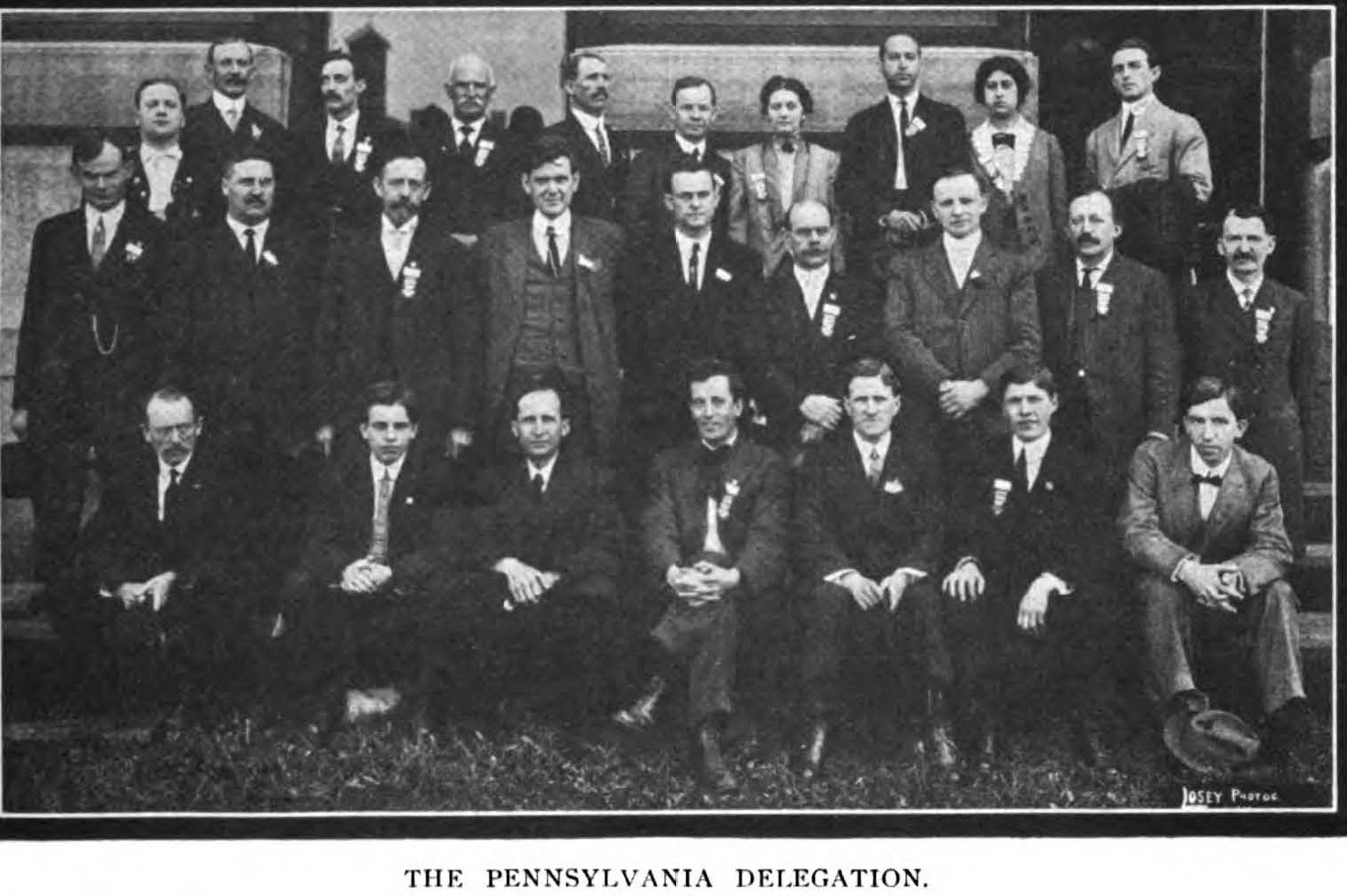
Con Foley, Pennsylvania, and O. K. all the time, said: “If the workers don’t take hold and make the Socialist party their party, they are going to have it handed to the little cockroaches. This Convention means great step. The Reds forced everything and it kept the Daffodils busy trying to keep up.”
There are too many professional people trying to lead the working class instead of workers fighting their own battles. The workers should run their own Conventions. They should dictate to others who may wish to serve and within a few years, they will double the strength they showed at the last Convention and run the party in the interests of their own class, was the verdict of Ed Moore.
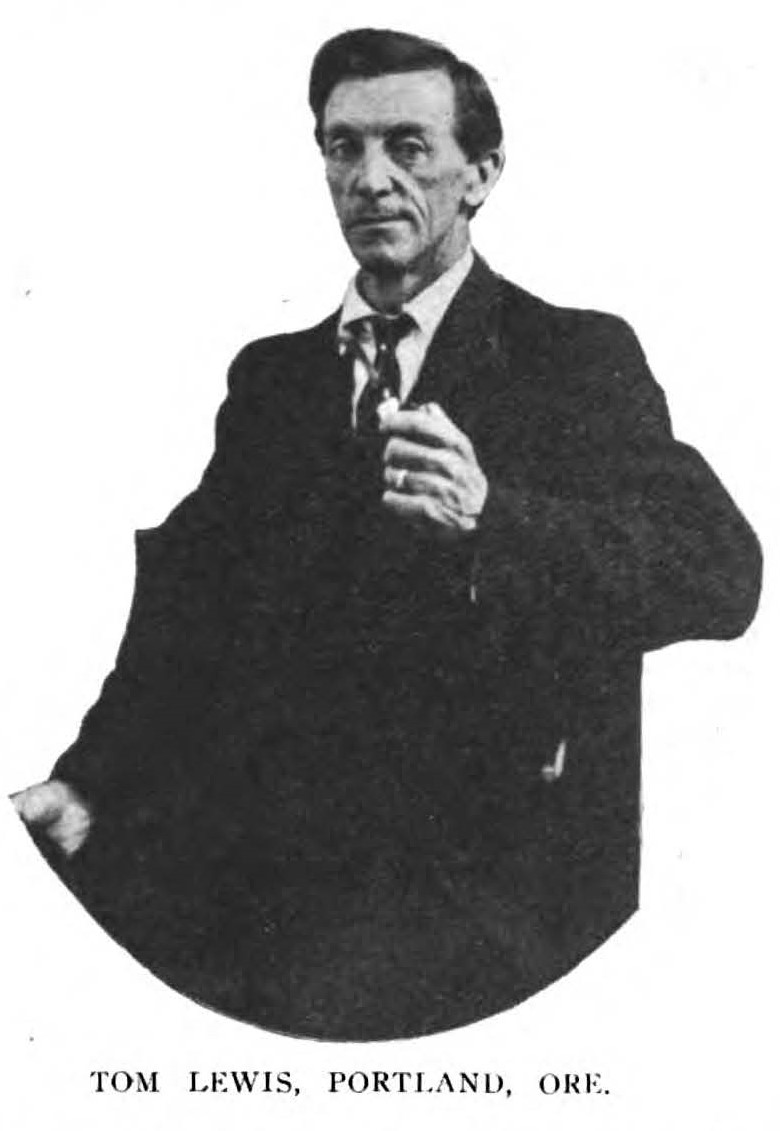
If you want to know something about the Oregon delegation read the following Oregon resolution: “The attitude of the intellectuals toward the party should be one of service to the working class and not one of personal ambition.”
According to the Review definition sabotage means striking on the job; that is, staying on the job, drawing your pay and checking production. Some of the convention delegates who stopped at the Hotel English complained because of the poor service in the dining room. You got your napkin along about time for dessert and your knife and fork after your meat grew cold. It seems that the waiters were dissatisfied with working conditions in the hotel and struck on the job. They pulled back instead of helping things along. They didn’t know it was sabotage but they did it just the same.
Question: Will the delegates who tipped waiters who were balking (or striking on the job), practicing sabotage, be expelled from the party if Section 6 of the Constitution goes through? Isn’t tipping a practical form of endorsement?
What was the matter with the Ohio delegation? Nothing! All Reds but two. Watch the line-up and you’ll know who the two are. Margaret Prevey can put it over any Yellow that ever assumed the platform to befuddle the delegates. Mrs. Storck was on the job just as she has been in holding Study Clubs the last five years. There are more copies of ‘Value, Price and Profit” sold in Ohio than any other state. Nothing doing in the co-operative line in the Buckeye state. Tom Clifford handed out Berger’s “Call to Arm” (the famous ballot and bullet editorial), and counselled the party to avoid antiquated methods. He proved by Berger’s own words that he was one of the chief advocates of violence. Pete Kinnear was on hand to assure the fighter that the Red delegation next time would be able to switch the party over into the hands of the working class.
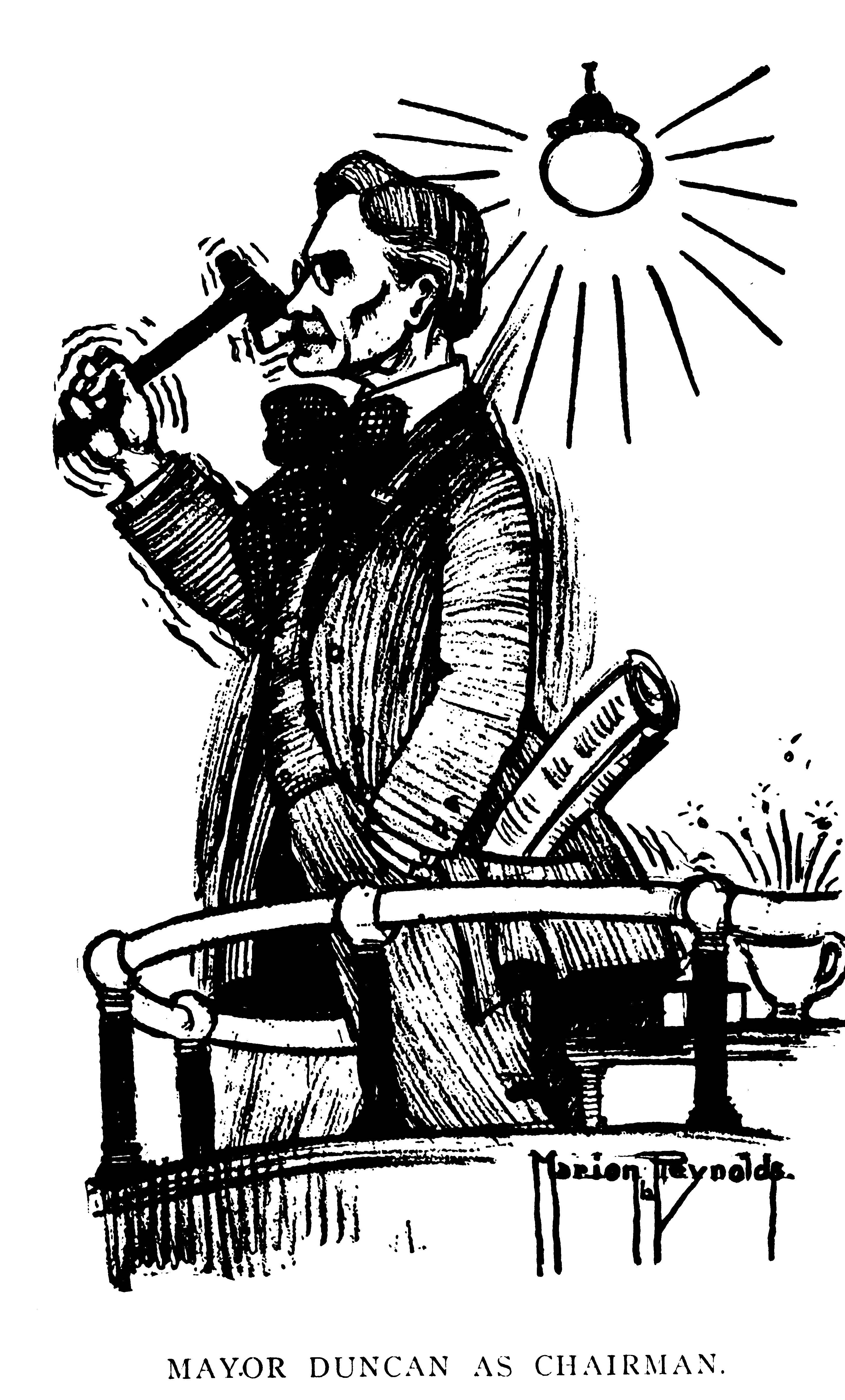
Delegate Patterson wondered if the chairmen needed the services of an oculist. Mayor Duncan was the only one who could see the Red side.
An Indianapolis paper defined the Yellows as those who go backward, and the Reds as those who go forward. Evidently he is wiser than some Socialists.
Steve Reynolds said the only thing that hurt him was that he couldn’t take all the delegates home with him.
Jennie Potter and Max Boehm were on hand doing good work. It was queer how lonesome the politicians looked. It was noticeable that they never turned their backs to each other. This is one of the ills of politics. No man’s back is safe against the stabs of his associates.
Luella Twining said the rank and file had taken hold of Convention matters in great shape and she believed they would get into the saddle next time. She rejoiced in the wonderful sentiment for industrial unionism. She says Europe is ablaze with it.
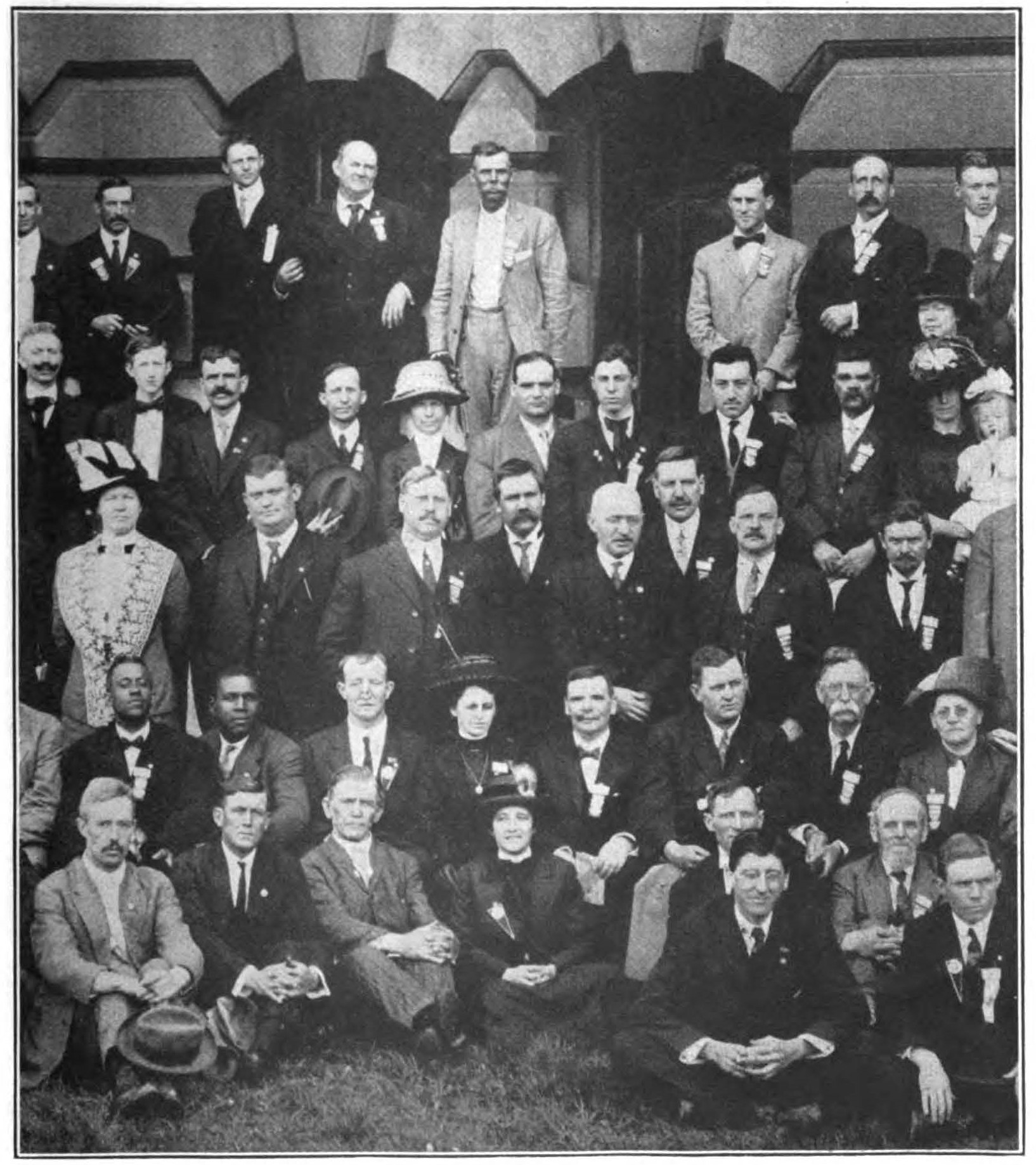
A good bunch came from Texas. State Secretary Green has turned in to the National office over 181 local charters during the past two months.
Haywood says he can now speak from the Socialist platform bearing the message of Socialism to the disfranchised black men and women, and to the disfranchised white men and women, for industrialism includes all these comrades.
Charles Edward Russell gave a talk at Tomlinson Hall Wednesday night that brought down the house. He advised the Socialists to cut out dabbling with palliatives and seek to abolish capitalism.
Delegate Hickey declared the Convention was a straight line up between the professionals and the proletarians. That the Reds had enough information on hand to disqualify the Wisconsin delegation on Saturday, but decided that under no condition would they cause a split in the Convention. We showed those who are hurling “Disrupters” at us that the Feather Bed Socialists were themselves seeking a split in the party. The Reds proved to be the conservators of party unity. This spirit was again splendidly demonstrated on Thursday, when, after a battle that lasted into the morning, Tuesday, and was repeated on Wednesday, the Trinity of Toms unanimously accepted the resolution that had been finally drafted by the other side. It was my opinion that the opportunists believed we would accept no resolution prepared by them. Our acceptance made them the most amazed men in the Convention.
Fred Merrick and Bob Wheeler were two delegates that did splendid work, yielding personal interests for those of benefit to the working class. Justice, of which Comrade Merrick is editor, is growing by leaps and bounds. Further, Fred is not a politician and he is keeping step with the progress of industrial evolution. Five years from now the Daffodils will tell us how they led Fred Merrick and Bob Wheeler into the Industrial Fold. Watch ’em.
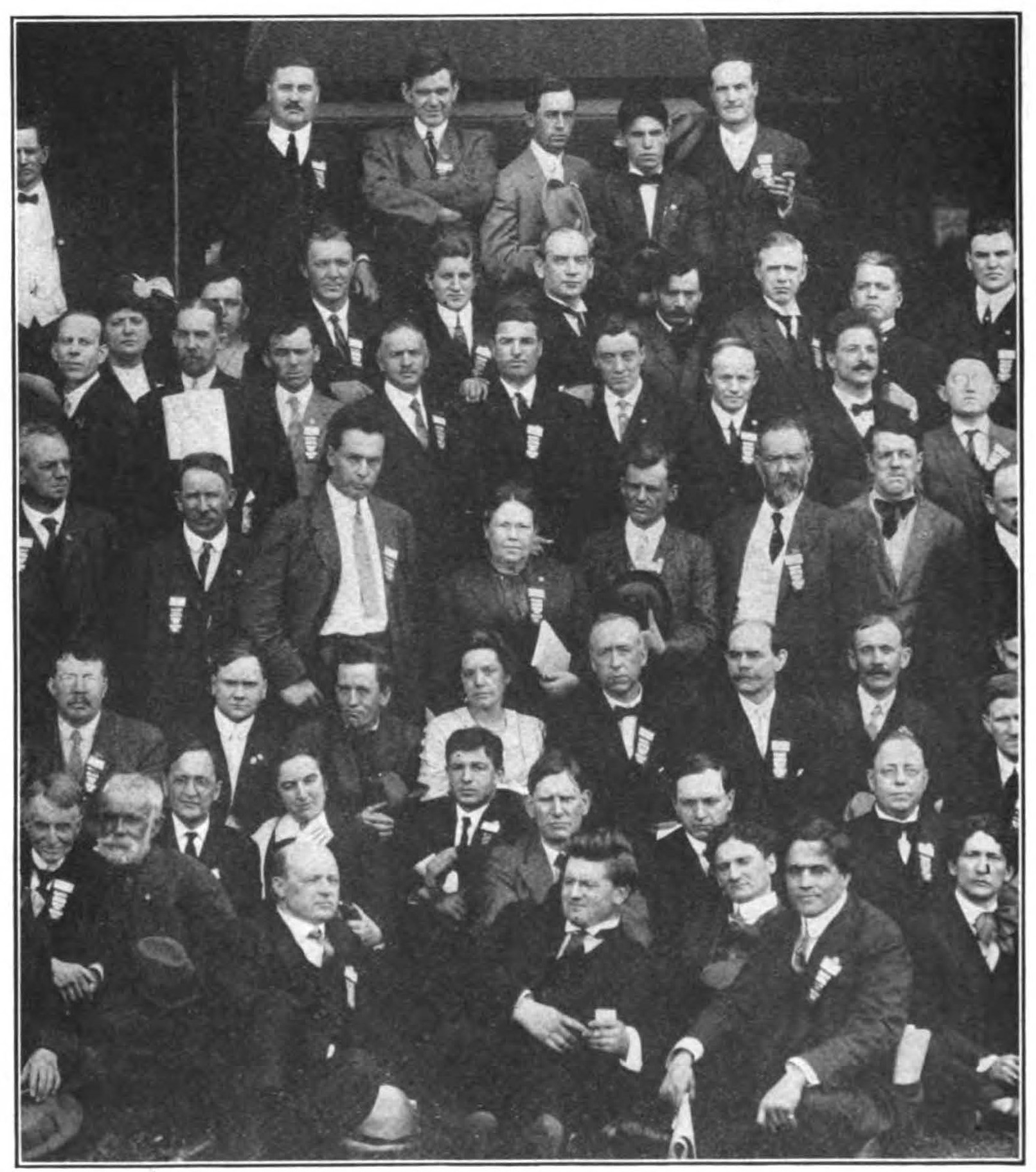
Delegate Wheeler has been appointed special investigator for the new party committee on Industrial Education. He is to prepare a statistical study of the introduction of automatic machinery in the basic industries and its effect on the workers. Comrade Wheeler will confine his investigations principally to the glass, steel, coal, cement, railroad industries and agriculture. The particular purpose of this investigation is to gather data to establish a sound basis for conclusions as to the ultimate utility of industrial education. Few educators have a conception of the rapidity with which industrial processes change and inventions progress. Many think in terms of the past. The conception of a society when the great work of production is done by automatic machinery, staggers the mind. Emil Seidel, vice-presidential candidate, has been elected on the new committee. Seidel brings to the work of the committee the practical experience of the working class. It is highly important that the committee should have the point of view of the man who sees the changes taking place in industry. Comrade Seidel and Robert Wheeler add very much to the strength of the committee.
Delegate Luki, editor of Tyomies, reported that he had attended three Socialist Conventions. The second convention, he said, was in complete control-of the conservatives, and the last one was mostly in control of the revolutionists. We need (he said) more delegations like Washington, Ohio, Oregon, and part of Pennsylvania, and especially Ohio. You can always count on the Finnish comrades.
Delegate Hendrichson of Massachusetts claims the Indianapolis Convention promises more for working class control of the party than any previous convention.
Hoogerhyde of Michigan is a good man to nail the dues-stamp grafters.
Somebody says the Reds put one over on Milwaukee and that hereafter Wisconsin will have to buy dues stamps from the National office just like any common state. Personally, some of us think it looks bad for a state to be holding out on the party at the same time it is flooding the country with letters begging for “help.”
Some say they don’t like Carey doing the Steam Roller. Well, he didn’t stick to the role for long.
Lots of good comrades to be counted in Pennsylvania, and Illinois shows that she is waking up.
Delegate Patterson wonders if the Chairmen (except Duncan of Montana) need the services of an oculist. They could rarely see a Red but were always able to glimpse the N. E. C. members right off the reel. On several occasions when the Chair decided in favor of the Feather Bed Socialists, a vote brought out a decision in favor of the Reds by an overwhelming majority. Justice did not attend the Convention except when Duncan had the Chair.
If Montana and her delegates had a chance to teach some of the Eastern states a few points in economics, there would be a different line-up next time.
The Reds showed great self-control and in spite of the violent tactics of Bully Gaylord and the slurs of other professional mud slingers, they never lost their heads.
Patterson said the Reds averaged 33 per cent of the delegates and were the fighting force of the Convention. They calmed the Bolters and worked all the time for party unity. But when it came to votes the politicians and delegates. dominated by middleclass instincts made a loud noise.
Delegate Ida Callery of Arkansas is one of the women who does big things. Under her state secretaryship the party membership has grown to be ten times what it was six months ago.
The International Socialist Review (ISR) was published monthly in Chicago from 1900 until 1918 by Charles H. Kerr and critically loyal to the Socialist Party of America. It is one of the essential publications in U.S. left history. During the editorship of A.M. Simons it was largely theoretical and moderate. In 1908, Charles H. Kerr took over as editor with strong influence from Mary E Marcy. The magazine became the foremost proponent of the SP’s left wing growing to tens of thousands of subscribers. It remained revolutionary in outlook and anti-militarist during World War One. It liberally used photographs and images, with news, theory, arts and organizing in its pages. It articles, reports and essays are an invaluable record of the U.S. class struggle and the development of Marxism in the decades before the Soviet experience. It was closed down in government repression in 1918.
PDF of full issue: https://www.marxists.org/history/usa/pubs/isr/v12n12-jun-1912-ISR-gog-Corn.pdf
 Revolution's Newsstand