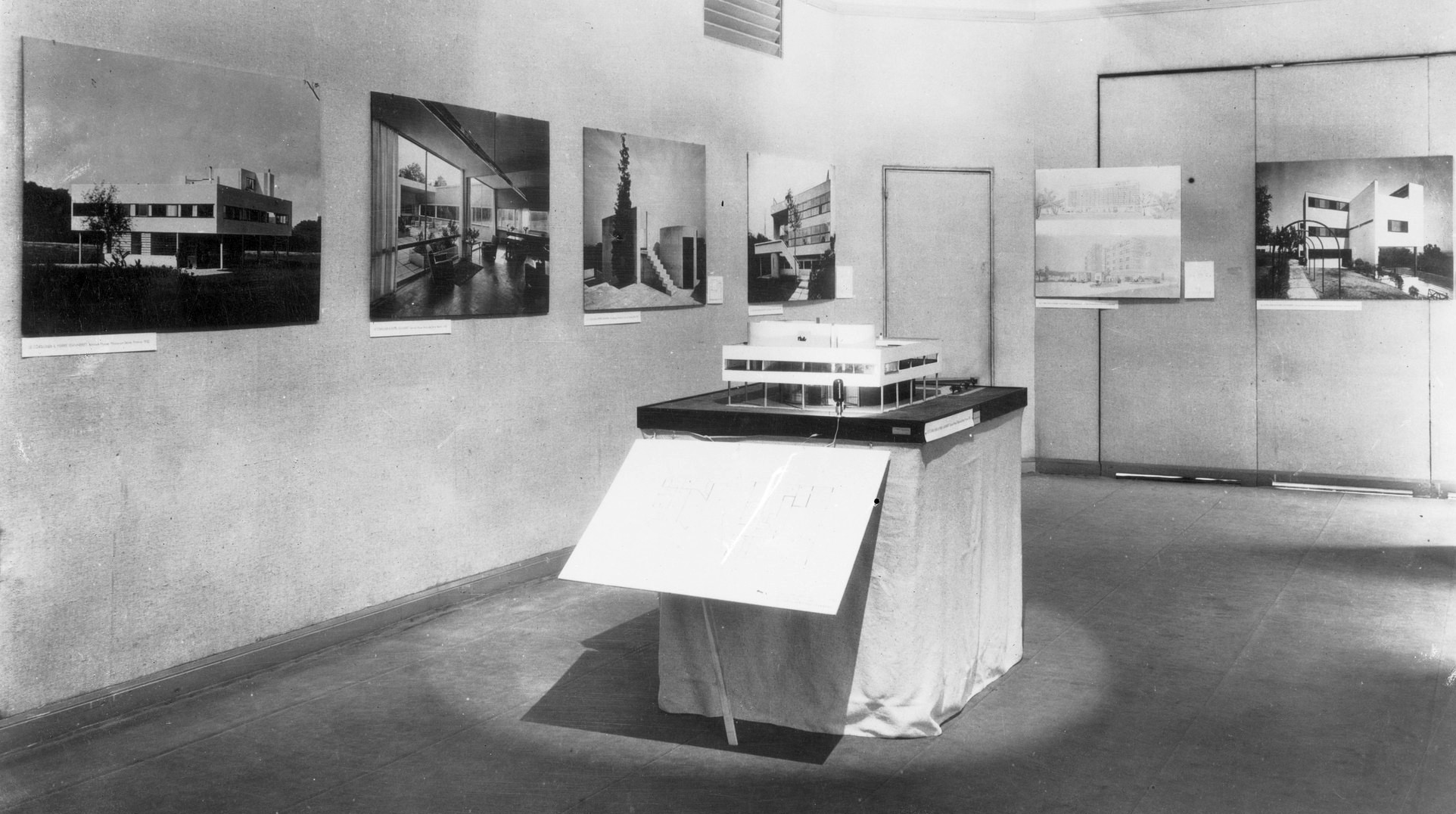
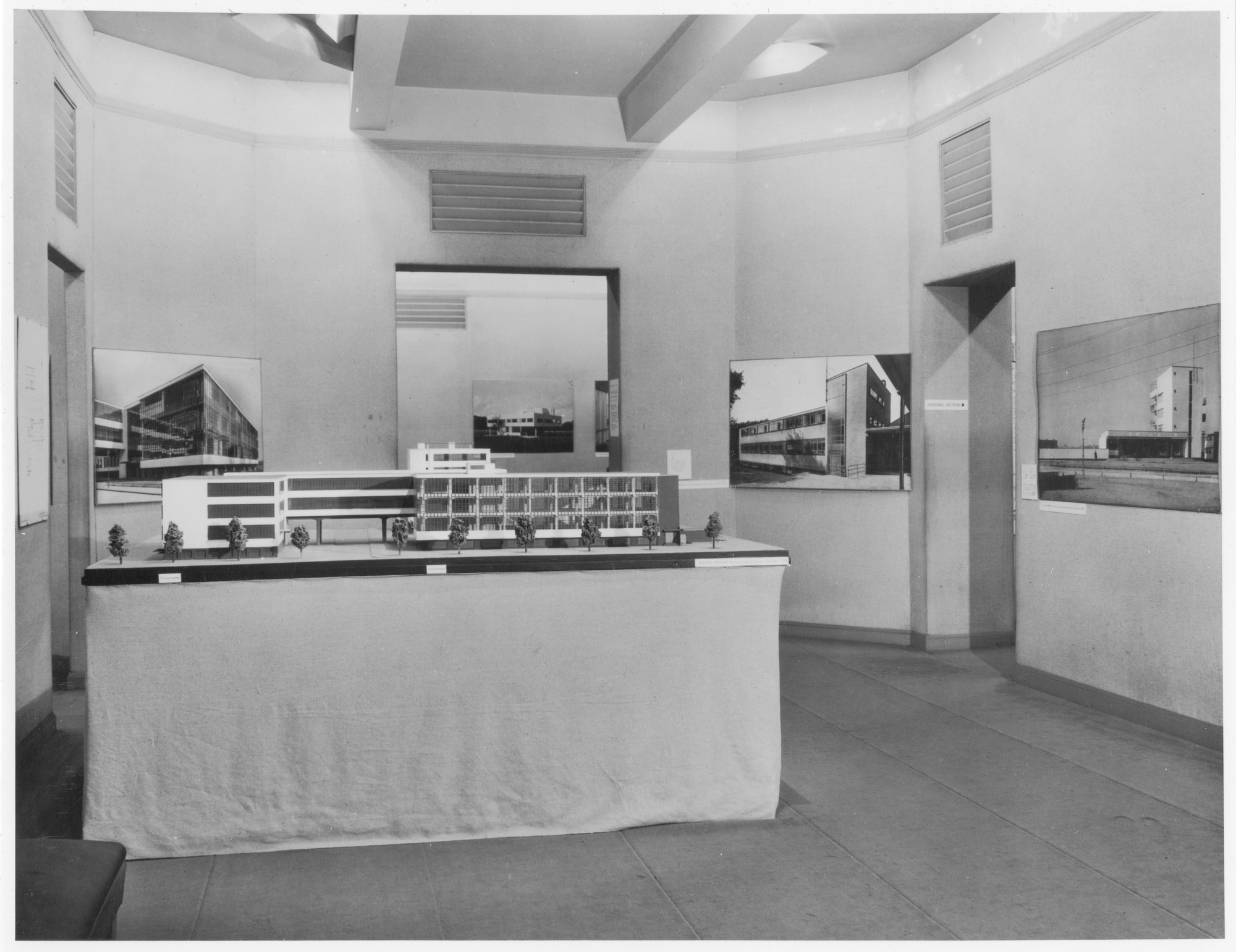
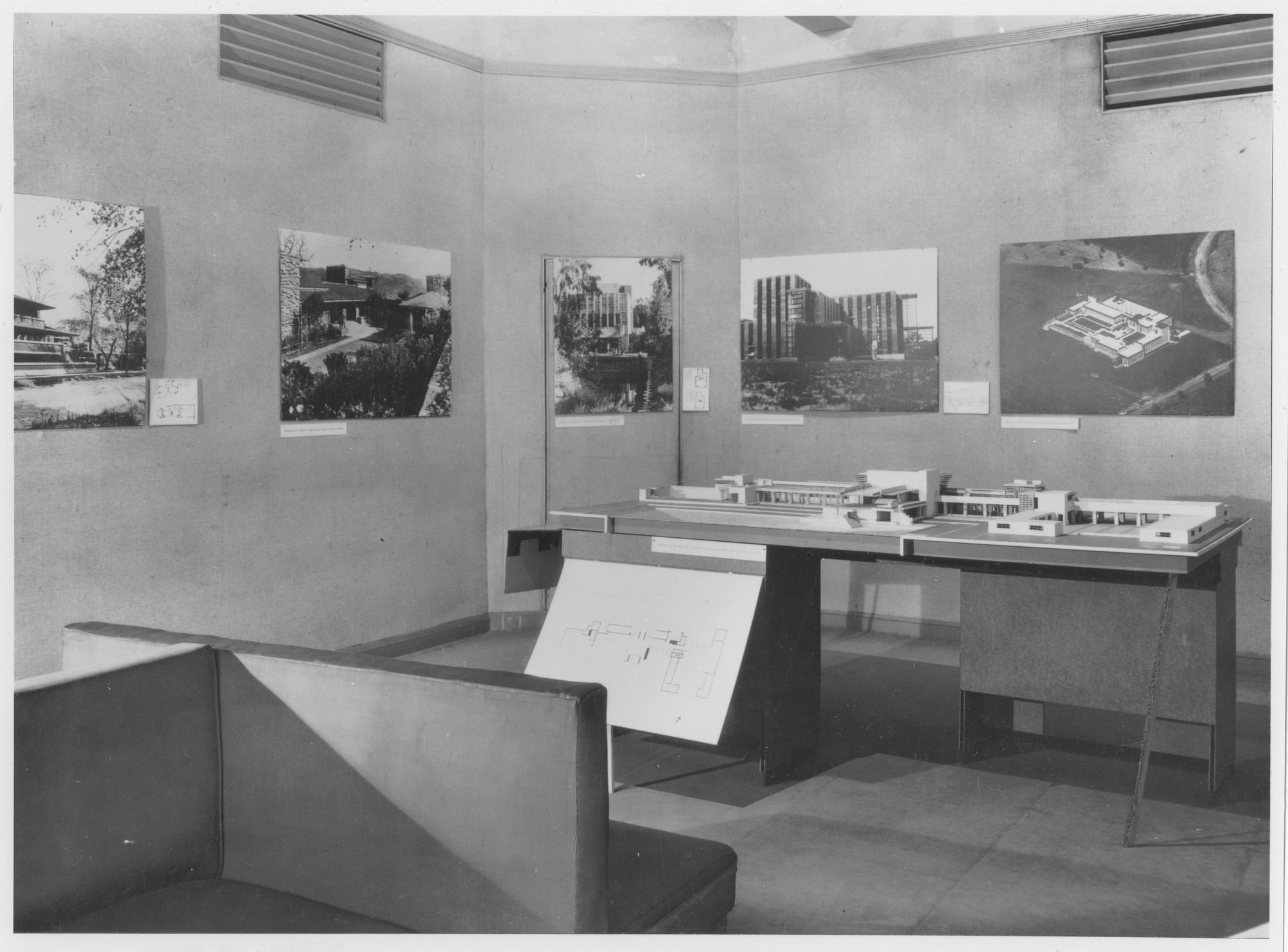
An early article by one of the foremost art historians and critics of the 20th century. Meyer Schapiro writing as John Kwait, brings his radical eye to the Museum of Modern Art’s 1932 Modern Architecture: International Exhibition. A PDF of the original program of the exhibit here.
‘The New Architecture’ by John Kwait (Meyer Schapiro) from New Masses. Vol. 7 No. 11. May, 1932.
The recent exhibition of architecture at the Museum of Modern Art (New York) is surely the most important in its history. Perhaps some of the shows of French painting were artistically better, but they cannot have the same social importance. The buildings are more than designs or spectacles; they are a social program and a necessary part of a new society. The intentions of the most advanced architects imply a social revolution, even when the architects themselves are conservative or ignorant of basic facts. In claiming the social relevance of building, in affirming in projects and books the public responsibilities of the architect and the need for communal enterprise, these bolder architects anticipate the style of a Socialist Republic. In a field dominated by traditional, wasteful procedures, by sentimentality, by class pretension in the aping of old aristocracies, they have created a method which is insistently technical, unsentimental, and alive to everyday human needs. They have provided the indispensable technique and esthetic of a Socialist community in shifting the attention of architects from the decoration of individual facades to the hygienic, practical planning of whole cities. We can understand why its enemies have called the new architecture the “Trojan horse of Bolshevism” and why it is the favored art of Soviet planners.

Its artistic characters are appropriate to such ideals. They show us how forms and uses are inseparable in styles of architecture.(1) The older styles are massive, weighted, with accented, fixed proportions; their surfaces are heavily ornamented, and the whole meaning of the building and its decoration is bound up with ideas of individual power, authority, permanence, wealth, or varying religious doctrines. The temple or private palace is the chief subject or model of great building. The new style, which is in its very infancy, although the culmination of a long growth, corresponds to the gradual laicizing or socializing of architecture. It is the first style which has tended to be international, classless and practical. It has made the perfect utilitarian, industrial building the model of all building, whether domestic or civil, or even religious. It is the style of frank, direct artists who demand an experimental, informal, flexible architecture.
Probably this style, which is still little known in America and is regarded by academic architects as too practical to be artistic, will become the dominant manner of building. For its technique accords too well with the inevitable modern tendency to mass production and large-scale projects. If the style was generated by individuals without thought of such a motive, nonetheless, we recognize its root in the commercialization of architecture in the 19th century, which gradually imposed a more practical technique and the use of cheaper materials. We detect also its relation to a bourgeois culture in which the factory and the machine became esthetic symbols and the city dwelling acquired the architectural importance of the chateau or temple. These forces do not themselves explain the emergence of the new style; they simply indicate those conditions which assured its growth and its fashionable success.
The technical, esthetic form is not enough to ensure the social value of this architecture. For like any technique this one may be used for good or evil. Without the will to apply it for a common end, this style, which has grown out of industrial society, will remain a means of exploitation, or the newest fad of the richest class, the symbol of a profitable, spectacular efficiency. In the 19th century the rebuilding of cities only transplanted, rather than eradicated slums. It imposed on the worker the burdens of financial speculation in housing; it gave him at times the pretense of ownership, which unfitted him for collective action. To-day the improvement of building by new techniques of mass production may increase the chaos of unemployment, since the architects foresee a factory-made house of standard parts, easily assembled, dispensing with the great corps of workers— masons, bricklayers, plasterers, painters, plumbers and electricians — who now live on building. The technical advance and cheapening of production cannot raise the standards of more than that small group which is well-paid and saves money. It cannot touch the poor majority, whose need of proper housing is most desperate. Only a Socialist community can rebuild the city from the very center.
It is very much to the credit of Mr. Mumford that in the catalogue of the exhibition he insisted on this aspect of housing and stated clearly that “the alternative for this group is either an economic revolution, which will raise their real wages, or a public subsidy, which will supply the difference between what they can afford to pay in renting or purchasing a house and what they must pay. There is no third way.” The catalogue was no place to demonstrate the weakness of public subsidy or any such compromising and incomplete method. But at a meeting of architects, a symposium for the discussion of the new architecture, held at the Museum, one evening (February 19) during the exhibition, Mr. Mumford concluded his opening speech, in which he had denounced the indifference of American architects to the elementary human needs in housing, and the shameful concealment of wretched tenements and single houses behind the frippery of imitated, once aristocratic ornaments, by telling them that if they wished to build well they must build as if for a Communist government.
The applause which followed was only the formal greeting of an invited speaker by gentlemen-architects, not an acceptance of his views. Only one architect of Communist sympathies took up his view and observed that without a Communist society one could not build as if for a Communist state. But this challenge was not met except for some inanities on architecture and “politics” by Mr. Howe, who in a later speech recited in long words, and what sounded much like the declaration of independence and the constitution of the United States, a written account of his own conversion to “modernism” in architecture. This discussion was soon closed. Mr. Wright made an honest, ineffectual appeal to the wrong people for social planning, and the symposium turned to questions of nomenclature, origins and schools of architecture.

We must not forget Mr. Raymond Hood’s long Rotarian address, in which he alluded frequently to the excellent quality of the meal he had just left and to his sorrow in having to exchange suck pleasures for mere talk on architecture.
The newspapers, in reporting this meeting, mentioned Mr. Hood, but said nothing of the only speech which touched fundamentals. There is no need to comment on this silence. We are only convinced that despite all the talk about housing and city planning, and the reform of society by better dwellings — which do not in the least change the relation of boss and worker — the liberal architects cannot think their ideal through to its last conclusion, that they will not even undertake to discuss the basis of their whole activity, that they remain ultimately the highly-paid employees of realtors and builders or are themselves small businessmen with a stake in the common exploitation. If you doubt it, listen to the speaker from the profession who introduces the symposium on housing in the current number (March 1932) of the Architectural Forum.
“With the cessation of effective demand on the part of the “class” (his quotes, — he means “classy”) population, and with seemingly more than an adequate number of houses for the income groups, the building industry has been forced to seek a new field…The manufacturer now finds in housing the potential: market for unheard of quantities of his materials. The financier sees the possibility of investing funds in securities that will be stable and secure and that will produce an adequate yield (if he is not too perturbed at the thought of the r effect which new housing construction will have on the value of existing properties on which he has perhaps loaned just a little too much for safety). The realtor contemplates the possibility of assembling whole blocks in cities and whole sections of property for a large-scale operation, and the stabilizing of neighborhood value.”

The author does not forget the “social benefits” of housing and the statuesque lingo of philanthropic exploitation of the public good. “Portions of this Utopian visualization.” he says, “are possible of accomplishment, but only through wise leadership, proper technical direction and sincere organized cooperation.” If there is this “great opportunity…why do they not go ahead with it? The obvious answer is ‘Because there was no money in it’; and that is still the reply of the majority of architects, builders, bankers, et al. But perhaps there is money in it after all, and some of the wise minority may soon prove it.”
Note.
- The simple, splendid palace designed for the League of Nations by one of the leaders of the new movement in architecture, Le Corbusier, was rejected because it was too practical, not sufficiently ornamented and palatial, even though his was the only superior design that respected the landscape and fell within the financial limits of the project. It was the choice of the technicians, but the award was refused him on a treacherous technicality (he did not use the proper inking) and given to an influential French academician whose ponderously grandiose plans were impractical and far exceeded the allotted cost. The whole incident is in the style of the League of Nations.
The New Masses was the continuation of Workers Monthly which began publishing in 1924 as a merger of the ‘Liberator’, the Trade Union Educational League magazine ‘Labor Herald’, and Friends of Soviet Russia’s monthly ‘Soviet Russia Pictorial’ as an explicitly Communist Party publication, but drawing in a wide range of contributors and sympathizers. In 1927 Workers Monthly ceased and The New Masses began. A major left cultural magazine of the late 1920s and early 1940s, the early editors of The New Masses included Hugo Gellert, John F. Sloan, Max Eastman, Mike Gold, and Joseph Freeman. Writers included William Carlos Williams, Theodore Dreiser, John Dos Passos, Upton Sinclair, Richard Wright, Ralph Ellison, Dorothy Parker, Dorothy Day, John Breecher, Langston Hughes, Eugene O’Neill, Rex Stout and Ernest Hemingway. Artists included Hugo Gellert, Stuart Davis, Boardman Robinson, Wanda Gag, William Gropper and Otto Soglow. Over time, the New Masses became narrower politically and the articles more commentary than comment. However, particularly in it first years, New Masses was the epitome of the era’s finest revolutionary cultural and artistic traditions.
PDF of full issue: https://www.marxists.org/history/usa/pubs/new-masses/1932/v07n11-may-1932-New-Masses.pdf
 Revolution's Newsstand