
Joseph Berger, founding member of the Palestine Communist Party and then head of the Comintern’s Near East Department, details the processes by which land was expropriated from Palestine’s Arab peasants and the reaction to that displacement in 1929.
‘The Fight for Land in Palestine’ by Joseph Berger (Jerusalem) from International Press Correspondence. Vol. 9 No. 38. August 9, 1929.
As a result of the methods of imperialist rule, a unique, hard and bitter struggle – the light for land – has become the most immediate, in fact the central problem of political and economic life in Palestine. In order to convert Palestine into a favourable strategic basis for its war adventures, into a favourable strategic key position for conquering the whole of the Arabian East, British imperialism requires the aid of a “Jewish National Home”. This Jewish national home must, however, if British policy is to achieve its aim, be “built” in fierce and lasting conflict with the Arabian masses, in the first place with the peasant masses. The British imperialists have, therefore, give their servants the Zionists to understand, that if a Jewish colonisation is to be tolerated at all, then it must proceed along agricultural lines.
Thus the Zionists have been given the hint to place once again in the foreground the expropriation campaign against the Arab peasants, which ever since the inception of Zionism has constituted the foundation of this “idealistic” movement. But in expropriating the Arab peasants recourse must not be had to such primitive means as brute force. The British are far too cautious to rouse the anger of the Arabs all at once by fulfilling the demands of the Zionists and directly handing over to them large stretches of land. The expropriation of the Arab fellahin is carried out in a more subtle and refined way, and it is precisely these underhand methods of the Zionists that cause the resistance of the Arab peasants to be all the more fierce and desperate.
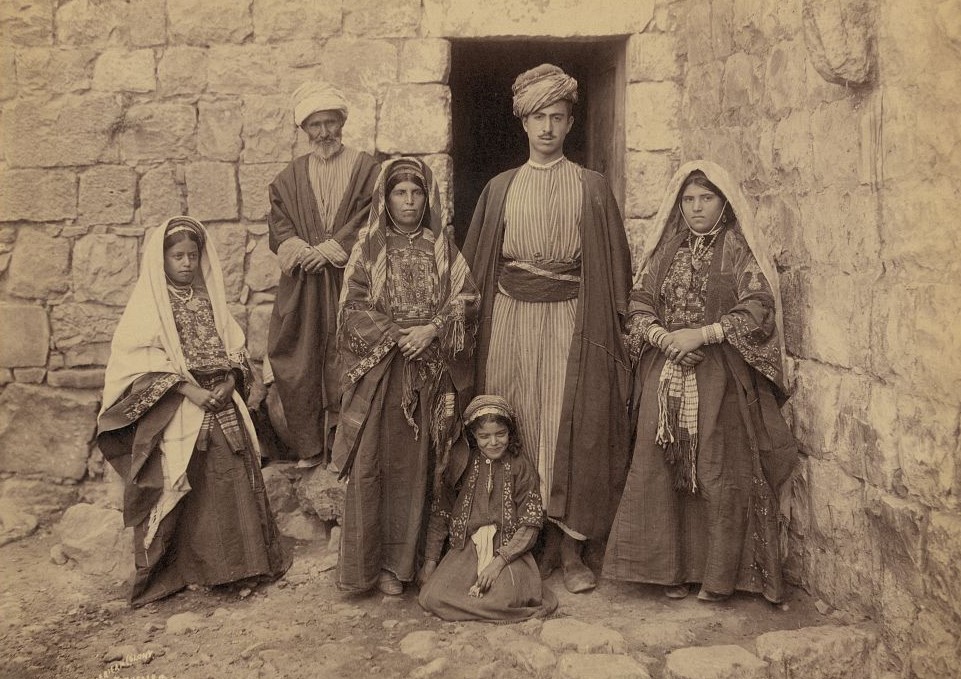
In carrying out its historical mission of helping British imperialism by driving the poor Arab peasants from the soil, Zionism makes use of two factors. The first is the Arab big landowners who “sell” to the Zionist societies the peasants’ land, the real possessors and cultivators of which, owing to the peculiar conditions of land registration, are often quite unaware that it does not belong to them but to the Effendi (the big landed proprietors). Nay more, the big landowners are at the same time dealers in land, who bribe the elders of the Arab villages, make dirty bargains with the government officials and in this manner hand over the Arab lands to the Zionist colonising companies. Once the first part of the business (the fraudulent bargaining away of the peasants’ land without the previous knowledge of the fellahin) is concluded, the Zionists, backed by the authority of the law, can now proceed to the second act of land-robbery.

This is where the Zionist labour leaders, the section of the II. International, come on the scene. The chief task which the Zionist socialist set the members and supporters of their party, is to carry out the seizure of the land. The poverty stricken Jewish workers are instigated in the most unscrupulous manner against the Arab small peasants in order to induce them toseize the latter’s land. Numerous bloody collisions result in the carrying out of this task. Upon the ruins of the small Arab farms there arise huge orange plantations, upon which a few parasitic capitalists exploit in the most unheard of manner hundreds of Jewish workers, who have “won” this land, and thousands of Arabs, mostly expropriated small peasants. And that is Zionism.
The only force which offers resistance to this perfidious imperialist-Zionist-feudal-reformist game is the Communist Party. The Arab nationalists, who at first protested in words against the monstrous land robbery, have now found ways and means of becoming, so to speak, “sleeping partners” of the Zionists. They are fulfilling their national duty by endeavouring to forestall the Zionists in purchasing the fellahin’s land. The rich Wakf administration (Mohammedan church lands) has lately been competing with the imperialist “Jewish National Fund” in the purchase of land. In both cases the cost has to be borne by the fellahin.
The Communists, on the other hand, place in the foreground the interests of the Arab small peasants. The fighting slogan of the Communists is, active revolutionary fight against the expropriation of the small peasants’ land by the Zionists. Brotherly union of the Arab and Jewish workers in the fight against the base actions of the social imperialists, is the way indicated by the Communists.
Against this dear and plain policy of the Communists there is concentrated the whole fire of the British, Zionist and Arab reaction. On the Arab New-Years’ Day (8th of June) some nationalist groups in Jaffa wanted to hold a demonstration against the sale of land to the Zionists. The Communists immediately placed themselves at the head of the movement, but turned it in the direction of the light against imperialism and for the dividing tip of the land of the big landed proprietors.
The Communist appeals made a great impression upon the Arab population, and the government summoned troops and police from all parts of the country in order to prevent a demonstration. As a further counter-measure it called upon the Arab notables (big merchants, landowners and Sheiks) to render help in suppressing the Communist demonstrations. The Arab notables, some oi whom only very recently posed as being very radical and even coquetted with the Labour movement, immediately complied with this demand. A few weeks later the British High Commissioner was able to express his thanks to these notables with whose help he had succeeded in quelling the Communist disturbances!
So far as the Zionists are concerned, the object of the Communist struggle is to expose the true character of Zionism. It is the chief aim of the Zionists to prevent the truth coming to light, even if it means employing the most brutal and criminal means. Thus the Communists, who are fighting against the Arabs being driven from the soil, are boycotted, beaten, driven from their homes, handed over to the police and condemned to imprisonment, compulsory labour, and deportation.
A Communist delegate who, at a Jewish “meeting of deputies,” protested against the driving of the fellahin from the soil was prevented from concluding his speech, howled down and thrown out of the hall by the Zionist socialists who talk so much of justice and democracy. Similar incidents occur at trade union meetings, public gatherings etc.
The fight for land has become the cardinal point of development in Palestine. It is an important instrument of British imperialism and at the same time an episode in the war preparations which are at present being made in the Near East. For this reason the Communist Party is connecting Its anti-war campaign with its immediate slogans in the fight for land and with the fighting slogans against imperialism and Zionism, for the alliance of the workers and peasants and the agrarian revolution.
International Press Correspondence, widely known as”Inprecor” was published by the Executive Committee of the Communist International (ECCI) regularly in German and English, occasionally in many other languages, beginning in 1921 and lasting in English until 1938. Inprecor’s role was to supply translated articles to the English-speaking press of the International from the Comintern’s different sections, as well as news and statements from the ECCI. Many ‘Daily Worker’ and ‘Communist’ articles originated in Inprecor, and it also published articles by American comrades for use in other countries. It was published at least weekly, and often thrice weekly.
PDF of full issue: https://www.marxists.org/history/international/comintern/inprecor/1929/v09n38-aug-09-1929-Inprecor-op.pdf
 Revolution's Newsstand