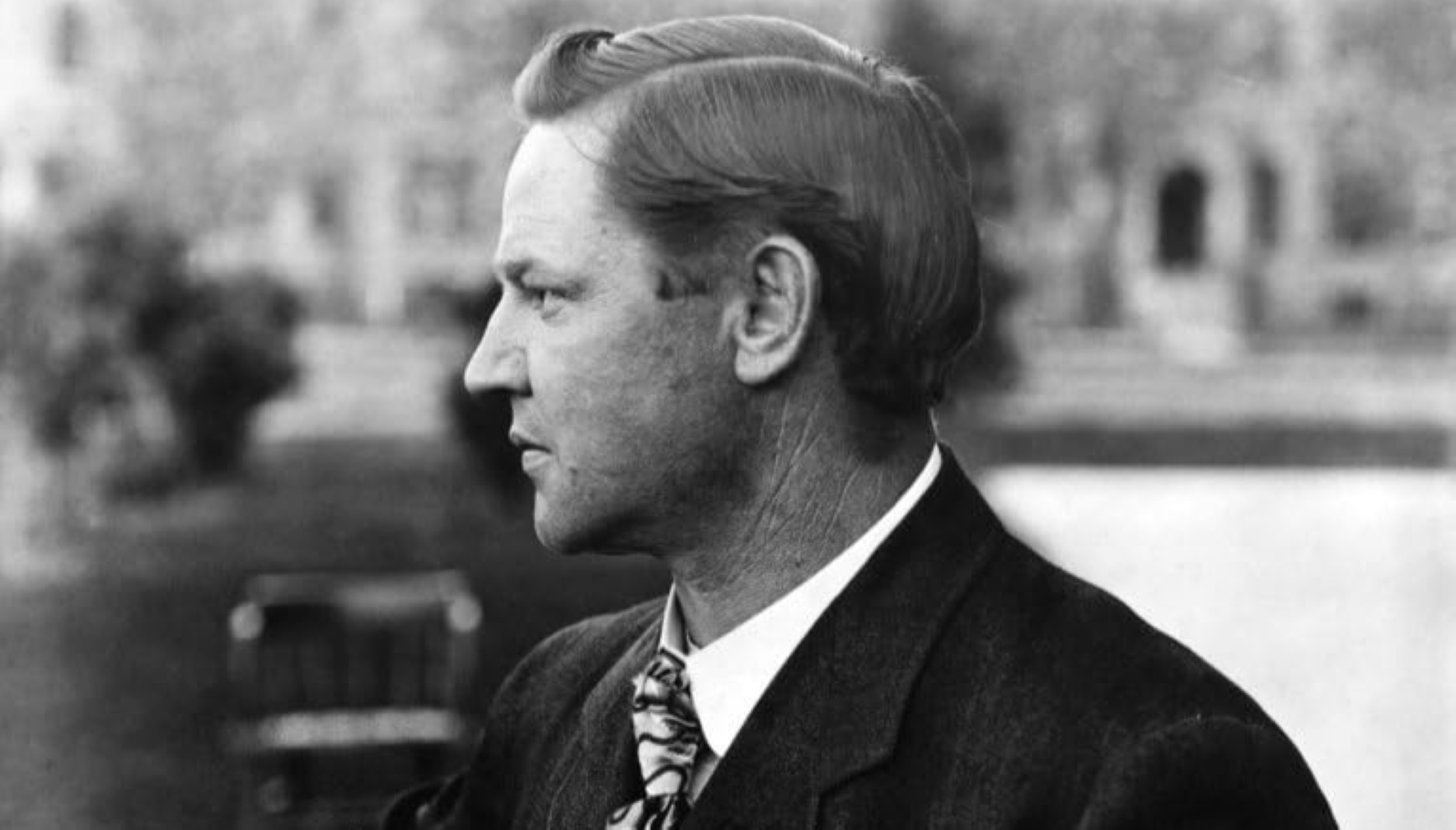
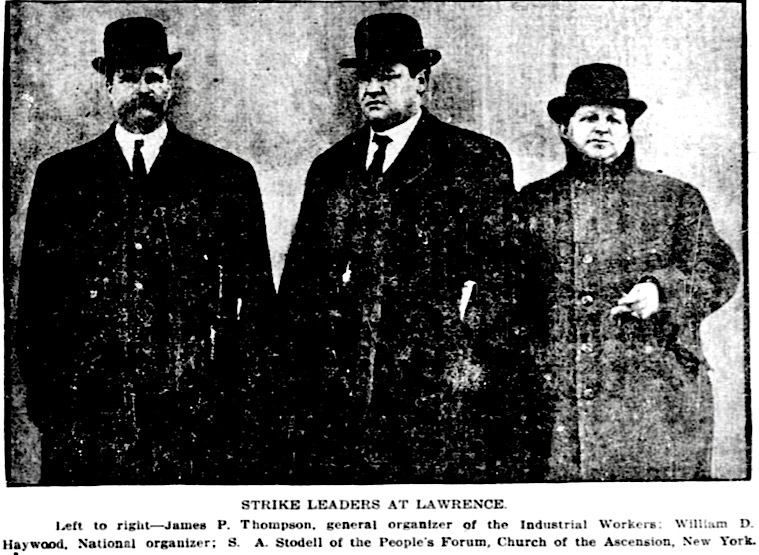
I.W.W. leaders William D. Haywood and James P. Thompson speak on the class war to a packed meeting of Denver workers in 1911.
‘Denver Haywood Meeting a Big Success’ by Carl Rave from Industrial Worker. Vol. 3 No. 27. September 28, 1911.
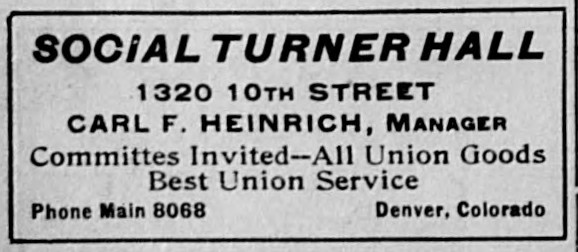
Our meeting on September 14 at the Social Turner hall in Denver of local No. 26 was a grand success, in spite of the rainy weather. The hall was filled to the gallery and the audience was very attentive, as the majority remained until the end of the meeting without the slightest interruption of anybody, except the frequent applause.
Bill Haywood opened the meeting as the chairman of the evening and gave us a most striking talk of the insidious charged up crimes against the McNamaras. He explained very graphically how the agents of the Steel Trust, Manufacturers’ Association, in short, how bloodhounds of the plutocratic despots had kidnapped them in order to break the neck and bones of all labor organizations.
Haywood made a comparison of the McNamaras persecution with the Steunenberg case and the Haymarket tragedy of Chicago. So that we may put an end to all such trumped-up charges against members of the working class in the future, he urged the men and women present to develop their power and use it so against the enemy to such a degree that persecutions and prosecutions of such a cowardly nature will be impossible in the future.
The audience seemed to like Haywood more than ever, judging from the applause and interest taken in his speech. Haywood asked and urged the working men and women present to join the I.W.W. in order to put a stop to this and all other misrule and despotism of capitalism and finally abolish the wage system. Haywood appealed for a liberal collection, which was answered generously, as it amounted to $16.14.
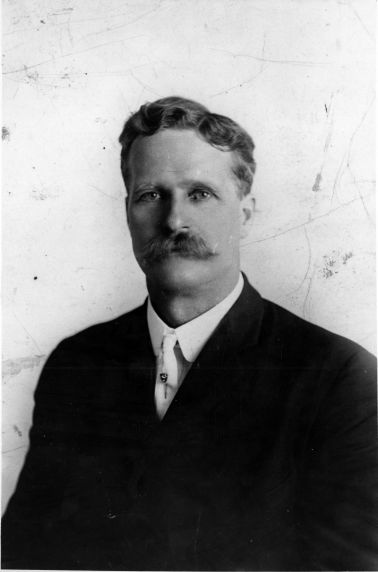
Thompson analyzed and explained the present system from cause to effect in the clearest manner and with his plain expressions not only proved to be a good agitator, but, indeed, a very excellent teacher to his audience.
His speech at times was full of humor, of stern reminders, of satirical chastising, or ridicule, to the simple minded, of smashing cobweb logic. He gave each according to his needs and taught the open minded full and plenty to digest. The system applied by Thompson in teaching ought to be more heeded by our own agitators than anybody else. He is certainly turning out a heavy artillery in the labor movement against the capitalists. In him we have a Karl Marx transformed into a longshoreman.
Thompson illustrated most forcibly the economic law of “The expansion and contraction of the unemployed causes the rise and fall of wages.”
In connection with this he told what the universal eight-hour day would do for the wording class, as, for instance, he asked, “If 40 Hours of labor had to be performed, how many men would, it take?”
Someone said, “Four men at 10 hours a day each.”
If each man would work only eight hours a day, how many men would it take?
Five men (answer).
If 1,000,000 men would work eight hours instead of 10 hours a day, how many additional would he required?
Answer: 1,000,000 more men.
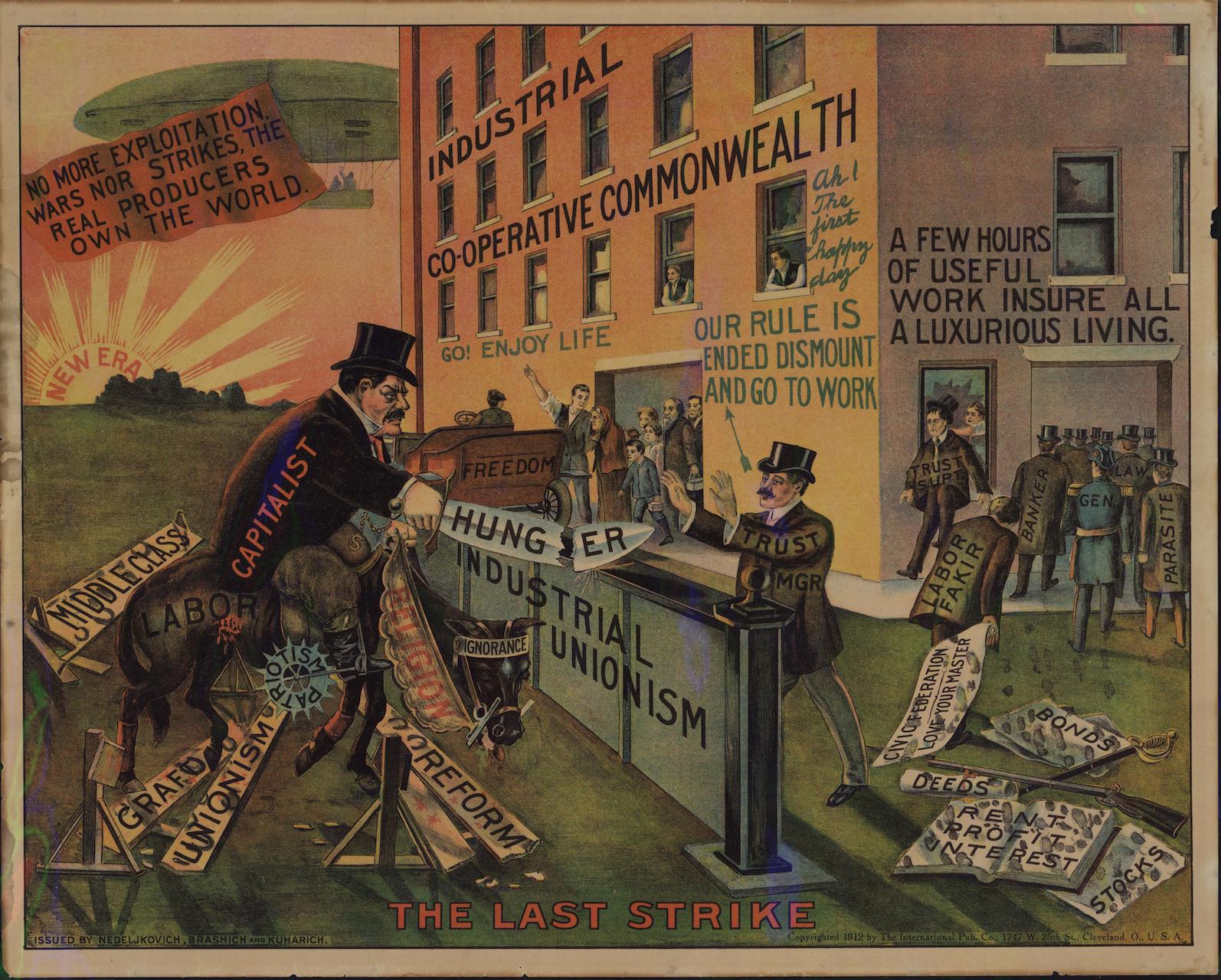
If these men would use shovels, then just as many more men as would be needed just so many more shovels would have to be used. The same is true in other lines of work with different tools and machinery. This would give work to men making these tools and machinery, etc.
He also told us: “If you get the eight-hour law by the government it wouldn’t do you any good because it would be either unconstitutional or the boss could speed you up.”
Here Thompson rubbed it into the parliamentarian-minded men and told them at the same time, “Picnic, if you can not understand this, he at least honest and don’t let the windows of your brains, slam shut.”
He also handed it strong to the slave who refuses to take advantage of the boss whenever we have him in our power. He said, “Somebody ought to take a custard pie and paste it all over his face.”
Furthermore, he said. “The eight-hour day can be made a law in the union meetings and enforced by the men on the job.” The only time the politician makes an eight hour law is when the men on the job have enforced it already. He does this to make the workingman believe what they can do and are doing for the working class.
The hot air revolutionist got the worst satirical spanking of all and he made a comparison of him with a girl he once met who told him she could swim and at the same time admitted that she had never been in the water. Just as little as she could swim in reality, just so little are we able to accomplish the revolution by hot air only.
He said also “Competition among the workers is the direct cause of poverty, low wages and misery. Poverty Is the direct cause of overwork, and overwork is the direct cause of the unemployed army. Unemployment causes worry and worry is a cause of premature old age and death. When the hours are reduced and we refuse to be speeded up, it immediately reduces the number of the unemployed, and this in turn, gives rise to higher wages.
Higher wages means better food, better food means better blood, the eyes begin to sparkle, cowardice and fear disappear. I can imagine I see the time coming when it will be hard to tell who are the rulers, the workers, or the shirkers—the capitalists.” Thompson ended with a strong appeal to join our union if we want to hear the whistle blow for the capitalist to go to work. Then each heart only beats so many strokes until it stops forever.
The Industrial Union Bulletin, and the Industrial Worker were newspapers published by the Industrial Workers of the World (IWW) from 1907 until 1913. First printed in Joliet, Illinois, IUB incorporated The Voice of Labor, the newspaper of the American Labor Union which had joined the IWW, and another IWW affiliate, International Metal Worker.The Trautmann-DeLeon faction issued its weekly from March 1907. Soon after, De Leon would be expelled and Trautmann would continue IUB until March 1909. It was edited by A. S. Edwards. 1909, production moved to Spokane, Washington and became The Industrial Worker, “the voice of revolutionary industrial unionism.”
PDF of original issue: https://www.marxists.org/history/usa/pubs/industrialworker/iw/v3n27-w131-sep-28-1911-IW.pdf
 Revolution's Newsstand