
A series of short notices telling the story of the death and funeral of ‘Skippy Baritone,’ who died of starvation in New York City over Christmas of 1932 during the Great Depression. ‘Baritone’ was a homeless Black worker, a member of the Unemployed Council, who had been evicted with others from his squat on W. 39th St. His comrades in the Unemployed Council and the homeless community provided him with a guard of honor and public funeral, only to be attacked by the police. His death was a rallying cry for the city to take action and open unused buildings to house people. How far we have come, comrades.
The Death and Funeral of ‘Skippy Baritone’ from the Daily Worker. December, 1932.
DEMAND USE OF EMPTY BUILDINGS December 24, 1932
Homeless Blame City for Worker’s Death
NEW YORK, Dec. 23.—Charging the Department of Public Welfare with responsibility for the death of Skippy Baritone, a Negro worker who was found dead from starvation and exposure in a slaughter house at 39th Street and 12th Ave., the City Committee of the Homeless Men, affiliated with the New York Unemployed Council, demanded at the office of Commissioner Taylor to open up various public buildings where various unemployed workers could obtain shelter. The delegation was received by Taylor’s assistant, Kelly, upon the former’s decision to see them. The delegation left with Kelly the resolution containing the demands of the homeless men who then held a meeting at 10 East 17th St., at 1 p.m. for the purpose of making plans for further action.
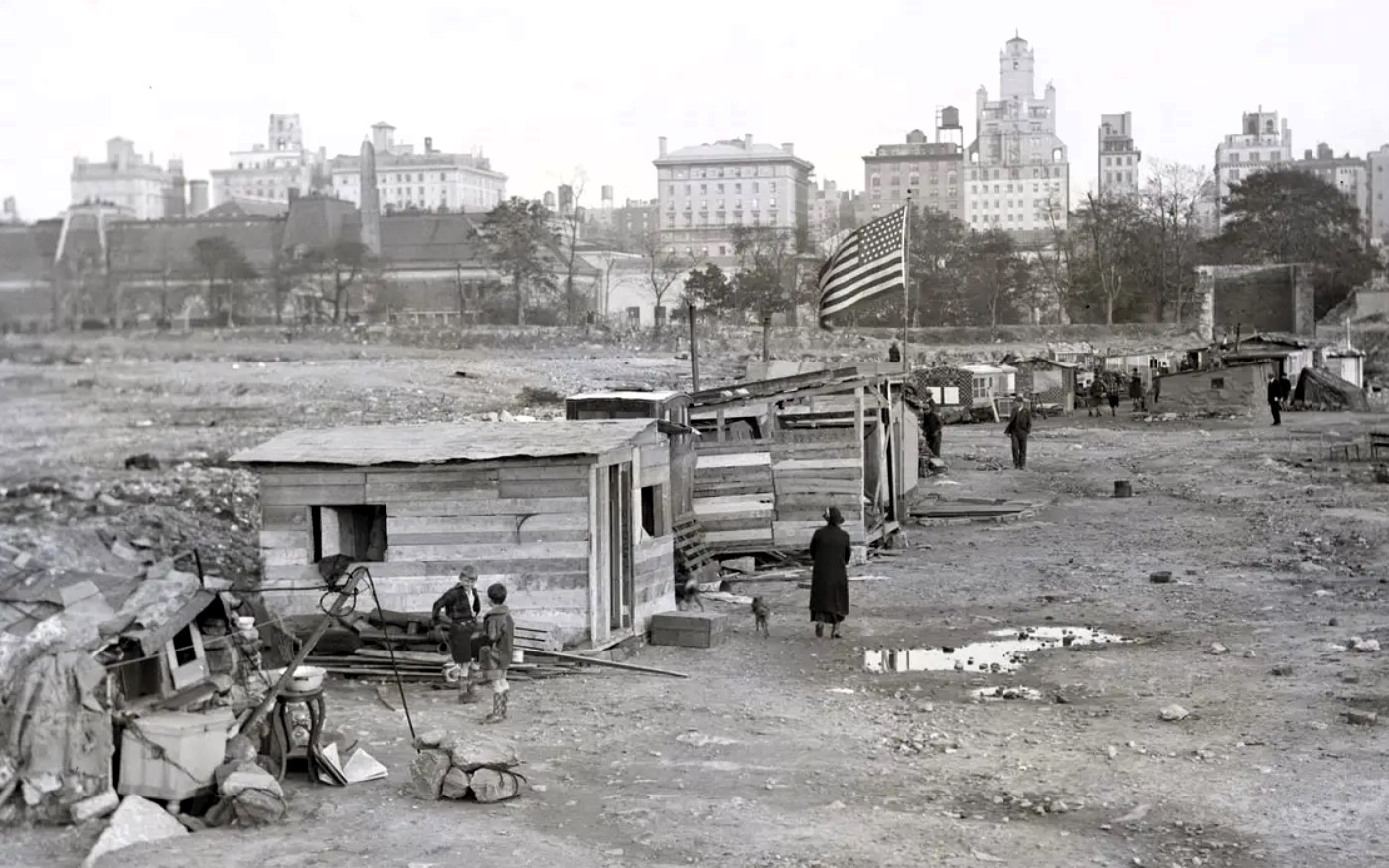
Refuse To Open Buildings
Although authorized by the city to open various vacant buildings for the use of homeless, Commissioner Taylor refuses to do so, acting in the spirit of the decision which is obviously only a fake “relief” gesture. When confronted with this fact, Kelly replied that these buildings are condemned, and “anyhow, they are to be used for families.” Charging special discrimination against Negro workers by the relief agencies, the resolution presented to the Public Welfare Dept., declares, “Just a few days previous to the death of Baritone, a committee of homeless workers had placed their grievances in your office in connection with the opening of such buildings as the city government has already authorized you to do.”
The action of the City Committee of Hornless men is one of the first steps to compel action on the promise wrung by the jobless from the city for shelter. At a meeting of homeless men Friday at the Unemployed Council of Greater New York, it was decided to hold a mass funeral for Skippy Baritone, Negro worker, who died of exposure and starvation. The funeral will be held Tuesday at noon from the Unemployed Council at 478 Tenth Ave.
They Called Him “Baritone” by Dan Davis. December 26, 1932.
“Baritone’s” Voice Stilled by Starvation; Mass Funeral Tomorrow at West Side Council
NEW YORK.—The workers called him “Baritone.” No one knew his real name. But his song was one of the few bright spots in their lives, His rich Negro voice mellowed the bleakness of the empty slaughter house—the 39th St., “Hooverville.” He sure made them feel good with his singing.” So they called him Baritone.” For several days they missed him. That was after they had gone to Commissioner Taylor and demanded better shelter and relief. He promised them “in a few days.”
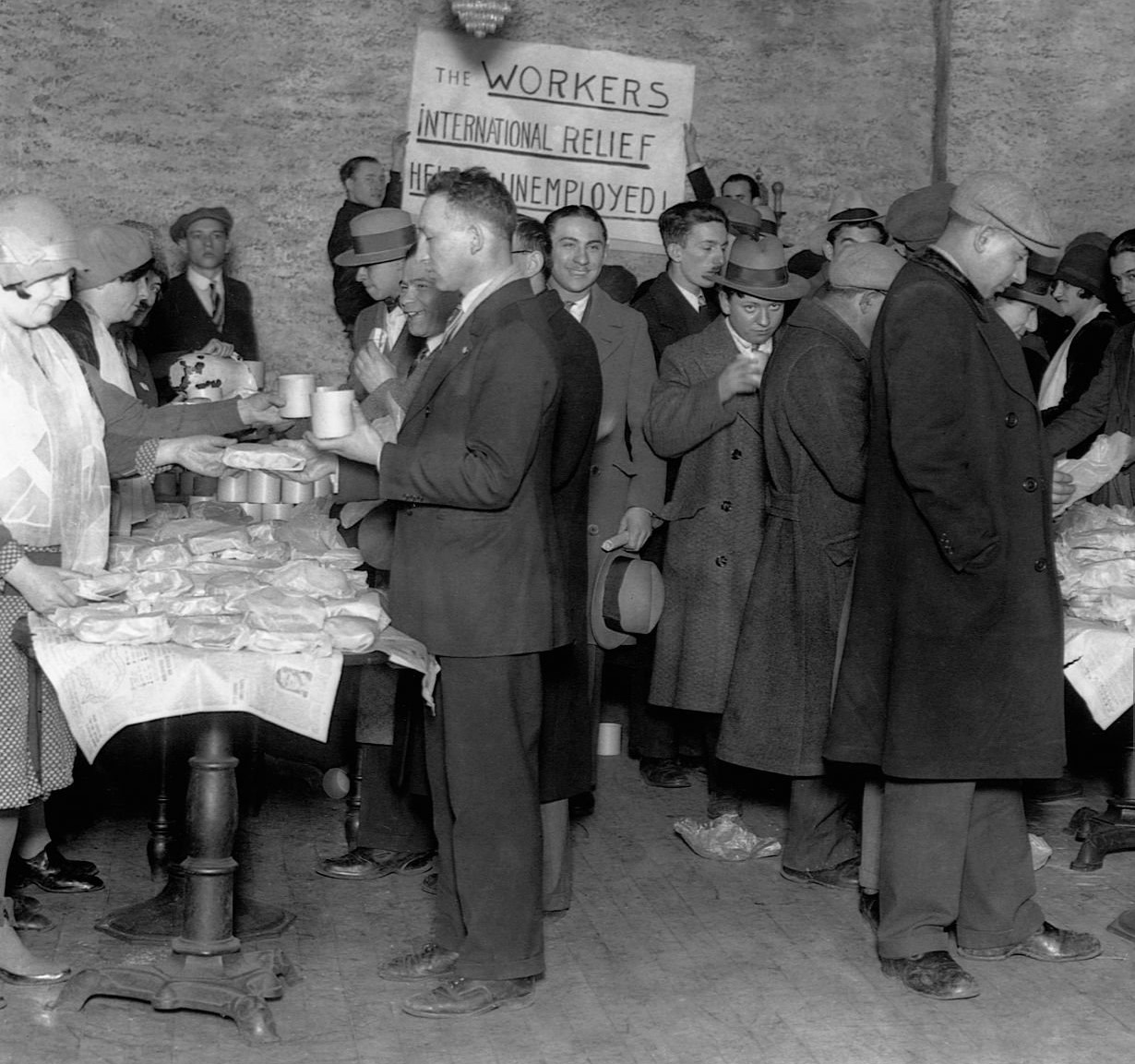
“But what about the men who are sick?” they had asked. “That’s your problem,” Taylor said. “Baritone” was one of those who were sick. They reported back to the workers in the 39th Street building. A little hole under the loading platform, 2 feet in diameter, was the entrance. Until a few weeks ago these workers had huddled in this hovel, ashamed to walk the streets in the daytime. Then they were drawn into the West Side Unemployed Council. So far they had forced the city to promise them a building “in a few days.” In those “few days,” “Baritone was missing.
Eaten By Rats
Last Wednesday they found him. A worker looking for a more sheltered room stumbled across one that had been unused. It was dark. He lit a torch of newspapers and looked around. There on a frame covered with old rags and cotton lay “Baritone.” The flash of his face was tom away. His upper lip hung in a rip over his chin bone. His skull stood out in ghastly relief. The throat that once carried mellow notes was a big hollow. Capitalist starvation in the person of Mr. Taylor, had murdered “Baritone.” Rats, the bosses blessings to workers had eaten away his flesh.

Not one capitalist paper reported his death. He had finished his life of making profits for the bosses in the city market where he worked until they needed him no longer. Now his tom body lay still. Dead from lack of the food he had handled all his life!
Tomorrow afternoon at 12 o’clock the workers of New York will take “Baritone’s” body from the city morgue. They will march through the streets he once knew, past the West Side Unemployed Council at 478-10th Ave. and then to a mass protest meeting at Union Square. A challenge to all workers to take up the fight, for who of us might not be next to go?
“Baritone’s” song was stilled by capitalism. But the voices of his fellow workers roar on to the struggle. “The whole front of the West Side Unemployed Council headquarters carries a big sign: “In Memory of Skippy Baritone, Homeless Negro Worker, who died After Being Refused Shelter and Relief By City Welfare Department.”
All workers’ organizations are asked to send large delegations to the funeral, and to send contributions for funeral expenses either to Funeral Arrangements Committee, 10 E. 17th St., or to West Side Unemployed Council, 478 Tenth Avenue.
POLICE ATTACK MASS FUNERAL. December 28, 1932.
Workers in Tribute to Skippy Baritone
NEW YORK.—The workers or New York buried Skippy Baritone yesterday. Mounted cops charged into them, threatened them, tried to break up their funeral procession but their lines held fast, steeled by the bonds that made them and the homeless Negro worker, Skippy Baritone, comrades. Baritone —no one knows his real name—was killed by starvation. Together with about 50 other homeless Negro and white workers he lived in an empty slaughter house at 639 W. 39th St. The cops raided the place and kicked out Its jobless occupants, arresting 15.
Cops Attack Procession
At noon yesterday a crowd of workers gathered at the West Side Unemployed Council, 428 Tenth Ave to pay a revolutionary tribute to their dead comrade. A meeting was held, at which Gil, organizer of the Unemployed Council, spoke. Then the funeral procession started, the hearse and two private cars in front, with a guard of honor consisting of ten workers. Leading all was the Workers International Relief Band. The procession marched up Tenth Avenue to 45th St., turned east to Eighth Ave. and then south. At 42nd St. five mounted cops tried to break it up. At 39th St. again the police charged. But the workers’ lines held solid. A worker correspondent reported the scene to the Daily Worker in the following words:

“This time the workers in the procession, together with the workers on the sidewalk, showed such fighting spirit that the cops did not dare to break it up altogether, but forced the procession to turn back to Tenth Ave. marching down 18th St. to Union Square. The police gave tickets to the private ear drivers that were in the parade. They also told the driver of the hearse to hurry away or they will throw the coffin out.”
Mass Meet In Union Square
At Union Square a mass meeting was held, attended by about 1,000 workers despite the rain The meeting was addressed by Sam Wiseman, organizer of the Unemployed Councils of Greater New York, and by Morris Taft, of the International Labor Defense. They called on the workers to keep alive the memory of Skippy Baritone by intensifying the struggle for winter relief, shelter for the homeless, against evictions, etc. The meeting elected a delegation of six homeless workers, two of them Negroes and one a woman, to go to Mayor McKee and demand: 1. That the city actually turn over the empty buildings that the Board of Estimate had promised to the homeless; 3. That the city pay the funeral expenses.

The committee went to City Hall, where they were told that McKee was sick. His secretary tried to put them off, but they insisted on presenting their demands. The secretary told them that a survey was being made of the buildings, after which something—maybe—would be done. He refused to have the city pay the funeral expenses.
Skippy Baritone Is dead. But the fight for immediate cash relief, for unemployment insurance, for shelter for the homeless and against eviction goes on.
The Daily Worker began in 1924 and was published in New York City by the Communist Party US and its predecessor organizations. Among the most long-lasting and important left publications in US history, it had a circulation of 35,000 at its peak. The Daily Worker came from The Ohio Socialist, published by the Left Wing-dominated Socialist Party of Ohio in Cleveland from 1917 to November 1919, when it became became The Toiler, paper of the Communist Labor Party. In December 1921 the above-ground Workers Party of America merged the Toiler with the paper Workers Council to found The Worker, which became The Daily Worker beginning January 13, 1924. National and City (New York and environs) editions exist
 Revolution's Newsstand