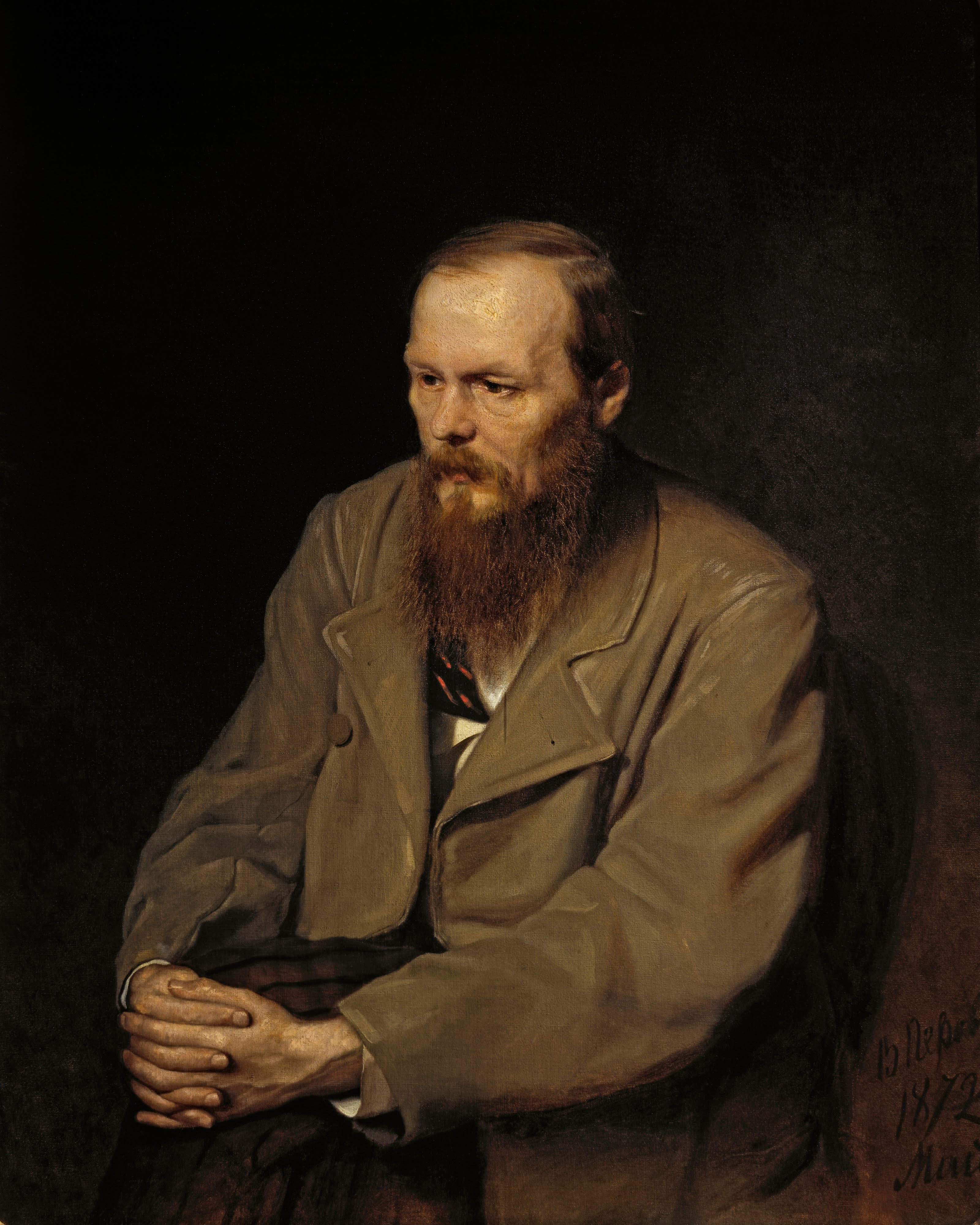
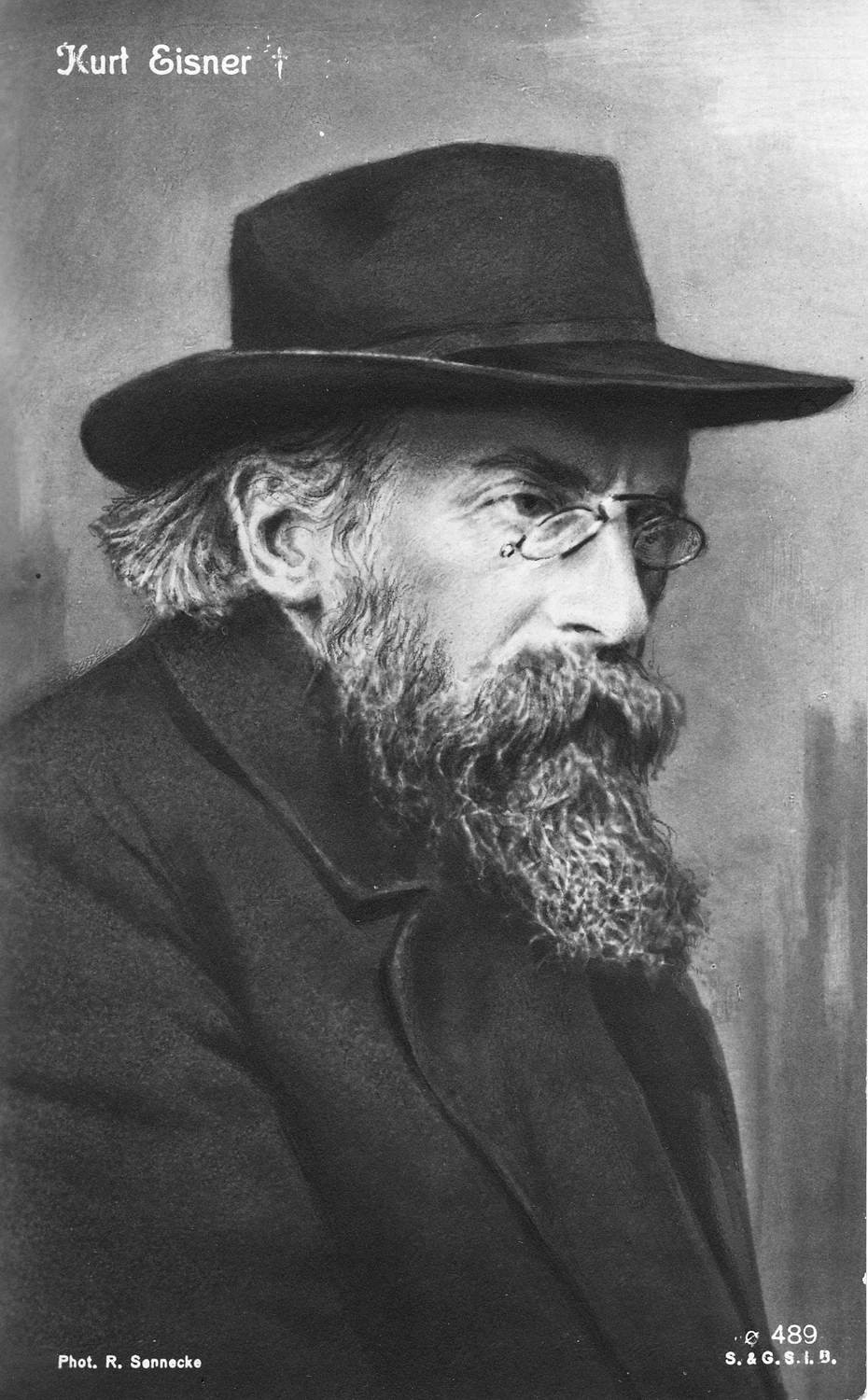
‘Soviet Russia’, the New York-based, semi-official voice of the Soviets before U.S. recognition, hosted a series to introduce readers to the great historic Russian writers with essays written by prominent revolutionaries. Kurt Eisner, veteran revolutionary critic and leader of the Bavarian Soviet, martyred in 1919, was chosen to represent Dostoevsky. Eisner’s marvelous essay, first published in the January, 1901 Sozialistische Monatsheffe, explores the writer through his lead character of Crime and Punishment, Rodion Raskolnikov.
‘Fedor Dostoievsky’ by Kurt Eisner from Soviet Russia (New York). Vol. 6 No. 4. March 1, 1922.
(Kurt Eisner, а brilliant German publicist, was a prominent member of the Socialist Party; during the war he took a stand similar to that of Liebknecht. He was the leader of the Revolution in Bavaria and his assassination by a monarchist on February 23, 1919, was the immediate prelude to the formation of the Bavarian Soviet Republic.)
I.
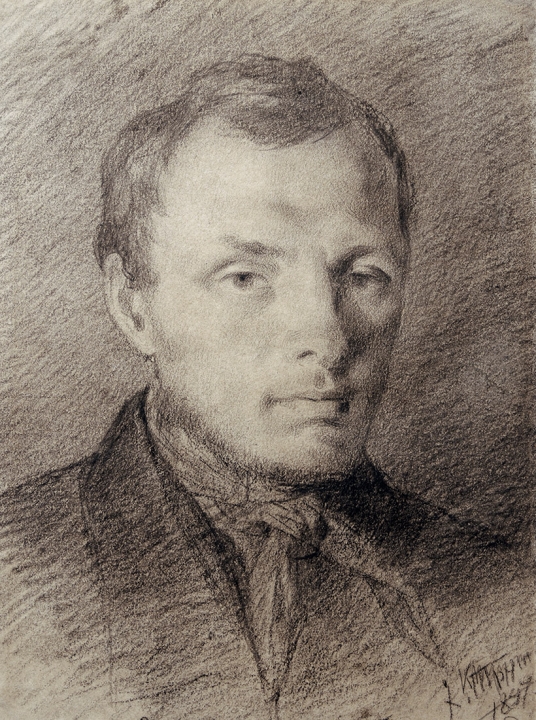
ABOUT the middle of the eighties of the last century, at the moment when the young naturalistic school of Germany was breaking its way into literature, Fedor Dostoievsky’s chief work, Crime and Punishment, was much read and was exerting a powerful influence. This Russian novel was written and published in the original when the representatives of the “youngest” Germany were born, in the year 1867. When they entered the universities, Raskolnikov began to live in them, for in a way they had grown up together with him. In the literary productions of this agitated period of German letters, Raskolnikov’s influence may often be noted. The bourgeois déclassés met with sympathetic views in Dostoievsky’s uncanny and fateful novel, which depicts the destiny of a brain. The soil that had been socially bequeathed to them was disappearing under their feet; their mythological traditionary faith was gone; a social conscience was stirring painfully; revolutionary ideas dominated them vaguely and amorphously; they cultivated les grandes passions, which are after all but petty aberrations; they longed for a mighty lawlessness, to shatter all values; they beheld in raptures the rosy dawn of a millennial kingdom, to which they, however, rendered no service; they felt at bottom that they were only clanking their chains, that they were purposeless and superfluous, mere observers of the sober, active world. They delighted in intoxicating themselves with Raskolnikov’s psychology. They had the lust of youth to descend into a chaos of a consciousness stirring with elementary emotions, disorderly in its moods of thought, to bore their way into the wilderness of the ego in ferment, to expose themselves in hidden weaknesses, lies, treacheries, to be their own detectives. Youth delights in listening inward, in following the contortions of a psychosis; every newly discovered intimate detail seems to it as an important revelation. The maturing spirit gradually loses its interest in that which is merely psychological, and learns that these nine-days’ wonders are no more than recurrences of the ever-recurring, the unalterable, inevitable fact, and that this psychological ego is nothing more or less than the primeval unchanged human beast that has hardly any new revelation of value to offer, and after the fruitless years of psychological brooding there follows an active period of clear, creative and fruitful thought and action, the true and only vehicle of mankind’s evolutionary development.
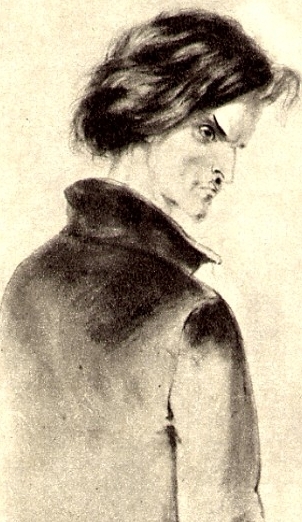
Crime and Punishment is a dangerous book for the young. Raskolnikov’s diabolic power is destructive, and may easily bend and break them that are weak. It is a creation of the night, of nervous phantasm; the corroding naturalism of insanity blazes in it.
II.
The tremendous Utopia which is the form Russia assumes in our eyes gives birth to the monsters of Russian art, one of which is Raskolnikov. Never have crime and the criminal been depicted with such compelling power, permitting room for never a moment’s doubt, and yet, his is not a crime that would have any interest for criminal statistics, it is a Utopian crime, a crime generated in a crucible; Dostoievsky is the naturalist of the improbable, at least of the extraordinary; he evolves the consequences of a mood, he makes dead earnest of a play of thought. A stormy yearning for new, subversive theories, a yearning that is characteristic of the Russian intelligentsia and that commonly exhausts itself in the ecstasy of disputation, dashes into fact—a course that is shorter, to be sure, in Russia, than anywhere else. Raskolnikov, the intelligent student, commits а murder out of a theory. He kills an old, repulsive, worthless money-lending woman, a vermin, in order to clear a way for himself with the conquered booty to liberty, to the great good of mankind— a Cain-Christ. He is dominated by the theory of the Superman. In Raskolnikov’s book, the concept later used by Nietzsche was still attached to the name of Napoleon. “I once put to myself the question,” Raskolnikov tells Sonia, the Puella dolorosa, “as to what would happen if Napoleon, for example, had been living in my stead, and had not had the career that we know was his, if there had been in his life no Toulon, no Egypt, no passage over Mont Blanc, but only an old, unprepossessing woman, the widow of a government clerk, whom he would be forced to kill in order to take money out of her chest—for his career, you see?—Now the point is, would he have decided to do it if there had been no other escape for it? Would he not have resisted, the whole thing being too little illustrious and—sinful too, after all? Now, I tell you, I have been torturing myself with this question for some time, so much so, that it seemed unspeakably humiliating to me when I finally—and quite unexpectedly—guessed that he not only would not have resisted, but that it would not even have entered his head that the deed was in any way unworthy of perpetration—he would not even have understood what there was to be resisted! If he had had no other road before him, he would have throttled her himself, before allowing her to utter another sound; he would not have given the thing a thought. Now, I too—have given up these reflections, I have killed her, following the great man’s example, and my act was entirely on that scale; I have only slain vermin, Sonia, a useless, ugly, malevolent thing.”

And then later, just before he delivers himself up to the law and collapses under the burden of guilt, he exclaims: “What! I slew an ugly, evil creature, an old usuress of no further use to anyone, whose elimination was equivalent to a remission of sin, who was sucking the blood from the poor, and you call that a crime? I assure you it is nothing to me; I shall not expiate…Blood is shed in the world like a cataract that rushes in its course, like champagne, and for shedding it laurels are distributed at the capitol and the shedders are called benefactors of mankind. Just look at me and see who I am! All I wanted was the good of mankind; I should have achieved it a thousandfold instead of merely committing a folly, not so much a piece of folly as an indiscretion,—the whole idea was not so bad, after all, as it is now made to appear by its failure!”
Failure! Raskolnikov is not Napoleon; he has the weak conscience that is characteristic of the heroes of Russian literature, and he does not murder in cold blood as a mere application of his theory, but in a state of irresponsibility and madness, when physically exhausted by privations and hunger, physically tortured by sore distress pressing in upon him on all sides—the victim without will of a diseased Zwangsvorstellung. His crime is fruitless. The few watches and rings that he hastily snatches together—he does not take the old woman’s fortune—he buries. He is now driven by only one remaining thought, namely, to obliterate the traces of his deed, to fight against his unmasking. He is determined to live, if only on the narrow ledge of rock over the abyss. But Raskolnikov is no Napoleon. Although he attempts to flee, he drives himself into the net.
III.
Literature has no other book to show in which the criminal’s fear of discovery is presented with such delicate cruelty and demonic power. And there are many pages in this novel, of which each sentence concentrates an entire tragedy. The ancient shudder in the presence of the Erinnyes here appears intensified and sharpened by a psychological criminology. In Dostoievsky, the merciless inquisitor who traces all the processes of the feverish consciousness as in a test tube, and who directs these processes, has become an artist. The sick brain sets down its own record moment by moment. Murder arises against the murderer and transforms him into a victim of torture and unending vivisection. Every word Raskolnikov speaks betrays him; his every gesture is the Nemesis of its predecessor. The higher the intelligence of the guilty man, by which he escapes the meshes laid for him everywhere, the more hopelessly he drifts into self-betrayal. He is both cat and mouse in one. Insanity relentlessly besets him; hell sends her racking dreams. Raskolnikov has not the robust hardness of the Superman: he is a soft, kind, selfsacrificing human, possessed by a fixed idea.
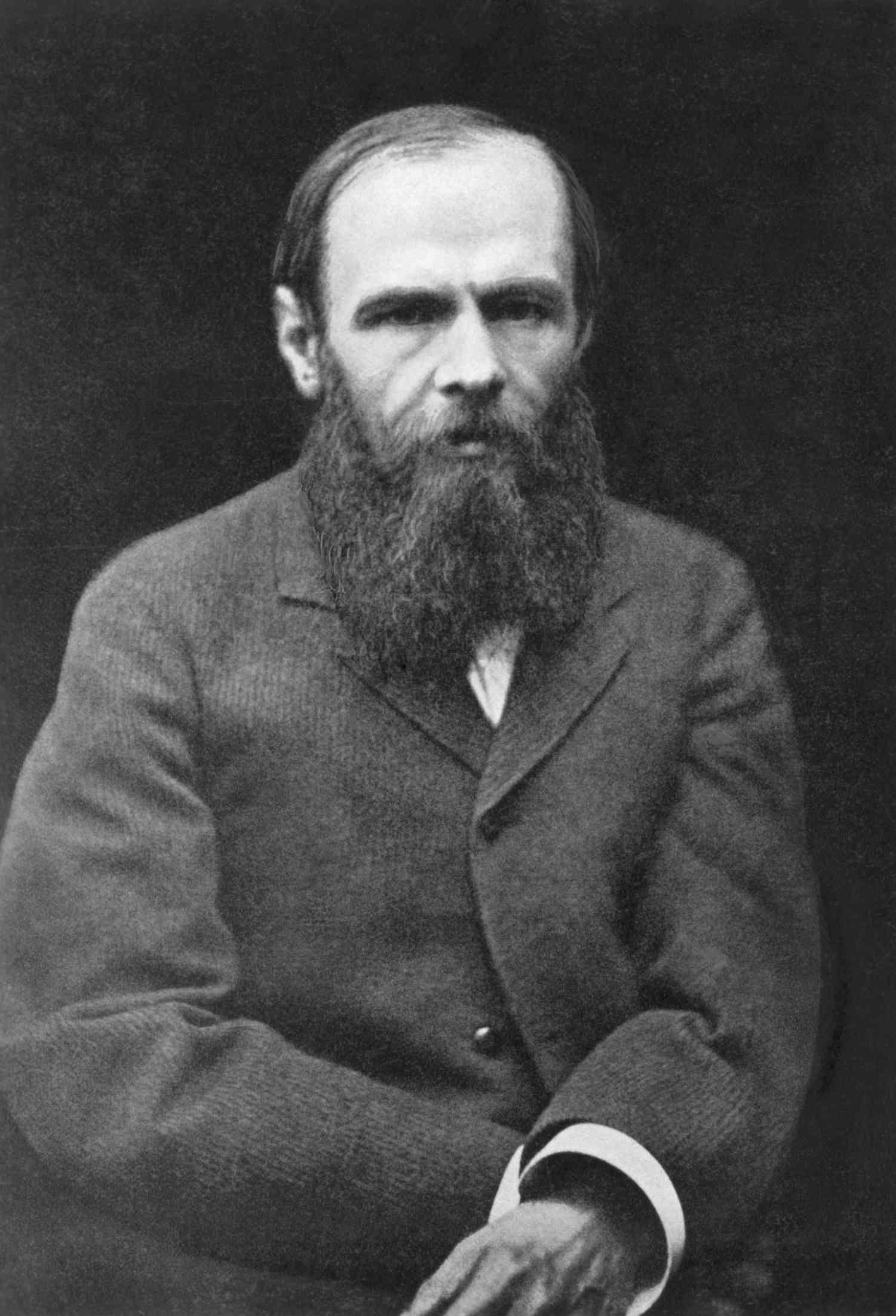
The psychological monodrama in which Raskolnikov appears rests on the broad basis of a social study of Russian misery. It is not so much the world of the poor as the world of the impoverished. The worse fate of the down-and-outs, the déclassés, is the background. The malicious wayward humor which is characteristic of Russian literature produces the nuances in this gray world of wretchedness, rascals and alcohol. And from the realm of the possessor come base voluptuaries defiling even the outcasts.
All the characters of the novel are analyzed in а satiric-ironic spirit. This gives them, in the eyes of the non-Russian reader, an exotic and freakish countenance. At bottom it is a society of fools and recluses—all these wrecks and these honorables of higher officialdom and of the well-to-do. Shrill shifts of mood, a Slavic racial trait, often confuse the characters, making them composite rather than individual.
Into this whirlpool of misery and derision, there drifts the white blossom Sonia, the immaculata of street prostitution, who has sold her childlike body to get bread for her family. Nothing has had the power to soil her, for all her essence is in her gentle eyes, which have not gone into the bargain. Raskolnikov takes refuge with her, to confess his guilt to her; his wounded soul is restored in her presence, in the rebirth of resurrection.
IV.
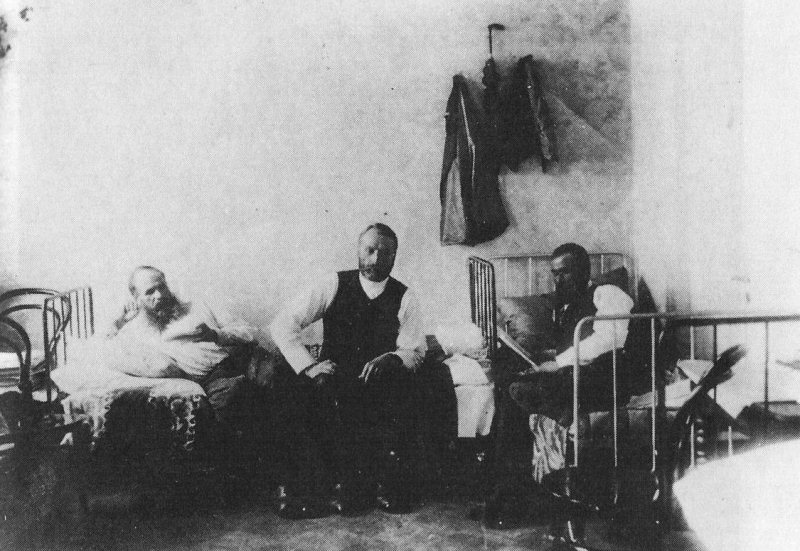
Russia’s horizon is Siberia. Siberia’s horizon is the New Testament. Punishment brings external cleansing; the gospels lavish inner redemption. Raskolnikov is like Tolstoy’s novel, Resurrection. During the generation that lies between these two works, the moods of the greater Russian art have passed through practically no change. Raskolnikov seems like an older edition of Tolstoy’s Resurrection. In action and characters, psychology and tendency, the two works are alike in essence. But Tolstoi is milder, and the ghastly odor of blood in Raskolnikov’s visions is strange to him. The protest against that which is, the negation of society and the despair of a practical solution— these are also found in the later work, equally sharp and hard. Tolstoy made no advance over Dostoievsky. Instead of working for a human solution, both take refuge in the thought of redemption. In Raskolnikov also, the Communism of the times appears shadowy and distorted, an interesting problem with no possibility of realization. The Communist Dostoievsky knows nothing of the workers’ movement, of economic evolution, of political tasks; he is interested only in free love and concerns himself with the momentous problem of whether every one will be permitted to enter any house under the Communist state of the future. At the end of the century, as well as the generation before, the two great writers of Russia do not walk in the vanguard of life, but escape life. From the prison of Russian conditions there is no escape except estrangement from the world. The guilt laden dreamer and the poor prostitute take refuge in the mystic asylum of the transcendental lovenest of the Nazarene. After the intelligentsia has shattered all authority, doubted all truth, undermined all laws, it creeps away into the anti-cultural simplicity of the primitive Christian spirit whose ecstatic revelations now appear to the whilom foes of heaven as the last word of wisdom. Thus Russia’s best men withdraw to a romantic worldless retirement, they escape the repulsive institutions by going inward, into their own ego, into a pious cloud of simplicity.
Dostoievsky too is one of the mighty poets whom Plato, at the door of his academy to train sane men, will rudely turn away.
Soviet Russia began in the summer of 1919, published by the Bureau of Information of Soviet Russia and replaced The Weekly Bulletin of the Bureau of Information of Soviet Russia. In lieu of an Embassy the Russian Soviet Government Bureau was the official voice of the Soviets in the US. Soviet Russia was published as the official organ of the RSGB until February 1922 when Soviet Russia became to the official organ of The Friends of Soviet Russia, becoming Soviet Russia Pictorial in 1923. There is no better US-published source for information on the Soviet state at this time, and includes official statements, articles by prominent Bolsheviks, data on the Soviet economy, weekly reports on the wars for survival the Soviets were engaged in, as well as efforts to in the US to lift the blockade and begin trade with the emerging Soviet Union.
PDF of full issue: https://www.marxists.org/history/usa/pubs/srp/v4-5-soviet-russia%20Jan-Dec%201921.pdf
 Revolution's Newsstand