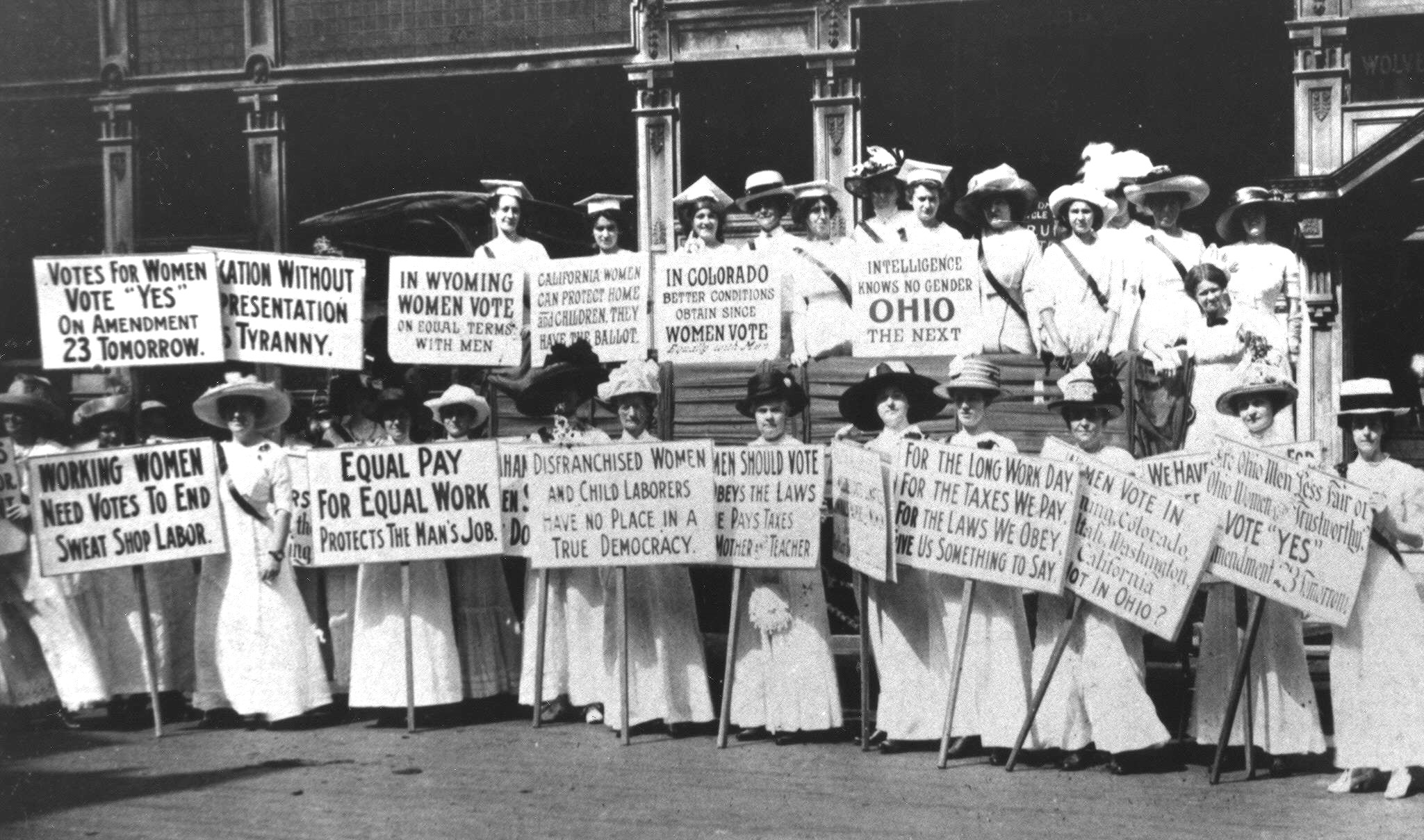
In the November, 1912 elections Kansas, Wyoming, Oregon, and Michigan passed amendments winning suffrage rights for women after decades of campaigning. Much of that campaigning was done by Socialists and trade unionists who framed the struggle with the concerns of their class and goal of ‘industrial freedom.’
‘Woman’s March for Freedom’ by Barnett Braverman from the Progressive Woman. Vol. 6 No. 66. December, 1912.
THE great torch-light procession held in New York on the night of November 9 to celebrate suffrage victories in Kansas, Wyoming, Oregon and Michigan will be remembered in history as an emphatic protest against the calloused, cowardly, man-made notions of the past that still dominate industry and government today.
Thirty-five thousand men and women mostly from the working class-were in that parade. The many hundred thousands who had come to see this demonstration of an awakened human consciousness looked on in silence. At the suffrage parade of last May they hooted and filled the air with catcalls. The difference between their former and present attitudes was striking. The fact that these people were silent now indicated that they were thinking-for thinking requires silence, and something to think about.
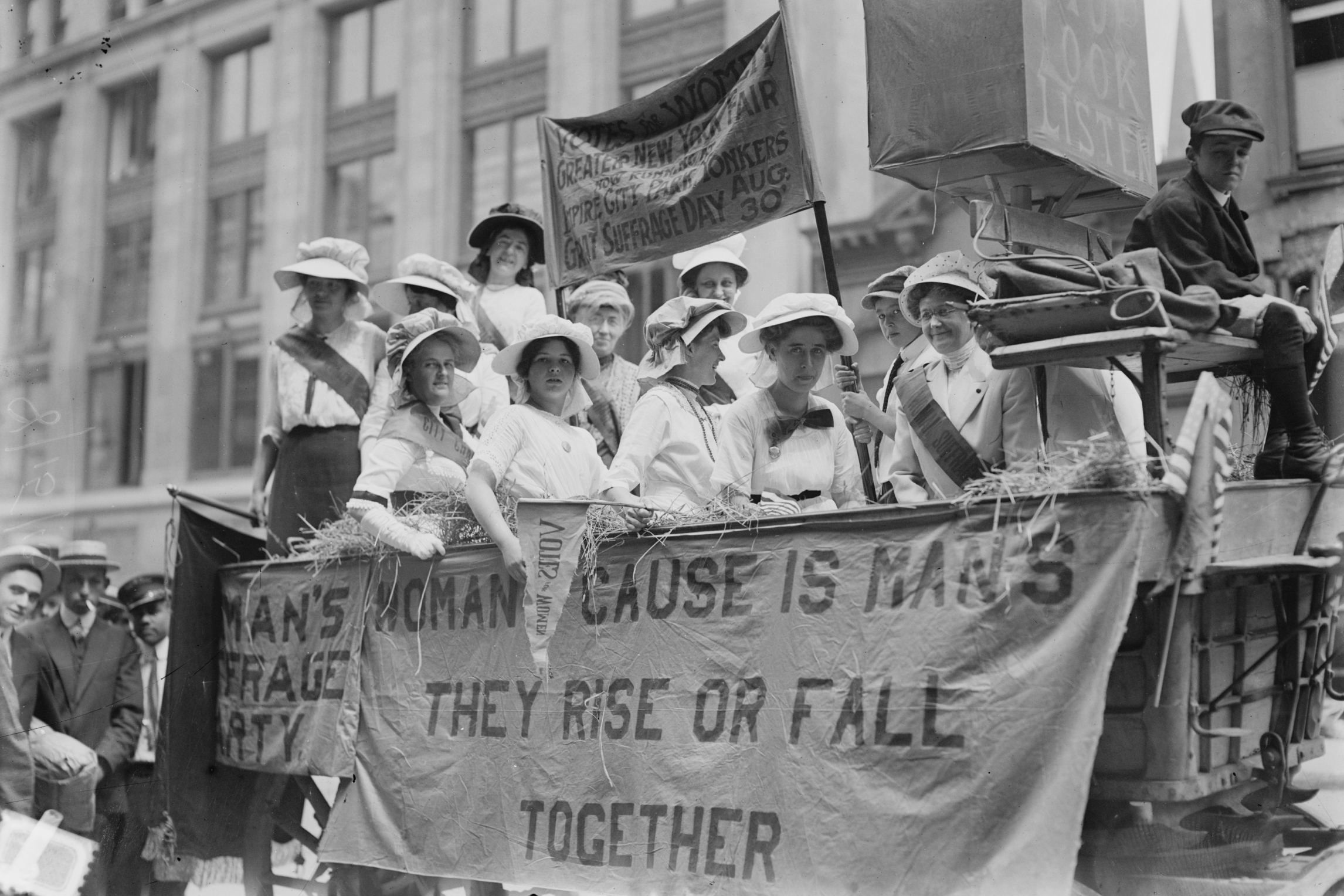
The participation of both men and women in this parade should impart to the world that the suffrage movement is more than a mere movement for the emancipation of women that in reality it is a human movement-a movement for both men and women-a movement that is based upon the principle that men and women should be equal in all things and dependent in none.
Like the Socialist movement, woman suffrage propaganda is an organized, but thoughtful purposeful rebellion against a social system that robs human beings of their right to grow and expand towards better human relations. And because of the common purpose between these two greatest movements of the century, the suffrage movement is destined to find in the Socialist Party its most powerful ally.
Woman suffrage will be the final step towards actual political freedom. But political freedom is useless if it is not based upon industrial freedom. The manner in which people make their living determines the real basis of their freedom. If women voters are to work long hours, submit to wage reductions,. Endure periods of unemployment when anxious to work, and be muddled by the bickerings of capitalist politicians-then the franchise will not help them to lighten woman’s burden. We know that men have been voting all these many years, but the chains of industrial slavery have never been more firmly riveted upon the workers than today. This condition prevails because men have not realized the power of the ballot. They have not fully understood that the right to vote is a joke and swindle upon themselves as long as they have to depend for their necessities upon a master class-the class that does not care how much political freedom the individual has, as long as he or she does not get the sensible notion to fight for industrial freedom.
And this is just the problem that women voters will begin to face. They will see that their votes are bound to be useless as long as the cost of groceries, rent, and clothing soar sky-high, while wages are cut or remain stationary. And because we have faith in woman’s desire to attempt the alleviation of social ills–because the suffrage movement is based upon the passion of social service, the one logical thing suffragists wilt eventually do wilt be to join the Socialist Party in the fight for industrial justice.
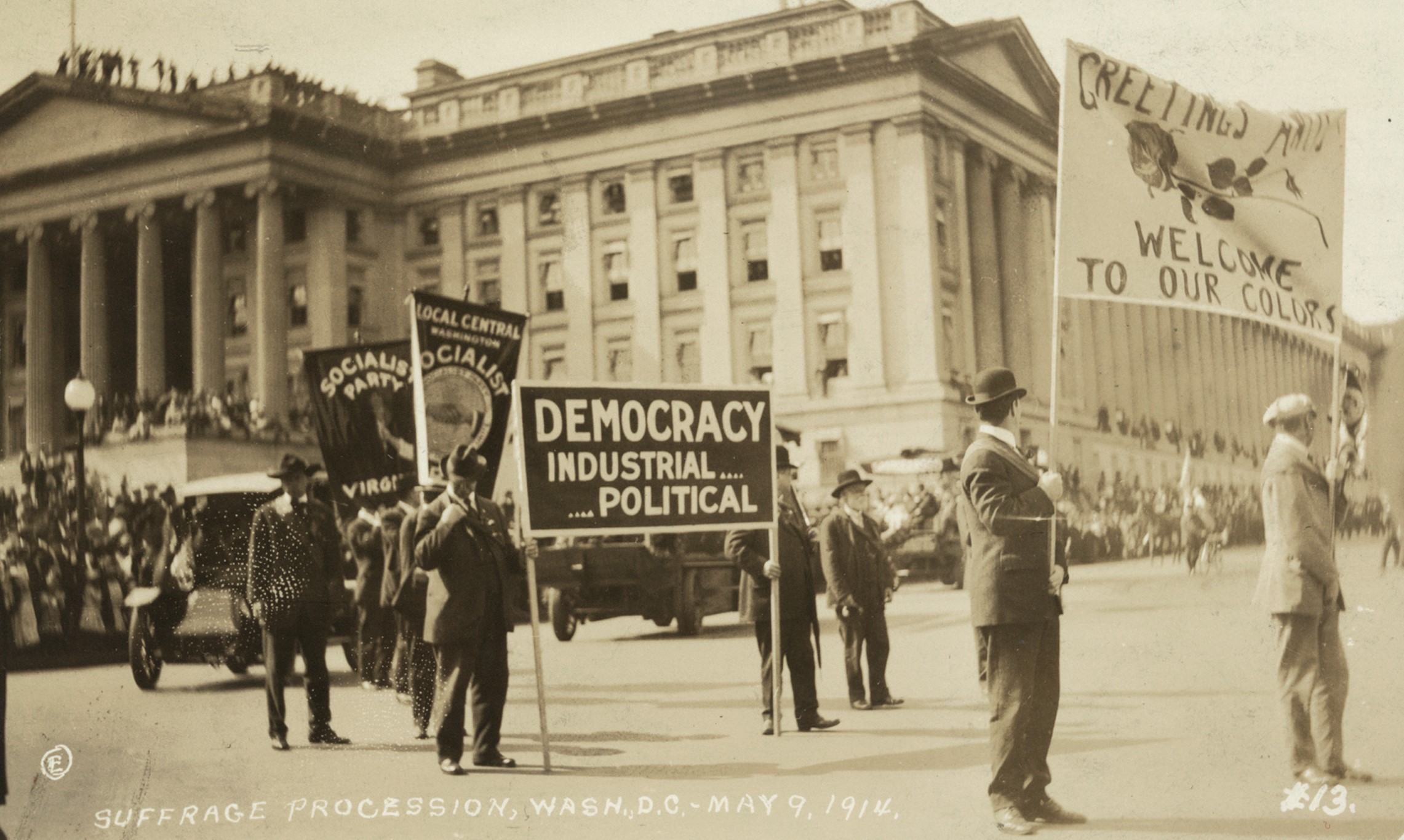
Those who are familiar with the Socialist movement know that it has always stood for complete justice to both man and woman because that is necessary for healthy growth in the social organism. The Socialist movement has always declared that man cannot progress unless woman progresses too. And there can be no social progress until there is industrial justice for both men and women.
The time will come when wise suffragists will not only recognize the Socialist Party as their greatest ally in the fight for economic justice on the political field, but they will also discern the necessity of Joining industrial unions to force the master class to relinquish its grasp upon human needs.
It may be that most suffragists do not foresee the part they will be compelled to play in the class war that is to be fought out by the working class and the capitalist class. But evolution has made some rapid strides during the last five years. And what will happen. In the future is likely to be something of which the suffragists never dreamed. Nevertheless, they are destined to be in the struggle that will mean defeat for the capitalist class and victory for the working class. And this victory will spell the elimination of all classes. It shall result in a unity of all men and women and thus usher into fact a real Human Race.
The Socialist Woman was a monthly magazine edited by Josephine Conger-Kaneko from 1907 with this aim: “The Socialist Woman exists for the sole purpose of bringing women into touch with the Socialist idea. We intend to make this paper a forum for the discussion of problems that lie closest to women’s lives, from the Socialist standpoint”. In 1908, Conger-Kaneko and her husband Japanese socialist Kiichi Kaneko moved to Girard, Kansas home of Appeal to Reason, which would print Socialist Woman. In 1909 it was renamed The Progressive Woman, and The Coming Nation in 1913. Its contributors included Socialist Party activist Kate Richards O’Hare, Alice Stone Blackwell, Eugene V. Debs, Ella Wheeler Wilcox, and others. A treat of the journal was the For Kiddies in Socialist Homes column by Elizabeth Vincent.The Progressive Woman lasted until 1916.
PDF of full issue: https://www.marxists.org/history/usa/pubs/socialist-woman/121200-progressivewoman-v6w66.pdf
 Revolution's Newsstand