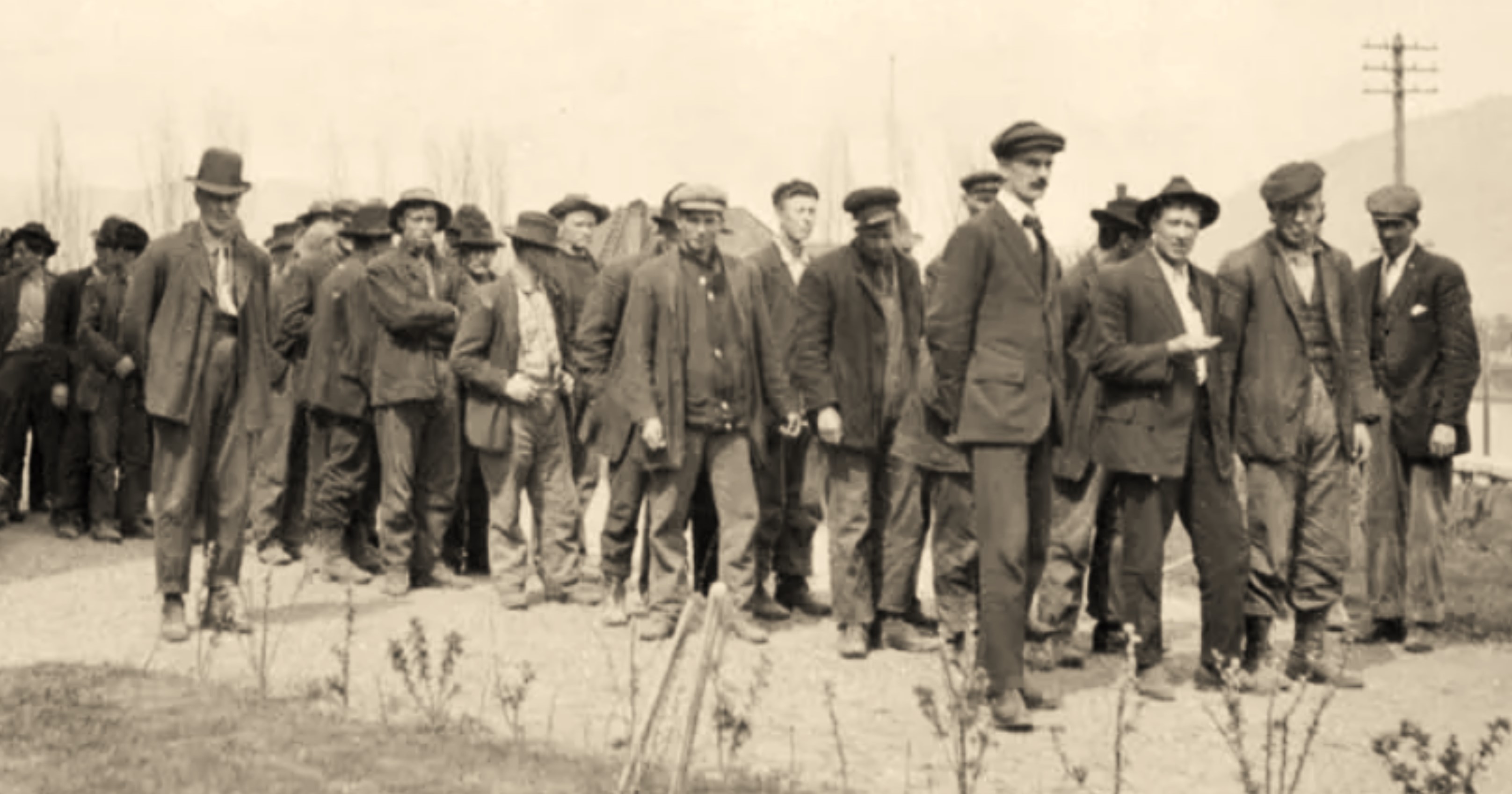
A report on the failed attempts to divide the 7,000 workers of sixteen nationalities on strike with the I.W.W. against the exploitative and dangerous conditions in the track camps of the Canadian Northern Railroad.
‘No Foreigner But the Boss’ by Floyd Hyde from the Industrial Worker. Vol. 4 No. 10. May 30, 1912.
SECOND MONTH FINDS STRIKERS FIRM—NATIONALITIES FAIL TO DIVIDE—POLICE CONTINUE THEIR ACTIVITY.
Two months of the great strike of 7,000 workers in the construction camps on the C.N.R.R. have passed and the strikers continue as firm as at first.
During the early days of the trouble the contractors were confident that within a short time strife would break out among the sixteen different nationalities engaged in the struggle with the result that one nationality would scab upon another and thus break the strike. The strikers, however, have learned that there are only two nationalities, and that these nations are divided by class and not by geographical lines. They realize that in one nation are the contractors, no matter where they were born, and in the other nation are the workers, no matter what country they happen to hail from.
They know that if their condition is to be improved they must all stand together and as a result of this solidarity not a break has occurred among the 7,000 men who had walked off the job some two months ago.
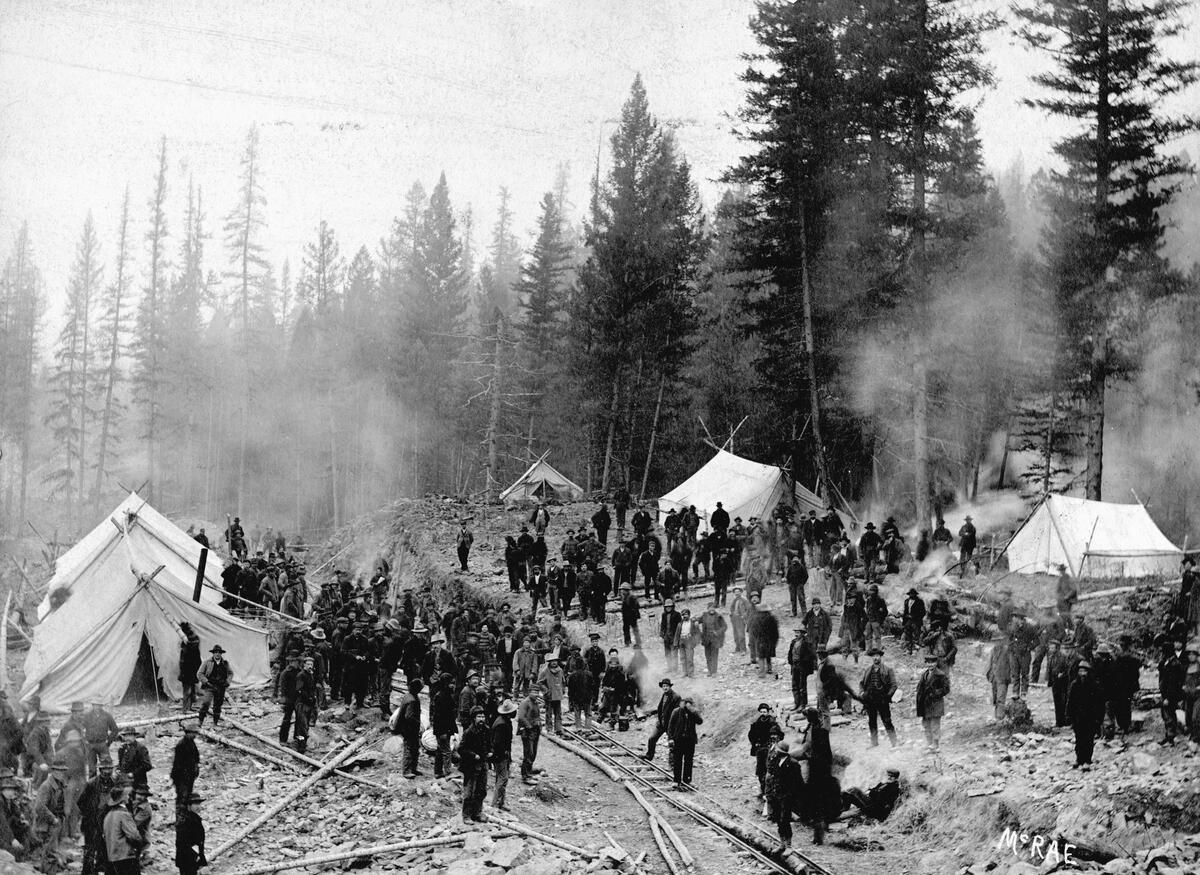
The contractors are getting desperate and although not a single instance of lawlessness or violence has occurred upon the side of the strikers, the Canadian Government has been appealed to and police and detectives came in lots of hundreds and thousands. These vultures are stationed all along the line from Hope to Kamloops, adjacent to the camps of the strikers.
From the time of their arrival all kinds of lawlessness and brutality on their part has taken place.
Last week the police issued an order to all strikers that they must either go to work or go to jail, but when it was discovered that the boys all preferred jail to scabbery these brutes then started their reign of terror, with actions equaled only by the thugs of San Diego. They herded the boys together and drove them out of the country, tore down our camps, closed up our halls, and at Lytton closed our headquarters although we owned the building and had a five years lease upon the ground, all at the behest of the contractors. The police tore down the sign and nailed up the hall, after driving out of town the 300 men stationed there.
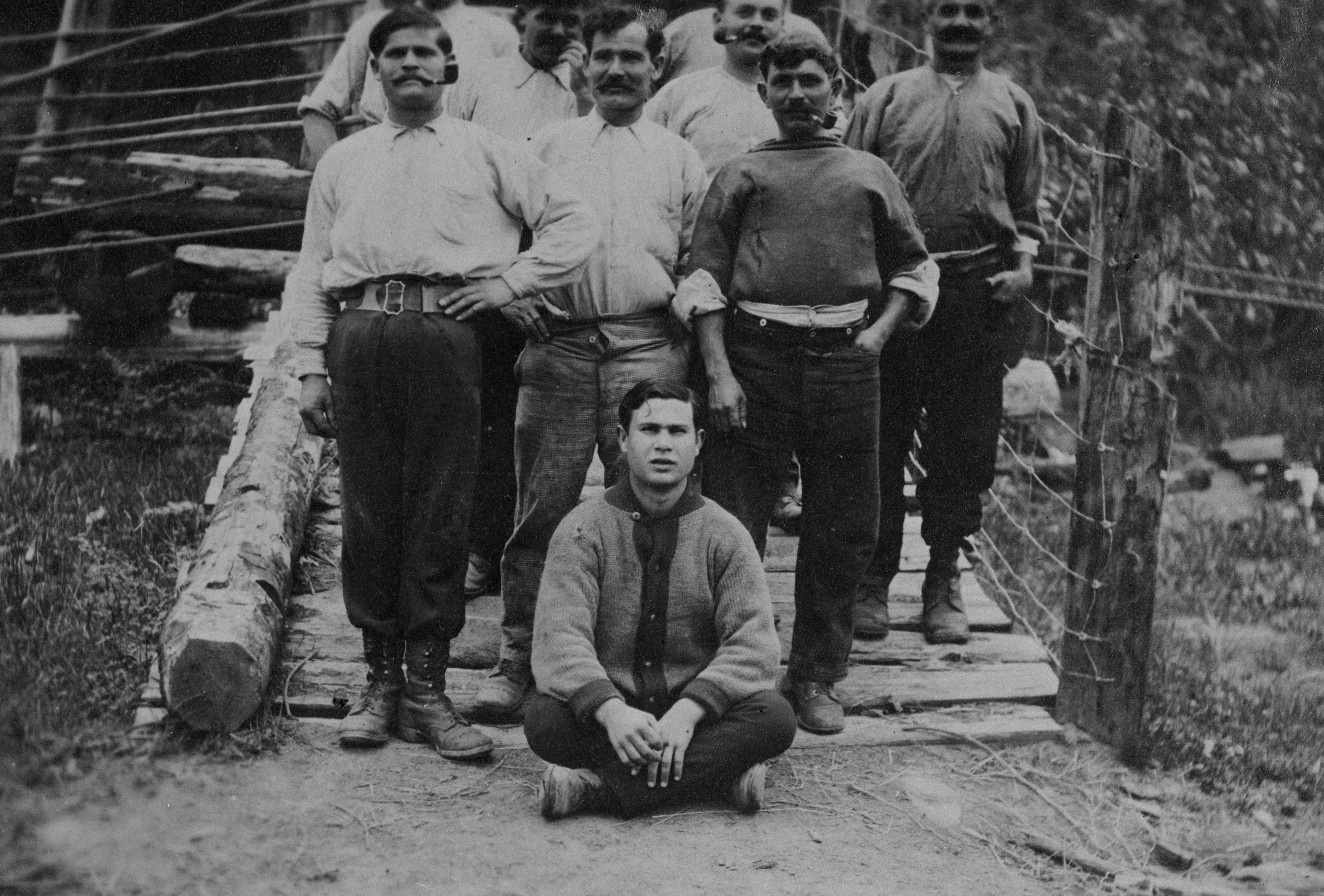
Still they are not able to get scabs, try as they will to take the places of the I.W.W. About the 25th of April twenty men were shipped to Yale from Vancouver by an employment office. These men were informed that they were to work on the Canadian Pacific. When they were unloaded and discovered that they were expected to act as strike breakers they all bolted. Part of them, after being provided with food by the strikers walked back to Vancouver. The rest, having some money, stayed around town all day and in the evening went to the station to take the passenger train to Vancouver.
As they were boarding the train, Martin Welch, accompanied by about a dozen police, approached them and informed them that they must either go to work or go to jail. The men, all of whom were Italians, were taken forcibly through town to the office of Martin Welch, there to be guarded that night. The following morning they were forced across the Fraser river into one of Welch’s camps.
Still the men stand firm with lines unbroken. Their statement was quite well expressed a few days ago by one of the strikers, Peterson, a negro. Peterson has been one of our most active and loyal members. He was arrested with a dozen others and charged with vagrancy. At the fake trial Peterson was asked what he had to say for himself and with the finest spirit in the world he replied: “Judge, I nave a principle- and that principle it to stand with my fellow workingmen…Judge, you haven’t got power enough to sentence me long enough to kill that spirit” Peterson was given six months at hard labor. He accepted the sentence with a smile.
As he was led to jail he remarked to the court, “I will come out a batter revolutionist than I was when I went to jail.”
That is the spirit of the Canadian Northern strikers. It is a revolutionary spirit. It is a spirit that the masters cannot understand and is destined to be the spirit of the workers of the world—the balding spirit of the oncoming revolution.
The Industrial Union Bulletin, and the Industrial Worker were newspapers published by the Industrial Workers of the World (IWW) from 1907 until 1913. First printed in Joliet, Illinois, IUB incorporated The Voice of Labor, the newspaper of the American Labor Union which had joined the IWW, and another IWW affiliate, International Metal Worker.The Trautmann-DeLeon faction issued its weekly from March 1907. Soon after, De Leon would be expelled and Trautmann would continue IUB until March 1909. It was edited by A. S. Edwards. 1909, production moved to Spokane, Washington and became The Industrial Worker, “the voice of revolutionary industrial unionism.”
PDF of original issue: https://www.marxists.org/history/usa/pubs/industrialworker/iw/v4n10-w166-may-30-1912-IW.pdf
 Revolution's Newsstand