
The writer-revolutionary and Comintern propagandist Victor Serge, with his observant, honest articulations, depicts the extraordinary exertions, endurance and exuberance manifested by the workers and Communists of Petrograd during the winter of 1920-21. The Soviets had emerged ravaged, isolated, and famished from the Civil War, now forced to engage in the monumental task of rebuilding a new society from the wreckage of the old. The Newsstand regards Serge as, perhaps, his generation’s finest literary artist of revolution; of its personal consequences, failures, and political meanings. The perspective of a partisan and participant, from a letter to his comrades in Paris’ ‘La Vie Ouvriere’, and transcribed in full here online for the first time online.
‘The Revolutionary Effort’ by Victor Serge from Soviet Russia (New York). Vol. 4 No. 12. March 19, 1921.
Petrograd, January 22nd, 1921.
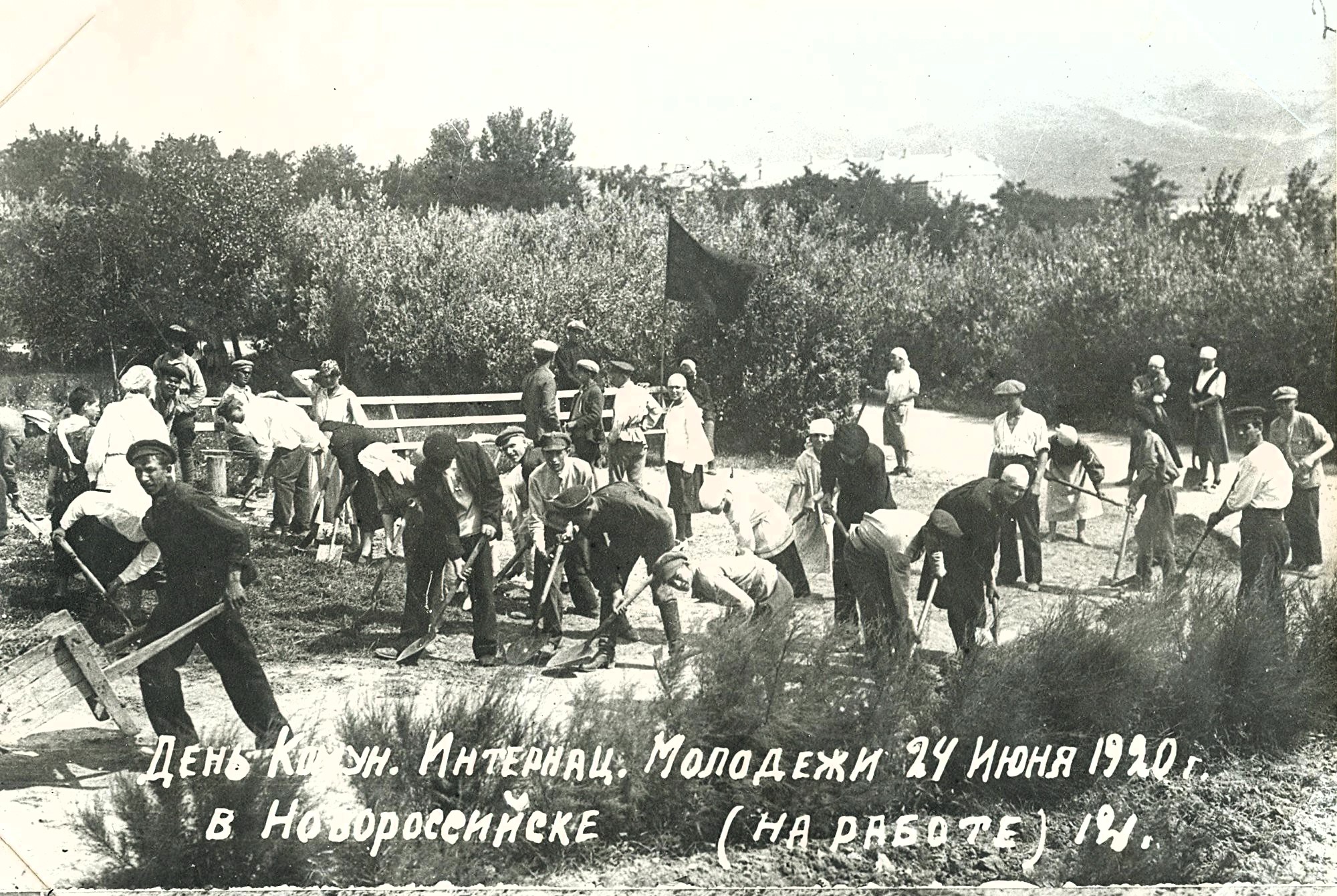
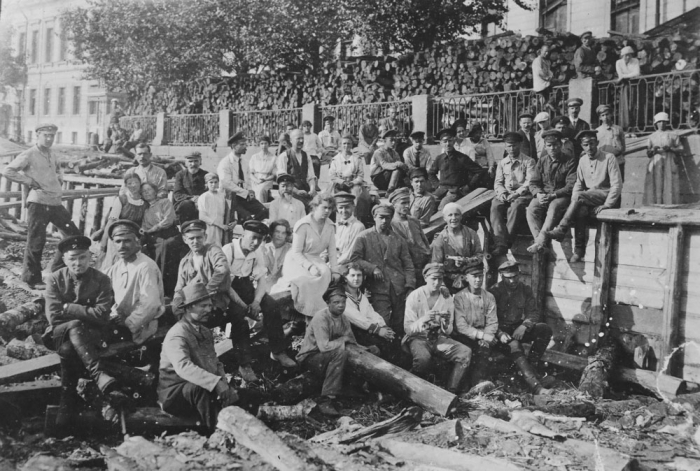
FORTUNATELY the winter thus far has been very mild. This is indeed a piece of good luck for the fuel crisis is such that a number of factories have had to be closed in Petrograd during the last few days. This was heart-breaking to many of us.
The problem is always the same: it is not that wood is lacking — wood is plentiful for a hundred versts all around — but we have not the necessary workers to cut it down, on the one hand because of the mobilization, and on the other hand, because we have not the means of compensating the field workers.
What could we give them in fact? They need manufactured articles. To furnish these, we should have to restore production, cost what it may. So long as production is not sufficiently restored to satisfy the needs of the country districts, the peasant, defiant and hostile to the city, will refuse the city his work.
I may add that the peasant seems better disposed this year: propaganda, agitation, the “Weeks for Help to the Peasant,” and finally, the victories of the Red Army at the fronts, have somewhat improved the state of mind, to the extent that in the fuel crisis the central factor still remains the lack of transportation.

The number of locomotives at our disposal is exceedingly small as compared with our needs. There results the impossibility of fully feeding the centers with wood as well as with other materials. This crisis therefore occupies all minds and the daily difficulties are enormous. I recently visited hospitals that are not at all or very badly heated. Think of what sufferings are involved in a fact like this!
However, among all these unheard-of difficulties — which are being surmounted by reason of the fact that they are less terrible and less formidable than they were last year — the revolutionary work is being pursued step by step. It is a gigantic work of cultivation, a work over a stony soil, torn up shells, like the soil of former battlefields. Whatever be done, whatever may be the danger and the difficulty, whatever may be the ill-will of some, the stupidity of others, our revolutionary plow cuts its furrow so deep that its mark will be ineffaceable. To be sure it occasionally deviates for moments from the straight line but it would be stupid to be surprised at this.
The first great change that I observed this year as compared with the preceding ones, is a purely psychological one. The White, who was very numerous still among the population in 1919, and even in 1920, has disappeared. You no longer meet the emaciated intellectual who confidently informs you of the approaching downfall of Red Petrograd. The food speculators have also disappeared, and the plots seem to have come to an end. No one, even of those who are hostile, any longer doubts the stability of the Communist regime.
If you knew what persistent hatred had been sworn against it by all the former possessing classes, bourgeois and petit-bourgeois, how that class surreptitiously sabotaged, you would understand the importance of this moral victory. Today, all our enemies of yesterday have entered the service of the Communist state. Naturally this is equivalent to a new danger and will contribute not a little to the creation of the baleful bureaucracy that we have thus far been combating.
The struggle against bureaucracy, the heritage of the manners of the old regime, the consequences of famine, * of officialism brought about by the war and of our fumblings in the work of Communist construction — is one of the problems on the order of the day.
You know that I am somewhat a diffident person and less inclined to be cocksure in the matter of an agreement with what may be called official optimism. And I really admire these people and the revolutionary elite.
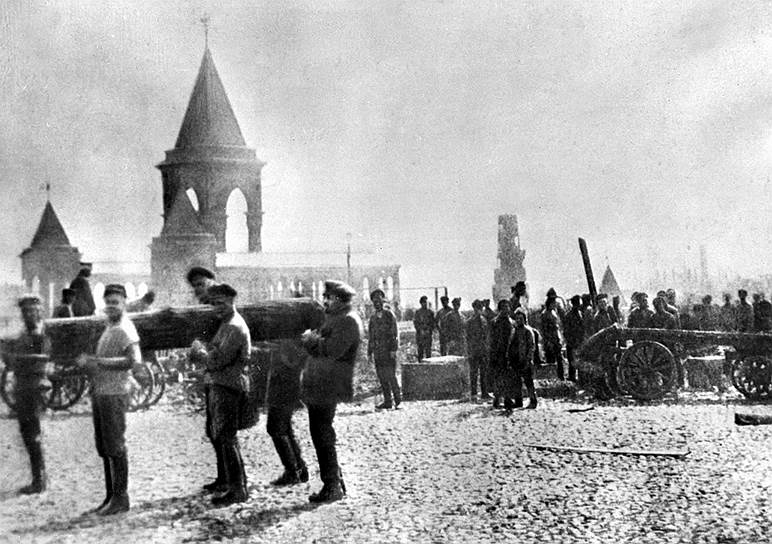
Hardly six weeks ago we were still at war and already the demobilization (that of the classes of above 32 years) is being effected, and already we breathe more freely.
For a month, from one end of the country to another, passionate discussions are being carried on concerning the economic reconstruction of the country. The pitiless criticism, coming from the masses themselves, meets those Communists in high positions who have not been able to resist bourgeois inclinations. I am sure the matter will be taken care of; the entire party is working on it.
Parallel with this it is necessary to get rid of the bureaucracy. This will be a long and difficult task to be sure; for it is only by organizing the Communist life, in other words, the wellbeing, the liberty, the true democracy of the workers that this task can be accomplished. But already today these words are on every lip, these ideas in every head.
In the Communist Party the chief debate at present is on the subject of the function of the trade unions in production (and of course on their mode of organization).

Should they take charge of the administration of production (decentralized in vast regions) and begin by restoring it at any price, without recoiling from the application of the military methods which have permitted the creation and the victories of the Red Army as Trotsky would like, or should they be chiefly schools of applied communism, making no use of force except after all means of persuasion have been exhausted, and constituting from now on a workers’ organization, largely democratized, as Lenin and Zinoviev would desire?
These tendencies are not the only ones, and I shall be able to give you more information on this subject soon, the next Congress of the Party will settle the question. At present it inflames all minds.
You know the contempt which Red Russia has for the democratic methods of the capitalist state. The reason is that the latter have no other object than that of masking the actual monopolization of all powers by the plutocracy. For some time the forms of an entirely different democracy have been taking shape here. Certainly the Communist Party exercises the dictatorship and has refused its enemies all the “liberties” that would have permitted them to kill it without fail in a short time. But I have been witnessing for a number of weeks this new spectacle: great crowds (for there are 30,000 Communists at Petrograd) of workers, of soldiers, of housekeepers in which the militants occupying the most important positions of confidence mingle with each other, are passionately discussing principles of the economic organization. Plebiscites or referendums might offer more in the way of formal guarantees; but they are far from being capable of comparison with this living debate, of daily recurrence, in speech, in writing, in action (for the material is chiefly that of the various experiences actually being undergone), in which there participate the six hundred thousand members of the Communist Party, and in another way, all the active members of the trade unions.
Other discussions of less scope are being taken up in the educational centers. The new element here is that in addition to the Communists, the parents of the pupils, the teachers, etc. — in short all those interested in the question — are called upon for their opinions. The principle of instruction is being constantly discussed. The school is called: the labor school. It is to mold men who are to be first of all producers. And this is logical: to be men — free men — in the full sense of me word, men must conquer — by producing — wellbeing and leisure. Is this school to be a polytechnical or a technical school? Shall it give instruction in a more general or in a more specialized form? That is the problem.
To give you an idea of the far-reaching significance of this revolutionary work, let me add that we are witnessing the disappearance — by the process of natural death — of money. Free food, free lodgings, free light, free railroads and tramways; free theatres under discussion (practically realized up to 70 per cent). Besides clothing and articles of prime necessity come from the Communist stores also free.
Action and discussion are constantly in progress. Advances are being made, with life, towards life, and all this under what painful conditions! I can give you an idea of this from some exact documents in my hands — of statistical nature — which I shall outline in a following letter.

The conditions are still terrible and sometimes such that the endurance and the vitality of the revolutionary people seem miraculous.
*The bureaucracy is one of the consequences of famine in the sense that the distribution of the extremely small number of manufactured articles at our disposal demands an apparatus of statistics, of control, of super- vision, etc., that is extremely complicated. When there are three pairs of shoes to 100 persons yon may imagine how easy it is to allot them. — Author’s Note.
Soviet Russia began in the summer of 1919, published by the Bureau of Information of Soviet Russia and replaced The Weekly Bulletin of the Bureau of Information of Soviet Russia. In lieu of an Embassy the Russian Soviet Government Bureau was the official voice of the Soviets in the US. Soviet Russia was published as the official organ of the RSGB until February 1922 when Soviet Russia became to the official organ of The Friends of Soviet Russia, becoming Soviet Russia Pictorial in 1923. There is no better US-published source for information on the Soviet state at this time, and includes official statements, articles by prominent Bolsheviks, data on the Soviet economy, weekly reports on the wars for survival the Soviets were engaged in, as well as efforts to in the US to lift the blockade and begin trade with the emerging Soviet Union.
PDF of full issue (large file): https://www.marxists.org/history/usa/pubs/srp/v4-5-soviet-russia%20Jan-Dec%201921.pdf
 Revolution's Newsstand