Unlike many of their Socialist predecessors, the early 2Oth century U.S. Communist movement embraced the struggle for Black liberation, its centrality to the class struggle and American revolutionary tradition. In turn, this led to a wholesale reappraisal of much of U.S. history, including the racialized class dynamics within the white majority. In two parts Hebert Biel provides thoroughly researched, Marxist analysis of class conflicts in the South, still often overlooked, in the decade before the Civil War. He dives deep to chronicle some of the untold rebellions and acts of resistance by the enslaved Black proletariat. The second part, to follow, covers the conflict between ‘poor whites’ and the Southern oligarchy over the same period. Great stuff.
‘Class Conflicts in the South, 1850-1860, Part I: Slave Resistance’ by Herbert Biel from The Communist. Vol. 18 Nos. 2. February, 1939.
Thee great attention given to the spectacular political struggles between the North and the South in the decade before the Civil War has tended to befog the equally important contests which went on during the same period within the South itself.
Writers have dealt at considerable length with the national scene, have demonstrated a growing conflict between an agrarian, slave-labor society and an increasingly industrial, free-labor society as to which should direct public opinion, enact and administer the laws, appropriate the West—in short, which should control the state. In 1860 the grip of the slave civilization upon the national government was very considerably loosened and clearly seemed destined to complete annihilation. The slavocracy therefore turned to bullets.
But there was more to it than that. The facts are that not only did the slavocrats see their external, or national, power seriously menaced by the Republican triumph of 1860, but they also observed their internal, local power greatly threatened by increasing restlessness among the exploited classes—the non-slaveholding whites and the slaves.
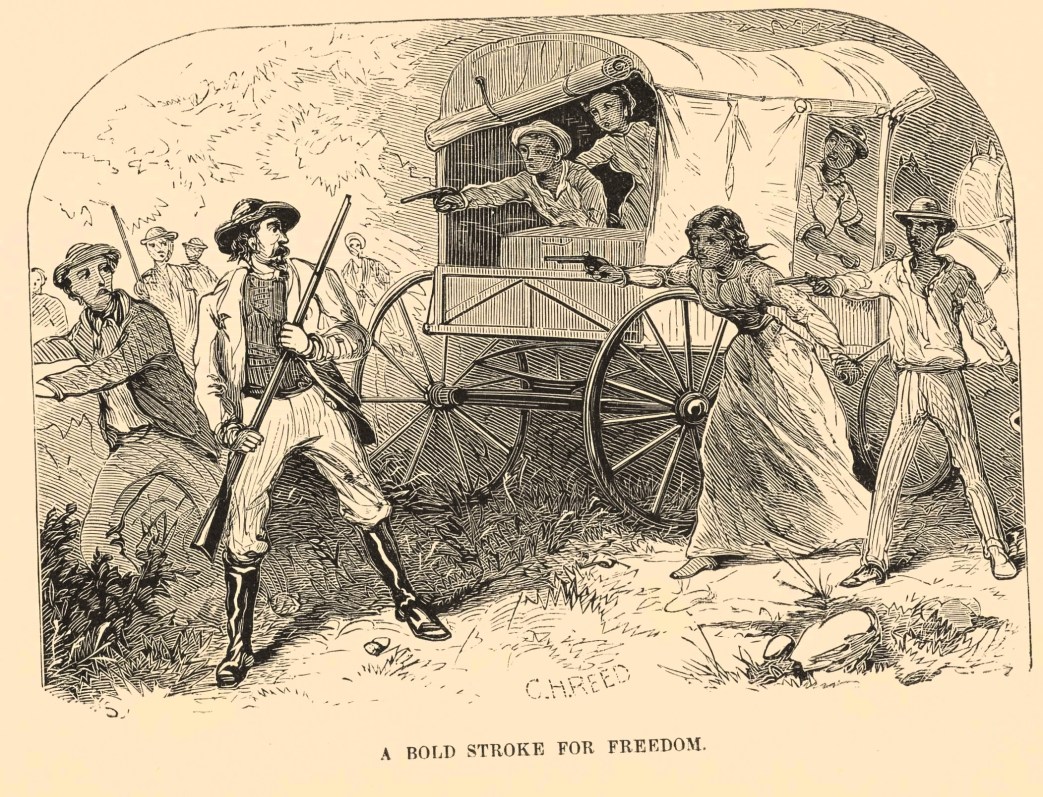
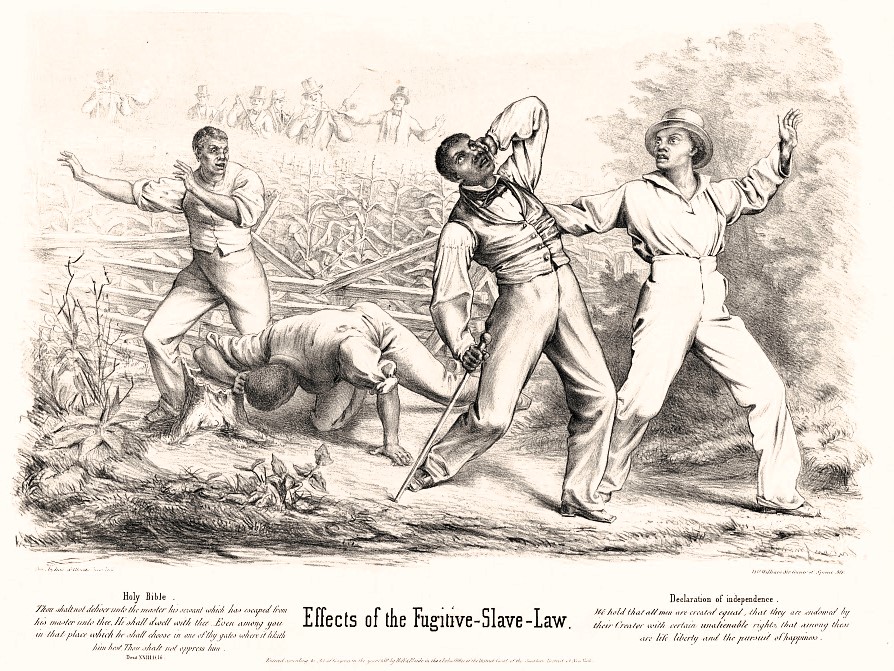
There were three general manifestations of this unrest: (1) slave disaffection, shown in individual acts of “insolence” or terrorism, and in concerted, planned efforts for liberation; (2) numerous instances of poor white implication in the slave conspiracies and revolts, showing a declining efficiency in the divide-and-rule policy of the Bourbons; (3) independent political action of the non-slaveholding whites aimed at the destruction of the slavocracy’s control of the state governments. In the opinion of the writer this growing internal disaffection is a prime explanation for the desperation of the slaveholding class which drove it to the expedient of civil war.
WHY THE UNREST?
Factors tending to explain the slave unrest of the decade are soil exhaustion, leading to greater work demands, improved marketing facilities, having the same result, and economic depression from 1854-56 throughout the South, approaching, especially in 1855, the famine stage. These years witnessed, too, a considerable increase in industrialization and urbanization within the South. These phenomena(1) were distinctly not conductive to the creation of happy slaves. As a slaveholder remarked,(2) “The cities is no place for n***s. They get strange notions into their heads, and grow discontented. They ought, every one of them, to be sent back to the plantations.” As a matter of fact there was for this reason, during this decade, an attempt to foster a “back-to-the-plantation” movement.
It is also true, as Olmsted observed,(3) that: “Any great event having the slightest bearing upon the question of emancipation is known to produce an unwholesome excitement” among the slaves. The decade is characterized by such events as the 1850 Compromise, the sensation caused by Uncle Tom’s Cabin, the Kansas War, the 1856 election, the Dred Scott decision, Helper’s Impending Crisis, Brown’s raid, the election of 1860. If to this is added the political and social struggles within the South itself (to be described later), it becomes apparent that there were many occasions for “unwholesome excitement.”

Combined with all this is a significant change in the Abolitionist movement. Originally this aimed at gradual emancipation induced by moral suasion. Then came the demand for immediate liberation, but still only via moral suasion. Then followed a split into those favoring political action and those opposed. Finally, and most noticeably in this decade, there arose a body of direct actionists whose idea was to “carry the war into Africa.”
The shift is exemplified in the person of Henry C. Wright. In the ’forties he wrote the “Non-Resistant” column for Garrison’s Liberator, by 1851 he felt it was the duty of abolitionists to go South and aid the slaves to flee, and by 1859 he was convinced(4) that it was “the right and duty of the slaves to resist their masters, and the right and duty of the North to incite them to resistance, and to aid them.” By November, 1856, Frederick Douglass was certain that the “peaceful annihilation” of slavery was “almost hopeless” and therefore contended(5) “that the slave’s right to revolt is perfect, and only wants the occurrence of favorable circumstances to become a duty…We cannot but shudder as we call to mind the horrors that have marked servile insurrections—we would avert them if we could; but shall the millions for ever submit to robbery, to murder, to ignorance, and every unnamed evil which an irresponsible tyranny can devise, because the overthrow of that tyranny would be productive of horrors? We say not…terrible as it will be, we accept and hope for it.”
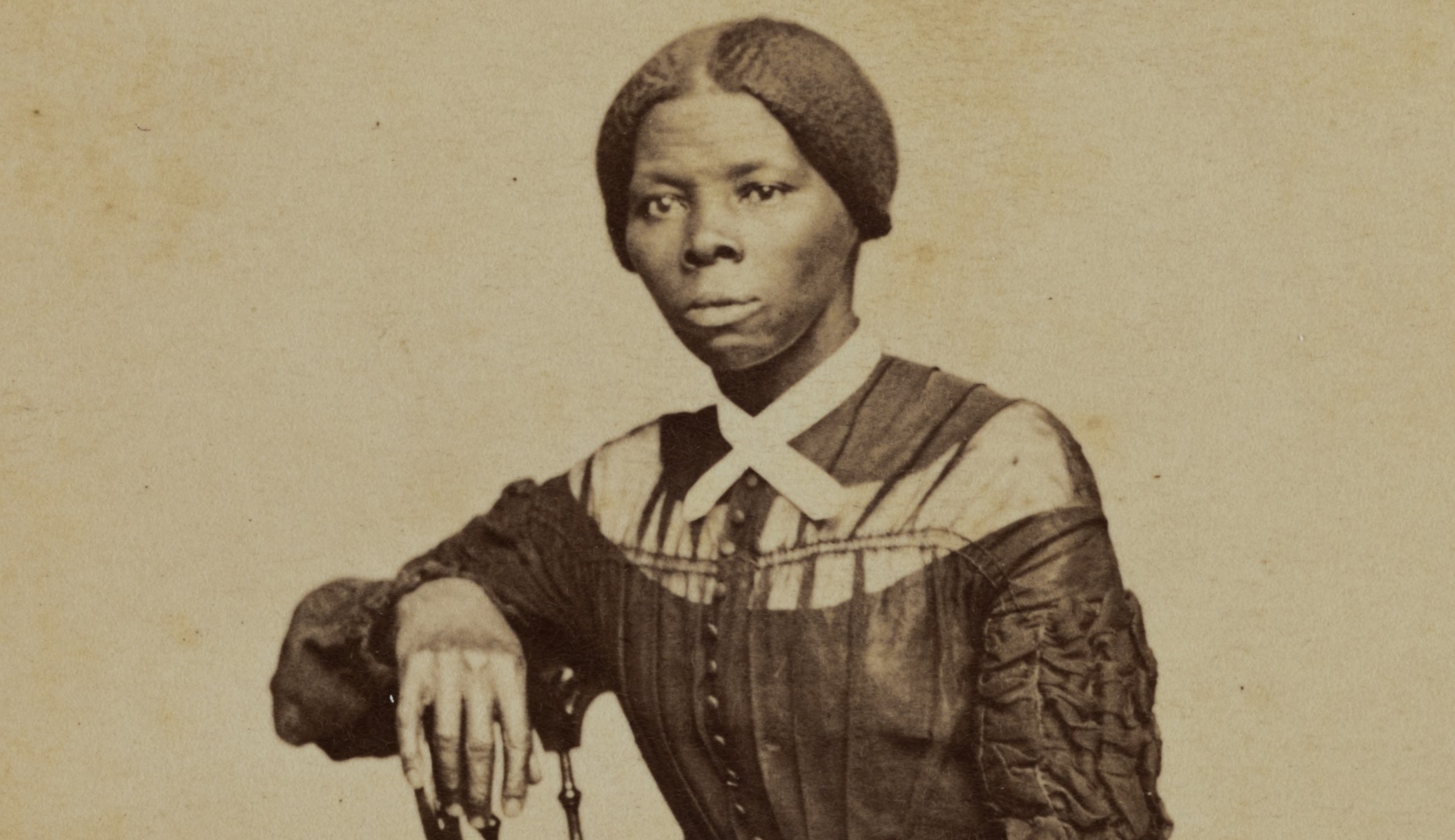
And while John Brown’s work was the most spectacular, he was by no means the only Northern man to agitate among the slaves themselves; there were others, the vast majority unnamed, but some are known, like Alexander Ross, James Redpath, and W. L. Chaplin.(6) But this exceedingly dangerous work was mainly done by Northern or Canadian Negroes who had themselves escaped from slavery. A few of these courageous people are known—Harriet Tubman, Josiah Henson, William Still, Elijah Anderson, John Mason. It has been estimated(7) that, from Canada alone, in 1860, 500 Negroes went into the South to rescue their brothers. What people can offer a more splendid chapter to the record of human fortitude?
The obvious is at times elusive and it is therefore necessary to bear in mind when trying to discover the causes of slave disaffection that one is indeed dealing with slaves. We will give but one piece of evidence to indicate something of what this meant. In January, 1854, the British consul at Charleston, in a private letter, wrote,(8) “The frightful atrocities of slave holding must be seen to be described…My next-door neighbor, a lawyer of the first distinction, and a member of the Southern Aristocracy, told me himself that he flogged all his own negroes, men and women, when they misbehaved…It is literally no more to kill a slave than to shoot a dog.”
TERRORISM AND INSUBORDINATION
There is considerable evidence pointing to a quite general state of insubordination and disaffection, apart from conspiracies and revolts, among the slave population.
A lady of Burke County, North Carolina, complained in April, 1850, of such a condition among her slaves and declared, “I have not a single servant (slave) at my command.” Three years later a traveler in the South observed “in the newspapers, complaints of growing insolence and insubordination among the negroes.”(9) References to the “common practice with slaves” of harboring runaways recur, as do items of the arrest of slaves caught in the act of learning to read. A paper of 1858 reported the arrest of ninety Negroes for that “crime.” It urged severe punishment and remarked, “Scarcely a week passes, that instruments of writing, prepared by negroes, are not taken from servants (slaves) in the streets, by the police.”(10)
A Louisiana paper of 1858 reported “‘more cases of insubordination among the negro population…than ever known before,” and a Missouri paper of 1859 commented upon the “alarmingly frequent” cases of slaves killing their owners. It added that “retribution seems to be dealt out to the perpetrators with dispatch and in the form to which only a people wrought up to the highest degree of indignation and excitement would resort.”(11)
Examples of such retribution with their justification are enlightening. Olmsted tells of the burning of a slave near Knoxville, Tenn., for the offense of killing his master and quotes the editor of a “liberal” newspaper as justifying the lynching as a “means of absolute, necessary self-defense.” The same community shortly found six legal executions needed for the stability of its society.!(12) Similarly, a slave in August, 1854, killed his master in Mt. Meigs, Alabama, and, according to the Vigilance Committee, boasted of his deed. This slave, too, was burned alive. “The gentlemen constituting the meeting were men of prudence, deliberation and intelligence, and acted from an imperative sense of the necessity of an example to check the growing and dangerous insubordination of the slave population.” Precisely the same things happened”(13) in the same region in June, 1856, and January, 1857. Again, in August, 1855, a patrolman in Louisiana killed a slave who did not stop when hailed and this was considered(14) proper since “Recent disorders among the slaves in New Iberia had made it a matter of importance that the laws relative to the police of slaves, should be strictly enforced.”
A common method by which American slaves showed their “docility” was arson. This occurred with striking frequency during the ten years under scrutiny. For example, from Nov. 26, 1850, to Jan. 15, 1851, one New Orleans paper reported slave burnings of at least seven sugar houses. For a similar period, Jan. 31, 1850, to May 30, 1851, there were seven convictions of slaves in Virginia for arson.(15)
Burnings were at times concerted. Thus the Norfolk Beacon of Sept. 21, 1852, declared that the slaves of Princess Anne County, Va., had excited alarm and that an extra patrol had been ordered out. And,
“On Sunday night last, this patrol made a descent upon a church where a large number of negroes had congregated for the purpose of holding a meeting, and dispersed them. In a short time, the fodder stacks of one of the party who lived near were discovered on fire. The patrol immediately started for the fire, but before reaching the scene it was discovered that the stacks of other neighbors had shared a like fate, all having no doubt been fired by the negroes for revenge. A strict watch is now kept over them, and most rigid means adopted to make every one know and keep his place.”
The Federal Union of Milledgeville, Ga., of March 20, 1855, told of incendiary fires set by slaves that month in South Carolina and three counties of Georgia. Property damage was considerable and “many persons were seriously injured.”(16)
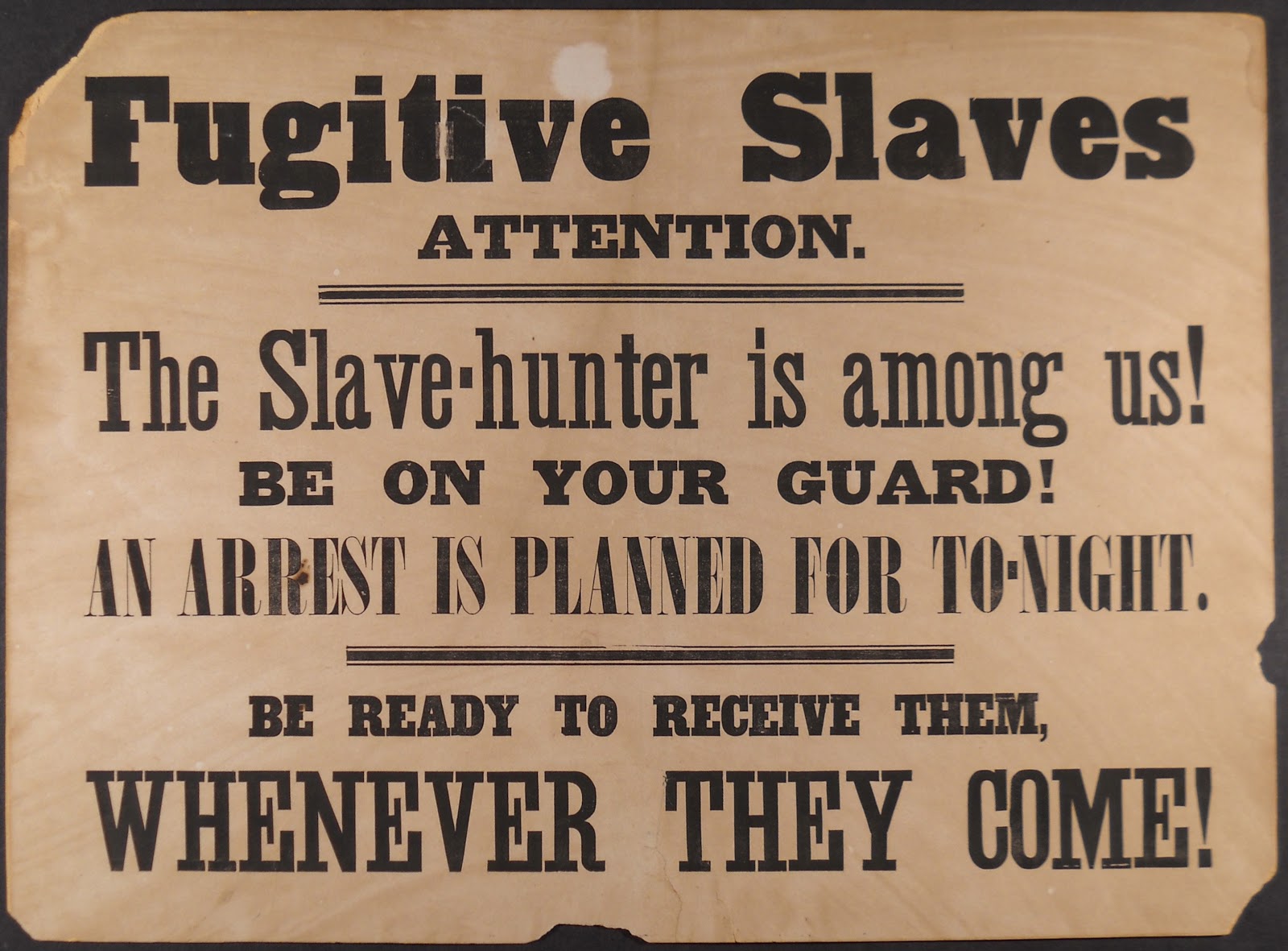
The fleeing of slaves reached very great proportions from 1850 to 1860 and was a constant and considerable source of annoyance to the slavocracy. According to the census estimates 1,011 slaves succeeded in escaping in 1850 and 803 succeeded in 1860. At current prices that represented a loss of about $1,000,000 each year. But that is a very small part of the story. First, the census reports were poor. The census takers were paid a certain sum for each entrant and so tended to make only those calls that were least expensive to themselves. City figures were therefore more reliable than those for rural communities. Moreover, Olmsted found census taking in the South “more than ordinarily unreliable” and told of a census taker there who announced that he would be at a certain tavern at a certain day “for the purpose of receiving from the people of the vicinity—who were requested to call upon him—the information it was his duty to obtain!”(17)
According to Professor W. B. Hesseltine, “Between 1830 and 1860 as many as 2,000 slaves a year passed into the land of the free along the routes of the Underground Railroad,” and Professor Siebert has declared(18) that this railroad saw its greatest activity from 1850 to 1860. And this is but a fraction of those who fled but did not succeed in reaching a free land, were captured or forced to turn back. When people pay as high as $300 for one bloodhound(19) the fleeing of slaves is a serious problem indeed.
It is also to be noted that the decade witnessed a qualitative as well as quantitative change in the fugitive slave problem, for now not only did more slaves flee, but more often than before they fled in groups; they, as Southern papers put it, stampeded.(20)
Another piece of evidence of the growing unrest of the slave population is afforded by the figures for money appropriated by the state of Virginia for slaves owned by her citizens who were legally executed or banished from the state.(21) For the fiscal year 1851-52 the sum equaled $12,000; for 1852-53 the sum was $15,000; 1853-54, $19,000 was appropriated and the same for 1854-55. For the year 185556, $22,000 was necessary and this was duplicated the next year. For 1857-58 the sum was $35,000 and stayed at that same high level for 1858-59. For each of the next two years prior to the Civil War, 1859-60, 1860-61, $30,000 was appropriated. Thus “bad” slaves, legally disposed of, cost the one state of Virginia in ten years the very tidy sum of $239,000.
REBELLION
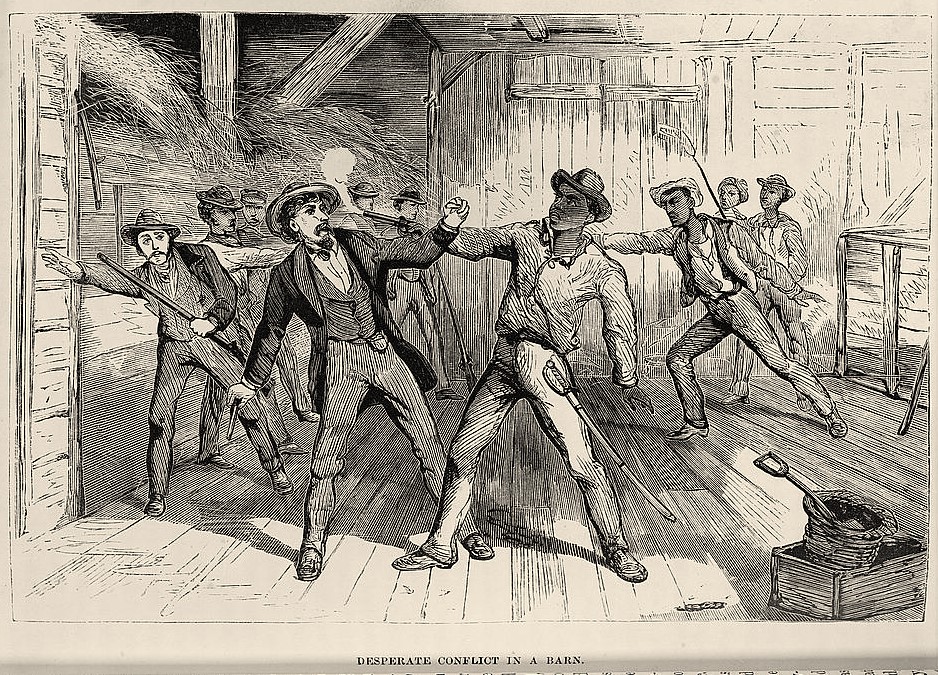
There was still another manifestation of slave disaffection: conspiracy or revolt. Some of the episodes already described, as that in Virginia in 1852 or in Georgia in 1855, may perhaps be thought of as conspiracies. The decade witnessed many more, the most important of which follow.

A free Negro, George Wright, of New Orleans, was asked by a slave, Albert, in June, 1853, to join in a revolt.(22) He declared his interest and was brought to a white man, a teacher by the name of Dyson, who had come to Louisiana in 1840 from Jamaica. Dyson trusted Wright, declared that one hundred whites had agreed to aid the Negroes in their bid for freedom, and urged Wright to join. Wright did—verbally. He almost immediately betrayed the plot and led the police to the slave Albert. The slave at the time of arrest, June 13, carried a knife, a sword, a revolver, one bag of bullets, one pound of powder, two boxes of percussion caps, and $86. The patrol was ordered out, the city guard strengthened, and twenty slaves and Dyson were instantly arrested.
Albert stated that 2,500 slaves were involved. He named none. In prison he declared that “all his friends had gone down the coast and were fighting like soldiers. If he had shed blood in the cause he would not have minded the arrest.” It was indeed reported that “a large number of negroes have fled from their masters and are now missing,” but no actual fighting was mentioned. Excitement was great along the coast, however, and the arrest of one white man, a cattle driver, occurred at Bonnet Clare. A fisherman, Michael McGill, testified that he had taken Dyson and two slaves carrying what he thought were arms to a swamp from which several Negroes emerged. The Negroes were given the arms and disappeared.
The New Orleans papers tended to minimize the trouble, but did declare that the city contained “malicious and fanatical” whites, “cutthroats in the name of liberty—murderers in the guise of philanthropy” and commended the swift action of the police, while calling for further precautions and restrictions. The last piece of information concerning this is an item telling of an attack by Albert upon the jailer in which he caused “the blood to flow.” The disposition of the rebels is not reported.
The year 1856 was one of extraordinary slave unrest. The first serious difficulty of the year was caused by maroons in North Carolina. A letter(23) of Aug. 25, 1856, to Governor Thomas Bragg signed by Richard A. Lewis and twenty-one others informed him of a “very secure retreat for runaway negroes” in a large swamp between Bladen and Robeson Counties. There “for many years past, and at this time, there are several runaways of bad and daring character—destructive to all kinds of Stock and dangerous to all persons living by or near said swamp.” Slaveholders attacked these maroons August 1, but accomplished nothing and saw one of their own number killed. “The negroes ran off cursing and swearing and telling them to come on, they were ready for them again.” The Wilmington Journal of August 14 mentioned that these Negroes “had cleared a place for a garden, had cows, etc., in the swamp.” Mr. Lewis and his friends were “unable to offer sufficient inducement for negro hunters to come with their dogs unless aided from other sources.” The Governor suggested that magistrates call for the militia, but whether this was done or not is unknown.

A plot involving over 200 slaves and supposed to mature on Sept. 6,, 1856, was discovered(24) in Colorado County, Texas, shortly before that date. Many of the Mexican inhabitants of the region were declared to be implicated. And it was felt “that the lower class of the Mexican population are incendiaries in any country where slaves are held.” They were arrested and ordered to leave the county within five days and never to return “under the penalty of death.” A white person by the name of William Mehrmann was similarly dealt with. Arms were discovered in the possession of a few slaves. Every one of the two hundred arrested was severely whipped, two dying under the lash. Three were hanged. One slave leader, Frank, was not captured.
Trouble involving some 300 slaves and a few white men, one of whom was named James Hancock, was reported in October from two counties, Ouchita and Union, in Arkansas, and two parishes, Union and Claiborne, across the border in Louisiana. The outcome here is not known. On November 7 “an extensive scheme of negro insurrection” was discovered in Lavaca, De Witt and Victoria Counties in the Southeastern part of Texas and very near Colorado County, seat of the October conspiracy. A letter from Victoria of November 7 declared that: “The negroes had killed off all the dogs in the neighborhood, and were preparing for a general attack” when betrayal came. Whites were implicated, one being “severely horsewhipped,” and the others driven out of the country. What became of the slaves is not stated.(25)
One week later a conspiracy was disclosed in St. Mary parish, Louisiana, It was believed(26) that “favorite family servants” were the leaders. Slaves throughout the parish were arrested. Three white men and one free Negro were also held. The slaves were lashed and returned to their masters, but the four others were imprisoned. The local paper of November 22 declared that the free Negro “and at least one of the white men, will suffer death for the part taken in the matter.”
And in the very beginning of November trouble was reported(27) from Tennessee. A letter of November 2 told of the arrest of thirty slaves, and a white man named Williams, in Fayette County, at the Southwestern tip of the state. It was believed that the plot extended to “the surrounding counties and states.” Confirmation of this soon came. Within two weeks unrest was reported from Montgomery County in the north central part of the state, and across the border in the iron foundries of Louisa, Kentucky. Again many slaves and one white man were arrested. Shortly thereafter plots were discovered in Obion, at Tennessee’s western tip, and in Fulton, Kentucky, as well as in New Madrid and Scott Counties, Missouri.
In December plots were reported, occasionally outbreaks occurred, slaves and whites were arrested, tortured, banished and executed in virtually every slave state. The discontent forced its way through notwithstanding clear evidences of censorship. Thus a Georgia paper confessed(28)that slave disaffection was a “delicate subject to touch” and that it had “refrained from giving our readers any of the accounts of contemplated insurrections.”
The Washington correspondent of the New York Weekly Tribune declared on December 20 that: “The insurrectionary movement in Tennessee obtained more headway than is known to the public—important facts being suppressed in order to check the spread of the contagion and prevent the true condition of affairs from being understood elsewhere.” Next week the same correspondent stated that he had “reliable information” of serious trouble in New Orleans leading to the hanging of twenty slaves, “but the newspapers carefully refrain from any mention of the facts.”
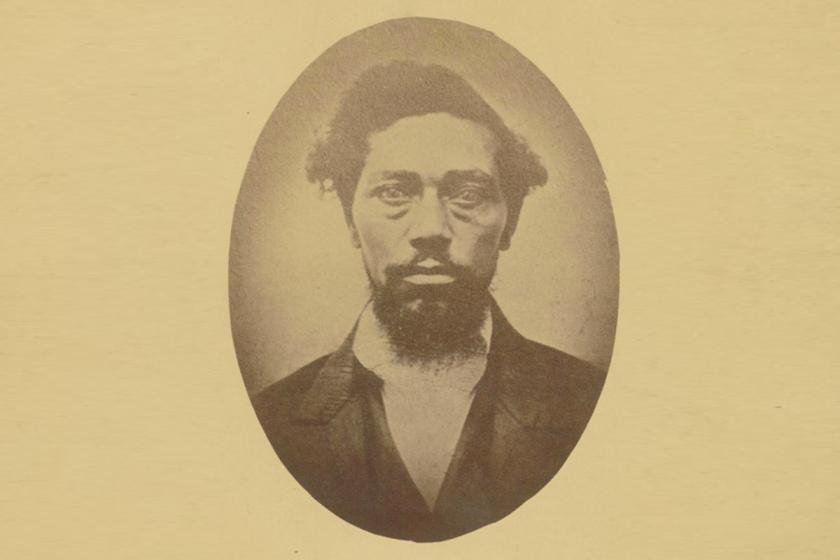
Indeed, the New Orleans Daily Picayune of December 9 had itself admitted that it had “refrained from publishing a great deal which we receive by the mails, going to show that there is a spirit of turbulence abroad in various quarters.” December 3 it said the same thing about “this very delicate subject” but did state that there were plots for rebellion during the Christmas holidays “in Kentucky, Arkansas and Tennessee, as well as in Mississippi, Louisiana and Texas” and that recent events “along the Cumberland river in Kentucky and Tennessee and the more recent affairs in Mississippi, approach very nearly to positive insurrection.”
To this may be added Maryland, Alabama, Virginia, North Carolina, South Carolina, Georgia and Florida.(29) Features of the conspiracies are worth particular notice. Arms were discovered among the slaves in, at least, Tennessee, Kentucky and Texas. Preparations for blowing up bridges were uncovered. Attacks upon iron mills in Kentucky were started but defeated. At least three whites were killed by slaves in that same state. The date for the execution of four slaves in Dover, Tennessee, was pushed ahead for fear of an attempt at rescue, and a body of 150 men was required to break up a group of about the same number of slaves marching to Dover for that very purpose.
Free Negroes were directly implicated as well as slaves in Kentucky, and they were driven out of several cities as Murfreesboro, Tenn., Paducah, Ky., and Montgomery, Ala.
Whites, too, were often implicated. Two were forced to flee from Charles County, Maryland. One, named Taylor, was hanged in Dover, Tenn., and two others driven out. One was hanged and another whipped in Cadiz, Ky. One was arrested in Obion, Tenn. The Galveston, Texas, News of December 27 reported the frustration of a plot in Houston County and stated, “Arms and ammunition were discovered in several portions of the county, given to them, no doubt, by white men, who are now living among us, and who are constantly inciting our slaves to deeds of violence and bloodshed.”
A letter, passed along by whites as well as slaves, found Dec. 24, 1856, on a slave employed on the Richmond and York Railroad in Virginia is interesting from the standpoint of white cooperation and indicates, too, a desire for something more than bare bodily freedom. The letter reads: (30)
“My dear friend: You must certainly remember what I have told come up to the contract—as we have carried things thus far. Meet at the place where we said, and dont make any disturbance until we meet and d’ont let any white man know any-thing about it, unless he is truth-worthy. The articles are all right and the country is ours certain. Bring all your friends; tell them, that if they want freedom, to come. D’ont let it leak our; if you should get in any difficulty send me word immediately to afford protection. Meet at the crossing and prepare for Sunday night for the neighbourhood—
“P.S. Dont let anybody see this— Freedom—Freeland Your old friend W.B.”
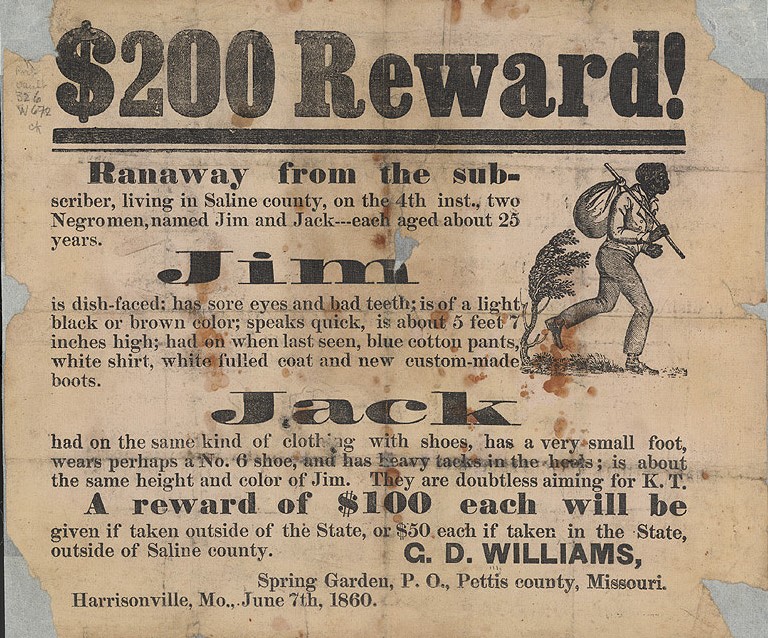
Another interesting feature of the plots of November and December, 1856, is the evidence of the effect of the bitter Presidential contest of that year between the Republican, Frémont, and the Democrat, Buchanan. The slaves were certain that the Republican Party stood for their liberation and some felt that Colonel Frémont would aid them, forcibly, in their efforts for freedom. Certain slaves are so greatly imbued with this fable that I have seen them smile when they were being whipped, and have heard them say that, Frémont and his men can hear the blows they receive. One unnamed martyr, a slave iron worker in Tennessee, “said that he knew all about the plot, but would die before he would tell. He therefore received 750 lashes, from which he died.”(31)
Of the John Brown raid nothing may be said that has not already been told, except that to draw the lesson from the attempt’s failure that the slaves were docile, as has so often been done, is absurd. And it would be absurd even if we did not have a record of the bitter struggle of the Negro people against slavery. This is so for two main reasons: first, Brown’s raid was made in the northwestern part of Virginia, where slavery was of a domestic, household nature and where slaves were relatively few; secondly, Brown gave the slaves absolutely no foreknowledge of his attempt. The slaves had no way of judging Brown’s chances or even his sincerity, and, in that connection, let it be remembered that slave stealing was a common crime in the Old South.
The event aroused tremendous excitement. The immediate result is well described in this paragraph:
“A most terrible panic, in the meantime, seizes not only the village, the vicinity, and all parts of the state, but every slave state in the Union…Rumours of insurrections, apprehensions of invasions, whether well founded or ill-founded, alters not the proof of the inherent and incurable weakness and insecurity of society, organized upon a slaveholding basis.”(32)
Many of these rumors were undoubtedly false or exaggerated both by terror and by anti-“Black Republican” politicians. Bearing this in mind, however, there yet remains good evidence of real and widespread disaffection among the slaves.
Late in November, 1859, there were several incendiary fires in the neighborhood of Berryville, Virginia. Two slaves, Jerry and Joe, of Col, Francis McCormick were arrested on the charge of conspiracy and convicted. An effort was made to save these slaves from hanging for it was felt that the evidence against them was not conclusive and that since “We of the South, have boasted that our slaves took no part in the raid upon Virginia, and did not sympathize with Brown,”(33) it would look bad to hang two slaves now for the same crime. Others, however, urged their executions as justified on the evidence and necessary as an example, for “there are other negroes who disserve just as much punishment.” The slaves’ sentences were commuted to imprisonment, at hard labor, for life.
In December Negroes in Bolivar, Missouri, revolted and attacked their enslavers with sticks and stones. A few whites were injured and at least one slave was killed. Later, (34)
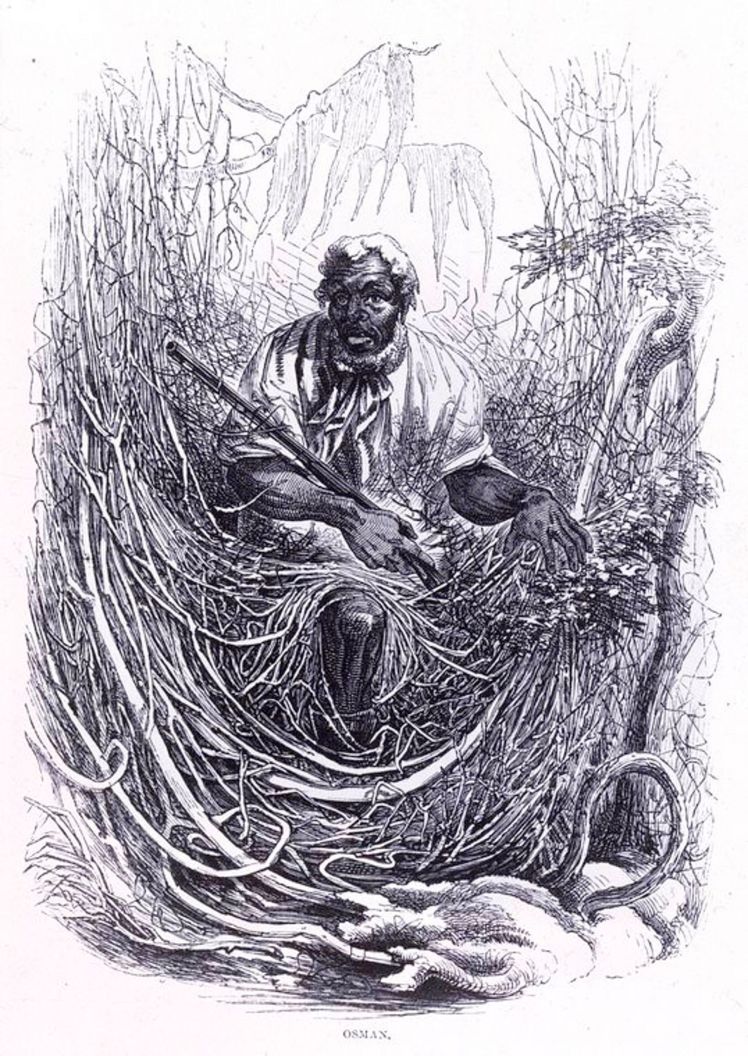
“A mounted company was ranging the woods in search of negroes. The owner of some rebellious slaves was badly wounded, and only saved himself by flight. Several blacks have been severely punished. The greatest excitement prevailed, and every man was armed and prepared for a more serious attack.”
Still later advices declared that “the excitement had somewhat subsided.”
Early in July, 1860, fires swept over and devastated many cities in Northern Texas. Slaves were suspected and arrested.(35) White men were invariably reported as being implicated, and frequent notices of their beatings and executions together with slaves occur. Listing of the counties in which plots were reported, cities burned, and rebels executed will give one an idea of the extensiveness of the trouble and help explain the abject terror it aroused: Anderson, Austin, Dallas, Denton, Ellis, Grimes, Hempstead, Lamar, Milam, Montgomery, Rusk, Tarrant, Walker and Wood. The reign of terror lasted for about eight weeks.
And before it was over reports of disaffection came from other areas. In August a conspiracy among the slaves, again with white accomplices, said to have been inspired by a nearby maroon band, was uncovered and crushed in Talladega County, Ala.(36) About 100 miles south of this, in Pine Level, Montgomery County, of the same state, in that same month, the arrest of a white man, a harness maker, was reported(37) for “holding improper conversations with slaves.” Within five months serious difficulty is reported from that region.
Meanwhile, still in August, plots were uncovered in Whitfield, Cobb, and Floyd Counties in Northwest Georgia. Said the Columbus, Ga., Sun, of Aug. 29: “By a private letter from Upper Georgia, we learnt that an insurrectionary plot has been discovered among the negroes in the vicinity of Dalton and Marietta and great excitement was occasioned by it, and still prevails.” The slaves had intended to burn Dalton, capture a train and crash on into Marietta some seventy miles away. Thirty-six of the slave leaders were imprisoned and the entire area took on a warlike aspect. Again it was felt that “white men instigated the plot,” but, since Negro testimony was not acceptable against a white man, the evidence against them was felt to be insufficient for conviction. Another Georgia paper of the same month, the Augusta Dispatch, admitting: “We dislike to allude to the evidences of the insurrectionary tendency of things…” nevertheless did deign barely to mention the recent discovery of a plot among the slaves of Floyd County, about forty miles northwest of Marietta.
In September a slave girl betrayed a conspiracy in Winston County, Mississippi. Approximately thirty-five slaves were arrested and yet again it was discovered that whites were involved.(38) At least one slave was hanged as well as one white man described as a photographer named G. Harrington.
Late in October a plot first formed in July was disclosed among the slaves of Norfolk and Princess Anne Counties, Virginia, and Currituck County, North Carolina.(39) Jack and Denson, slaves of a Mr. David Corprew of Princess Anne, were among the leaders. Other were named Leicester, Daniel, Andrew, Jonas and William. These men planned to start the fight for freedom with their spades and axes and grubbing hoes. And it was understood, according to a slave witness, that “white folks were to come in there to help us,” but in no way could the slaves be influenced to name their white allies. Banishment, that is, sale and transportation out of the state, was the leaders’ punishment.
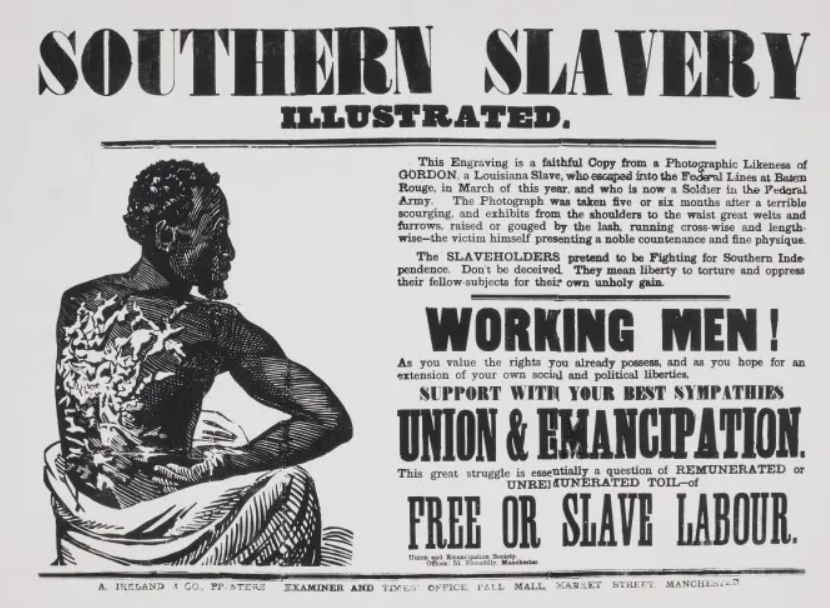
In November plots were disclosed in Crawford and Habersham Counties, Georgia.(40) In both places whites were involved. In Crawford a white man, described as a Northern tinsmith, was executed, while a white implicated in Habersham was given five hours to leave. How many slaves were involved is not clear. No executions among them were reported. According to the Southern papers the rebels were merely “severely whipped.”
December finds the trouble back again in the heart of Alabama, in Pine Level, Autaugaville, Prattville and Hayneville. A resident of the region declared it involved (41) “many hundred negroes” and that “the instigators of the insurrection were found to be the low-down, or poor, whites of the country.” It was discovered that the plot called for the redistribution of the “land, mules, and money.” Said another source, the Montgomery, Ala., Advertiser of Dec. 13:
“We have found out a deep laid plan among the negroes of our neighborhood, and from what we can find out from our negroes, it is general all over the country…We hear some startling facts. They have gone far enough in the plot to divide our estates, mules, lands, and household furniture.”
The crop of martyrs in this particular plot numbered at least twenty five Negroes and four whites. The names of but two of the whites are known, Rollo and Williamson.
There is evidence (42) of the existence in December, 1860, of a widespread secret organization of slaves in South Carolina, dedicated to the objective of freedom. Said J. R. Gilmore, a visitor in the region: “. . . there exists among the blacks a secret and wide-spread organization of a Masonic character, having its grip, password, and oath. It has various grades of leaders, who are competent and earnest men and its ultimate object is FREEDOM.”
Gilmore warned a slave leader, Scipio, that such an organization meant mischief. No, said Scipio, “it meant only RIGHT and JUSTICE.”
The slaves saw the impending war between the states and sang:
“And when dat day am come to pass We’ll all be dar to see! So shut your mouf as close as death, And all you n***s hole your breafh, And do de white folks brown!”
Or, in more sober prose, Scipio told Mr. Gilmore that the South would be defeated “’cause you see dey’ll fight wid only one hand. When day fight de Nor wide de right hand, Doy’ll hey to hold de n*** wide de left.” Scipio’s parting words were a plea that Gilmore let the North know that the slaves were panting for freedom and that the poor whites, too, were victims of the same vicious system.
There are a number of journals with this name in the history of the movement. This ‘Communist’ was the main theoretical journal of the Communist Party from 1927 until 1944. Its origins lie with the folding of The Liberator, Soviet Russia Pictorial, and Labor Herald together into Workers Monthly as the new unified Communist Party’s official cultural and discussion magazine in November, 1924. Workers Monthly became The Communist in March ,1927 and was also published monthly. The Communist contains the most thorough archive of the Communist Party’s positions and thinking during its run. The New Masses became the main cultural vehicle for the CP and the Communist, though it began with with more vibrancy and discussion, became increasingly an organ of Comintern and CP program. Over its run the tagline went from “A Theoretical Magazine for the Discussion of Revolutionary Problems” to “A Magazine of the Theory and Practice of Marxism-Leninism” to “A Marxist Magazine Devoted to Advancement of Democratic Thought and Action.” The aesthetic of the journal also changed dramatically over its years. Editors included Earl Browder, Alex Bittelman, Max Bedacht, and Bertram D. Wolfe.
PDF of full issue: https://www.marxists.org/history/usa/pubs/communist/v18n02-feb-1939-The-Communist-OCR.pdf
 Revolution's Newsstand