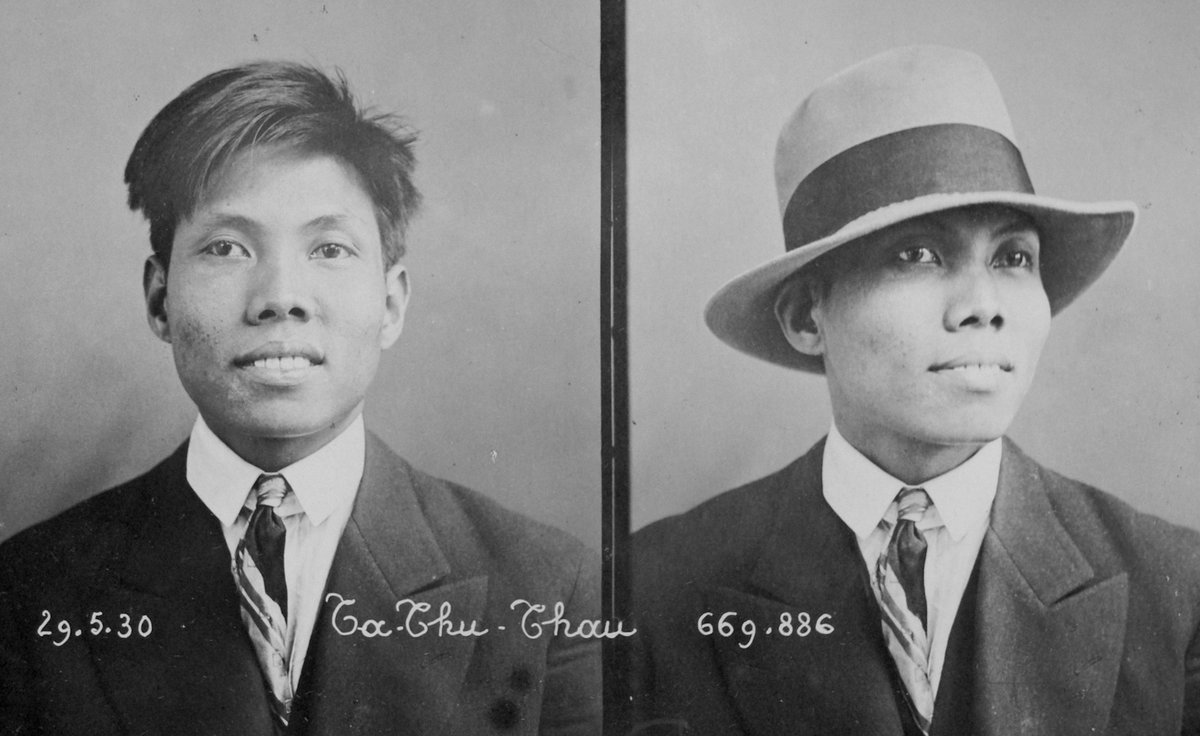
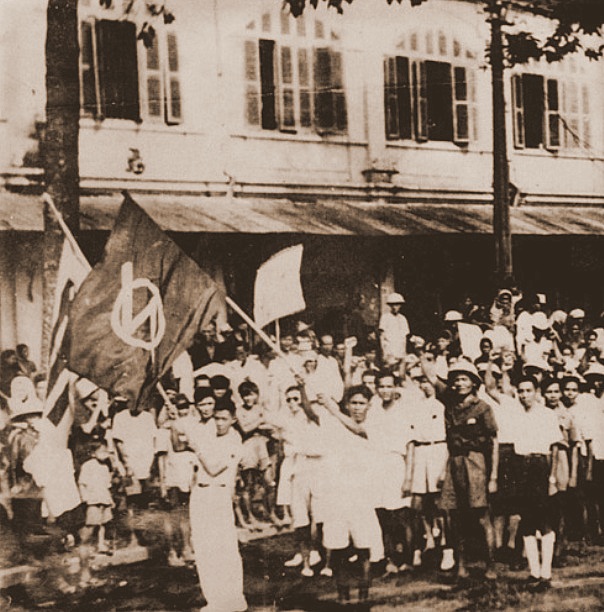
A major, often overlooked quandary of the Comintern’s Popular Front policy concerned subordination of anti-imperialist struggles, often lead by Communists, in the colonies to the Popular Fronts in imperialist powers where Communists also held positions, or wished to. Nowhere was this more hypocritically and violently played out than in France’s colony of Vietnam. There leaders of the struggle against French Imperialism, including a relatively strong Trotskyist movement, were brutally repressed, organizations destroyed, and with many killed in the struggle for democracy and self-determination; ostensibly positions of the French Popular Front. Tạ Thu Thâu was a central figure in the Vietnamese Left Opposition from the late 1920s and a genuine mass leader of Vietnamese workers. This was one of his innumerable arrest under a variety of regimes. When released by the French in 1945, Thu Thâu went north to the Hòn Gai-Cẩm Phả “Commune” to continue the fight against imperialism. At the time, policy of the Vietnamese Communist’s was to establish a ‘Democratic Republic’ in the North and to win it international recognition. Thau and his comrades, among the largest and most influential Fourth Internationalist groups in the world, rejected the stance of the Viet Minh, prepared and participated in Saigon’s September, 1945 workers revolt. For which they were jointly hunted down and killed in mass by French security and the Viet Mihn, including Thau.
‘Tạ Thu Thâu, Indo-Chinese Militant, Held in Prison of People’s Front’ from Socialist Appeal. Vol. 2 No. 15. April 19, 1938.
His right side paralyzed as a result of hunger strikes in the People’s Front prisons of Saigon, French Indo-China, Ta-tu Thau, leader of the Indo-Chinese Fourth Internationalists and a member of the Municipal Council of Saigon, is serving a sentence of two years’ imprisonment imposed upon him by a People’s Front court for his leadership of the struggle against French imperialism.
A broad campaign is being conducted in France by the P.O.I. (Workers’ internationalist Party) and the International Aid for his immediate release.
Ta-tu Thau is one of the veteran leaders of the national liberation movement in Indo-China. As editor of La Lutte he has been at the center of all mass struggles in the French colony for nearly a decade.
People’s Front Repression
Always the scene of bloody repression, Indo-China has never been ground down harder beneath the heel of French oppression than it has been during the past two years of People’s Front rule. During most of this period a Socialist, Marius Moutet, sat at the Colonial Ministry in France directing the blows at the national liberation movement in Indo-China, French North Africa, and other parts of the French Empire.
Directly involved in the persecution of Ta-tu Thau was Assistant Minister of Colonies Violette, the same “Socialist” Who played a leading role in hounding out of the French Socialist Party in 1935 the young revolutionists of the Seine Socialist Youth Federation who are now part of the Revolutionary Socialist Youth, adherents of the Fourth International.
Ta-tu Thau is the outstanding representative of the national revolutionary movement in Indo-China and it is as the symbol of that movement that the People’s Front regimes of Blum and Chautemps have relentlessly hounded him.
Arrested and Expelled
Ta-tu Thau, as a young student in Paris, was one of the first Indo-Chinese revolutionists to rally to the Left Opposition, joining the group of La Verite in 1929. He participated in a demonstration organized by that group before the Elysee Palace in 1930 in protest against repressions in Indo-China. He was arrested and expelled. Back in Saigon in 1931 he founded La Lutte.
La Lutte and the group around it was unique in the international revolutionary movement up until 1937. The newspaper was the organ of a united front between the Stalinists and Trotskyists of Indo-China. They fought side by side in united front actions and elections. Ta-tu Thau led the ticket of this unprecedented coalition in an election some two years ago which made him a member of the Saigon Municipal Council, a body created by the French in a niggardly attempt to satisfy the aspirations of the Indo-Chinese to independence.
The paper, and in particular its editor, became the target of police attacks which grew sharper as the group grew in influence and prestige as the leading factor in numerous strike movements and agitation for political and civil rights. Arrested in 1,935, Ta-tu Thau and several of his collaborators were held for several months and then heavily fined.
Moutet Orders Suppression
In August, 1936, after the victory of the People’s Front, the Lutte group started agitation for the creation of committees of action throughout the country with the aim of setting up an Indo-Chinese Congress. Orders arrived in September from Moutet for the suppression of this movement. The governor-general promptly arrested Ta-tu Thau on September 28. He went on hunger strike for 11 days and was finally released on November 15. During the winter of 1936-37 great strikes swept the French colony and once more Ta-tu Thau was put behind People’s Front bars.
The strongest pressure for suppression of the popular movement in Indo-China was brought to bear by the French Communist Party, which had now become the staunchest flag waver of French imperialism. The Stalinists openly called in their press for police action against the Indo-Chinese revolutionists. Thus spurred, the People’s Front police acted and dealt their blows indiscriminately at the Trotskyists and the Stalinists in Saigon and other cities in the colony.
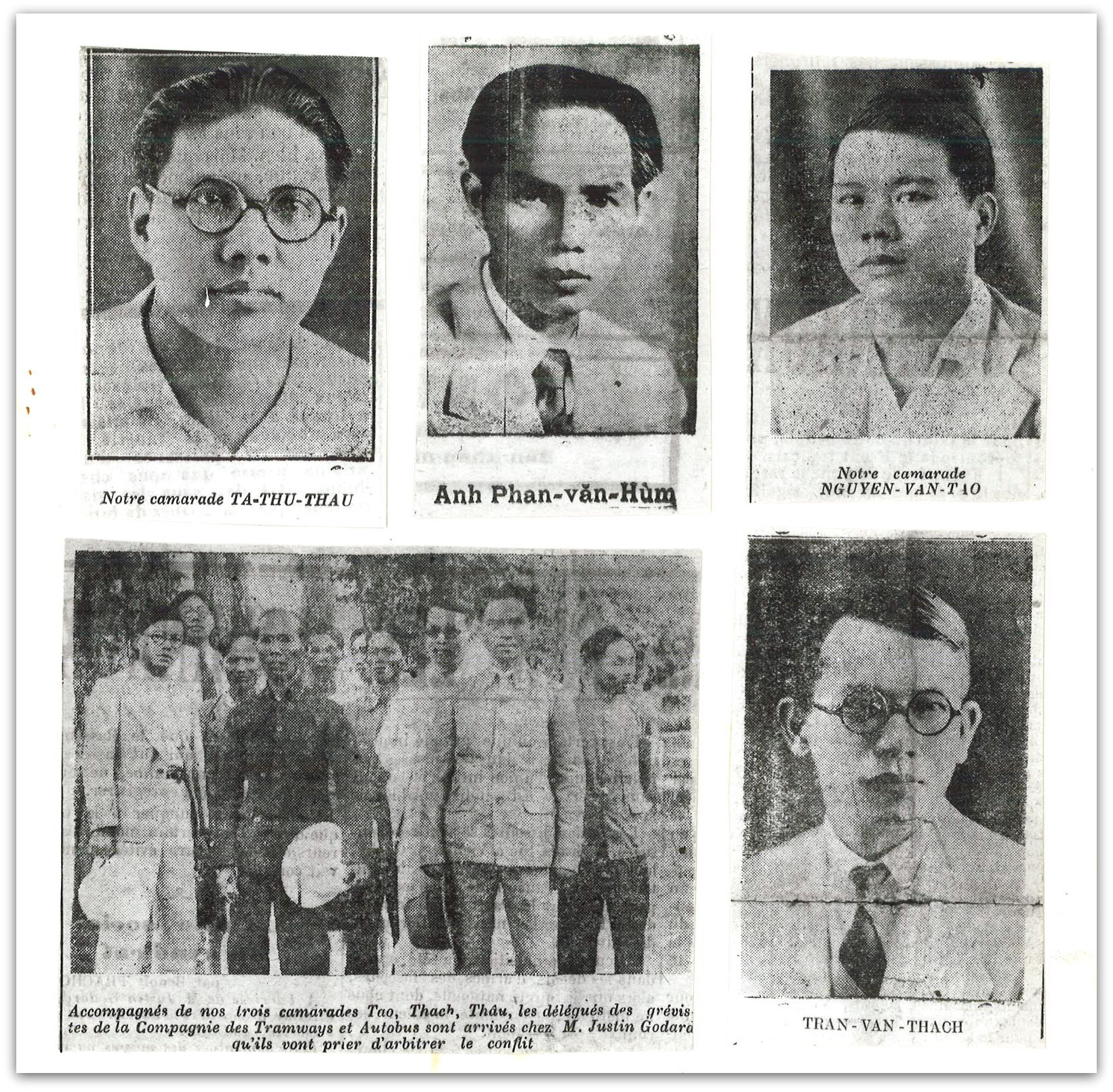
Ta-tu Thau was arrested on May 10 last year and was released on bail in June. In the interim the Stalinist Party in Paris finally succeeded in getting their confreres in Indo-China to withdraw from the united front movement. They quit the group of La. Lutte three weeks before Ta-tu-Thau was scheduled to come before the court. He had assumed full responsibility for the editorship of the paper and was deserted by them just as he was about to bear the full brunt of the action against the group. On. July 9, alter conducting himself as a true revolutionist before the court, Ta-tu Thau was sentenced to two years’ imprisonment. An appeal only succeeded in adding five years’ banishment to this sentence. He was still out on bail awaiting the result of the appeal when he was arrested for the fourth time following a great railway strike in Cochin China. Along with him was arrested the Stalinist leader Tao. When they were refused liberation on bail they began a hunger strike. They fought off forced feeding for 12 days before finally ending the strike.
Is Paralyzed
While the “Socialist” colonial authorities in Paris smirked and told protesting militants that Thau was “simulating” his illness, the Indo-Chinese leader was actually paralyzed along his right side. Medical commissions which examined him in prison confirmed that he was in a serious condition. Nevertheless all appeals for his release have gone unheard. Instead, an old sentence from 1932 was invoiced against him, increasing his full term to four years.
From his prison Ta-Tu Thau has sent out word of his unshaken faith in the proletarian revolutionary movement and of his dependence upon its support to force his release.
We must add our voices to those that have already been raised in behalf of Ta-Tu Thau as the representative of the national movement in Indo-China. It is the duty of American workers’ organizations to protest to all local French consulates and to the French Embassy in Washington demanding his immediate release!
There have been a number of periodicals named Socialist Appeal in our history, this Socialist Appeal was edited in New York City by the “Left Wing Branches of the Socialist Party”. After the Workers Party (International Left Opposition) entered the Socialist Party in 1936, the Trotskyists did not have an independent publication. However, Albert Goldman began publishing a monthly Socialist Appeal in Chicago in February 1935 before the bulk of Trotskyist entered the SP. When there, they began publishing Socialist Appeal in August 1937 as the weekly paper of the “Left Wing Branches of the Socialist Party” but in reality edited by Cannon and other leaders. Goldman’s Chicago Socialist Appeal would fold into the New York paper and this Socialist Appeal would replace New Militant as the main voice of Fourth Internationalist in the US. After the expulsion of the Trotskyists from the the Socialist Party, Socialist Appeal became the weekly organ of the newly constituted Socialist Workers Party in early 1938. Edited by James Cannon and Max Shachtman, Felix Morrow, and Albert Goldman. In 1941 Socialist Appeal became The Militant again.
PDF of full issue: https://www.marxists.org/history/etol/newspape/themilitant/socialist-appeal-1938/v2n15-apr-09-1938-SA.pdf
 Revolution's Newsstand