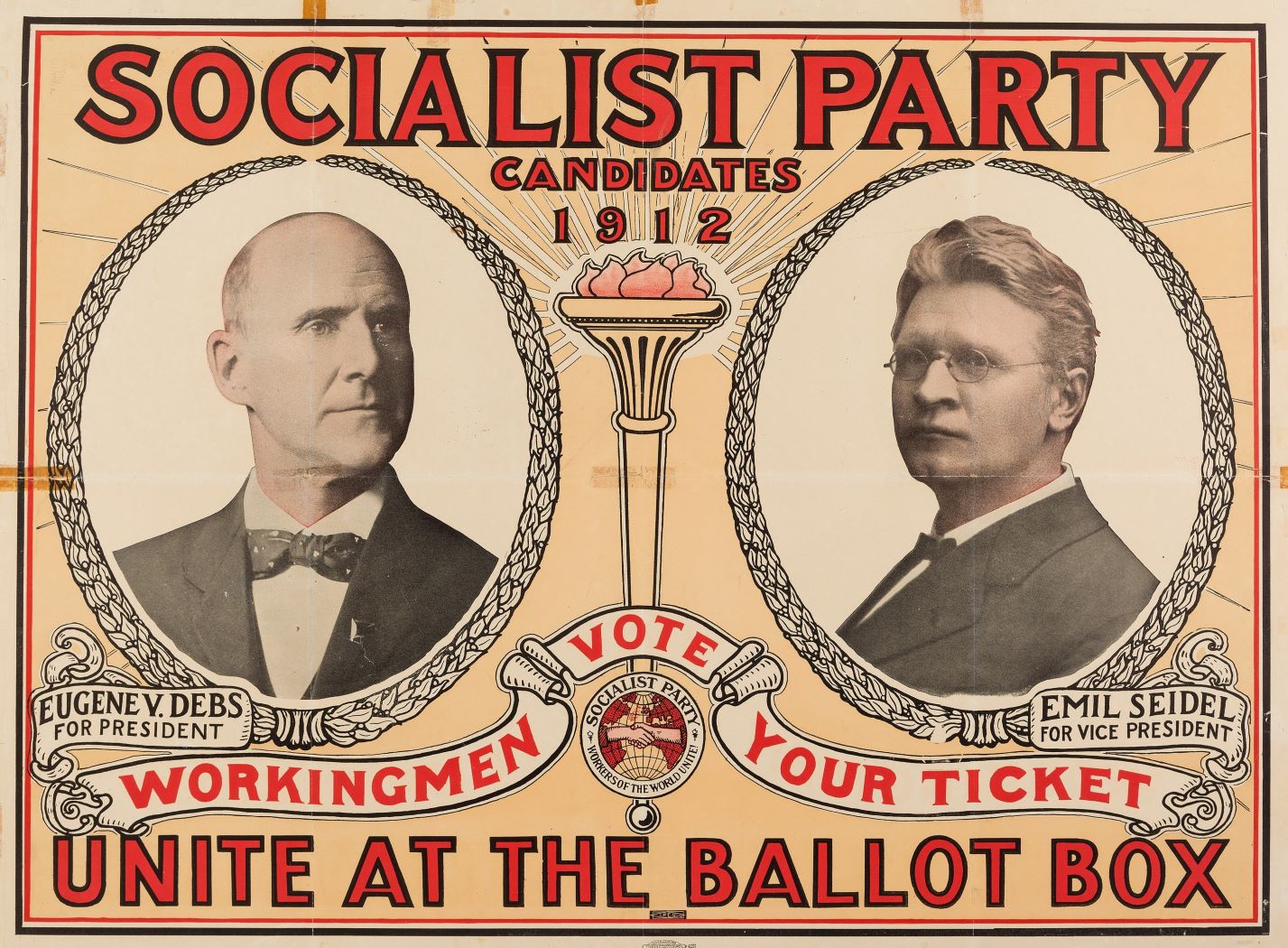
A high-water mark for the Chicago Socialist Party was the election of 1912 when nearly 100,000 voted for the Party’s candidates, electing four representatives to the State Legislature. The best result in Chicago for Socialists since the 1870s. Debs ran that year for President, also scoring his best performance nationally, 6%, as well as in Illinois with over 7% state-wide and 13% in Chicago. J. Louis Engdahl, future editor of the Daily Worker and then editor of the Chicago Socialist World reports.
‘Red Tidal Wave Engulfs Chicago’ by J. Louis Engdahl from the Coming Nation. No. 115. November 23, 1912.
LABOR in the city of Chicago got both its fists in its eyes and is rubbing them hard. It is a rather blinding proposition this meeting the full blaze of new day. Especially is this true because there has been a great darkness for a very long time. Just what a big half-blind, half-seeing thing like labor will do when it gets to rubbing its eyes may be judged by just a few statements of fact. They are:
The city of Chicago polled nearly 97,000 votes for the Socialist candidate for states’ attorney, William A. Cunnea, on last election day. It polled about 55,000 votes for Eugene V. Debs as the presidential candidate of the Socialist party. It elected four Socialists to the Illinois state legislature and nearly elected one United States congressman.
This is all according to the election returns furnished by election officials owned and controlled by the Hearst-Harrison democratic election machine in Chicago and Cook county. It was the Hearst-Harrison combination that forced the recent newspaper trust strike and then slugged and jailed the locked-out workers. That the election of Cunnea for state’s attorney was stolen from the working class is the claim of the Cook county Socialist party organization and it is planning to contest the count of the anti-working class forces.
But on the face of things from the Socialist viewpoint it was a half-blind election. The Chicago working class has always fought the thing that immediately faced it, be it a fellow member of the working class in jurisdictional dispute or the master class in solid array arraigned against it. It has given but little consideration to the ultimate goal, its own emancipation, at least it has never voted that way, nor has it ever gone on strike that way.
So in the election of November 5 the big thing that the working class of Chicago realized was the fact that William Randolph Hearst, through his Chicago representative, “Long Green Andy” Lawrence, was trying among other things to elect a state’s attorney.
In the realms of Chicago and Cook county political power there is probably no single office in the gift of the people that carries with it the influence possessed by the state’s attorney’s office. During the trust press strike it was this office that could either permit or stop the swearing in of thugs and gunmen to shoot up the city as the occasion demanded. The office was not in the hands of the working class and the shooting went on.
So the working class, fighting for the immediate advantage, set out to get control of the state’s attorney’s office. There were five candidates in the field, the republican, democrat, Socialist, prohibition and progressive. From among these the working class threw its support to the Socialist. The vote furnished by the Hearst-Harrison election officials was as follows: Republican 94,667; democrat, 105,610; prohibition, 2,528; Socialist, 96,975; progressive, 71,561.
It wasn’t a straight Socialist vote. This is seen by the fact that Debs polled over 40,000 less. But it was not a reform wave. It was an unenlightened working class protest sweeping over the city like a tidal wave, bringing terror and the tidings of the new day to the powers that now control.
There are thirty- five wards in the city of Chicago and the vote cast for Cunnea was big enough to carry nineteen of these wards. There was a red ribbon of them extending from the stockyards on the south side of the city to the purely working class districts on the north and northwest sides.
In the study of the vote the greatest satisfaction comes in the fact that over on the northwest side, where two Socialists were elected to the state legislature and the race for congress took place, there the Socialist vote was the straightest, and it was here, too, that the biggest vote was cast for Cunnea. It is further encouraging to note that the campaign in these northwest side wards was a Socialist campaign, little attention being paid to the individual candidates. In addition to this it is even more encouraging to note that these wards came out of the struggle with a fighting organization in every precinct, an increased and growing membership list and an insatiable desire on the part of the workers themselves to know more about Socialism.
The Socialist candidates were nominated for office irrespective of the fight that later developed. They had all been chosen and voted upon in primary election last April before the pressmen were locked out of the Hearst press rooms starting the fight that raged throughout the city all summer and fall. It just happened that the Socialist candidate for state’s attorney, William A. Cunnea, also became one of the counsel for the locked out and striking members of the newspaper trades. The Socialists elected to the state legislature are:
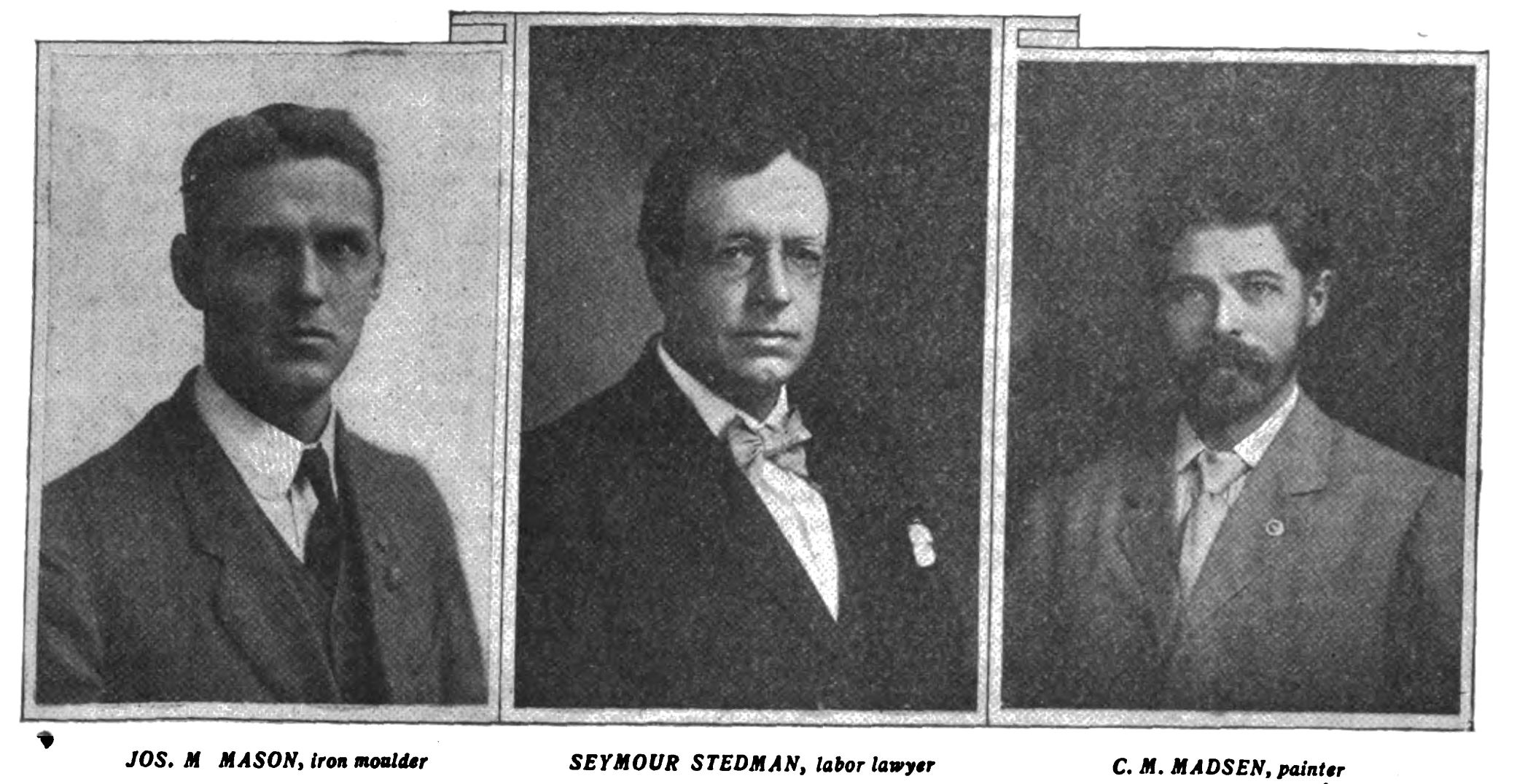
Seymour Stedman, labor lawyer, who was chief counsel for the Illinois Mine Workers during the Cherry mine disaster.
C.M. Madsen, painter, who is secretary of his union, the largest in the jurisdiction of the Painters, Decorators and Paperhangers of America.
Joseph M, Mason, iron molder, former president of his local, and chosen from a district where the election was stolen from the Socialists two years ago.
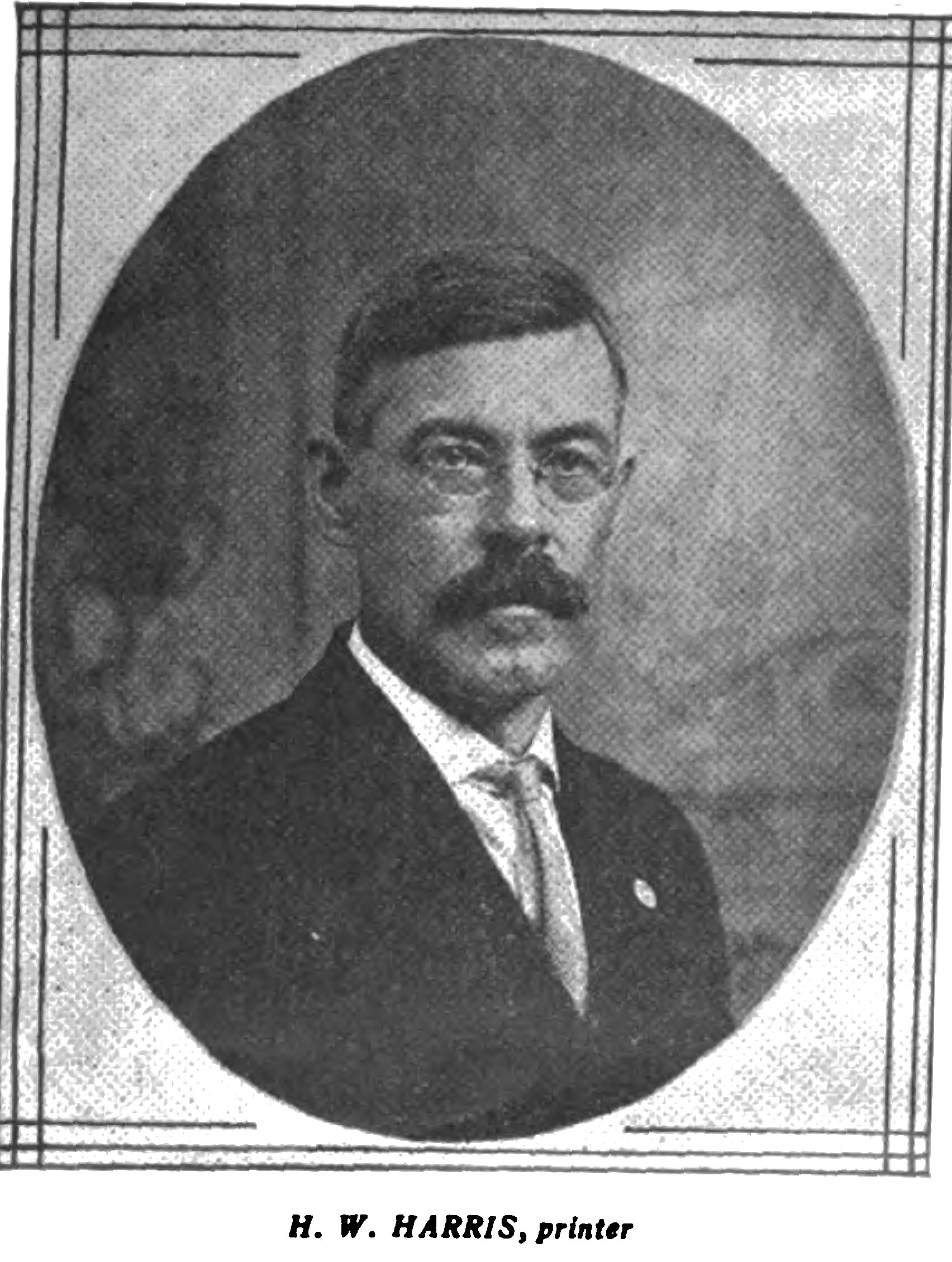
H.W. Harris, printer, working at his trade, and elected from a district known as the home of railroad workers.
In the race for congress the Socialist candidate, Otto C. Christensen, was beaten by Frank Buchanan, the present incumbent, who is a former president of the Bridge and Structural Iron Workers International Union. He traveled on the crest of the democratic wave, the power of which can only be overcome by the proper kind of working class education. While the election was raging it was interesting to note the intense interest among the young, especially the children in the graded schools where teachers who are Socialists are often found. In many of the school rooms the children had elections of their own. Where Debs did not win, it is reported, he secured a good percentage of the ballots. One eighth grade room adopted the Socialist platform as the platform voicing its political beliefs. In another room one ambitious youngster on Halloween brought several pumpkins to his teacher representing the heads of the various presidential candidates with the exception of Debs. When the omission was pointed out he explained it by the fact that he couldn’t find a pumpkin long and narrow enough to furnish a likeness of Debs’ face.
That the Chicago World, the Socialist daily newspaper in Chicago, helped is proven by the fact that in those districts where the circulation of the World is big, there the Socialist vote was heavy, and where there are few subscribers to the World, there the vote was light.
Not only in Chicago but everywhere throughout the nation the trend of events seems to indicate that the working class mind is agitated. What is most needed now is organization and education. The Socialist party was never better equipped to carry on this work than now, and as it continues in the fight it will grow stronger as the hosts engaged in the battle increase in numbers.
The Coming Nation was a weekly publication by Appeal to Reason’s Julius Wayland and Fred D. Warren produced in Girard, Kansas. Edited by A.M. Simons and Charles Edward Russell, it was heavily illustrated with a decided focus on women and children. The Coming Nation was the descendant of Progressive Woman and The Socialist Woman which folded into the publication. The Socialist Woman was a monthly magazine edited by Josephine Conger-Kaneko from 1907 with this aim: “The Socialist Woman exists for the sole purpose of bringing women into touch with the Socialist idea. We intend to make this paper a forum for the discussion of problems that lie closest to women’s lives, from the Socialist standpoint”. In 1908, Conger-Kaneko and her husband Japanese socialist Kiichi Kaneko moved to Girard, Kansas home of Appeal to Reason, which would print Socialist Woman. In 1909 it was renamed The Progressive Woman, and The Coming Nation in 1913. Its contributors included Socialist Party activist Kate Richards O’Hare, Alice Stone Blackwell, Eugene V. Debs, Ella Wheeler Wilcox, and others. A treat of the journal was the For Kiddies in Socialist Homes column by Elizabeth Vincent.The Progressive Woman lasted until 1916.
PDF of full issue: https://books.google.com/books/download/The_Coming_Nation.pdf?id=j8MsAQAAMAAJ&output=pdf
 Revolution's Newsstand