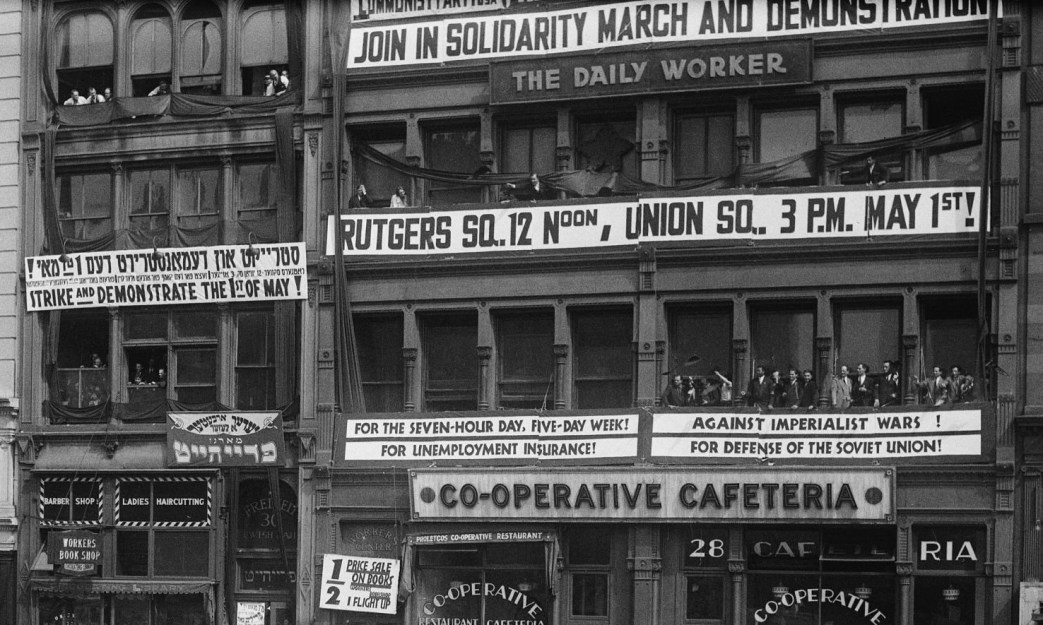
1930 was a low ebb for the Communist Party. Since its last National Convention in 1928 it went through two damaging splits, losing thousands of cadre and much of its historic leadership, being reduced to around 6,800 members in the process. At the Communist International went through parallel splits and made a sharp political pivot to the ‘Third Period’ of crisis and confrontation, including the building of new unions. The Great Depression had begun the previous October with unemployment becoming the central issue. It was in those circumstances that, for the first time since its founding, the party did not face an organized factional dispute at a National Convention.
Max Bedacht held an interesting position at the time of the Convention, which would inaugurate a different party than that of the 1920s. Born in Germany and raised politically in its Socialist Democratic Party, he emigrated to the U.S. in 1908, where he would be active in California Socialist politics. Aligning with the Left, he was a founder of the Communist Labor Party and later Communist Party where he was trade union activist, a Comintern delegate and a leader of Ruthenberg-Lovestone’s faction before he broke with Lovestone after Ruthenberg’s 1927 death. Though loyal to the Party throughout its many turns in 1930s, and made Acting General Secretary after Lovestone’s 1929 expulsion, he was never embraced by the new leadership and would spend much of his remaining time serving as head of the International Workers Order. He would be expelled in 1948.
‘The Major Problem Before the Seventh Convention of the C.P.U.S.A.’ by Max Bedacht from The Communist. Vol. 9 No. 6. June, 1930.
THE period since its Sixth Convention was the most eventful in the history of the Communist Party of the United States. It brought the tasks of the Party, its weaknesses and its possibilities to the attention of every Party member in the sharpest possible form, The campaign of bolshevization which started with the reorganization of our Party in 1925 remained very much on the surface. The organizational changes in the course of this bolshevization process remained largely formal changes. The old forms of language federations and Party branches on the basis of official political subdivisions were practically useless for the work of the Party. They did not help in accomplishing the task of driving its roots of the Party into the working class.

The Communist Party as the vanguard of the working class must be its head; but this head cannot be disconnected from the main body; it must have intimate connections with it, must be an integral part of it. Its organizational structure must be such that it makes possible the conveyance of the Party’s understanding, of its revolutionary will, of its inspiring energy and of its directives to the working class. At the same time this Party structure must permit the feelings of the working class, the reactions of the working class to economic and political event, the reaction of the working class to the action of the Party, to flow back into the Party and to its leadership. The old form of organization was not conceived for such purposes. It was adapted to the functions of an election campaign machinery and of a propaganda body. Even for the latter function it was inadequate. Its propaganda was carried on unsystematically and its audiences were gathered promiscuously by advertisement and like methods without consideration of the class composition of the incidental audience such methods may bring When the reorganization took place our Party was already for quite some time in the throes of a serious and furious factional struggle. The primary consideration of every action of the Party during this factional fight was the improvement of the position within the Party of the controlling faction. The minority faction of the hour also had only one thing in mind—the improvement of its chances to get control. It was largely for these reasons that the ideological campaign for the bolshevization remained totally inadequate. As a result, the reorganization changed the outer forms of the Party structure but failed completely to fill the new forms with the political content of the functioning of a revolutionary body. On the contrary, the routine life of the old forms was transferred into the new and was permitted to spread its paralyzing influence in them. The rank and file therefore never really learnt the purpose of the reorganization. It merely saw the change of name from branch to nucleus. The connections of the Party with the working class were not visibly improved. The social composition of the Party, because of its pure propaganda function without special organizational measures to reach the working masses, was weak. ‘The most exploited sections of the workers in the heavy industries were very poorly represented. ‘The reorganization did not bring a serious change.
The factional situation within the Party tended to petrify this situation. The weaknesses of the Party became a principle to be upheld. The principle itself was justified by an eclectic system of reasoning which finally crystallized into a definite Right wing line and policy. This line turned the weaknesses of the Party into an inevitable and historic necessity explained by a theory of an inherent and comparatively unassailable strength of American capitalism.
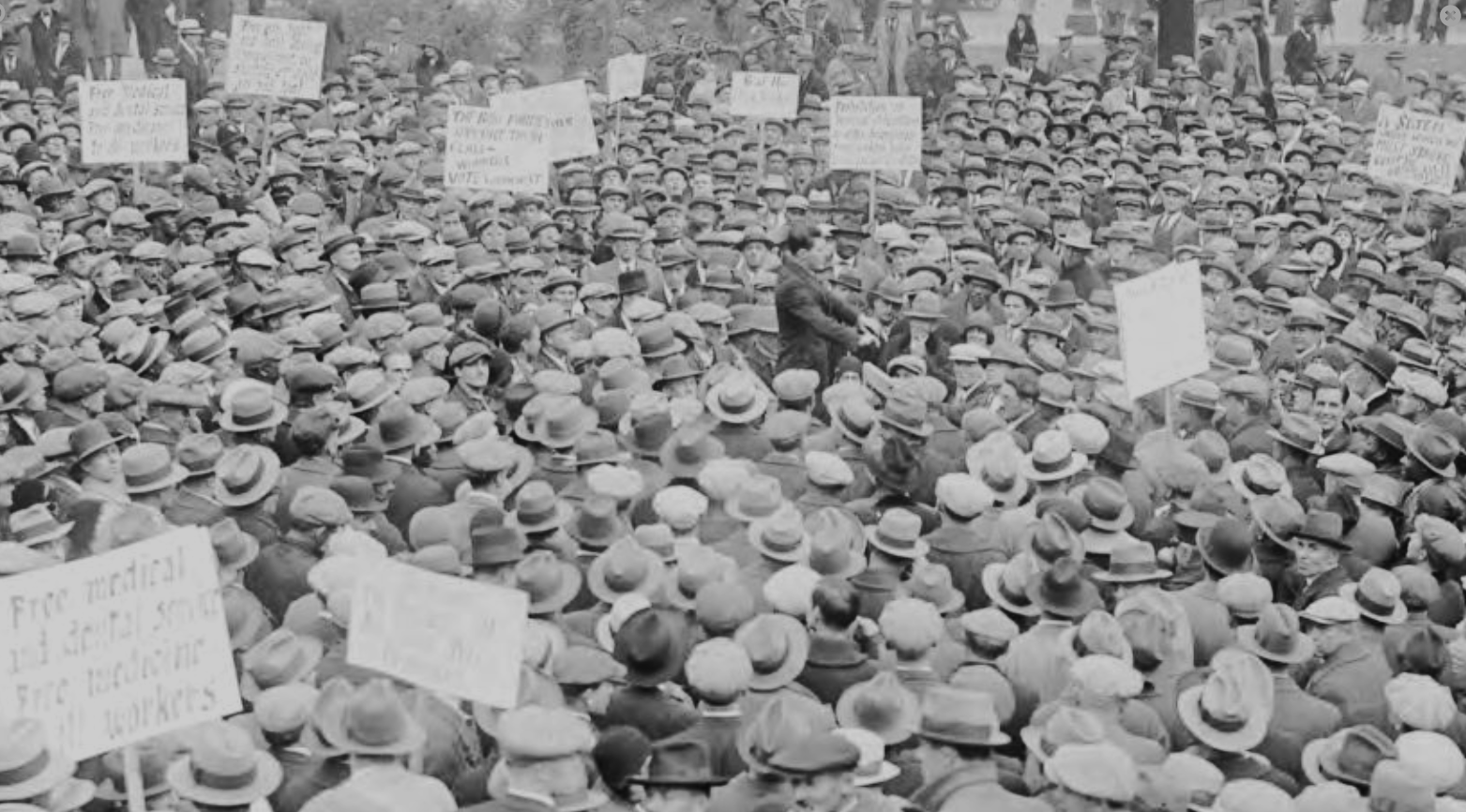
Meanwhile, a serious change took place in the economic and political situation of international capital. The vigorous policy of post-war capital to solve its weaknesses and to strengthen its base by making the workers work more and eat less had gradually resulted in catching up with and even exceeding the pre-war level of production. At the same time, however, this re-establishment of the economic equilibrium of capitalism following the inexorable laws of capitalism had eaten away the necessary base of any economic equilibrium, the marketing possibilities. Thus, instead of stabilization, capitalism is confronted with the most serious impossibility of stabilization, it is confronted with a rapidly growing disproportion of the growth of its productive forces and of its markets. This disproportion raised anew before the capitalist world, and in a more imperative form, the problem of the redistribution of the world. This problem puts war upon the order of the day of all political considerations of capitalism. Our international leadership, the Communist International, saw this development very clearly. It analyzed it sharply in the Ninth Plenum of the Executive Committee of the Communist International. It formulated it definitely at its Sixth Congress.
This international capitalist development created new and greater tasks for the Communist Parties. It demanded an immediate overhauling of all the Parties. It demanded the most energetic weeding out of all weaknesses of the Party. It demanded a relentless struggle against the Right danger. It demanded the speeding up and deepening of the bolshevization process of all Communist Parties. It was for these reasons that the Communist International was so insistent that our Party should finally and definitely liquidate its destructive internal fight. It was for this reason that the Communist International put as the major problem before our Party its transformation from a propaganda sect into a revolutionary mass Party of action. In pointing out the successes achieved in this direction by our Party it emphasized the possibilities confronting it. In emphasizing, on the other hand, the still existing weaknesses and shortcomings of the Party in that direction, it pointed to the impossibility of the Party to solve its problems without a revolutionary change in its inner life, in its method of work and its approach to the problems.
It was here that the definite crystallization of a line contrary to that of the Communist International manifested itself. While formally accepting the line of the Communist International, arguments galore were presented attempting to prove that this line did not apply to the United States. The sharpening of the class relations were emphasizing daily more clearly the necessity of action in place of phrases and organization in place of reliance on the spontaneity of the masses. The Right line of the Lovestone-Pepper leadership manifested itself precisely in its resistance to this change. Insofar as it recognized formally the change of class relations it refused to draw the conclusion of a necessary change in the tactics and activities of the Party. In its eyes the weaknesses of the Party had become a virtue which had to be preserved even if it led to a struggle against the Communist International. But it could only be a virtue in the eyes of people who do not want the Party to be a real revolutionary force against capitalism, who do not want the Party to develop a real struggle against capitalism.
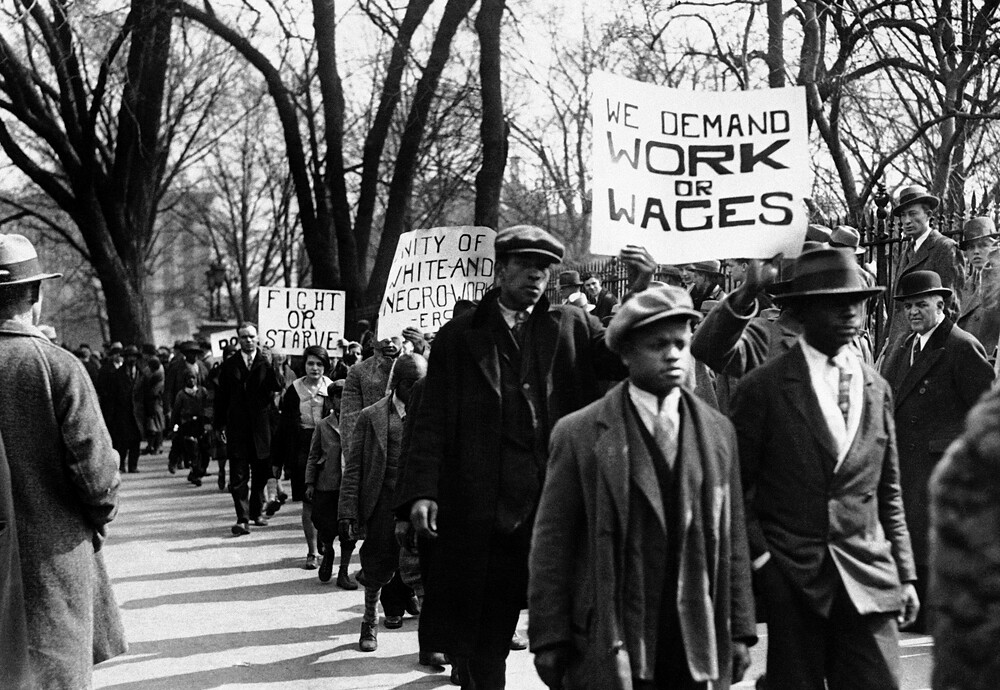
The full implications of that line, however, became clear to the Party only after the Open Address of the Executive Committee of the Communist International in May 1929. Up to that time this line was wrapped up in a declaration of formal acceptance of the line of the Comintern and opposition to organizational proposals only. In the arguments before the ECCI, however, the wrapper fell into the waste basket and the political contents revealed themselves in an open political declaration of war against the Communist International.
This development of our Party to this serious point of danger was possible only because the whole Party and all of its sections were permeated With and dominated by the poison of factionalism. Factionalism itself, on all sides, had become an opportunist weakness and a veritable deviation. The open Address of the Communist International therefore necessitated a most profound reexamination on the part of every single Party member of his conceptions and his relations to the Party and to the CI. This reexamination brought the first serious change into our Party. It led to a clearer understanding on the part of the Party of its problems and its duties. It transformed bolshevization from a formal organizational into a profound political problem. It elevated self criticism from a factional maneuver to a most serious and indispensable method of improving the revolutionary strength and quality of the Party. It transformed the struggle against the Right danger from an unprincipled battle against factional opponents into a method of revolutionizing composition, methods and tactics of the Party.
In the meantime a serious economic crisis developed in the United States. The process of radicalization of the masses accelerated and deepened to the point of producing a revolutionary upsurge. The Party quickly recognized this change. It saw a quick change in the relationship of classes taking place in the United States. It extended its activities quite rapidly. A new spirit entered the Party. The confidence of the membership in the Party’s abilities and possibilities rose greatly and created a readiness for work in hitherto inactive sections of the Party. A very concrete and conscious extension of the base of the Party’s work was carried through. Organization work in the South, for instance, was definitely turned from a subject of advertising into a very seriously approached task of the Party. Mass mobilization of work was carried through with surprising success.
In all this work, however, the still existing basic weakness of the Party came into the fore: the change of conditions created by the economic crisis increased the readiness of the workers for response to our activities. Even though the Party still acted primarily as a propaganda organization, it could register successes; but these successes were based upon spontaneous response. No serious attempt was made to anchor the Party organizationally into the masses and to turn the readiness and spontaneous response into concrete and lasting organizational strength. The readiness and spontaneous response even became in itself the cause for further neglect of the organizational tasks of the Party; just because the agitational and propaganda activities were in themselves sufficient for successful mass meetings and mass demonstrations, no serious effort was considered necessary to base these demonstrations upon systematically organized preparations. The changed conditions, therefore, in spite of increased activities, resulted in a widening of the already existing gap between the political influence of the Party and its organizational strength.
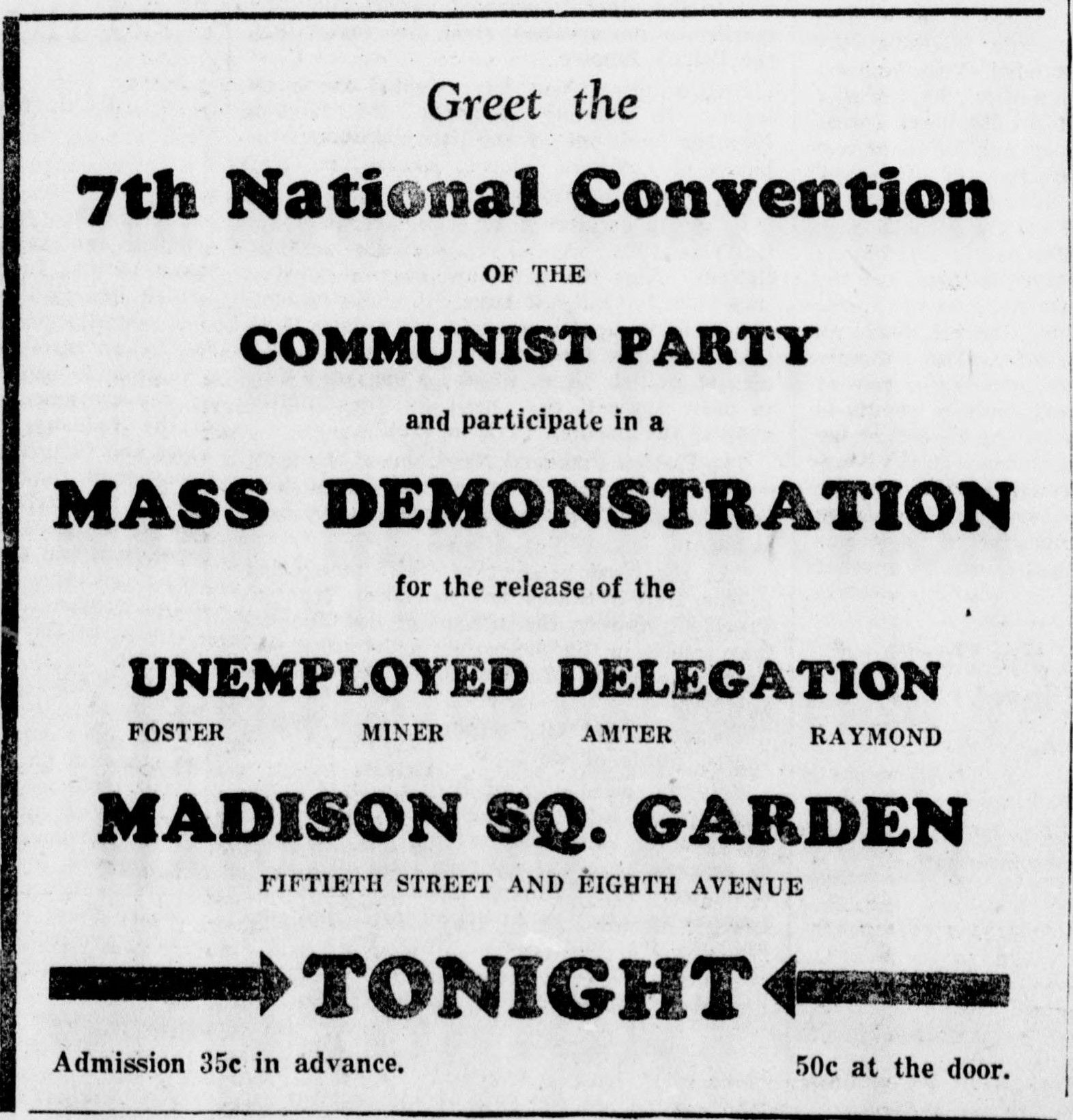
The most important concrete result of the profound historic events in our Party since our last convention is that they raise before the Party the most tangible part of the problem of its development from a propaganda sect into a revolutionary mass Party of action. It is the problem of extending and anchoring the base of the Party in the factories, shops and mines. This is not merely an organizational problem. It is a problem of the fundamental change of all our methods of work. It is the problem of replacing unsystematic agitation and propaganda by systematic organizational steps. It is a problem of transferring the major manifestations of life of the Party from the meeting hall into the factory. It is the problem of the active raising by the Communists of the daily problems of the workers in the shops and factories and the building round these problems of shop committees and of revolutionary industrial union organizations for their solution. It is the problem of the transformation of the mere routine of our Party units into political life. Without this transformation the Party units remain an empty shell and the reorganization of the Party a meaningless form. The very attempts to shift the center of gravity of our base of the Party into the shops, to extend the shop nucleus base cannot be achieved without this revolutionary change in the functioning and activities of the basic units of the Party. It is not the mechanical finding of members in the shops and the adding of those members to the Party as parts of street nuclei that will effect this change, but it is the change itself which will add new members and will build shop nuclei.
It will be the duty of the coming convention of the Party to raise all these problems into a concrete form. ‘The result of the convention must be the working out of a one-year plan of work, setting up a necessary minimum of achievement in every field of work and making the Party fully conscious of the imperative necessity to accomplish this plan.
The orientation of the Party leadership in the Districts and Sections and their activities after this convention must be fundamentally different from their activities in the past. The Party does not need purely formal declarations of acceptance of the line adopted by the convention. The adoption of the line must take the form of immediate concrete application. The District and Section resolutions on the work of the convention must concretize the plans adopted by the convention. They must be definite and detailed guides of action.
Only insofar as our convention accomplishes this task and only insofar as the discussions previous to and at the convention contribute to a clearer understanding of this problem will the convention fulfil its task. But if the convention will fulfil this task— and the determination of the Party at the present time is a guarantee that it will, then the Seventh Convention of the Party will in truth be the most important milestone in its history.
There are a number of journals with this name in the history of the movement. This ‘Communist’ was the main theoretical journal of the Communist Party from 1927 until 1944. Its origins lie with the folding of The Liberator, Soviet Russia Pictorial, and Labor Herald together into Workers Monthly as the new unified Communist Party’s official cultural and discussion magazine in November, 1924. Workers Monthly became The Communist in March ,1927 and was also published monthly. The Communist contains the most thorough archive of the Communist Party’s positions and thinking during its run. The New Masses became the main cultural vehicle for the CP and the Communist, though it began with with more vibrancy and discussion, became increasingly an organ of Comintern and CP program. Over its run the tagline went from “A Theoretical Magazine for the Discussion of Revolutionary Problems” to “A Magazine of the Theory and Practice of Marxism-Leninism” to “A Marxist Magazine Devoted to Advancement of Democratic Thought and Action.” The aesthetic of the journal also changed dramatically over its years. Editors included Earl Browder, Alex Bittelman, Max Bedacht, and Bertram D. Wolfe.
PDF of full issue: https://www.marxists.org/history/usa/pubs/communist/v09n06-jun-1930-communist.pdf
 Revolution's Newsstand