
‘The Role of Women in the British Miners’ Strike’ by Catherine H. Cant from the Daily Worker. Vol. 4 No. 57. March 21, 1927.
THE most important event, for the whole labor movement, of the year that has passed since last women’s day has been the seven months’ lockout of the British miners. But when we are marshalling the lessons of the past year to teach us what must be our tasks in the future we should consider how women have entered not only into the recent strike, but into the coal industry everywhere. In its early days the industry employed thousands of women underground. In some pits it was necessary for them to work almost naked—crawling in 24-inch passages, drawing the heavy trucks of coal by a chain fastened to a belt round their waists.
Work Underground in Bengal.
These conditions have been abolished by the struggles of the workers from British pits. Nowadays, the only women actually employed in the industry are the 10,000 or so “pit head girls’’ who sort and “trim” the coal. Women must never forget, and international women’s day is the day for remembering, that tho the efforts of the organized workers have abolished such work in the mines of Great Britain, women and little children are still slaving under, even work for the same capitalists, in the pits of India and China. For instance, of over 250,000 miners of Bengal who tried to organize a strike in aid of the British miners, over 60,000 were women working underground in the pits. The mine owners make them work sometimes 80 hours at a stretch to save the cost of bringing them up and sending them down the shaft. These women out of their wages of something like 16 cents per day contributed more than $3,750 to the relief of the miners in the strike.
In 1921 a long strike resulted in the bringing down of the standard of the miners to a bare subsistence level. Since then the conditions under which the miners and their wives have had to live have been a disgrace to civilization. Their average wage in the best districts was $12.15 per week—in the worst which were the largest, $7.27. Out of this the wife had to do everything—feed, clothe, and house her family. The houses which generally belong to the colliery company were left unrepaired, often nearly ruinous. In most cases they were overcrowded and very often condemned as unfit for human habitation but still inhabited because of the lack of others. The rent was usually $2.43 to $3.65 per week.
Infant Mortality High.
In such conditions, living on such food as can be bought for such wages, after all deductions for rent, coal, hospital, etc., are made, it is no wonder that the infant mortality and the mortality of women in childbed was higher by far in the coal fields than in any other area,—that the rate of deaths from tuberculosis in these areas was so great. Such were the conditions in the coal fields before the strike of 1926. When it came, the women of the mining areas threw themselves into it with the energy of despair. They were threatened with the loss of from 20% to 33% of those starvation wages on which they were already existing and they simply could not face this prospect.
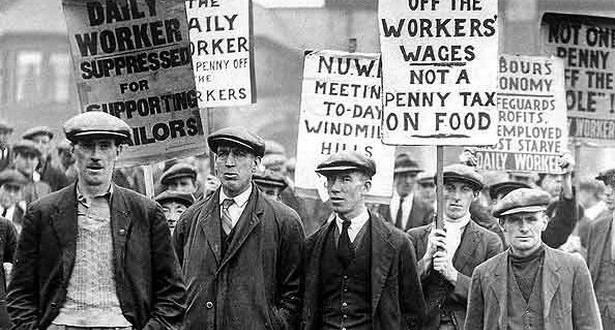
The role which they played in the conduct of the strike could hardly be overestimated in importance. Last women’s day was remarkable for the holding in the centre of the Midland coal field at Mansfield of a big delegate meeting—one of the most important recent developments of Communist work among women.
Three hundred women delegates from various organizations attended and after the position was discussed were given the task of preparing for the strike. When the strike actually began in this and in all the other areas, led by the women of the labor party and the Communist Party, women took charge of certain defined and important tasks.
The raising of money tho the chief activity in the non-mining areas, was not of such importance in the coal fields. The feeding of the striking men and the children in kitchens and centres—while for the most part were supported by the money spent by the Russian workers—was one of the chief women’s activities. Holding the men together by means of concerts and amusements was another. The most important activities, however, were the demonstrations and propaganda connected with all questions of relief.
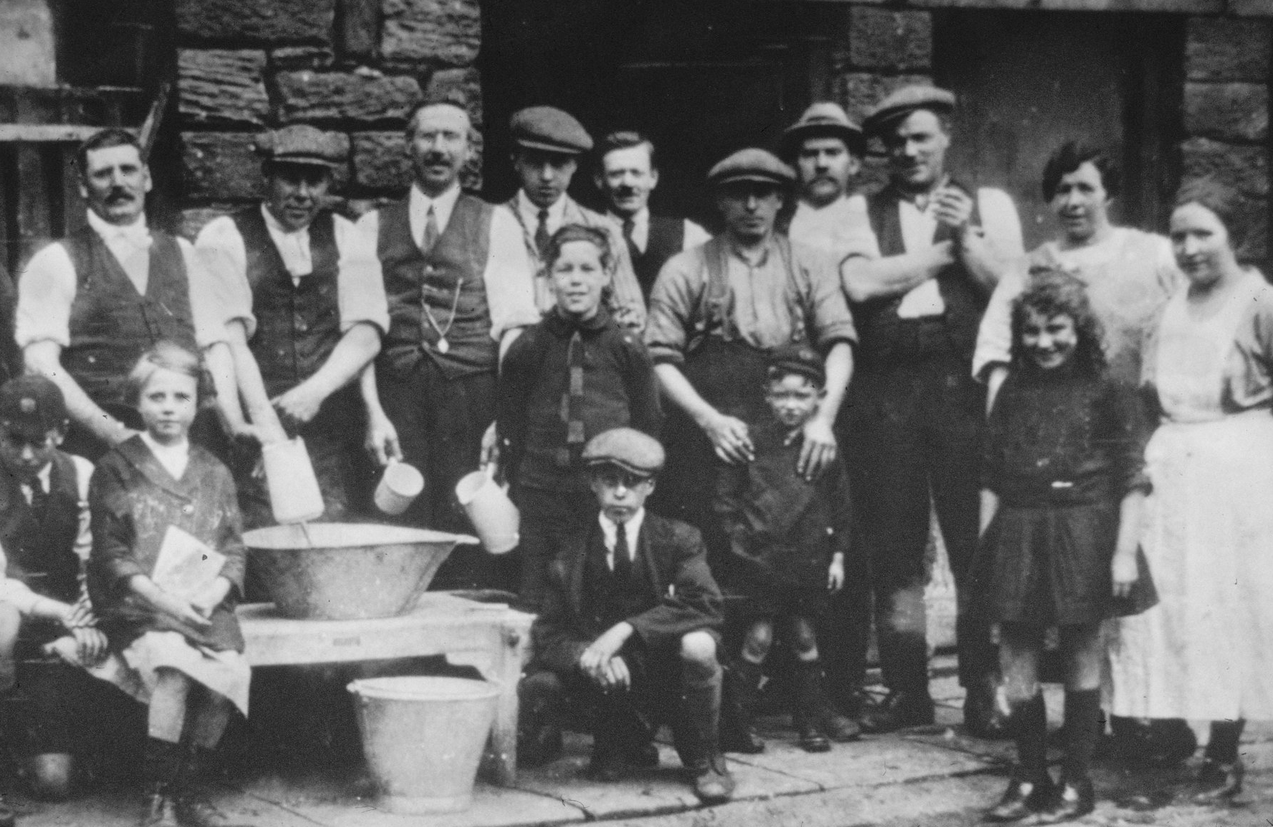
In this matter the women of the Communist Party worked without ceasing to get all that was possible out of the authorities as relief. Cases were known in Fife and Nottinghamshire where women with tiny children walked as much as 20 miles over the hills to protest against the pitiful sums given out as relief. Such demonstrations were general in all districts. The organization of mass pickets where these were necessary was another important task of women. For this many women were arrested including about 10 Communist, of whom one, Mrs. Cartwright, was forced to go to prison with her baby of a few months old in her arms.
Meetings For Women Held.
Meetings for women—for wives of strikers, were held regularly throughout the coal areas. In some eases these regular meetings held to explain the situation of the strike and to see that all the difficulties concerning relief, feeding, etc., were cleared up as far as possible, have crystallized into permanent forms, of Guilds of the miners’ wives, to bring them into closer contact with the affairs of the trade union. All these activities grew out of and were sustained by the indomitable spirit of the great mass of the miners’ wives. It was admitted by capitalist newspapers that without this spirit and determination which animated the women that the solidarity of the men would have been broke long before it was finally defeated.
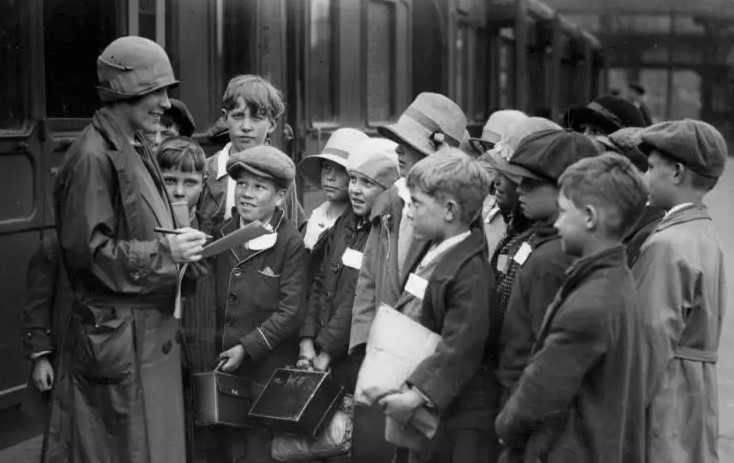
The miners’ wives of Great Britain in spite of their heroic fight are now suffering more intensely than ever before. The lessened wages of their men in many cases do not furnish enough for food alone. Their men in working the extra hour have to have food and bath prepared for them at hours which mean a 16 or 17 hour day for a woman who has one or more miners in her home and has also children at school. Unemployment is prevalent in every coal area. Yet the women are not showing that discouragement which has followed most strikes. They have not fallen into despair—and at this Women’s Day the Communist Party which at the 8th of March, 1926, numbered barely 600 women is now 3,000 strong in female members—at least 80 per cent of whom are miners’ wives.
Must Develop Solidarity.
Though the strike is over, the women of every country in the world should remember the wives of the British miners with messages of solidarity and encouragement in the hour of defeat. They have come through this great struggle with almost incredible courage and spirit. They have been defeated but only for a time—and they will fight again. The women of all lands must write not only to send messages of solidarity but whenever occasion offers to act in solidarity with their suffering sisters everywhere—not only in Britain, but in the mines of India, in the textile factories of China, in every land where the workers are ground down under capitalist imperialist oppression.
The Daily Worker began in 1924 and was published in New York City by the Communist Party US and its predecessor organizations. Among the most long-lasting and important left publications in US history, it had a circulation of 35,000 at its peak. The Daily Worker came from The Ohio Socialist, published by the Left Wing-dominated Socialist Party of Ohio in Cleveland from 1917 to November 1919, when it became became The Toiler, paper of the Communist Labor Party. In December 1921 the above-ground Workers Party of America merged the Toiler with the paper Workers Council to found The Worker, which became The Daily Worker beginning January 13, 1924. National and City (New York and environs) editions exist
PDF of full issue: https://www.marxists.org/history/usa/pubs/dailyworker/1927/1927-ny/v04-n057-NY-mar-21-1927-DW-LOC.pdf
 Revolution's Newsstand