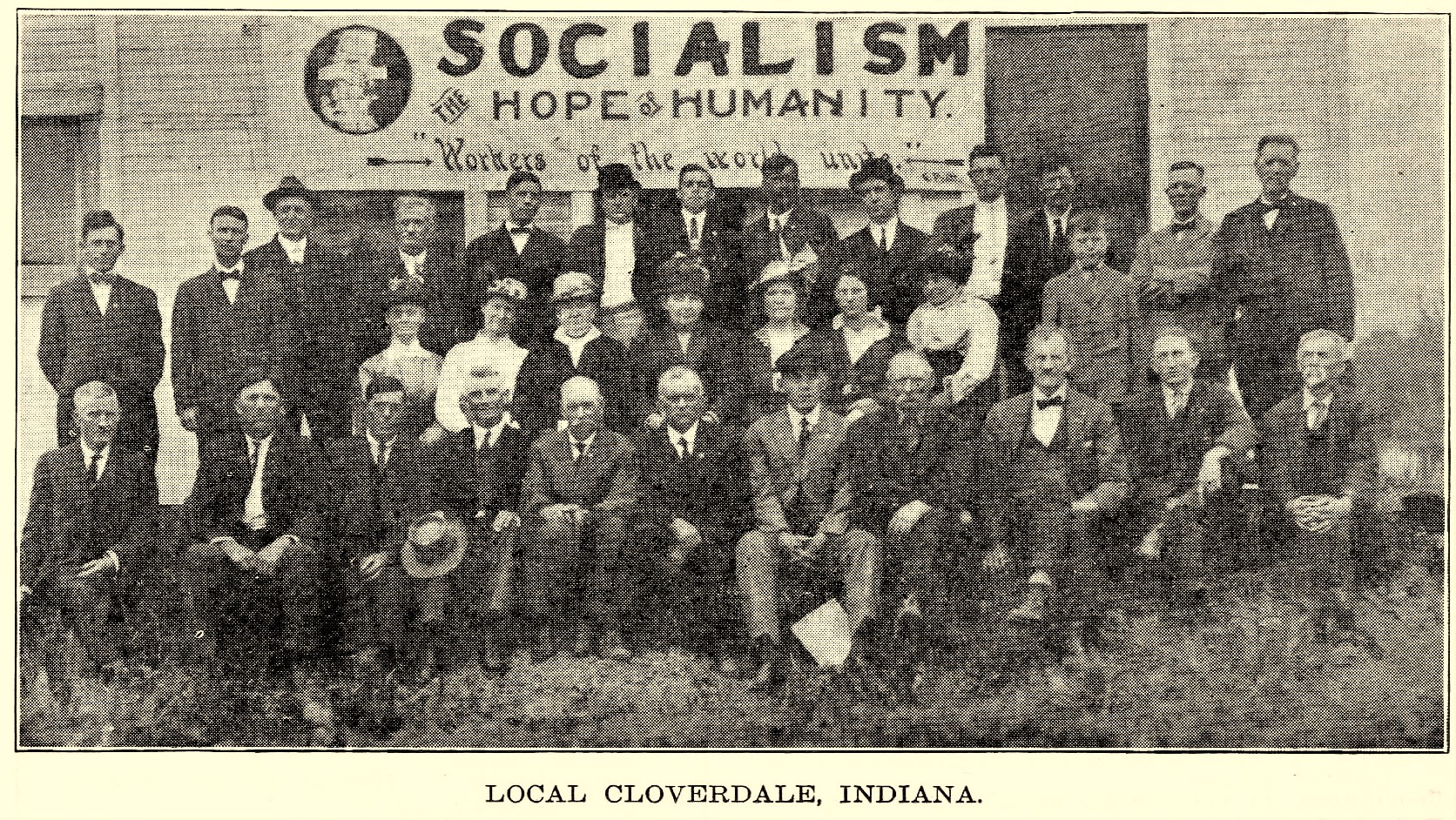
The founding convention of the Socialist Party held in 1901 tasked the new National Executive Committee to devise a suggested municipal for the Party. A committee of A.M. Simons, Victor L. Berger, Job Harriman, Emil Lies, and John C. Chase were chosen. Here are their suggestions.
‘Suggested Lines of Socialist Municipal Activity’ from the International Socialist Review. Vol. 3 No. 6. December, 1902.
PUBLIC EDUCATION.
I.—Changes in Instruction.
1. Sufficient kindergartens for all children of proper age.
2. Manual training in all grades (not trade schools).
3. General introduction of idea of development and freedom in education with close connection with things, according to principles of modern pedagogy.
4. Teaching of economics and history with evolution oi industry as base.
5. Establishment of vacation schools.
6. Adequate night schools for adults.
7. Instruction of children as to child labor legislation and rights of children before the law.
II.—Changes Affecting Teaching Force.
2. Adequate teachers (small classes).
2. Pedagogical training required as a qualification for teaching.
3. Right of trial for teachers when dismissed.
4. Pensions for teachers when superannuated or disabled.
III.—Care of Children.
1. Free text books.
2. Free meals and clothing.
3. Free medical service, inspection for eyes, ears, mental faculties (for educational purposes), and contagion.
IV.—Equipment.
1. Adequate buildings, numerous, not too large.
2. Ample play-grounds with physical instructor in charge.
3. Museums, art galleries, libraries, etc., enlarged and accessible to all children through frequent visits accompanied by teachers.
4. Baths and gymnasiums in each school.
5. All school buildings open evenings, Sundays and holidays for public assemblages.
V.—Miscellaneous Provisions.
1. Inmates of orphan asylums and other public institutions for children required to attend public school.
MUNICIPAL OWNERSHIP.
I.— Principles of Management.
1. Reduction of hours and increase of wages to correspond with improvements in production.
2. No profits to be used for reduction of taxation.
3. Pensions for all city employes when sick and disabled.
4. Election of supervising officers by employes subject to control of municipality.
II.—Industries Suggested for Ownership.
1. All industries dependent on franchises, street cars, electric and gas lighting, telephones, etc.
2. Public parks, slaughter houses where they are needed.
3. Bakeries, ice-houses, coal and wood yards.
WORKING CLASS GOVERNMENT.
1. Police not to be used in interest of employer against strikers,
2. Free legal advice.
3. Abolition of justice courts (trial by jury without extra expense).
4. Abolition of fines as alternative to imprisonment.
5. Establishment of Municipal Labor Bureau.
GENERAL MEASURES FOR PUBLIC RELIEF.
1. Establishment of works to give employment to unemployed.
2. Free medical service.
3. Adequate hospital service with no taint of charity.
4. Homes for aged and invalid.
5. Night lodgings for men out of employment and without homes.
6. Adequate regular aid to widows with no implication of charity.
7. Pensions for all public employes.
8. Free public crematory.
DEPARTMENT OF PUBLIC HEALTH.
1. Inspection of food, punishment of all harmful adulteration.
2. Public disinfection after contagious diseases.
3. Publicly owned and administered baths; wash-houses, closets, laboratories, drug stores and such other things as care of public health demands.
FACTORY LEGISLATION.
1. Special laws for protection of women and children in both mercantile and industrial pursuits.
2. No child under eighteen to be permitted to work at any gainful occupation, including selling papers, blacking shoes, etc.
HOUSING QUESTION.
1. Strict legislation against over-crowding, provision for light and ventilation in all rooms.
2. Building of municipal apartments to rent at cost of care of buildings and depreciation—no return for ground rent to be demanded.
3. Condemnation and destruction by the city of all tenements not conforming to proper standards of light, ventilation and overcrowding.
PUBLIC EMPLOYMENT.
1. Direct employment by the city—abolition of contract system.
2. Fixing of minimum wage not lower than standard trade union rate.
3. Only union labor to be employed where unions exist.
TAXATION.
1. Progressive income tax where possible.
2. Taxation of ground rents.
3. Exemption of household furniture and laborers’ homes.
MISCELLANEOUS.
1. Erection of “Labor Temple” by municipality as headquarters, meeting place and educational center for laborers of the city.
2. Publication of a municipal bulletin, containing complete news of all municipal activity.
The International Socialist Review (ISR) was published monthly in Chicago from 1900 until 1918 by Charles H. Kerr and critically loyal to the Socialist Party of America. It is one of the essential publications in U.S. left history. During the editorship of A.M. Simons it was largely theoretical and moderate. In 1908, Charles H. Kerr took over as editor with strong influence from Mary E Marcy. The magazine became the foremost proponent of the SP’s left wing growing to tens of thousands of subscribers. It remained revolutionary in outlook and anti-militarist during World War One. It liberally used photographs and images, with news, theory, arts and organizing in its pages. It articles, reports and essays are an invaluable record of the U.S. class struggle and the development of Marxism in the decades before the Soviet experience. It was closed down in government repression in 1918.
PDF of full issue: https://www.marxists.org/history/usa/pubs/isr/v03n06-dec-1902-ISR-gog.pdf
 Revolution's Newsstand