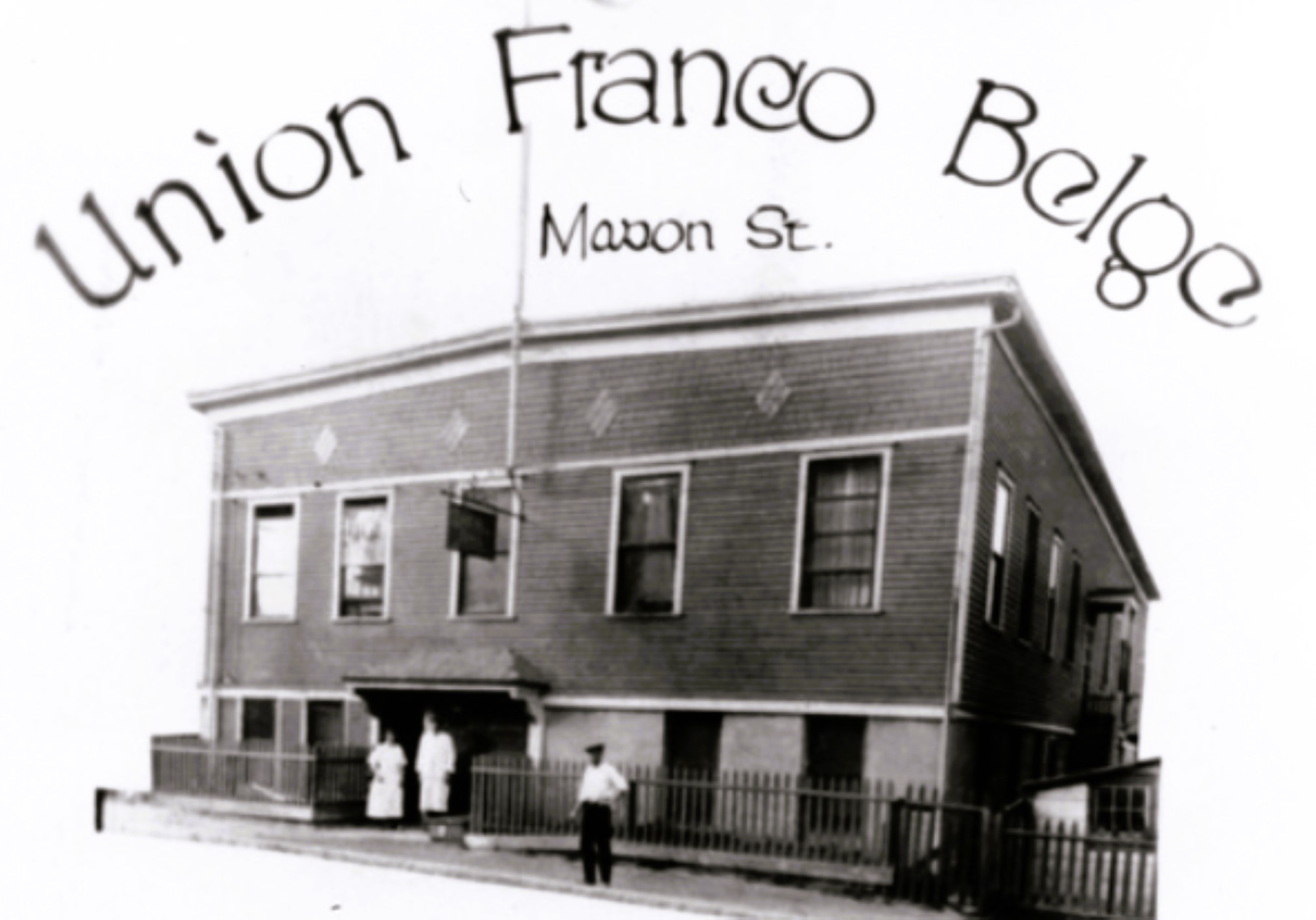
The Fourth Convention of French-speaking I.W.W. branches was held in Lawrence, Massachusetts in May, 1911. Below is an article from an observer and the secretary, Louis Picavet’s report. The second day seems to be missing.
‘Convention of the French Branches of the I.W.W.’ by Francis Miller and Louis Picavet from Solidarity. Vol. 2 No. 29. July 1, 1911.
The fourth Convention held by the French branches in Lawrence, Mass., was a success in every way.
Seventeen I.W.W. delegates attended the sessions, representing New Bedford, Mass., Woonsocket, R.I., Providence, R.I., Philadelphia, Pa., New York, and Lawrence. The local Textile Alliance of Lawrence a body composed of all textile unions in that city, sent a French speaking fraternal delegate. G.E.B. member Joseph Ettor, and Willian Yates, Sec’y. of the National Industrial Union of Textile Workers were also interested spectators. The Convention opened Saturday, May 27th at 5 p.m.
August Detollenaere Secretary of the Executive opened the session with a short speech of welcome to the delegates. A credential committee of one member from each branch was elected. After a short recess the committee brought in its report; that all I.W.W. delegates should be seated with one vote, the fraternal delegate to be given voice but no vote. Report adopted.

The report of the Executive committee was read, and referred to the Auditing Committee, with instructions to bring in a report for the following session.
The next question, the Eight Hour Day brought on a long and very interesting discussion, many delegates participating. A motion to appoint fellow workers Oscar Maes of Philadelphia, Michel Dumas of New York and August Detollenaere a committee to write up a pamphlet on the Eight Hour Day, carried and closed, the debate. This pamphlet will be printed in a good sized edition, and will no doubt do a lot of good.
As Local No. 20 had arranged a Concert and Ball for the benefit of the delegates, it was voted to adjourn at 7:30: (unanimously) to Sunday 8 a.m.
The next morning in company with William Yates I attended a mass meeting of Italian Textile Workers with Joseph Ettor as speaker, the hall was packed full in spite of the fact that it was a church holiday, and a couple of brass bands playing right around the corner.
When I got back to the Convention Hall, the fifth question on their order of business was up for discussion, i.e. the Rational School; Oscar Maes, Louis Picavet and, Michel Dumas and other delegates making it a very interesting discussion. A motion to bring the matter before the next convention of the National Union of Textile Workers, was amended to select some member who would be competent to give an exposition of the question and send him as fraternal delegate to the next Convention.
Fellow Worker Detollenaere who has made our French paper “l’Emancipation”, a good clear cut paper was put back on the job again. It was decided to hold another Convention in 1912. Time and place to be decided by referendum.

At five o’clock the union brass band, “Solidarity” all members of the French and Belgian Branches of Local 20 gave their first concert, and it was really a treat. Their main hall will seat five hundred but it was packed to the doors. If the boys in Lawrence keep up their work they will have one of the largest local unions in the I.W.W. The agitation carried on by Ettor and Miss Flynn should make things hum. F. MILLER:
(We have received a detailed report of the above conference from Fellow Worker Logis Picavet. It is written in the French language, and will be published as soon as we can translate it. -Editor Solidarity.)
‘Secretary’s Report of the Fourth Convention of French and Belgian Branches of the I.W.W.’ by Louis Picavet from Solidarity. Vol. 2 No. 32. July 22, 1911.
Held in Lawrence, Mass., May 27-28, 1911.
FIRST DAY’S SESSION.
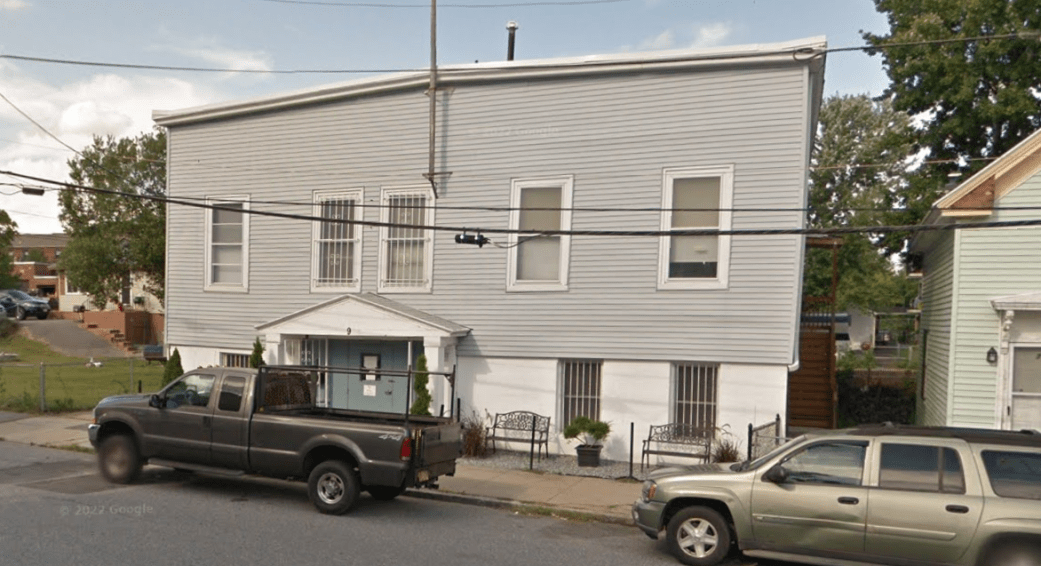
The delegates were met at the railroad. station by members of Local 20, and conducted to the headquarters, the Franco-Belgian Club, at 9 Mason St., where they were received by the members of the different organizations and their families; the band, “Solidarity,” playing the International upon their entrance. Refreshments were offered the delegates while the band and chorus rendered several more revolutionary pieces, among others, “The Red Flag.” The federal secretary, Fellow Worker August Detollenaere delivered the address of welcome to the delegates. Fellow Worker Michel Dumas, of New York, then made a short speech in response, which was vigorously applauded, after which the convention was ready for business.
Fellow Worker Detollenaere after a few opening remarks called for the nomination of a committee on credentials. This committee verified all credentials present. Joseph Bedard, delegate of the Alliance of Textile Workers of Lawrence was admitted with a voice but not a vote. A chairman and secretary for the convention were then chosen- Emile Lamoire as chairman, and Louis Picavet secretary.

The chairman announced the order of the day as follows:
1. Verifications of credentials.
2. Report of the Federal Bureau.
3. The eight hour workday.
4. International Language: Esperanto.
5. The Rational School.
6. Abolition of Piece Work.
7. Abolition of Overtime and Night Work.
8. Industrial Union Propaganda, and the appointment of a French-speaking organizer.
9. Industrial Union and Co-operation.
10. Labor accidents.
11. The official organ and the election of an editor.
12. General rules for the federal body.
13. Fixing time and place for next convention.
The chairman of the committee on credentials made his report, which was adopted after a short discussion.
The federal secretary read his report, which was approved. A statement was made concerning the non-payment of per capita for twelve months by the local of New Bedford, and Fellow Worker Saulniers of that local gave as a reason the several strikes, which had drained the local’s treasury.
Delegate Bachstag of Providence moved the election of an auditing committee to examine the books and accounts of the secretary, The motion was seconded by Delegate Francis Miller and was carried. The convention then passed to a consideration of the Eight Hour Workday. Delegate Oscar Maes of Philadelphia read his report upon the question, concluding with an appeal for unity of effort and co- operation with all other I.W.W. organizations for the conquest of that reform on the date specified by the General Organization of the I.W.W.
The federal secretary also read his report which concluded in the same sense and accepting the date fixed by the G.E.B.
An animated discussion followed. Certain delegates contended that, in view of the ignorance of the people, they ought to try to reduce the hours of labor gradually. The majority of delegates were opposed to this view.
Delegate Dumas. while declaring himself in favor of the proposed action, saying that the eight hour workday is a question of principle the symbol toward which the thought of the working class is directing itself and which will make that thought vibrate in unison the world over, nevertheless declared that it is an illusion to think that that conquest will be made on a fixed date.
Delegate Picavet declared himself in accord with Dumas regarding the illusion of the fixing of a date; but as this will have a tendency to inspire the mass of workers and attract them to the proposed action, not necessarily on the date set, but at some date, he made a motion to endorse the action of the General Executive Board decreeing an agitation for the establishment of a Universal Eight Hour Workday on May 1, 1912. The motion was carried.
A motion by delegate Miller of the G.E.B., that Fellow Workers Dumas, Maes and Detollenaere be named to prepare a leaflet on the eight hour proposition, was carried.
The session closed at eight o’clock.
The most widely read of I.W.W. newspapers, Solidarity was published by the Industrial Workers of the World from 1909 until 1917. First produced in New Castle, Pennsylvania, and born during the McKees Rocks strike, Solidarity later moved to Cleveland, Ohio until 1917 then spent its last months in Chicago. With a circulation of around 12,000 and a readership many times that, Solidarity was instrumental in defining the Wobbly world-view at the height of their influence in the working class. It was edited over its life by A.M. Stirton, H.A. Goff, Ben H. Williams, Ralph Chaplin who also provided much of the paper’s color, and others. Like nearly all the left press it fell victim to federal repression in 1917.
PDF of full issue: https://www.marxists.org/history/usa/pubs/solidarity-iww/1911/v02n32-w084-jul-22-1911-Solidarity.pdf
 Revolution's Newsstand