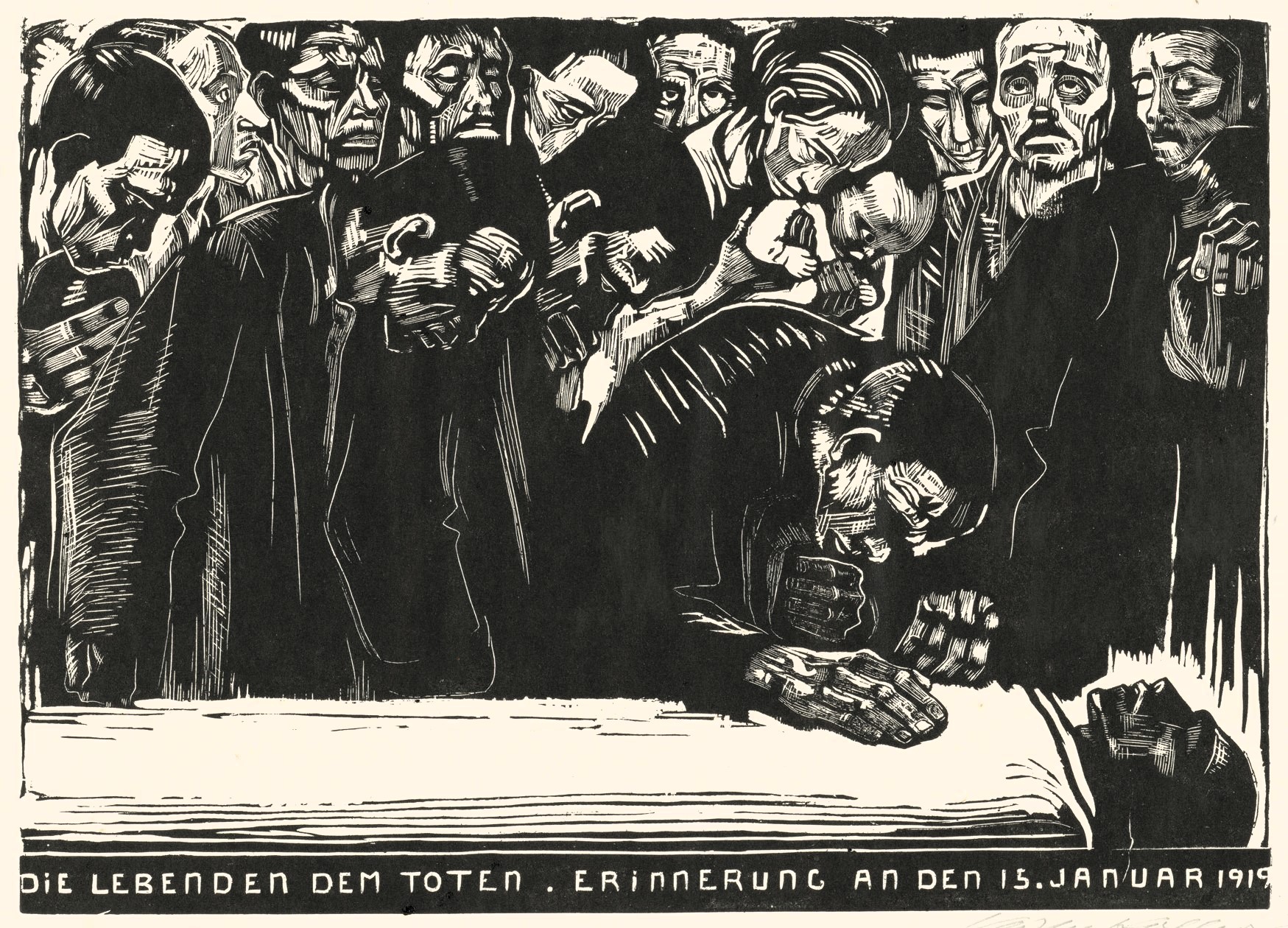
Cleveland, Ohio had one of the largest, most militant and will organized Socialist Party locals of any city in the country. The home of Charles Emil Ruthenberg, Cleveland hosted the most left-wing German-American community in the country. Karl Liebknecht spoke there on his 1910 tour of the country and here that community gathers to honor him a month after his murder. By the end of the year Ruthenberg would be a leader of the Communist Party and the ‘Ohio Socialist’ would become the paper of the rival Communist Labor Party.
‘Cleveland Workers Honor Liebknecht’ from The Ohio Socialist. No. 56. February 19, 1919.
The memorial meeting in honor of Kark Liebknecht held under auspices of the Socialist Party of Cleveland last week Friday, brought out a crowd of workers eager to pay tribute to Liebknecht, that filled every seat in the large auditorium. Every mention of the name of Liebknecht by the speakers who made addresses in German, Russian and English, was greeted by waves of cheers and applause.
The memorial meeting was opened by the Liedertafel Orchestra playing he Marseillaise, the audience standing. The first speaker was Harry Rode of the German branch, who in years gone by had been an active workers in the ranks of the German Social-Democracy, and who recalled from personal knowledge, the services of Liebknecht in the German Socialist movement.
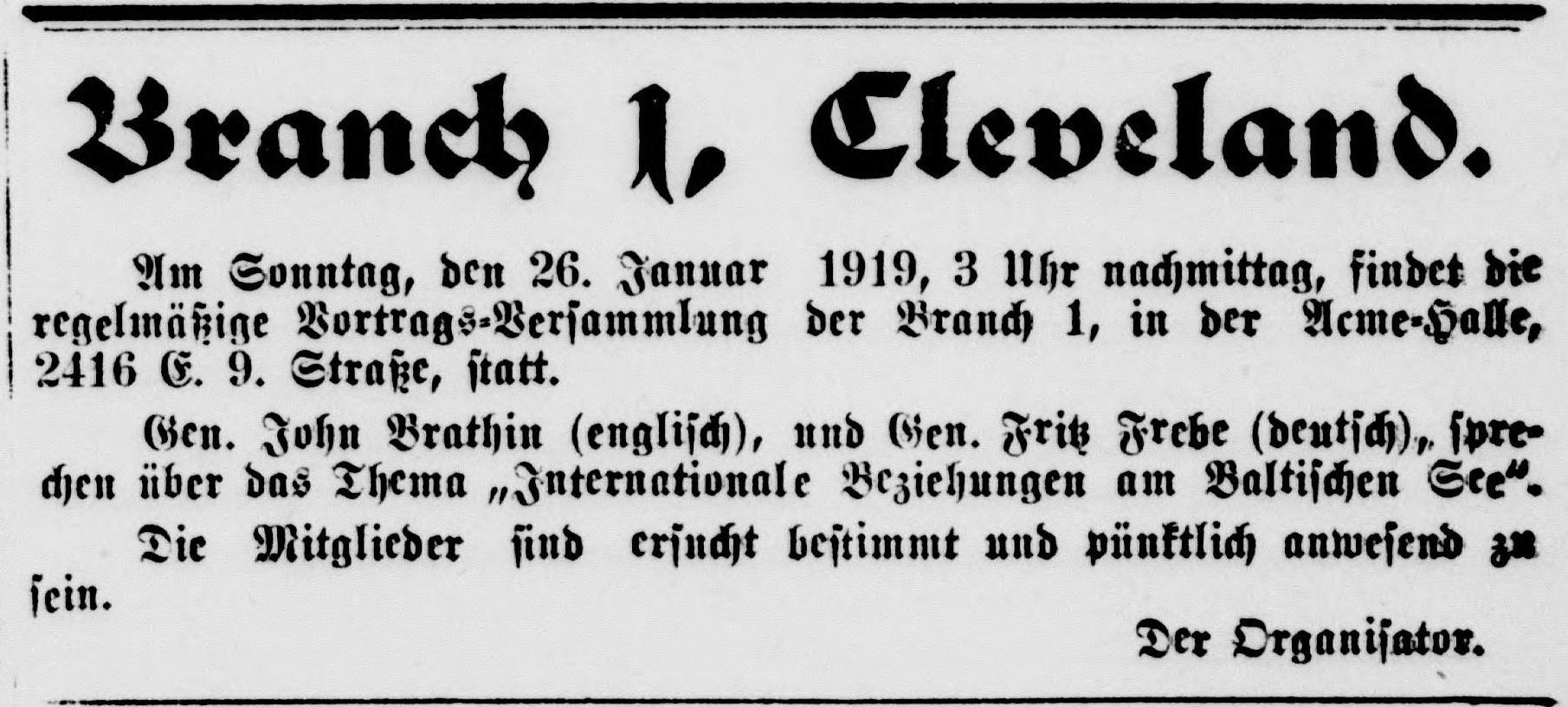
Following Rode, A. Bilan, who participated in the Russian revolution of 1905, paid tribute to the work and deals of Liebknecht in Russian. The inspiration of the Russian revolution vas brought out clearly by the great bursts of applause which greeted the coupling of the name of Liebknecht with the ideal of the Bolsheviki..
C.E. Ruthenberg was the English speaker. He made a brief survey of the life of Liebknecht and his services to the revolutionary movement, taking occasion to refute the charge that while in Cleveland in 1910 Liebknecht had said that the American workers were far better off than those of Germany. What Liebknecht has said at the meeting at the Cleveland theater was, that he had just come from the Pittsburg district and that nowhere in Germany was there to be found such abject poverty and misery and degradation of the workers as he had seen there.
“In honoring the memory of Liebknecht,” Ruthenberg continued, “we should do more than recall his services to the working class movement. We should fix clearly in our minds the issue in the struggle in which he died.
“Before the Russian revolution the Socialists the world over talked about the social revolution, but how the workers control of industry was to be established we were very vague about. The Russian revolution has shown us that our ideal can only be realized through a mass movement of the workers in the industries themselves.
“The issue in Germany between the Majority Socialists and the Spartacans is whether the workers shall establish Socialism now, or whether they shall wait another decade or two and have it legislated into existence a step at a time from the top. The Majority Socialists favor the latter plan. They propose that the workers take the long, devious and dangerous path of building up new political institutions and then, as their power makes it possible, to legislate Socialism into existence a step at a time. The Spartacans believe that the time is ripe for Socialism now. They are urging the workers to take control of the government and at the same time to step into industry and assume the management of industry, using the powers of the state to protect their interests while they proceed with the work of transforming capitalist industry into an industrial democracy. They propose that the social revolution shall be achieved through a mass movement from the bottom-a mass movement of the workers in industry. It was to achieve the goal of Socialism in Germany now that Liebknecht died.”
The Liedertafel Singing Society and the Finnish Socialist Chorus rendered international songs as the program proceeded, which brought storms of applause and the demand for more and more from the audience. The following resolution was adopted by a unanimous rising vote:
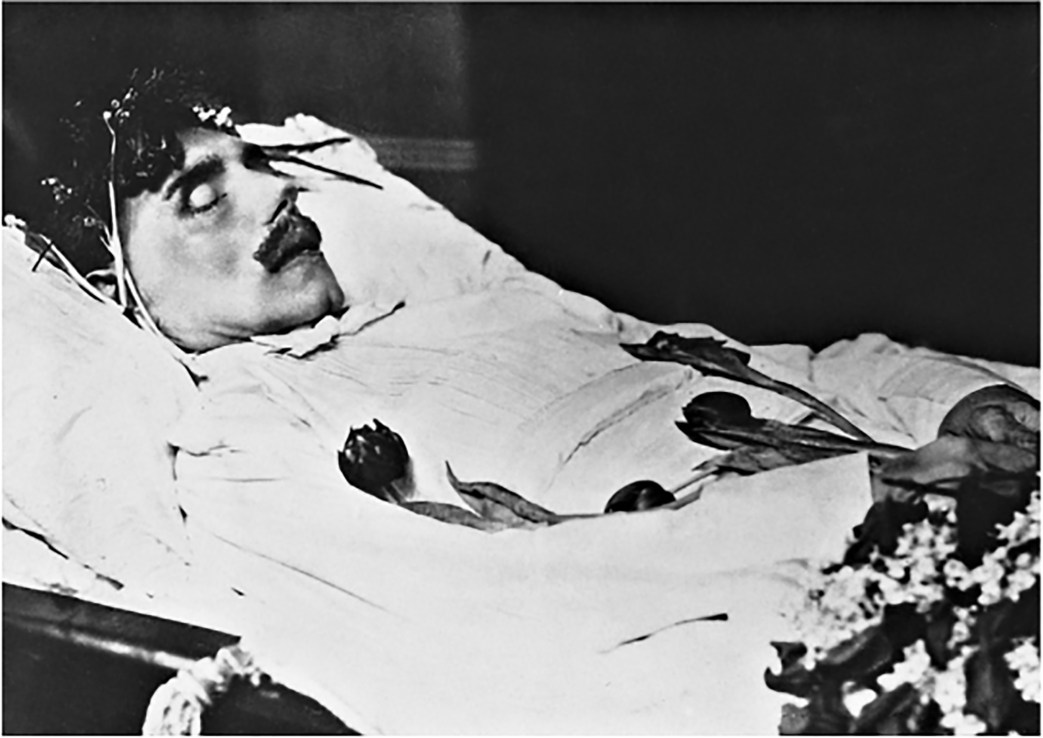
“Resolved, that we the working men and women of Cleveland, in honoring the memory of our valiant and beloved comrade, Karl Liebknecht, renew our pledge to work for the ideal for which he died the establishment of an industrial democracy in which the workers will rule with all our strength and pledge ourselves not to falter nor compromise until that ideal is realized.”
The meeting was closed by Chairman John Brahtin by calling for three cheers for Internationalism and the Social Revolution, which were given with a will.
The Ohio Socialist, published by the Left Wing-dominated Socialist Party of Ohio in Cleveland from January, 1917 to November, 1919. It was edited by Alfred Wagenknecht Wagenknecht spent most of 1918 in jail for “violation of the Conscription Act.” The paper grew from a monthly to a semi-monthly and then to a weekly in July, 1918 and eventually a press run of over 20,000. The Ohio Socialist Party’s endorsement of the Left Wing Manifesto led to it suspension at the undemocratic, packed Socialist Party Convention in 1919. As a recognized voice of the Left Wing, the paper carried the odd geographical subheading, “Official Organ of the Socialist Parties of Ohio and Kentucky, Virginia, West Virginia and New Mexico” by 1919’s start. In November of that year the paper changed to the “labor organ” of the Communist Labor Party and its offices moved to New York City and its name changed to The Toiler, a precursor to the Daily Worker. There the paper was edited by James P. Cannon for a time.
PDF of issue: https://www.marxists.org/history/usa/pubs/ohio-socialist/056-feb-19-1919-ohio-soc.pdf
 Revolution's Newsstand