
‘Pennsylvania Labor Under the Iron Heel’ by Thomas J. O’Flaherty from Labor Defender. Vol. 3 No. 4. April, 1928.
IN this kingdom of steel and coal ruled by the Mellon money dynasty the constitution of the United States and particularly that part of it which declares that the right of free speech free press and free assemblage shall be inalienable is as dead as King Tutankamen, and the thousands of coal miners now striking to maintain the standards of living wrung from the coal barons after many years of struggle are at the mercy of state troopers, deputy sheriffs and coal and iron policemen with no rights that the rulers of the state are bound to observe.
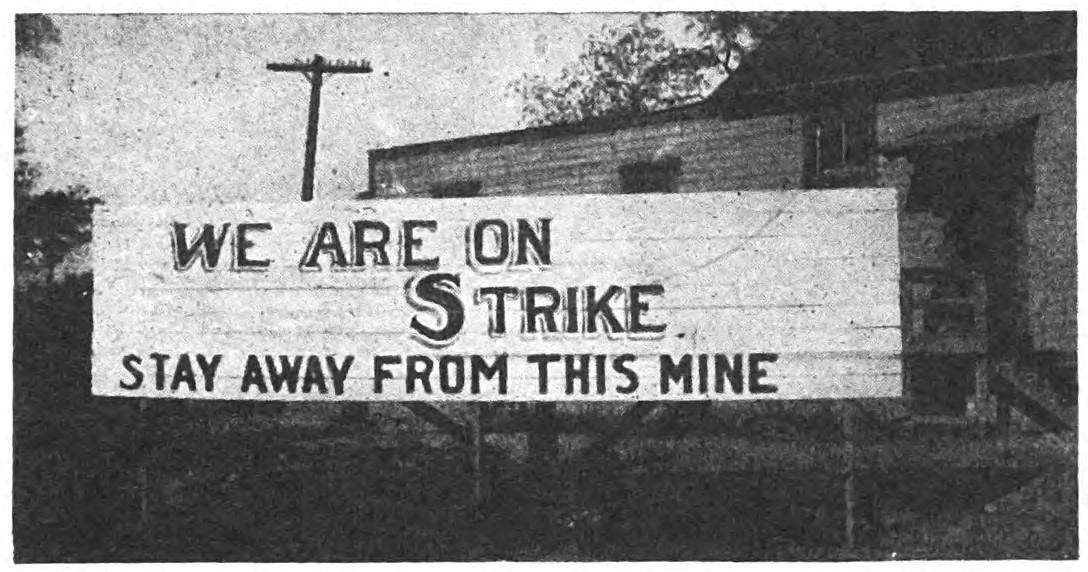
From Pittston in the east to Pittsburgh in the western part of the state the rule of the gun has superseded the rule of law. It is true that at best this capitalist-manufactured law gives little legal protection to the working class but whatever shelter it afforded them in time of industrial peace from the unhindered exercise of brute force employed by the capitalist class, they are now treated like outlaws, arrested, tortured, jailed and convicted at the whim of any local satrap of the masters of Pennsylvania.
With the bituminous coal strike in its twelfth month and almost half a million miners and their dependents, holding the line for unionism despite hunger and other privations, the operators have turned loose their supressive forces in an effort to crush every opposition to their tyrannical rule and to smash the miners union.
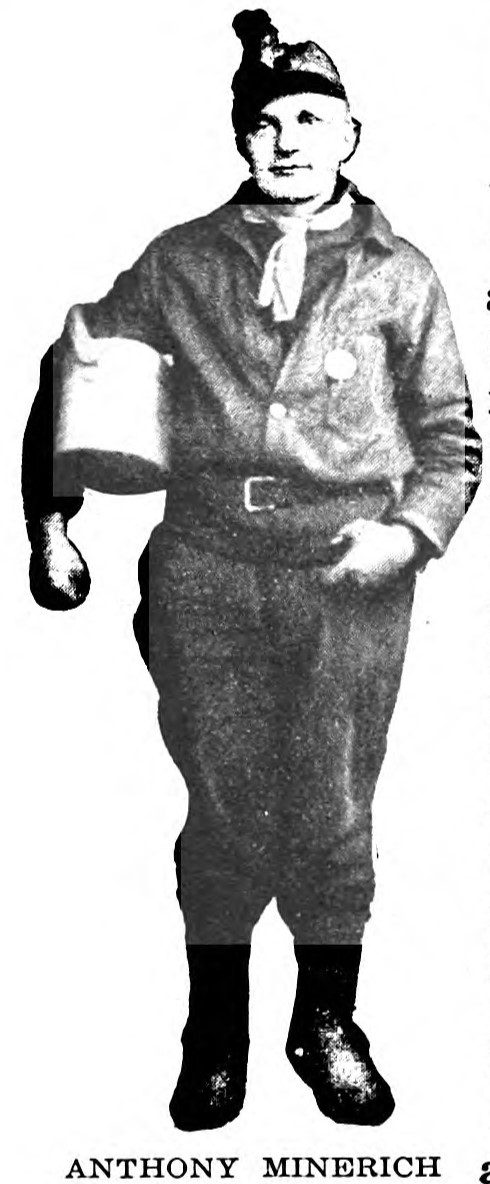
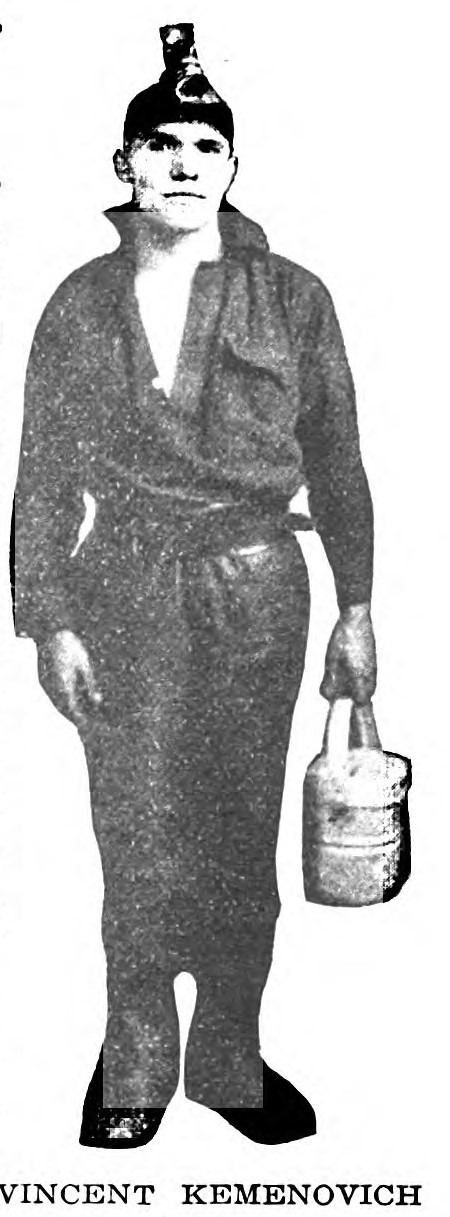
The policy of submission urged on the workers by John L. Lewis and his reactionary machine in the miners union since the beginning of the strike has resulted in the operators being able to import thousands of strike-breakers into the scab mines. The coal barons felt that they had the back bone of the union broken when a new wave of militancy, organized and led by the “Save The Union Committee” under the leadership of such men as John Brophy, Pat Toohey, Anthony P. Minerich, Vincent Kamenovich and scores of others not so well known but equally courageous and progressive, brought the operators face to face with the fact that though the old leadership of the miners union had hauled down the flag of battle, the rank and file were able and determined to fight on to victory. This is the cause of the reign of lawlessness and persecution of the workers recently inaugurated by the government of the state of Pennsylvania under the leadership of the coal operators.
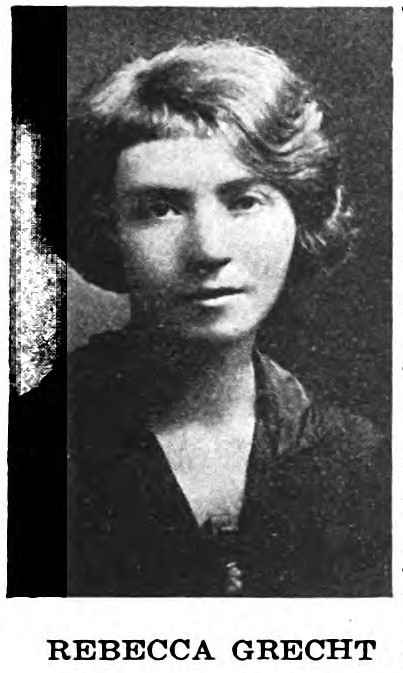
One of the first attempts to stem the rising tide of militancy on the part of the miners was made in the early part of February when Anthony P. Minerich, chairman of the Pennsylvania-Ohio Miners Relief Committee, was arrested in McDonald, Pa., while addressing a mass meeting of striking miners and charged with inciting to riot. The case was thrown out of court, the state troopers admitting that the “incitement” consisted of Minerich speaking in a loud voice. Minerich was arrested because he was an active strike-leader always out among the miners urging them to stand together, to picket the mines regardless of the strike-breaking in- junctions. This was his crime. Rebecca Grecht of New York, a member of the millinery workers union, tho young in years, a veteran in the class struggle, was arrested in Burgettstown on March 6 and held on a charge of sedition. The first charge placed against her was one of disorderly conduct, to be followed by “inciting to riot” and later on sedition.

John Brophy, chairman of the “Save the Union” Committee of the United Mine Workers of America and Pat Toohey, editor of the “Coal Digger” official organ of the Committee were arrested and Toohey beaten by State troopers while addressing a joint meeting of two local unions at Renton on March 6. The arrests were made when Toohey in his speech attacked the policy of sending marines to shoot down the people of Nicaragua in the interests of American imperialists. State trooper N.J. Onke, an ex-marine, assaulted the speaker, because he declared that he did not approve of Toohey’s views on the disgraceful invasion of Nicaragua.
But Pennsylvania is not the only state where the constitution works one way, for the operators. In the coal mining regions of Ohio, the militant miners and their equally militant women folk are thrown into jail for exercising the right of picketing. In Ohio, Anthony P. Minerich, was arrested and convicted of a violation of a federal injunction against picketing and is now out on a bond of $2,000 pending an appeal of his case to a higher court.
Several miners from around Steubenville have been convicted and jailed. Three women from Yorkville were arrested and jailed for leading a demonstration against a scab mine.
Against this reign of persecution unleashed in the strike regions of Pennsylvania and Ohio, the workers must defend themselves to the limit of their ability. In the International Labor Defense they have a weapon which is always ready to aid to the limit of its financial resources. In this critical hour of the coal strike the I.L.D. will be called on to exhaust its ability to the utmost to help the miners defeat the efforts of the strike-breaking judges to keep them in jail and thus rob the masses of their leaders.
It is up to the members of the I.L.D. and all readers of the Labor Defender to support the striking miners in this struggle and help take the iron heel of the coal barons off the neck of labor in Pennsylvania and Ohio.
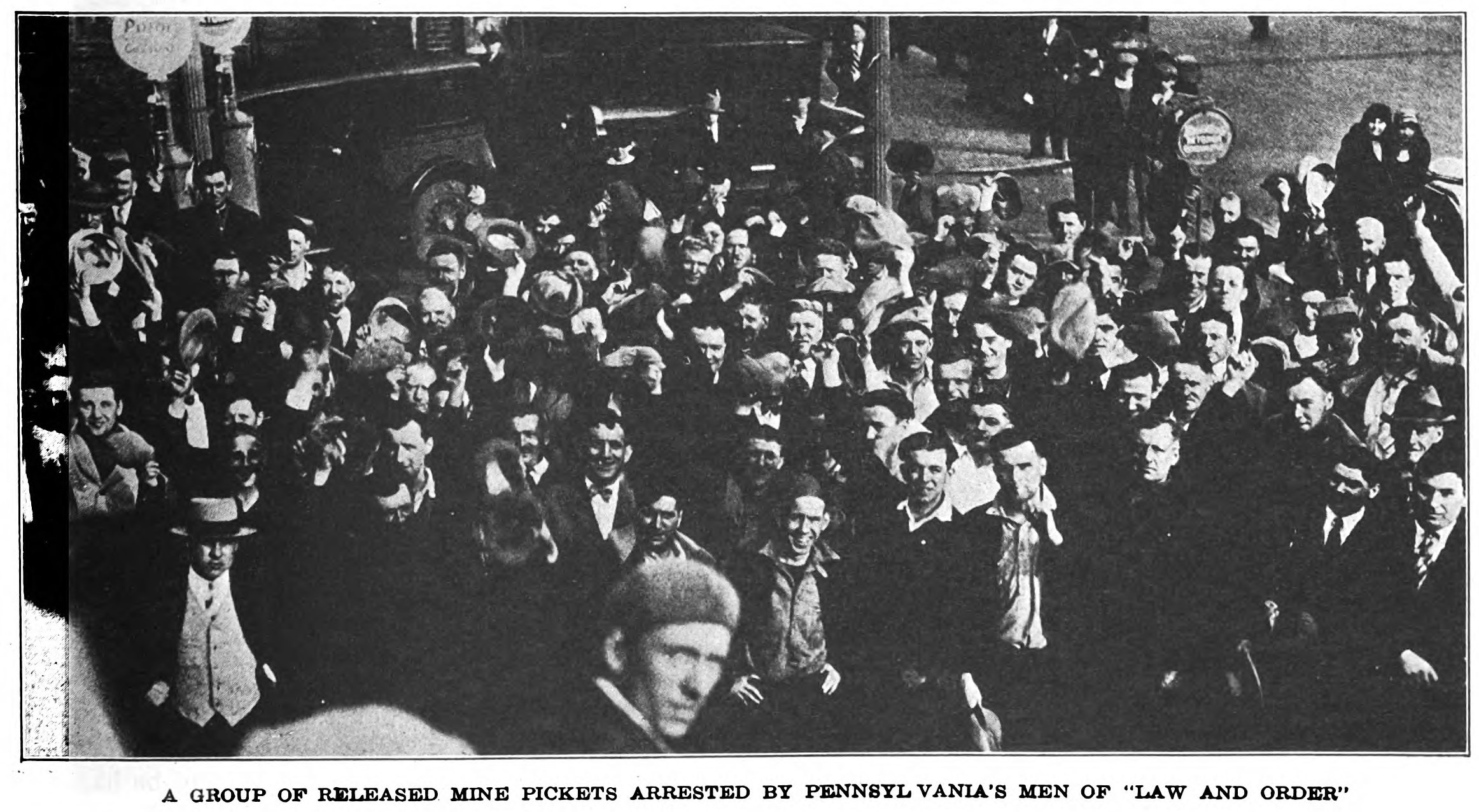
They have fought with courage and militancy, against the combined forces of the coal operators, and their gunmen, the government and its machinery, and their officials and their betrayals. They are making a fight for the whole working class.
Labor Defender was published monthly from 1926 until 1937 by the International Labor Defense (ILD), a Workers Party of America, and later Communist Party-led, non-partisan defense organization founded by James Cannon and William Haywood while in Moscow, 1925 to support prisoners of the class war, victims of racism and imperialism, and the struggle against fascism. It included, poetry, letters from prisoners, and was heavily illustrated with photos, images, and cartoons. Labor Defender was the central organ of the Scottsboro and Sacco and Vanzetti defense campaigns. Editors included T. J. O’ Flaherty, Max Shactman, Karl Reeve, J. Louis Engdahl, William L. Patterson, Sasha Small, and Sender Garlin.
PDF of full issue:
 Revolution's Newsstand