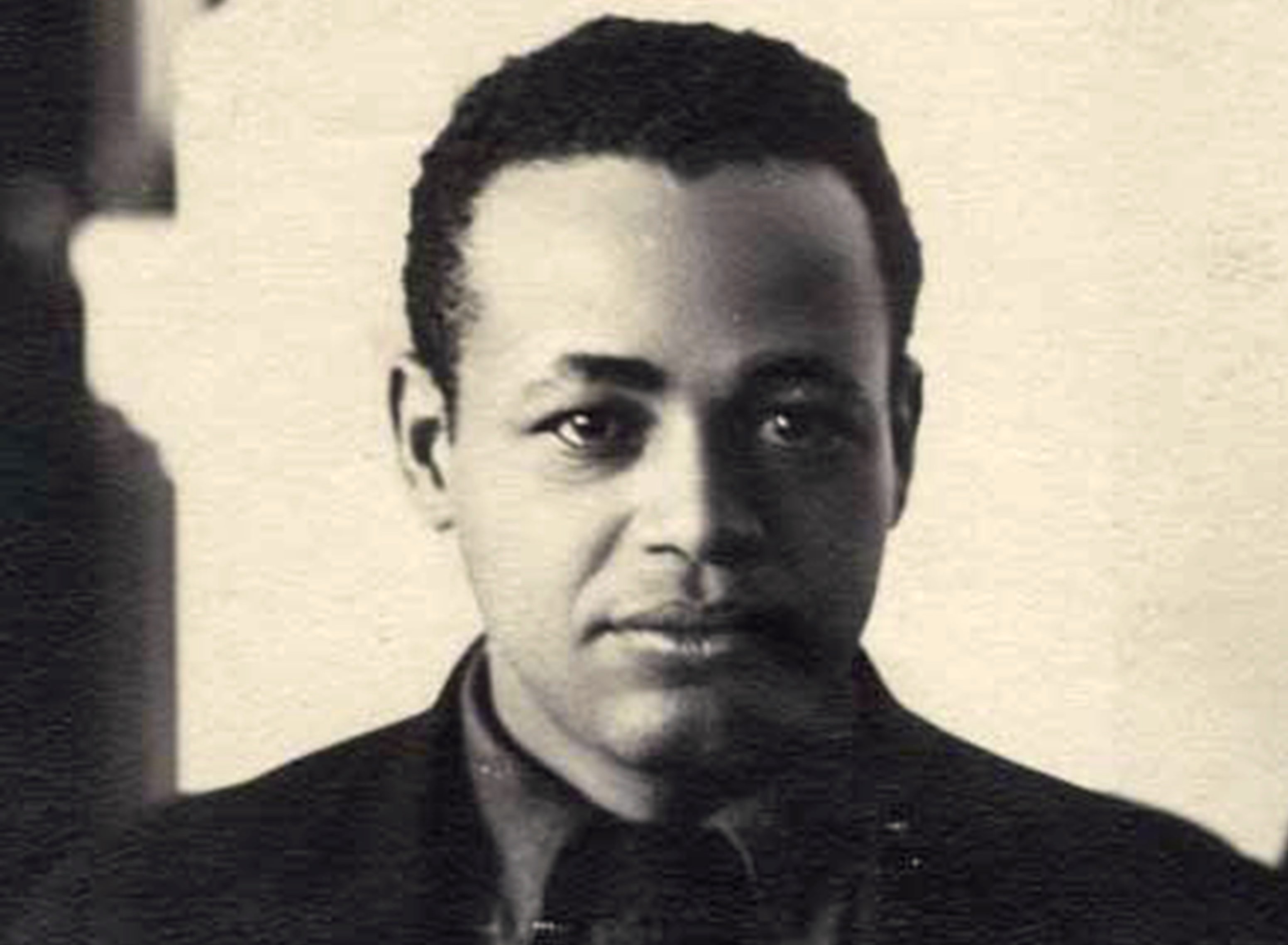
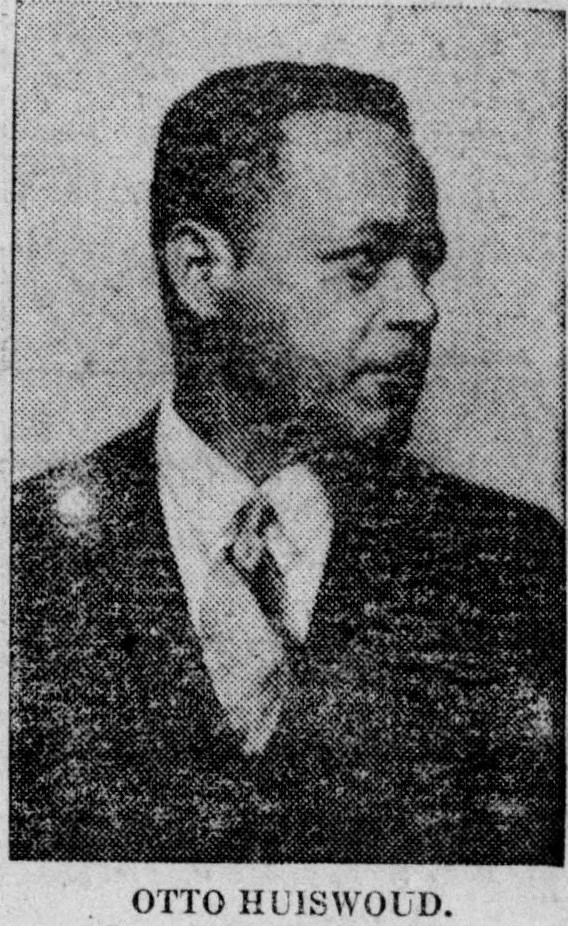
Otto Huiswoud with a major political survey of conditions in the African Diaspora at the beginning of the 1930s. With sections on Africa, The West Indies, and The United States North and South Huiswoud places the ‘Negro question’ at the center of the global class struggle. Suriname-born Otto Huisowud was a founding member of the Communist movement in the United States. Indeed, he was a member of (fellow Dutch speaker) S.J. Rutgers and Louis C. Fraina’s proto-Bolshevik Socialist Propaganda League even before the Russian Revolution. In 1922 he attended the Fourth Comintern Congress and would later serve on staff the Comintern for a decade. Huisowud was an important, consistent figure in pushing Communist Party and the Comintern to take serious the issues of Black workers globally.
‘World Aspects of the Negro Question’ by Otto E. Huiswoud from The Communist. Vol. 9 No. 2. February, 1930.
Until recent years the Negro question and its relationship to the revolutionary working class movement was practically unnoticed, almost completely ignored. Little attention was paid to the Negro masses in their struggles against imperialist exploitation and subjection, no thought given to their revolutionary potentialities —to the role they are destined to play in the movement for the emancipation of the working class from capitalist domination and enslavement. As a result, little or no attempts were made to draw the Negro workers in the struggle against world imperialism.
Our approach to the Negro question has not only been largely sectional rather than international, but our concept and interpretation of the Negro question was narrow and incorrect. The old Social Democratic notion that the Negro question is only a class question, prevailed with us for a considerable time. We are only now beginning to realize that the Negro question is not only a class question but also a race question. We are beginning to understand that the Negro masses are not only subjected to the ordinary forms of exploitation as other workers, but that they are also the victims of a brutal caste system which holds them as an inferior servile class; that lynching, segregation, peonage, etc., are some of the means utilized to keep them the underdog in capitalist society— social outcasts.
In order to maintain its policy of repression, violence and exploitation of the Negro, the bourgeoisie creates a false racial ideology among the whites and fosters contempt and hatred for the Negro. The idea of “superior” and “inferior” races is the theoretical justification for their policy of super-exploitation of the Negro race.
The situation of the Negro masses varies in the different countries and therefore requires investigation and analysis. The concrete application of the policies and tasks of the Communist Parties are dependent upon the prevailing conditions in the various countries. It is of utmost importance that we note the differences that characterize the position of the Negroes in the different parts of the world. The following territorial divisions based upon population and certain general common features should be considered:
A) The United States and some Latin American countries, in which the Negro population is a minority.
B) Africa and the West Indies, where the Negro population is the majority in relation to the white population.
C) The “independent” Negro nations (Haiti and Liberia), which are in reality semi-colonies of American imperialism.
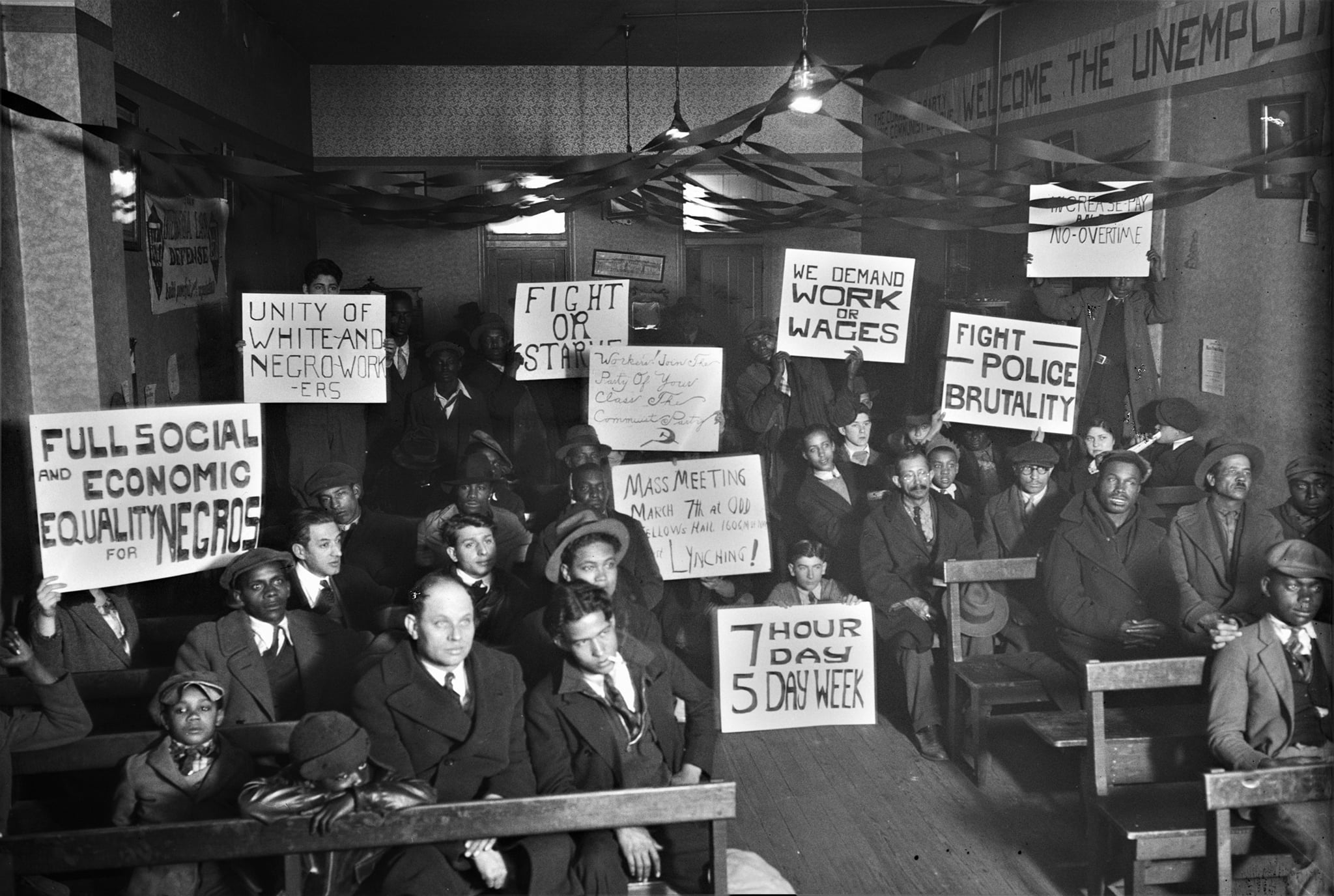
While the Negro race everywhere is a subject race and there exists a common bond of interest based upon racial oppression, nevertheless, the conditions of the Negroes are not similar in the above mentioned territorial divisions. It is essential that we distinguish the situation of the Negro masses in the colonies—Africa and the West Indies; the semi-colonies—Haiti and Liberia, who suffer from colonial exploitation, from that of the Negro in America, a racial minority, subjected to special persecution and exploitation. We must take into consideration the National-colonial character of the Negro question in Africa and the West Indies and the racial character of this question in the United States.
We must take note of the fact that the Negro question in Africa has all the characteristic features of the national-colonial question. Some of these features are:
1. Majority of population and organized communities.
2. A common language and culture. In contrast to this the Negro in America has a) no distinct language and culture from the dominant racial group; b) it is a minority of the population; c) its only distinguishing feature is its racial origin.
It is therefore imperative that the concrete policies and tasks of the Communist Parties be based on the foregoing considerations. Only with a clear understanding of these conditions can we apply the correct policies and tactics.
CONDITIONS OF THE NEGRO IN AFRICA
What we are mostly concerned with in this article is the present epoch of imperialism which is marked by the complete division of Africa and the complete subjection and enslavement of its population. This period is especially marked by the de-tribalizing of the native population, robbing them of their land and forcing them into the industries as the main source of cheap labor supply. Imperialism in its function as colonial exploiter utilizes Africa for the subtraction of super-profits in the sale of its industrial products, as an outlet for its accumulated surplus capital and for an important source of its raw material. But, at the same time, capitalism purposely retards the industrial development of the colonies except insofar as it is to the interest of the preservation of its colonial monopoly and furthers the economic dependence of these colonies.
Africa is completely partitioned between the various imperialist powers, the most important of which are:
Territory Population
England 3,871,357 sq. miles 50,525,175
France 4,290,268 sq. miles 35,663,332
Belgium 909,654 sq. miles 8,500,000
Portugal 927,292 sq. miles 7,736,700
The so-called independent nations of Liberia and Abyssinia, which are actually semi-colonies:
Territory Population
Liberia 36,834 sq. miles 2,000,000
Abyssinia 350,000 sq. miles 10,000,000
The foregoing figures give a picture of how complete the domination of the bourgeoisie is over Africa. The most cruel and brutal methods of suppression are utilized by the imperialist plunderers to maintain their rule and exploitation of the African natives. The development and penetration of capitalism has resulted in the most devastating consequences to the natives. In its policy of conquest, Christianity has been a useful “hand-maiden” to the imperialist exploiters.
The Central African colonies exemplify the most cruel and barbaric methods of capitalist exploitation and subjection. In this section of Africa, colonial exploitation assumes the very worst forms in the combination of feudal and slave-owning methods of exploitation. The profit-hunters have employed the most fiendish methods of torture to coin profits out of the blood of these natives. The deliberate murder and extermination of the natives by the imperialists in Belgian Congo in their quest for rubber is one of the blackest pages of colonial history. In the post-war period there has been a tremendous flow of capital into Africa, resulting in the concentration of large masses of expropriated natives in the huge plantations and industries.
The “independent” nations, Abyssinia and Liberia, are the constant prey of the imperialist powers. Through various treaties they seek to partition Abyssinia and reduce her to a complete vassal. Liberia is now completely under the domination of the United States. The Firestone Rubber Co., in its determination to break the British rubber monopoly, has secured thousands of acres of fertile land in Liberia, employing more than 10,000 natives for the miserable pittance of 30 cents per day. The Negro bourgeoisie in Liberia has completely “sold out” to Firestone & Co. and gives effective aid in the enslavement of the native population.
In South Africa the Negro masses are practically a landless peasantry. They are being expropriated from the land by the white colonists under the direct protection and aid of the government. They are disfranchised, their freedom of movement curtailed, and they are the victims of one of the most brutal forms of race and class oppression. The policy of the exploiters has been to take possession of the fertile land, ousting the natives therefrom, and to have these landless natives a source of cheap labor supply. As a result of this policy the six million natives are herded like cattle into what are known as reservations, the least fertile and usable land, comprising one-eighth of the total area. On the other hand, seven-eighths of the land, the most fertile section, is placed at the disposal of 1,500,000 whites.
In this manner the imperialists have attained two aims:
1. About 2,000,000 natives are compelled to slave on the land of the wealthy Dutch farmers — “Labor Tenants,” as they are called. They are in the same position as the share croppers and farm laborers in America. ‘These farm laborers and tenants are virtual slaves on the land. Even though paying rent these tenants must work ninety days every year for the landowners under the “Masters and Servants’ Act,” receiving as payment for this service an average of three dollars per month. The farm laborers suffer an even worse fate at the hands of the wealthy landowners than the labor tenants.
2. The overcrowding of the “reserves” has compelled the natives to seek employment in the industrial centers, particularly in the gold and diamond mines. Thus, there has developed a Negro industrial proletariat which constitutes the minority of the working class population. The following figures will give us an idea of the composition of the working class in South Africa:
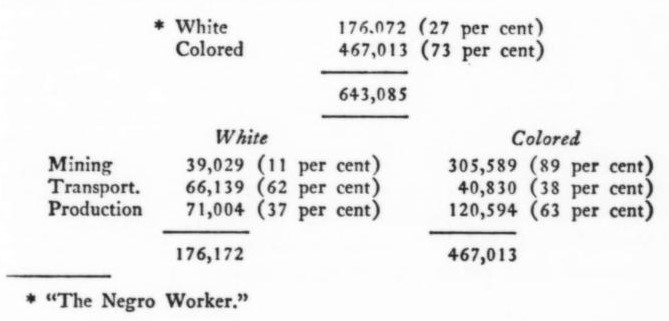
The wages paid the natives is much less than that paid the white workers. The average wage for the native is about seventy-five cents and that of the white workers about three dollars and fifty cents per day. The competition between black and white labor is a serious menace to the unity of the working class. While the aristocracy of labor has succeeded in enforcing a policy of segregation against native labor in skilled lines through the “Color Bar Bill,” the very process of rationalization and the introduction of labor-saving machinery, curtailing the demand for skilled labor, reduces them to the “white pauper” class, subjected to chronic unemployment. Employed to an ever-increasing extent in the industrial enterprises, the cheap native labor is rapidly supplanting the so-called “white paupers.”
Not only among the bourgeoisie, but also among large sections of the white working class, particularly the skilled workers, is there open hostility and contempt for the Negro workers. Race prejudice finds its reflection in the labor movement and has resulted in the complete division of the workers. As a result of this division there exists the white unions which do not admit natives and the independent unions composed solely of Negro workers. Recent figures give the number of organized white workers as 83,000, or 37 per cent. and 100,000 or 23 per cent. organized natives. The vast majority of the organized Negro workers in South Africa are in the Industrial and Commercial Workers’ Union which has had a rapid growth in recent years, but which is under the control of a reformist group and affiliated with the Amsterdam International.
Like the agricultural workers, the native industrial workers are most bitterly exploited. In order to assure a steady supply of cheap labor, the employers have enacted various laws to further enslave the Negro workers. (1) Various taxes are imposed, such as the hut tax and poll tax; (2) A system of passports and passes have been introduced which forbid the natives to stay in town without work for longer than a week, and without which he cannot move from place to place. By this method he is kept under constant surveillance by the police; (3) The contract system of labor, which makes the native a slave to the employer; (4) At the mines, the natives are forced to live in “compounds” and are not permitted to communicate with outsiders. At the end of their contract they are given a purgative, to make sure they have not swallowed any diamonds; (5) The prohibition of the workers to quit their places of work without the permission of the employer. These are the methods utilized by the bourgeoisie to enslave the African natives and to extract huge profits out of their labor. With the exception of the Cape Province, the native South African is denied the franchise. Using every instrument at its command, the courts, the armed forces, the white ruling class suppresses every attempt on the part of the natives to assert themselves. The natives have no legal status. Laws are constantly enacted to deprive them of the most elementary rights. They are always subject to arrests and raids. Meetings are generally prohibited. They live under the constant terror of imprisonment for the slightest infraction of the capitalist laws.
The South African Labor Party, the party of the white labor aristocracy, works hand in glove with the Nationalist Party, which represents the interests of the landowners, to suppress the native blacks and to bring about the complete disunity of the labor movement.
The recent uprisings and the refusal to pay taxes by the natives in South Africa, resulting in raids and wholesale arrests, are indicative of the growing resentment of the natives against these brutal methods of exploitation and their readiness to counter the moves of the imperialists by organized resistance. The revolt of the African masses against imperialist domination is but a part of the widespread revolt of the colonial peoples against world imperialism.
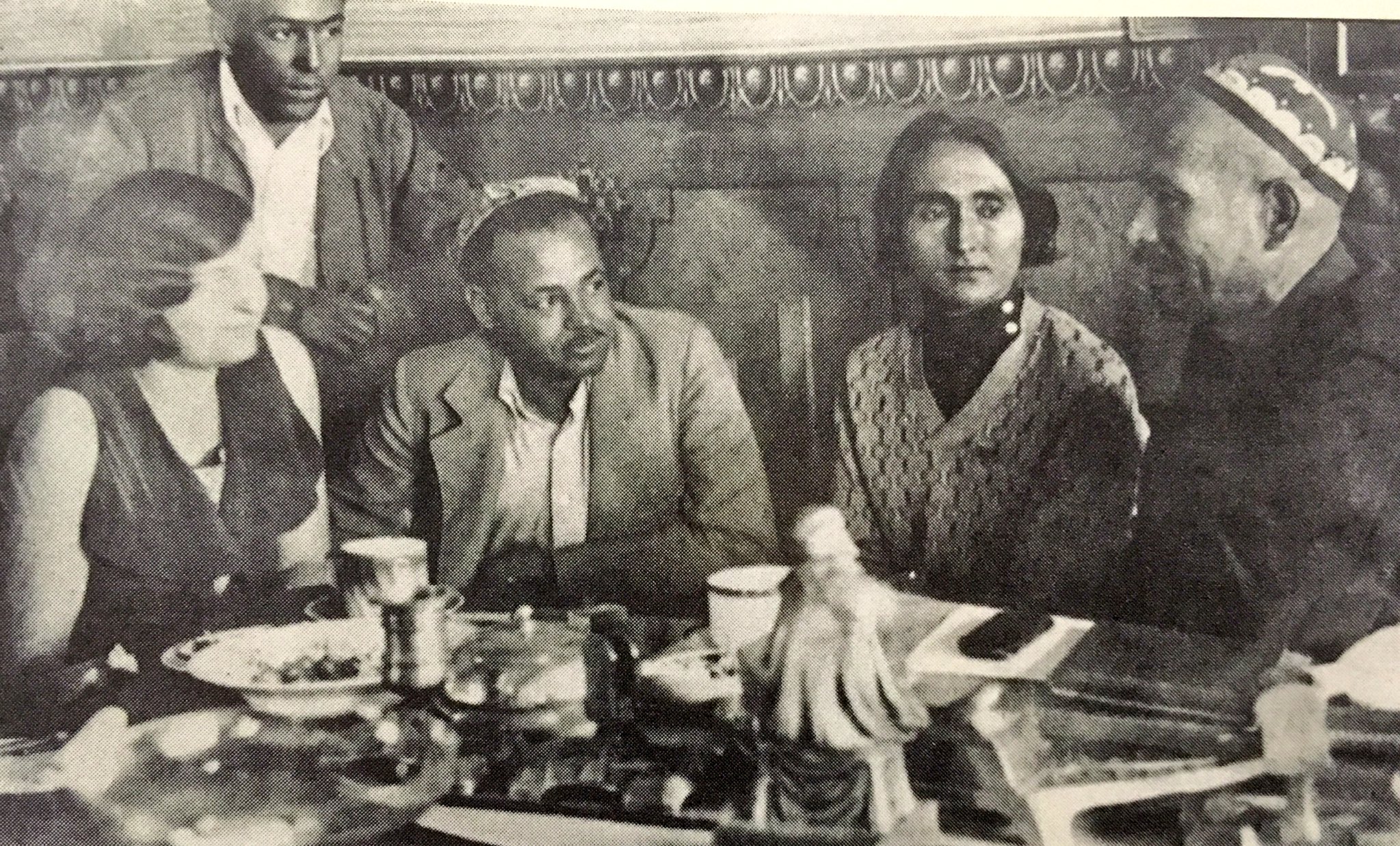
The African natives are slowly realizing that only through their organized effort can they put a stop to their exploitation by world imperialism. They are rallying in ever-increasing numbers to the banner of the Communist Party of South Africa and are deserting the organizations of the reformist Negro lackeys who are the tools of imperialism. The C.P. of South Africa, composed largely of natives (about 1,400 native members), is drawing the best elements into its ranks and is leading the struggle together with the League of African Rights against the bourgeoisie and for an independent native South African Republic.
THE WEST INDIAN ISLANDS
The West Indian Islands are controlled by England, France, Holland and the United States. England is the dominant power in the Caribbean and possesses the most valuable colonies. We shall only take into consideration here the islands predominantly populated by Negroes and which are completely under the domination of the imperialist powers.
Of major importance, from the viewpoint of markets for the finished products and sources of raw materials for the imperialist powers, and for naval strategy, are the British colonies, Jamaica, Trinidad, British Guiana, and the Island of Haiti, dominated by American imperialism. in the struggle between American and British imperialism tor markets and tor the maintenance of naval bases in the Caribbean to protect their interests, these islands play an important role. While largely agricultural, of recent years there has been a considerable development in the mining and oil industries in the Islands. Curacoa (Dutch West Indies) and Trinidad are oil and asphalt producing centers, while British and Dutch Guiana are rich in bauxite (aluminum ore) and gold deposits. Trinidad produced in 1927, 5,58U,464 barrels of petroleum and in 1926, 180,950 metric tons of asphalt. American capitalism is penetrating to an ever larger degree these colonies. The American Aluminum Co. (?), controlled by Andrew Mellon, has practically a monopoly in the bauxite industry. The United Fruit Co. is the dominant factor in the production and distribution of bananas in the Island of Jamaica. And in commerce, the United States is fast outstripping Britain in her own colonies.
The racial composition of the population of the Islands is more or less similar, and the proportion of whites to Negroes varies little. In all of the colonies the vast majority of the population are Negroes. There is of course a distinction made between blacks and mulattoes. The population of the Island of Jamaica may be taken as a typical example: Total population (1921 census), 857,729. Blacks, 660,420; colored (mixed), 157,223; white, 14,476; East Indians, 18,610; others, 7,000.
The natives of these islands are the victims of a most vicious colonial policy and are subjected to pre-capitalist forms of exploitation. The great mass of pauperized peasants live under the most primitive and poverty-stricken conditions. In most of these islands a semi-slave condition exists on the huge banana and sugar plantations, largely owned and controlled by big foreign corporations and absentee landlords. Working long hours under a broiling sun, housed in company-owned shacks, the mass of agricultural workers are paid a miserable pittance for their toil. The small farmers and tenant farmers are compelled to dispose of their products for little pay to the big corporations who exercise absolute power and control. The paltry sum received by the peasants must be supplemented by women and children who are forced to toil long hours on the plantations.
There are in most of these Islands a growing city proletariat. These workers, divorced from the land, are forced to live in crowded, unsanitary shacks. Receiving small pay (one to two dollars per day) they can only procure the barest necessities of life. To give an idea of the terrible exploitation of the workers, I will cite the prevailing rate of wages of a few occupations in Jamaica, which holds good for most of the Island:

While in a few of the islands there is the beginning of trade union organizations, the workers are largely unorganized. Unable to resist the pressure of the bourgeoisie, they are miserably exploited by the employers, native and white. The introduction of machinery, the cutting down of immigration to the United States, increase considerably the army of unemployed, bringing untold hardships to the masses. In spite of the lack of organization, and leadership, many spontaneous strikes occur, which are brutally suppressed by the government. The courts, the army, and the police are at the ready disposal of the employers whenever the workers revolt against their degrading condition, or make the feeblest attempt toward securing some small improvements. Beginning with the Longshoremen’s strike in Trinidad in 1924, which successfully tied up all shipping, there has been a steady attempt to develop trade unions. Most of the unions are short-lived, however, due to lack of experience and proper leadership. Only in Trinidad, British Guiana and a few smaller places is there any semblance of unionism. Trinidad has the largest union, the Trinidad Workingmen’s Association, with nearly 60,000 members, and the Trinidad Labor Party, led by petty-bourgeois politicians, are affiliated with the British Labor Party and the Amsterdam International. These organizations with their official organ, the “Labor Leader,” exert a considerable influence in local politics, having elected a number of labor candidates to the Legislature. Recently the leader of the Trinidad Labor Party was elected Mayor of the City of Port of Spain, the capital of Trinidad.
The class division within the native population in the islands is quite marked and rigid. The native bourgeoisie and petty-bourgeoisie is virile and strong and is in complete alliance with the white ruling class in their exploitation and subjection of the workers and peasants.
On the economic field they are entering into serious competition with some of the foreign corporations, supported by subsidies from the British Government, they are challenging the supremacy of the United Fruit Co. This is especially noticeable in the Island of Jamaica, where large numbers of native growers of bananas have organized the Jamaica Producers’ Association, acquired steamships, and are now shipping bananas to the United States, Canada and England in competition with American interests.
Alive to their own interests, fighting for political and economic control of the islands, the native bourgeoisie and their political representatives have launched a campaign for the Federation of British Islands with dominion status. This nationalist ideology is rapidly taking shape. Under the slogan of a “Federated West Indies,” as symbolizing native rule, the native bourgeoisie is able to influence the masses, who are clamoring for native (non-white) representation in the Legislative Councils. ‘Though restricted in the franchise by taxation qualifications and other bourgeois devices, the masses are rapidly developing political consciousness, as reflected in the increasing number of natives elected to the Legislatures.
Unlike the United States, there are no racial problems to speak of. Garvey’s racial propaganda is artificially stimulated. Though he has considerable influence among the masses, their allegiance to his movement is based primarily upon the expectation of immediate economic relief. While there is no racial question in the West Indies, there is a rigid caste system based on color. The white ruling class, in order to divide the workers and rule them more effectively inculcates the idea of superiority over the blacks among the mulatto element.
Due to the fact that the bourgeoisie and petty-bourgeoisie are largely colored, and the working class entirely native, the class, rather than the race, issues are to the forefront. In fact, the class lines within the native population are quite rigid and short. Operating under such conditions, Marcus Garvey, who has transferred his main activities now to the islands, particularly Jamaica, was forced to come out more openly in support of capitalism, while using liberal and racial slogans to befuddle the masses.
Haiti, with a population of 2,000,000 Negroes, is a semi-colony of American imperialism. This once free and independent Negro Republic, born out of the struggle of the slaves who revolted against French domination, is now ruled at the point of American bayonets. The reign of terror instituted by the Wall Street Government since 1915 has had as a result the murdering of thousands of defenseless workers and peasants. Peasants, who for generations had tilled their land, were summarily ordered to produce a title to the land or be evicted. In this manner, and with the assistance of the puppet government established by Yankee imperialism, the American capitalists were able to gain possession of large areas of valuable lands. Completely deprived of all their civil rights, drafted to work on the roads and on the plantations for a few cents per day, forced to accept an unequal treaty and a “made in America” constitution, these Haitian workers and peasants are brutally murdered whenever they attempt to revolt against their enslavement.
The recent strikes, culminating in a revolt against imperialist exploitation and oppression, is a sign of the readiness of the Haitian masses to struggle against Yankee imperialism and to drive the imperialist brigands out of their country.
The bitter exploitation and oppression of the workers in the West Indies drives them to struggle against their oppressors. The many spontaneous strikes, though lacking organization and leadership, are indicative of the mood of the masses.
Under such circumstances the Communist Parties can build a broad movement for the fight for the right of self-determination, giving proletarian leadership to the struggle for a “Federated West Indies.” The organization of trade unions and Labor Parties under our leadership should be one of the primary tasks of the Communist Parties in order to weld together the natives for the struggle against world imperialism.
THE NEGRO IN THE UNITED STATES
In the United States the Negro is an oppressed racial minority. The exploitation of the Negro masses in America is of a twofold character—racial and class exploitation. The twelve million Negroes in the United States are the special victims of capitalist exploitation and subjection. Members of a racial minority, they are singled out for the severest attacks and persecution by the employing class.
The development of America required cheap labor for the southern cotton and tobacco plantations. Africa became the source of supply of the much needed man-power. The slave trade, while resulting in the death of millions of Africans, the depopulation on a wholesale scale of the African Continent, and in the most horrible violence and atrocities against the African natives, produced millions in profits for the slave traders and their bankers.
Chained to the land for over 300 years through the system of chattel slavery, Negro labor produced the basis of the wealth of the United States. Driven with the lash, subjected to the most horrible forms of torture and brutality, the Negro slaves produced untold riches for the ruling class. The many revolts of the slaves against this monstrous system of enslavement and exploitation were brutally suppressed by the wealthy landowners and the State. Following the Civil War, the primitive mode of production of chattel slavery was replaced with that of wage slavery.
However, while the Negroes in the North became wage slaves during the period of reconstruction, the Southern Negro was practically completely re-enslaved on the plantations. The courts enacted innumerable laws which served to keep the Negro under the complete domination of the landowners. Every instrument at its disposal was used by the ruling class to shackle the Negro workers and bind them to the plantations.
THE SOUTH
‘The Negro population is not only concentrated in the South, but the bulk is concentrated in the rural sections. Out of the nearly 9,000,000 Negroes living in sixteen Southern states, about 6,000,000 or two-thirds live in the rural areas. In a number of states the Negro masses form a large part of the population. In Alabama and Louisiana, they constitute (1920 census) 38%, in Georgia 42% and in Mississippi and South Carolina 51% of the total population.

In the South the millions of Negro workers and farmers are largely concentrated within certain areas known as the “Blackbelt,” due primarily to the plantation type of agriculture. The Negro tenant farmer share cropper, and farm workers are virtually slaves on the land. The poor farmer and share cropper can never hope to own the land he tills, due to a credit and mortgage system which chains him to the land and makes him the serf of the merchants, landholders and bankers. Not only the land, but even the implements, crops—everything is mortgaged, placing them under complete domination of the white ruling class. The Negro farm workers are compelled to toil long hours under the most revolting conditions and for a miserable pittance as wages, receiving in some instances, as in Georgia, as little as $19 per month. Peonage, debt and convict slavery, vagrancy laws, defranchisements, segregation, lynching and mob violence are the methods used to mercilessly exploit and oppress the Negroes in the South. These are the methods of double exploitation of the Negro used by the capitalist class in order to extract super profits from their labor.
The migratory movement of the Negroes from the Southern plantations which really began soon after the Civil War and reached its peak in 1923, resulted in the tremendous increase of the Negro population in the Southern as well as the Northern cities. Fully one and one-half million Negroes have migrated to the urban centers between the years of 1910 and 1920. In 1890 less than 1,500,000 Negroes lived in cities. Recent estimates give the urban Negro population as 4,000,000. Between the years of 1920-25 the Negro farm population decreased from 5,300,615 to 4,505,796 or 15%. During this same period the white farm population decreased 11%, indicating that Negroes were migrating from the farms at a greater ratio than whites. (These figures are national but the Negro farmers are mostly in the South.) The latest reports give the total number of Negro farmers as 926,708. Of this number 219,612 are farm owners, 2,026 farm managers, and 705,070 tenants. Negro farmers are 14.7% of the total number of farmers. In 1910, 27% of Negro male laborers were farm workers, in 1920 only 16.5%.
The rapid industrialization of the south is drawing ever larger numbers of Negroes into the southern industries. The process of rationalization, speed-up, etc., affects most sharply the Negro workers. Fresh from farm labor, they come into industry for the first time at a point where the most terrific drive for production is taking place. Driven at a terrific rate, at long hours, and miserably low wages, terrorized and victimized, Negro labor in the South is not only cheap labor, but virtually slave labor. The south depends to a very large extent upon Negro labor for the production of its wealth. The heaviest, dirtiest tasks are performed by Negro workers. The turpentine, lumber, fertilizer, tobacco and cotton industries use largely Negro labor. Over 50% of the more than 100,000 lumber workers in the South are Negroes. Nearly three times as many Negroes as whites are in the steel industry working ten hours and more per day. Over 50,000 are in the coal mining industry. The tobacco and cotton industries employ tens of thousands of Negro workers, paying them as low as ten dollars per week. The vast majority of waterfront workers in the South are Negroes. The textile industry is increasingly using Negro workers. One textile plant in Durham, N.C. employs 700 Negro workers.
Negro women and children are used to further worsen the conditions of the male workers. Negro women and children are employed largely in the tobacco and textile industries, slaughtering and meat packing houses and the canneries. Twenty-nine and one-half per cent of Negro women in canneries earn less than four dollars per week. The average wage for tobacco workers is seven dollars per week. In the cotton waste mills 81% of the Negro women employed toil ten hours per day for a miserably low wage.
Segregated into the worst sections, compelled to live in flimsy, dirty shanties, jim-crowed at every turn, the Negro masses are bitterly exploited and live in the most abject poverty.
They are disfranchised and subjected to violence if they dare assert their rights to vote in elections. Intimidated and brutally lynched by the Ku Klux Klan, the Night Riders and various other terroristic agencies of the capitalist class, the Negro masses in the South are unable to resist their oppression and exploitation, because of the lack of organization and the prejudiced attitude, not only of the employers, but also of the white workers who are saturated with the idea of race “superiority.” Blinded by race hatred, deliberately fostered by the capitalist class, the mass of white workers fail to see the common interest between them and the Negro workers. Despite this racial antagonism, the worsening of the conditions of the white workers practically to the level of that of the Negroes, and the organizing and propaganda activities of the left wing unions and the Communist Party are laying the basis for the united action on the part of black and white against their common enemy—the exploiters.
THE NORTH
Soon after the Civil War, a slow but steady migration of Negroes from the South to the North began. Thousands of Negro peasants abandoned the plantations for the Northern cities. demand for labor in the war industries and the check on foreign immigration provided the basis for a huge mass movement from the South to the North, involving hundreds of thousands of Negroes. The Negro population of the North increased tremendously. The following table will show a partial picture of the increase of the Negro population in some of the industrial states:
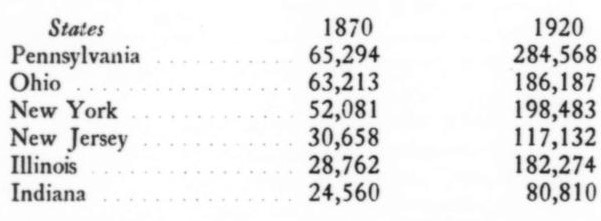
Turning their backs to the oppressive conditions of the South, with its intense exploitation, low wages and long hours, peonage and terrorism, the migrants flocked into the North to escape the open terrorism, jim-crowism and serfdom in the South, the Negro soon discovered that the conditions in the North are only little better than those from which he has escaped.
In the North he is the special object of intense exploitation and proscription. He is confronted with discrimination and jim-crowism in restaurants, theatres and other public places. He is the special prey of the landlords and real estate sharks. The segregation of Negroes into restricted areas, forcing them to pay rents forty to fifty per cent higher than white tenants pay for similar accommodations, is one of the methods of double exploitation utilized by the bourgeoisie against the Negro. Both white and Negro landlords reap a harvest of profits through this system of segregating Negroes into districts notorious for their unsanitary conditions, thereby causing a shockingly high death rate of the Negro workers. Racial separation, through segregation, is an effective means of reducing the Negro to a social outcast.
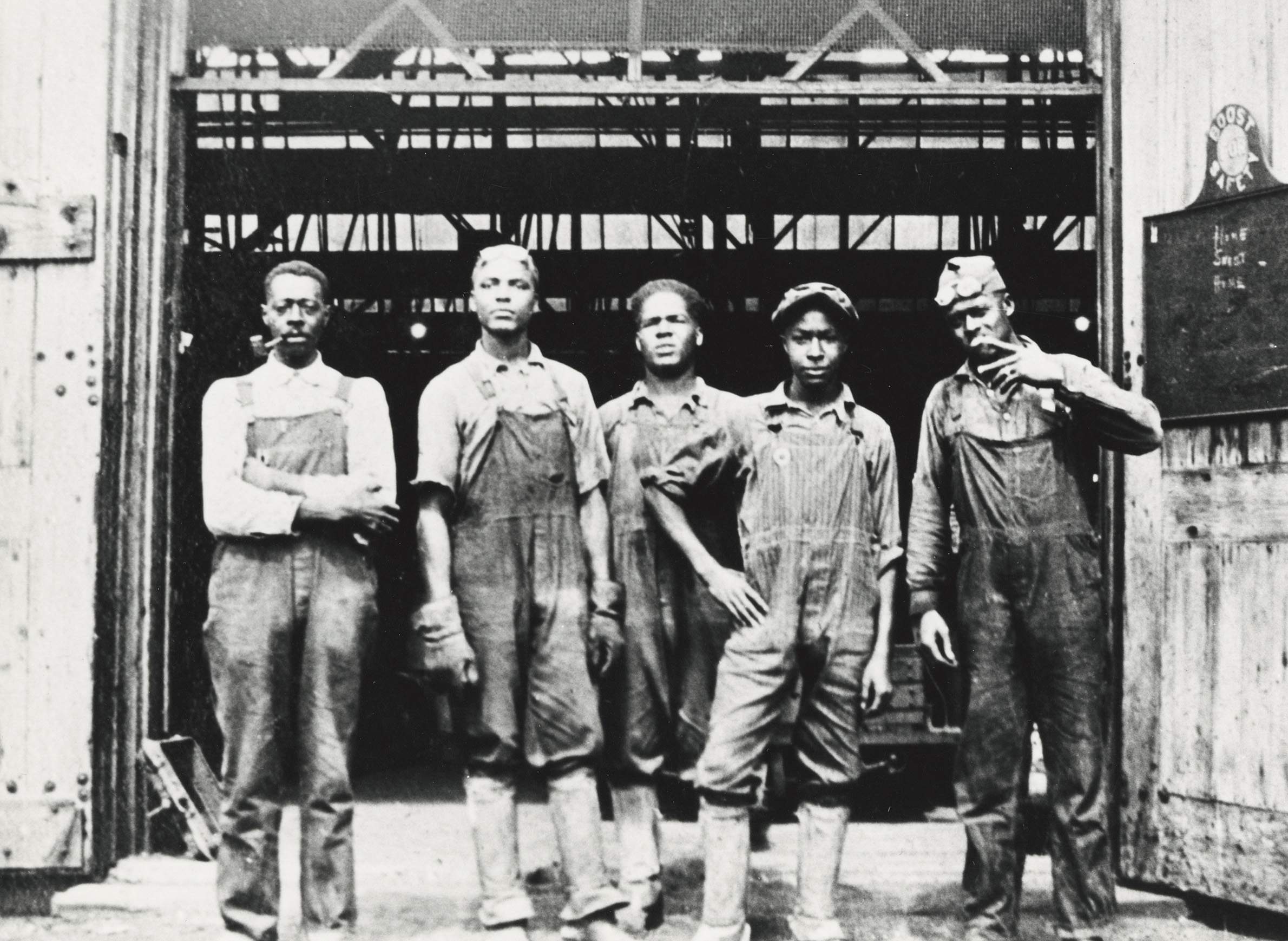
The Negro farmhand of yesterday has become an industrial worker in the North. Absorbed into the various industries, the two million Negro workers are an important factor in the basic industries, such as steel, coal, iron, automobile, railroad, etc.
The industrialization of the Negro workers can best be appreciated when we take into consideration not only the increase of Negro population in the industrial areas of the country but also the large numbers who have entered into some of the basic industries. The role and importance of the Negro proletariat in the North can easily be seen from the following figures, though incomplete:
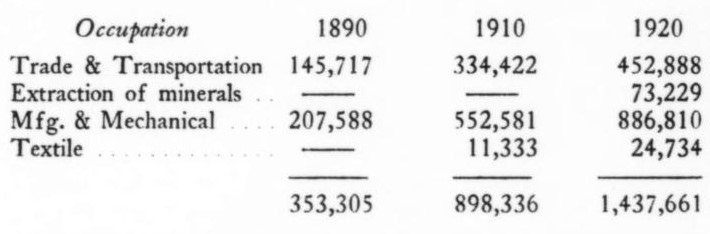
Taking his place side by side with the white workers in the gigantic factories, mills and mines, subjected to capitalist rationalization, wage cuts, speed-up and unemployment, with its consequent radicalization of the masses, the role the Negro proletariat will play in the sharpening class struggles can no longer be ignored.
The Negro workers are largely unorganized as a result of the A.F. of L. policy of outright refusal to organize the mass of semi-skilled and unskilled workers. The reactionary bureaucracy in control of the craft unions bar Negroes outright or practice gross discrimination against them. With their policy of racial separation and hostility, they play the game of the employers. The A.F. of L. and socialist leaders constantly betray the Negro workers in their struggle, as in the waiters’ strike in Chicago in 1922, the calling off of the scheduled Pullman porters’ strike and the issuing of a “Federal Charter” to the Brotherhood of Sleeping Car Porters, thereby jim-crowing and weakening the organization, leaving the workers at the mercy of the Pullman Company. In spite of the treacherous policy of these labor “leaders” there are nearly 200,000 Negro workers organized in the trade unions.
The sharpening class differentiation within the Negro population must no longer be ignored. The segregation of the Negro masses creates the basis for the development of a group of real estate brokers, merchants and bankers. Under the deceptive slogan of “race loyalty” the Negro bourgeoisie has been able to establish an ideological influence over the Negro masses.
The Garvey movement and the N.A.A.C.P. are classic examples of the reformist movements exerting considerable ideological influence over the Negro, diverting his militancy into reformist channels, betraying the Negro workers in their struggle against capitalist exploitation.
A basic task before the Communist Parties and the revolutionary unions is the winning over of the Negro masses in America and in the colonies for the struggle against world imperialism, under the leadership of the Communist International.
The recent revolts of the natives throughout Africa are indicative of the readiness of the African workers to fight against the brutal exploitation and oppression of world imperialism. The colonial slaves in Africa and the West Indies must be organized and drawn into the world-wide revolutionary movement for the overthrow of world capitalism.
In the United States the proletarianization and the growing radicalization of the Negro masses provide us the basis for organizing the Negro industrial workers in the new revolutionary trade unions under the leadership of the Trade Union Unity League. The attendance and active participation of sixty-four Negro delegates at the Cleveland Convention of the T.U.U.L. is a sign of the awakening of the Negro workers and their readiness for joint struggle with the white workers against capitalist rationalization and enslavement.
The Communist Party must throw all its energy, mobilize all its forces for the winning of the millions of Negro workers and farmers for the revolution. The peculiar forms of racial exploitation of the Negro masses provide the basis for a race liberation movement which must be actively supported by the Communist Party. Our slogan of race equality as well as political and social equality must be translated into action and the Party become the champion and the active organizer of the oppressed Negro race for full emancipation. Gastonia proves to us the possibilities of smashing the age-old Southern traditions and prejudices, mobilizing the white and black workers for common struggle against exploitation and oppression.
The danger of another imperialist war and of a war against the Soviet Union, into which thousands of Negroes will be drawn and sacrificed to appease the greed of world imperialism in their scheme for the re-division of the world, must be utilized to mobilize the Negro workers for struggle against world capitalism.
It is the duty of our Party to mobilize and rally the masses of white workers in defense of the Negro workers, linking up the struggles of the white with that of the black workers through all of its campaigns and activities.
A determined fight must be waged against every manifestation of white chauvinism among the broad masses of white workers and a campaign to stamp out all neglect and indifference among our white comrades toward Negro work.
The Party must intensify its work among the Negro masses, drawing them into the Party, aiding in the strengthening and building up of the American Negro Labor Congress and mobilizing the Negro workers under our leadership.
There are a number of journals with this name in the history of the movement. This ‘Communist’ was the main theoretical journal of the Communist Party from 1927 until 1944. Its origins lie with the folding of The Liberator, Soviet Russia Pictorial, and Labor Herald together into Workers Monthly as the new unified Communist Party’s official cultural and discussion magazine in November, 1924. Workers Monthly became The Communist in March ,1927 and was also published monthly. The Communist contains the most thorough archive of the Communist Party’s positions and thinking during its run. The New Masses became the main cultural vehicle for the CP and the Communist, though it began with with more vibrancy and discussion, became increasingly an organ of Comintern and CP program. Over its run the tagline went from “A Theoretical Magazine for the Discussion of Revolutionary Problems” to “A Magazine of the Theory and Practice of Marxism-Leninism” to “A Marxist Magazine Devoted to Advancement of Democratic Thought and Action.” The aesthetic of the journal also changed dramatically over its years. Editors included Earl Browder, Alex Bittelman, Max Bedacht, and Bertram D. Wolfe.
PDF of full issue: https://www.marxists.org/history/usa/pubs/communist/v09n02-feb-1930-communist.pdf
 Revolution's Newsstand