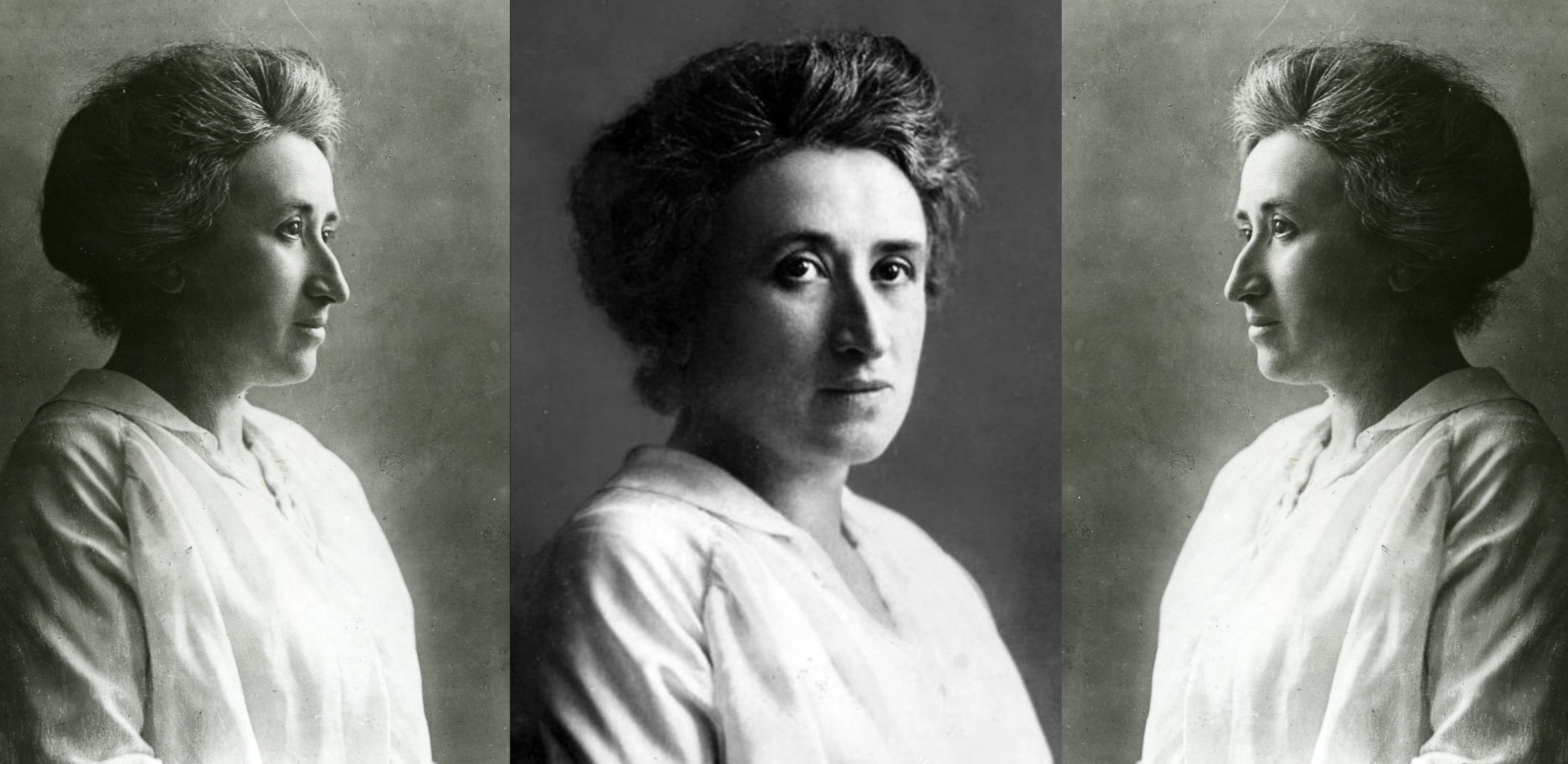
Paul Frölich, co-worker and biographer of Rosa Luxemburg, writes on the process of gathering his martyred leader’s ‘collected works’ and the context of the recently published fourth volume, ‘Against Reformism.’
‘Rosa Luxemburg: “Against Reformism”’ by Paul Frölich from International Press Correspondence. Vol. 5 No. 83. November 26, 1925.
At the beginning of 1923, Rosa Luxemburg’s “Accumulation of Capital” appeared as vol. I. of her “Collected Works”. Now vol. III. has appeared under the title “Against Reformism”, and with it the actual moment has come when the treasures hidden in the life-work of our fallen leader, are being unearthed. There is reason to hope that the other volumes of the complete edition will soon follow.1
Soon after Rosa’s death, this publication was resolved upon, but a good long time elapsed before even the preparatory work could be begun. The man who, more than any other, would have been qualified for this task, Leo Jogiches, followed Rosa three months later into the grave. At that time we did not foresee the enormous difficulties which would tower against the victory of the revolution, and we believed that this complete edition might be one of the first scientific works after the conquest of power. Finally, the difficulties of life itself, the persisting illegality of the Spartacus League and the burden of the daily tasks formed too great obstacles for it to be possible to start on this work.
A fresh impulse was given by the publication of Rosa’s posthumous manuscript “The Russian Revolution”, with which Paul Levi tried to cover his betrayal of the revolution and to undo Rosa’s greatest achievement, her leadership of the Spartacus League in the period of storm and stress of the German revolution. In her article “On Rosa Luxemburg’s attitude towards the Russian Revolution”, Klara Zetkin defended, with a sharp weapon, the revolutionary honour and the memory of her comrade in arms, and the tremendous historical achievements of the Bolshevists. But at the same time it was felt to be urgently necessary that Rosa Luxemburg herself should enter the forum in order, through her life’s work, to give evidence as to whether her path led into the camp of her own murderers and into that of the traitors to her political will and testament, or whether it was in reality the path leading the international proletariat to the conquest of power a path which would lead to Lenin, not by accident but through innate consistency. On the initiative of the Executive of the Comintern, a Commission, consisting of Comrades Klara Zetkin, Adolf Varski and Julian Karski, who has since died, was appointed at the time of the 3rd World Congress, to carry out the publication of Rosa’s works.
The difficulties of the task only became evident, when a start was actually made. Since Rosa’s library and other material left by her is not accessible but is held back by unauthorised persons, the articles had to be laboriously collected from newspapers and journals.2
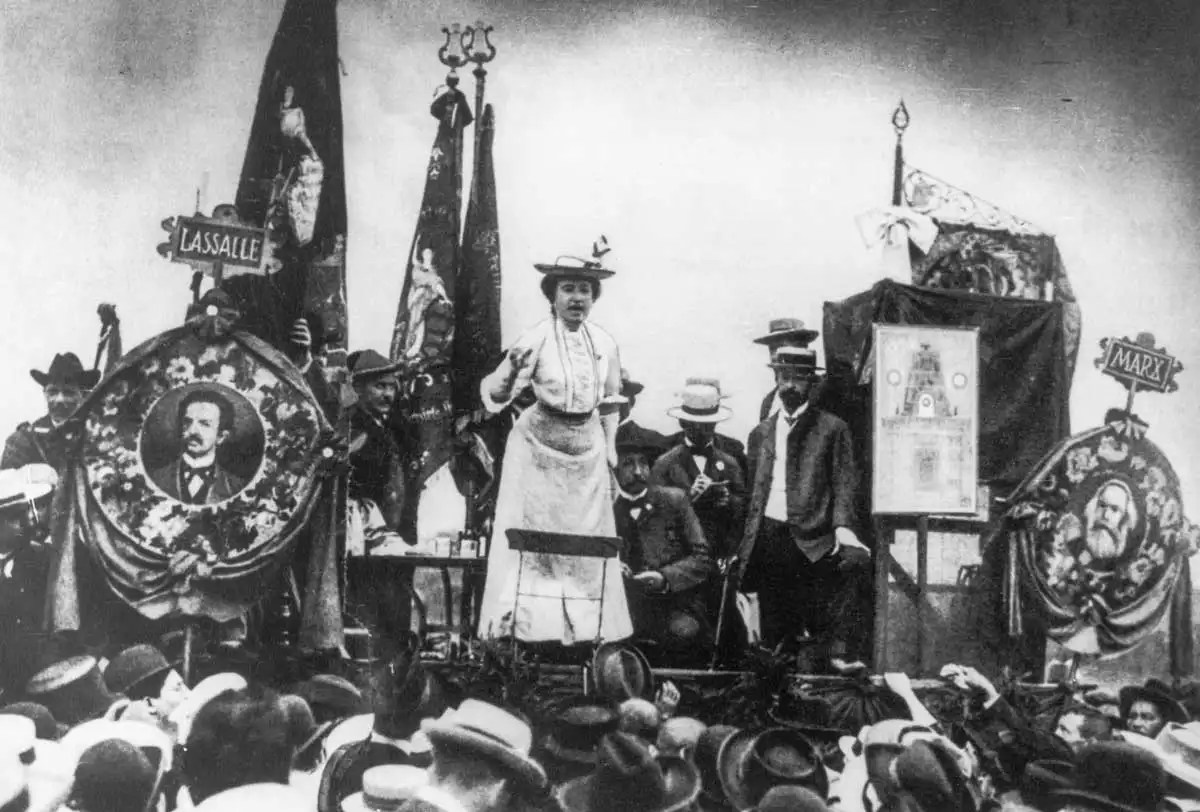
The articles from Polish and Russian papers had to be translated. This took a few years, as this work had constantly to be interrupted on account of work which at the moment was more urgent. The first fruit of this work is now before us, and thus, to a certain extent, Lenin’s stern reproach which weighed heavily on our conscience, that the German communists had unpardonably delayed the publication of Rosa’s works, has to some extent been removed.
When Lenin, in his article “On the Climbing of High Mountains”, pronounced this reproof, he said at the same time: “In spite of all her faults, Rosa Luxemburg is and remains an eagle; not only will her memory always be valuable to the communists of the whole world, but her biography and the complete edition of her works will be a valuable text-book in the education of many communists throughout the world.” This is the reason which gives the publication of these collected works a justification far beyond that of mere historical interest. It will be particularly effective just now, when the attempt has been made in the German Party to pluck the eagle and to convert the true picture of Rosa Luxemburg into a pitiful caricature. This attempt was undertaken with the glittering armour of a few tags of quotations by people who never took the trouble to make themselves acquainted with Rosa’s achievements and whose only object was to boost themselves and to conceal their own incapability. It is not a matter of indifference for the Party whether it recognises or fails to recognise the character and the value of its great leaders and martyrs, whether it becomes fully conscious of their mistakes so as to avoid them, and whether it assimilates their great and permanent teachings and reaps a thousandfold harvest from them
I must admit that I was somewhat doubtful as to whether just the volume now before us would give an idea of the precious teachings for our daily fight which can be drawn from Rosa Luxemburg’s legacy. It was in any case a bold move to begin with just those essays which date back more than a quarter of a century. As the collection and translation of the Polish and Russian writings entailed considerable difficulties, the alternative remained of either postponing the publication still further or of foregoing beginning the publication with volume I. It was thus very natural to begin with the publication of the volumes which would give us material of particular value for the present day, the volumes on war and revolution. Important reasons prompted the publishers and editors to issue the specifically German problems at least in their chronological sequence. And now, that this volume “Against Reformism” is before us, its actual significance is surprising.
The main point of revolutionary mobilisation was and re- mains that of becoming clear as to our attitude towards Reformism. The study of just this volume will show that it is always a question of the same problems, which in essentials are identical, and only vary in form. Bernstein, in his day, brought up all the fundamental questions which are nowadays on the agenda in the fight between Communism and Social Democracy. It would be frivolous to maintain that Rosa Luxemburg answered all these questions as far back as a quarter of a century ago. On the contrary, it became evident that at that time, for many questions, for instance that of the decisive fight for power a reformist, a wrong answer could be found, but no correct, no revolutionary answer, simply because the means and possibilities were not yet recognisable. In these questions we must turn to Lenin. In all other questions, in which we are faced by reformism, Rosa Luxemburg provides us with weapons with which to destroy it. Like all clear thinkers, she often drew conclusions in her fight against this enemy which, in her day, were rejected even by her comrades in the fight, as unjustified and exaggerated. The bitter experiences since 1914 have justified these conclusions and even surpassed them. She could go to extremes because her view on the fight of the proletariat was a thing complete in itself, because Marxism was a living thing to her.
It was one of her strong qualities that she always tried to pursue a problem into its finest ramifications. A standard example of this is her treatment of French ministerialism. She was not satisfied merely to refute it in general, theoretically. She pursues it in every form in which it expresses itself, she follows it into the last corner of the “cul de sac” in which it has taken refuge, and it is just in this way that she achieves more than a mere refutation, she tracks it down in order to annihilate it. This is why her teaching never gives the impression of abstract philosophy, it is drawn from life, living, creative protoplasm.
Even to-day what is the core of all the great tactical problems round which the fight rages within the Communist International? In the end the question always is how we can follow our path without straying either into the desert of sectarianism or into the slough of opportunism. In this respect, Rosa Luxemburg is a conscientious leader. The whole book is an emphatic warning against deviations to the Right.
The danger is exposed to us in a perfectly concrete form. Light is thrown on the ephemeral nature of the reformist Utopias. We have not yet fully recognised what an alluring effect the newest Utopias of reformism may have (we need only recall the question of economic democracy which is at present occupying the attention of the trade union movement). We have as yet not taken up the fight against it with sufficient seriousness and thoroughness. Rosa Luxemburg shows us how to recognise and demonstrate the complete hollowness of these ideas.

Social democracy is to-day once more faced with the question of an open coalition policy in the republic. It is strange but true that many workers have not been convinced by their own bad experiences with this policy. They continue to fall into the snare of delusions and promises. Rosa Luxemburg carried the French example to its logical conclusion as proof of the criminality of this policy, and an example which can be observed in its whole historical course, is often more convincing than the experiences of the present day. Even our propagandists find the question of the coalition policy illuminated in such a way that it gives them some new information and many arguments. In the questions of Republic and Monarchy, in the tariff policy, the readers can derive great benefit from Rosa Luxemburg’s investigations. Experience has taught me that a whole number of questions which suddenly crop up, have already, in their essentials, been illuminated by Rosa, without one’s having suspected it, so that I am convinced that the present day interest of this book will still prove itself in many ways. It is a text-book of class-war.
Of course the book demands of the reader that he should think historically, and it trains him to do so. Rosa Luxemburg, the intellectual dialectician, would most certainly object to the clumsy application of any of her words to every possible situation. We must always bear in mind how different was the time of the rallying of the masses, in which pure propaganda had such a tremendous significance, from our own times, when the fight for power occupies the foreground. We must not forget that before 1914, the strategy and tactics of revolution in Western Europe were still quite undeveloped, that Rosa Luxemburg was the first to give it a foundation and that, at that time, many a necessity was not yet recognised and some questions were still answered wrongly.
There is no doubt that the volume will not only give instruction to our comrades but will, above all, do great service in winning over the social democratic workers. What they lack, what makes it so difficult for them, is that their leaders arm them with no principles, but that they lead them into opposition, and even at that an opportunist one, in each case as it arises, that is from one stumbling block to another. Rosa Luxemburg gives them the equipment for an opposition which is no longer erratic, but which is sound to the core and conscious of its aim. It is the vocation of our Press to be the channel through which it is conveyed to them.
NOTES
1. The whole works are to include: Vol. I, The Revolutionary Movement in Poland. Vol. II, The Russian Revolution in 1905. Vol. III, Against Reformism Vol. IV, World Policy, the Mass Fight, Masses and Leaders. Vol. V, World War and Revolution. Vol. VI, The Accumulation of Capital. Vol. VII, Theoretical Writings on Marxism and Political Economy. Vol. VIII, Political and Literary Portraits, Letters and Miscellaneous Writings.
2. It would seen as though all material of value has already been collected. As however important articles may still exist somewhere or other, the publishers would be grateful for any communications, which should be made to the “Vereinigung Internationaler Verlagsanstalten”, Berlin SW., Planufer 17.
International Press Correspondence, widely known as”Inprecorr” was published by the Executive Committee of the Communist International (ECCI) regularly in German and English, occasionally in many other languages, beginning in 1921 and lasting in English until 1938. Inprecorr’s role was to supply translated articles to the English-speaking press of the International from the Comintern’s different sections, as well as news and statements from the ECCI. Many ‘Daily Worker’ and ‘Communist’ articles originated in Inprecorr, and it also published articles by American comrades for use in other countries. It was published at least weekly, and often thrice weekly.
PDF of full issue: https://www.marxists.org/history/international/comintern/inprecor/1925/v05n83-nov-26-1925-inprecor.pdf
 Revolution's Newsstand