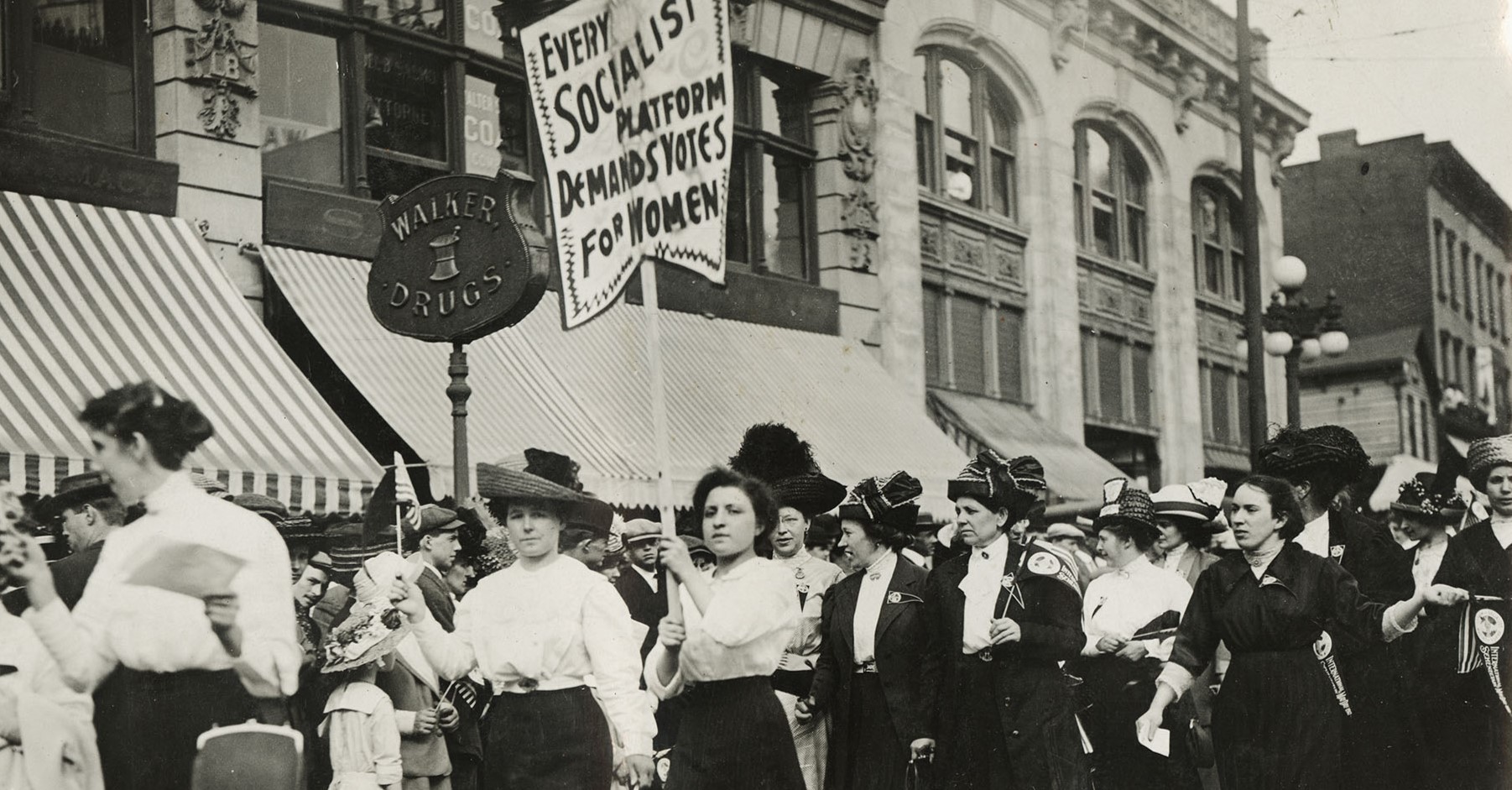
‘The Wage Earners’ Political Equality League of Pittsburgh’ by Pearl Ellis from The Progressive Woman. Vol. 7 No. 72-73. June-July, 1913.
ON THE evening of December 10, 1908, at the Christian Home for Working Girls at 424 Dubuque Way, Pitts burgh, there gathered in answer to the to the call of Mrs. Lucy Hobart Day, who was at that time organizer of the National Equal Suffrage Association, a number of the oldest woman suffragists of Allegheny County, among whom were Miss Matilda Orr Hays, state treasurer of the Pennsylvania Equal Suffrage Association; Mrs. David Starr Martin, president of the Constitutional Amendment League, and Miss Kate Sweeney, president of the New Era Club, for the purpose of discussing the proposed organization of a wage earners’ political equality club. The capacity of the Christian Home for Working Girls is some hundred and ten, and it is worthy of note that at this first meeting, held simply for the purpose of laying the foundations of a suffrage club, not more than thirty of the inmates of the home attended. The words “woman suffrage” brought the usual vision to the uninitiated of masculine-appearing, stamping females shouting to be “emancipated” from some imaginary evil to the minds of the majority of the girls or else they regarded the request to be present with indifference. In vain did the one or two suffragists of their number talk to them of improved working conditions. As one of these suffragists put it to a clerk in one of the large department stores, “Don’t you want an eight-hour day by law, the same as they have in the four suffrage states? Don’t you know how you complain because you have to work from eight in the morning until ten at night on Saturdays? Here, take this leaflet, “The Wage Earner and the Ballot,” and read it and come to the meeting.” But in the majority of cases the leaflet was not read and the girl who received it did not put in an appearance at the meeting.
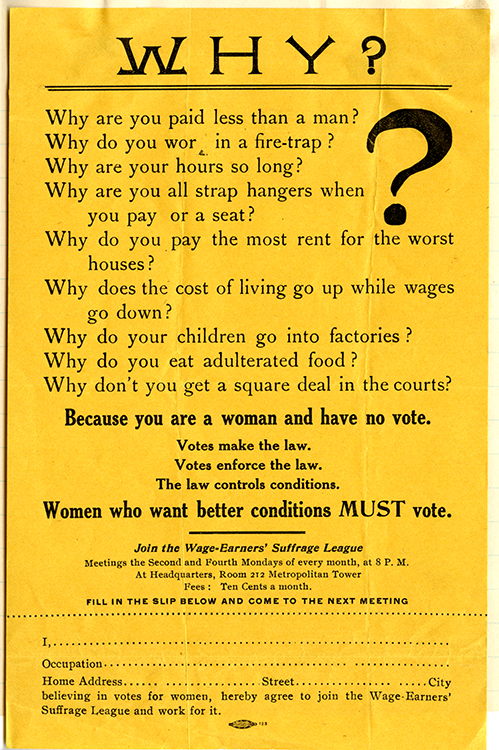
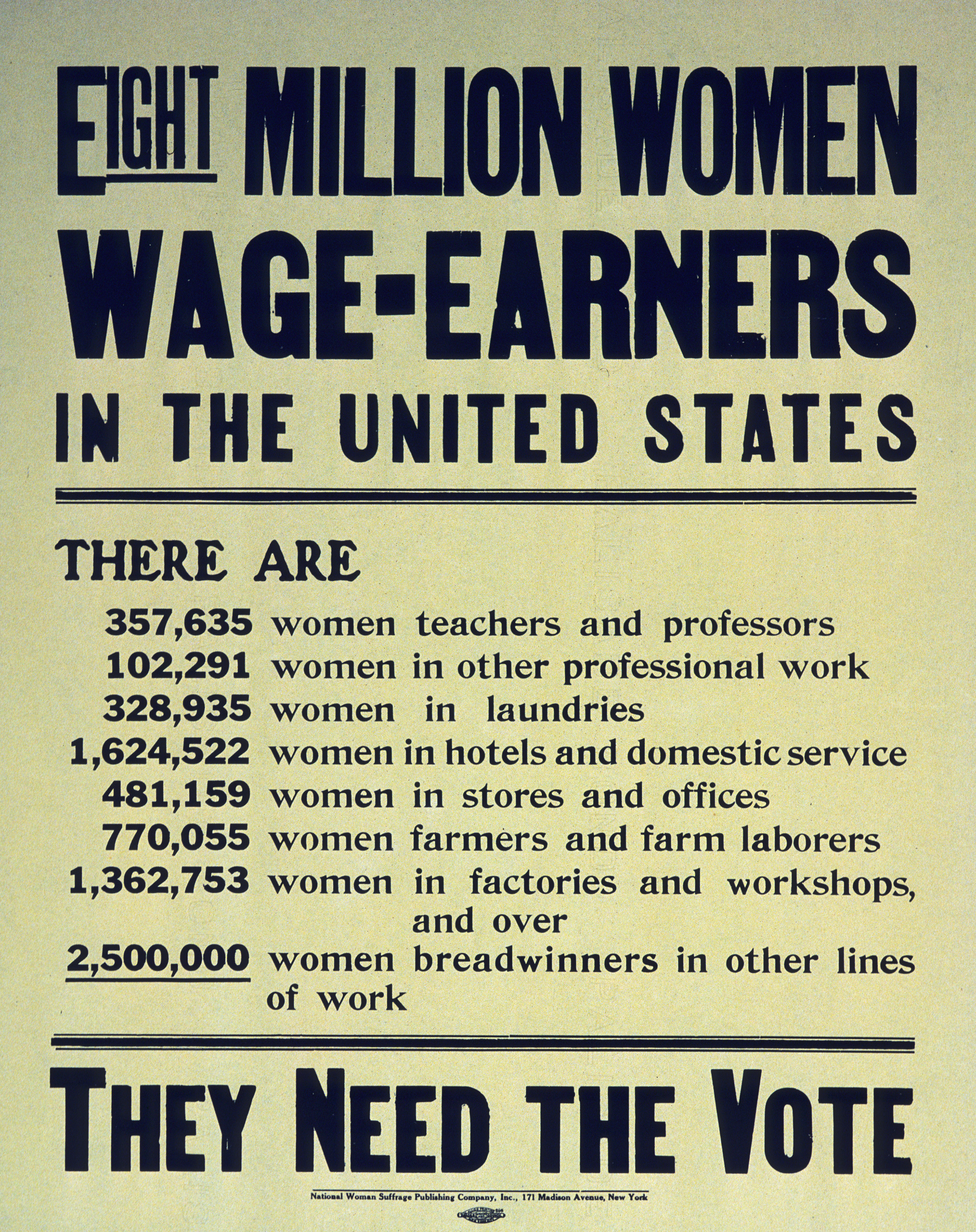
Following this meeting at which the above-named earnest women and also several others spoke, there was sufficient enthusiasm generated for the real work of organization of the club, which took place four nights later in the small library of the home. The club, it was understood, was to consist entirely of wage earners, any wage earning man or woman being eligible for membership, non-wage earners being given the privilege of associate membership. This rule has never been broken up to the present time. Be it said to the credit of the club that although it counts among its associate members some of the most exclusive and wealthy women of Pittsburgh, in its actual membership it continues to remain class conscious. And be it also said that these associate members accept their nominal membership without demur, come to the meetings and do all they can toward the welfare of the organization without the slightest suspicion of patronage toward its working class members. At the first meeting the following officers were elected: Honorary president, Mrs. Lucy Hobart Day; president, Miss Matilda Orr Hays; vice president, Miss Grace Thompson; secretary, Miss Pearl Ellis; treasurer, Miss Anna Allen; press agent, Miss Faith White. Executive and entertainment committees were also elected. For the purpose of encouraging membership the club was not placed upon a financial basis the first year, but depended entirely upon voluntary contributions of its members.
After the first bi-monthly meeting, on account of the large attendance, the club was obliged to change its place of meeting from the small library of the Home to the spacious double parlors. The third or fourth meeting was the occasion of a reception tendered to the wage-earners at the Home by all of the women’s clubs of Pittsburgh, the honor guest being Mrs. Rachel Foster Avery, who at that time was first vice-president of the National Suffrage Association, and president of the Pennsylvania Suffrage Association. This reception was well attended. It will always be remembered by a number of the older members of the club that upon this occasion Mrs. Avery remarked in her speech, “I would rather come and talk to this club of wage earners than to any other club in Pittsburgh.”
By the spring of 1909 the membership of the club had increased to eighty and after a final reception in May at which once more Mrs. Avery, and also Gertrude Breslau Fuller of Pittsburgh, known as the “woman Debs” of the Socialist party, were the principal speakers, the club adjourned until fall.
During the winter of 1909-10 the club increased its membership to 128 actual members and became affiliated with the Congress of Clubs of Western Pennsylvania. The meetings were well attended and it is a question if the meetings of any of the other clubs in the city were more interesting. Almost without exception the most brilliant men and women in the city, lawyers, newspaper people, educators, when asked to speak before this club responded with alacrity. One very noted criminal lawyer even volunteered to speak at any time to this “earnest group of young men and women.”
The most notable event in the early history of the club was the parade through the principal streets of Pittsburgh with “Votes for Women’ pennants flying, headed by Miss Hays, the president, bearing a large pennant inscribed with the name of the club, and another pennant bearing the words, “Welcome! Harriet Taylor Upton!” carried by the secretary to the station to meet Mrs. Upton, the national secretary, upon the occasion of her coming down from Warren, Ohio, to hear Mrs. Pankhurst on the evening the latter spoke in Pittsburgh, and the subsequent stage seating with which the club was honored during Mrs. Pankhurst’s lecture. A number of the members of the club still have in their possession the pennants carried on this occasion. It was at this lecture, which was held in the Old City Hall, that a squad of city police who had been trained to sing in concert by an evangelist some months before sang several hymns. Mrs. Pankhurst took occasion to say in the opening remarks of her speech which followed, that police had often taken part her meetings before, but never in so kind a fashion.
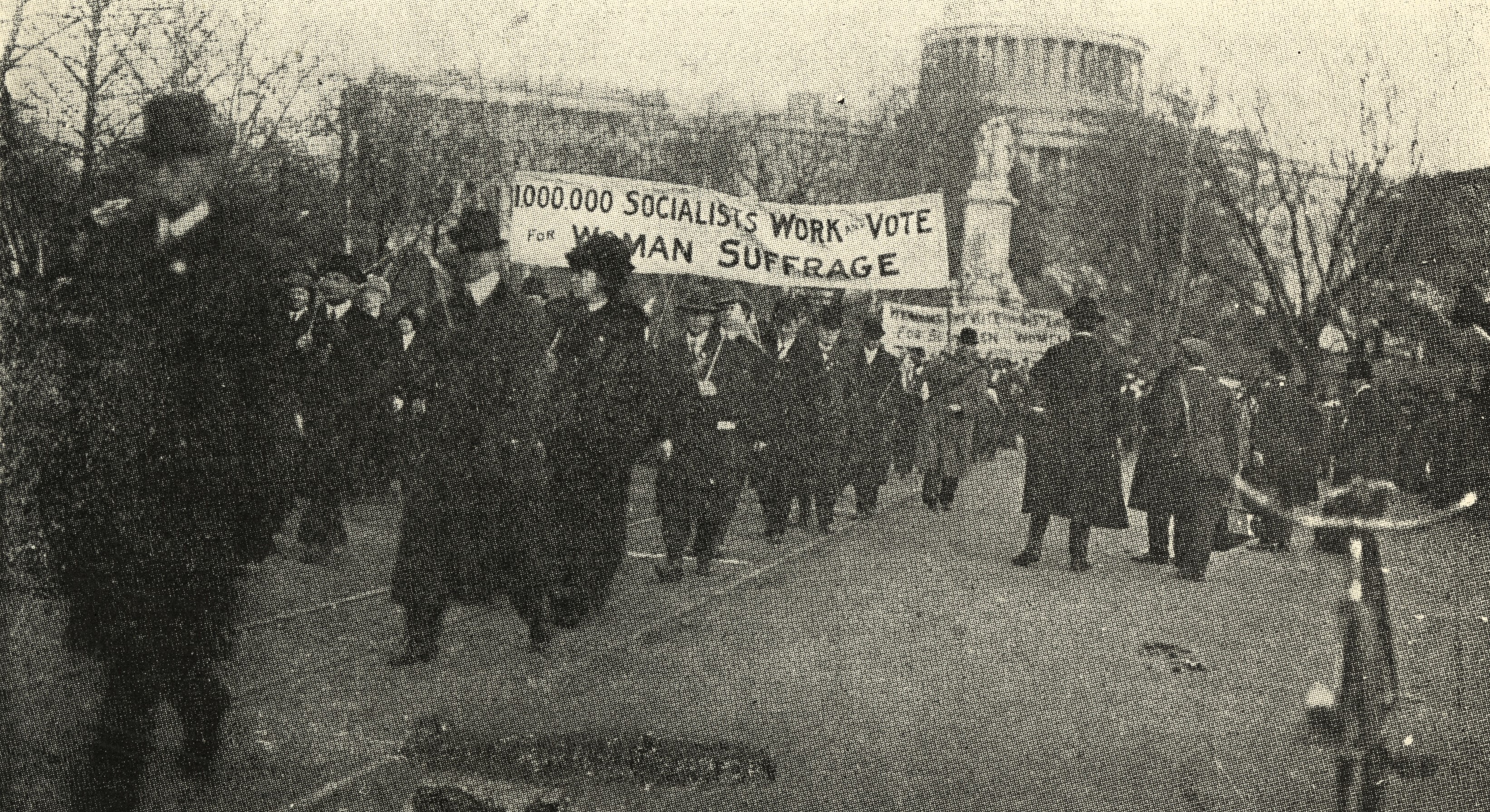
In February of 1911 the Garment Workers’ Union and also the Union Label League of Pittsburgh jointed the Wage Earners’ Political Club, swelling its membership by several hundreds. Miss M. Emmelinne Pitt, president of the latter organization, and Pennsylvania state organizer of the American Federation of Labor, was elected as honorary president of the Wage Earners, along with Mrs. Lucy Hobart Day. But the club has grown in more than mere numbers. It has probably done more to spread the gospel of equal suffrage than any other club in Pittsburgh, for although there are other suffrage clubs in the city, stronger both in numbers and in financial resources, yet these very organizations have had their beginnings in the activities of certain members of the Wage Earners’ Political Equality Club. It is a singular fact that these working men and women, although willing to organize the more conservative element, refuse to join the organizations they help materially to build up, but strong in the feeling of class cling tenaciously to their own club. During the past year the president and vice-president have responded to no fewer than fourteen calls for suffrage talks from various clubs and societies. Suffrage literature was distributed at these meetings and hundreds of slips were signed by men and women testifying to an awakened interest in the cause, while several hundred party slips were signed by those desiring to join the Woman Suffrage Party. All things tend to indicate that the Wage Earners’ Political Equality Club of Pittsburgh, like all things genuinely democratic and uplifting, will continue to grow until finally its membership will reach the nineteen thousand mark of the organization after which it is modeled, the Wage Earners’ Political Equality League of New York.
The Socialist Woman was a monthly magazine edited by Josephine Conger-Kaneko from 1907 with this aim: “The Socialist Woman exists for the sole purpose of bringing women into touch with the Socialist idea. We intend to make this paper a forum for the discussion of problems that lie closest to women’s lives, from the Socialist standpoint”. In 1908, Conger-Kaneko and her husband Japanese socialist Kiichi Kaneko moved to Girard, Kansas home of Appeal to Reason, which would print Socialist Woman. In 1909 it was renamed The Progressive Woman, and The Coming Nation in 1913. Its contributors included Socialist Party activist Kate Richards O’Hare, Alice Stone Blackwell, Eugene V. Debs, Ella Wheeler Wilcox, and others. A treat of the journal was the For Kiddies in Socialist Homes column by Elizabeth Vincent.The Progressive Woman lasted until 1916.
PDF of full issue: https://www.marxists.org/history/usa/pubs/socialist-woman/130600-progressivewoman-v7w72+73.pdf
 Revolution's Newsstand