Sometimes you read of a comrade past and are sure you have met them in our movement before.
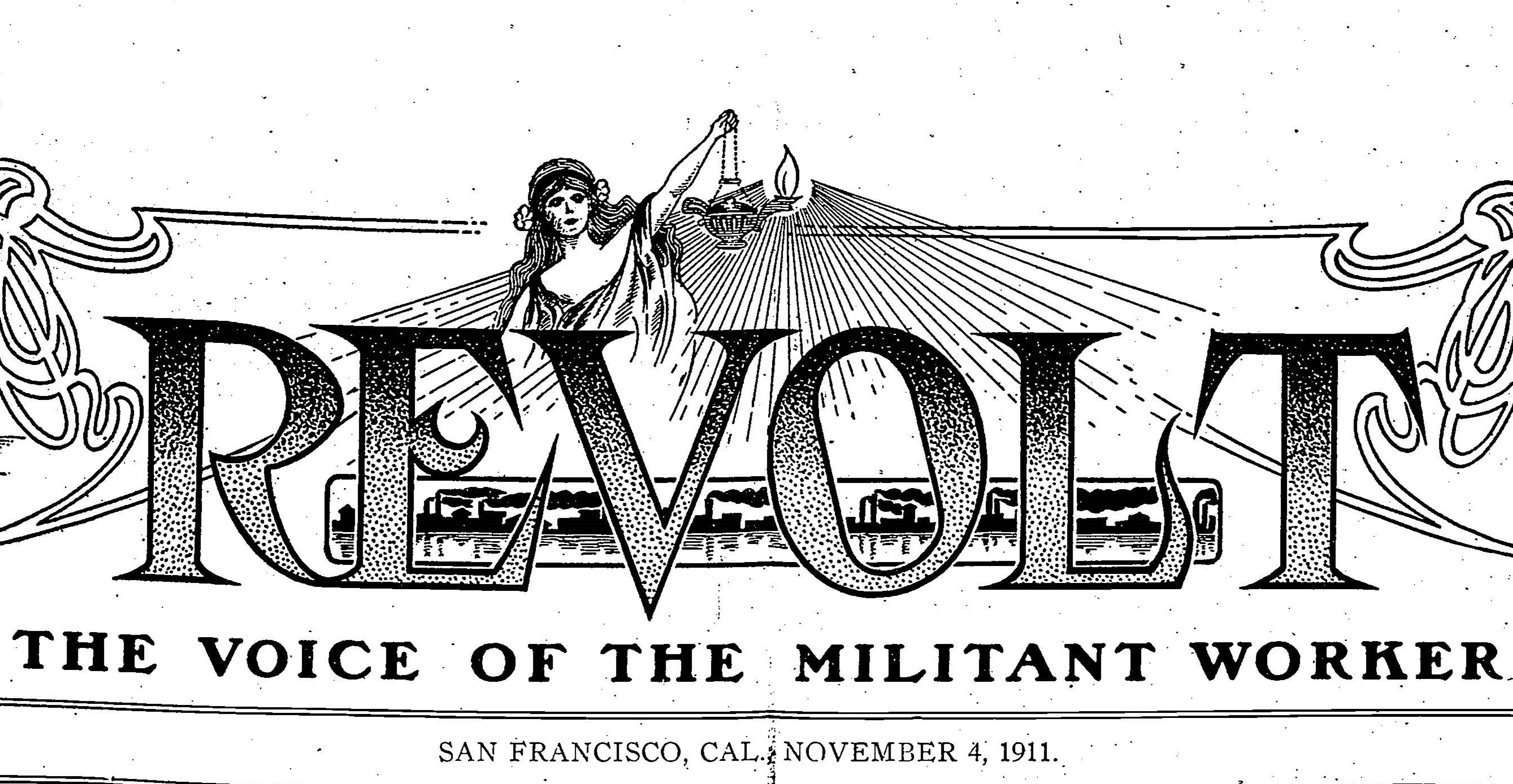
‘Death Claims a Stalwart Revolter’ by Austin Lewis from Revolt (San Francisco). Vol. 2 No. 19. November 4, 1911.
The death of Leslie Brown removes one of the straightest and most stalwart fighters in the movement on the Pacific Coast. To his influence the wide-spread sorrow not only among the revolutionary element, but among others not generally in sympathy with the movement, abundantly testifies. One of the prominent politicians in town, a man who is bitterly opposed to the Socialist movement, remarked to the writer, “I am sorry that Brown is dead. I did not agree with him, but he was a man.”
That is the keynote to Brown’s life. He was a man in the full sense of the word. He had a man’s weakness, and a man’s strength. His very follies were essentially manly follies, his virtues were transcendentally manly.
His magnificent physique; he was a bigger man than Haywood, impressed all. He was strong, and had a justified pride in the beauty and strength which had been his as a youth. His temper was the proverbially amiable temper of the giant. Only once in my knowledge did he ever strike a blow in anger, and that was under the severest provocation. That one blow, however, disposed of the offender who was taken away in an ambulance.
Night after night he spoke on the streets of Oakland and San Francisco for years. It is very doubtful if Socialist theory was ever better expressed in popular terms than by Brown. It is certain at all events that no other man in the. country, perhaps in the world, has delivered a series of such brilliant street speeches as he poured out for the Oakland proletariat. This must not be understood as the exaggerated praise with which we are wont to decorate the corpses of our departed. Leslie Brown indeed was exceptionally gifted. He had a beautiful voice, his knowledge of classical literature was unusually wide; he could quote the masters aptly and effectively and he had a fund of good humored raillery and catching human wit.
He was never bitter, never cynical, but frequently sad.
Like many huge men he had a gentle and tender heart. He was easily wounded, and exceedingly sensitive, so that the not ill meant roughnesses of those for whom he fought frequently hurt him. As I knew him and had his confidence his essential sweetness and delicacy of feeling seem to have been his most striking qualities, those and his broad Falstaffian humor, his strength, power and virility.
As a Socialist he belonged to the “impossibilist wing.” He was a strong industrial unionist and of late ceased to have any great sympathy with the political “cow traders” of the movement. A modest fighter in the ranks, he asked nothing for himself save the opportunity to serve.
Recognition of his effectiveness appeared in the sorrowing crowd of comrades who met on Sunday afternoon to bid all that remained of him farewell, and to pledge anew their fealty to the cause, for which he fought, and for which he might be said to have died.
Revolt ‘The Voice Of The Militant Worker’ was a short-lived revolutionary weekly newspaper published by Left Wingers in the Socialist Party in 1911 and 1912 and closely associated with Tom Mooney. The legendary activists and political prisoner Thomas J. Mooney had recently left the I.W.W. and settled in the Bay. He would join with the SP Left in the Bay Area, like Austin Lewis, William McDevitt, Nathan Greist, and Cloudseley Johns to produce The Revolt. The paper ran around 1500 copies weekly, but financial problems ended its run after one year. Mooney was also embroiled in constant legal battles for his role in the Pacific Gas and Electric Strike of the time. The paper epitomizes the revolutionary Left of the SP before World War One with its mix of Marxist orthodoxy, industrial unionism, and counter-cultural attitude. To that it adds some of the best writers in the movement; it deserved a much longer run.
PDF of full issue: https://www.marxists.org/history/usa/pubs/revolt/v2n19-w28-nov-04-1911-Revolt.pdf
 Revolution's Newsstand