And the question is posed even more starkly today.
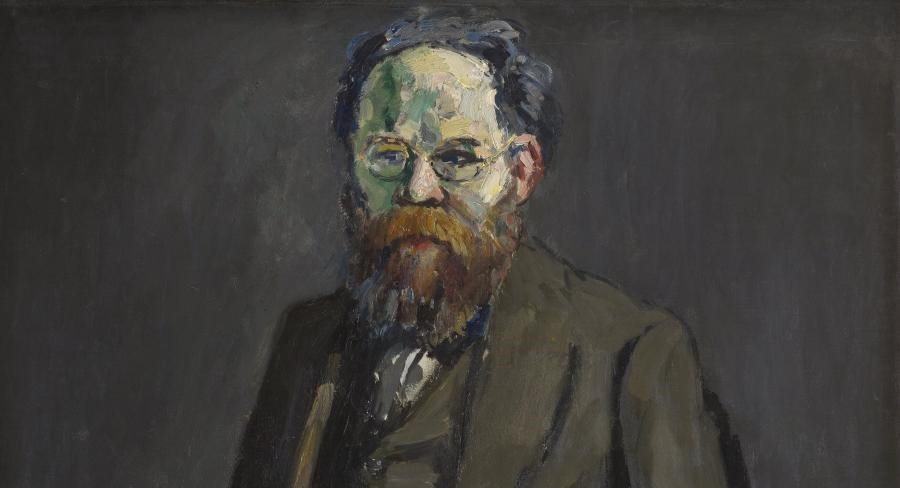
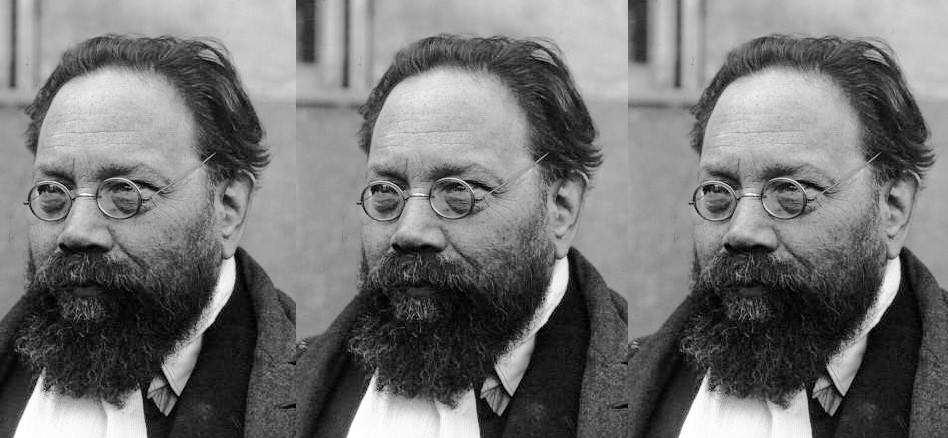
‘Revolution or War?’ by Charles Rappoport from the Daily Worker. Vol. 2 No. 29. April 19, 1924.
The biggest argument in favor of the fundamental Communist demand -the political and economic expropriation of the capitalist class lies in the fact which dominates the present situation and which consists in the expropriation of the nation by the capitalist class (confiscation of communal property, exploitation of labor-power, the depreciation of currency, taxation.) All those who have no class interest to blind their eyes and to stop their ears should be struck by this fact, which turns the entire social economy topsy-turvy. This fact is not of a theoretical order. It touches the most sensitive spot: the purse of everyone. By the high cost of living, it invades each household, however modest it may be. It colors the setting of everyday life. Capitalism Crumbling.

Every man who thinks, above all every worker, every peasant, every employe, is obliged, in fact of this fundamental fact, to reflect as follows: Either capitalism, in continuing its thievery will force me to the wall, expropriating me every day more and more of the product of my labor, or of my small savings, or I will forestall it by depriving it of the power to injure men, expropriating it for the benefit of all. Either capitalism will “get” me, or I will seize capitalism by the throat. There is no other outcome possible.
This being granted, the question of method inevitably comes up. Yes, we are told, you are right. Capitalist society has become bankrupt. It steals, it murders. It steals to murder and it murders to steal. From a producer it has become a destroyer. Yesterday an economic and social shelter, today it threatens to tumble about our ears and to bury us beneath its ruins. But how are we to over- turn it? By revolution? By another blood-letting?
Is Blood-Letting Revolution?
Now, this reasoning is artificial- contrary to the facts. Revolution is not necessarily a blood-letting. The greatest revolution of all times-that of November 7, 1917-did not cost more than a few dozens of victims. This is not too much for a social revolution which has overturned one-sixth of the globe. I am speaking of the triumphant assault upon the Winter Palace by my friend Antonoff Ovseeko, who, during the war, conducted at Paris with Trotzky, Lozowsky, Vladimiroff and your humble servant the newspaper called “Nashe Slavo” (Our Word.)
It was after the seizure of the seat of the Kerensky government that the power of the Soviets was proclaimed, to the applause of the immense majority of the population of the vast Russian empire.
How are we to explain this thundering victory, which, without the armed intervention of the governmental and capitalistic canaille of the entire world, would have been the least bloody in all history? The army, the expression of the people, was on the side of the revolution. The armed hand of the masses was put to the service of the revolution. was thus that all the revolutions of history triumphed. It was the united front, the bloc of workers and peasants, which overturned everything at once, Czarism and capitalism. Therefore, the problem is to win over the masses of the people- the rest comes as a natural consequence if one knows how to maneuver- and the revolution is accomplished without, or almost without, the spilling of blood.
But, even admitting that the aroused resistance of the fortunate masters brings about a bloody conflict, it is, under the present circumstances, a saving of blood, of violence and of sufferings. For it is beyond doubt that capitalist society, if it maintains itself, is heading toward a new world war. Moreover, it is already known what will be the nature of the war which will come. Some days ago, M. Herbette took notice in his “Bulletin du Temps”- “capitalism made into a newspaper”- of the construction, in Wilson’s America, of giant aeroplanes which, in one week’s time, could wipe out cities like Paris with its four million inhabitants. Mr. Lloyd George, the ally of the pacifist Ramsay MacDonald, builder of cruisers and airplanes, truly said that the next war will be a war of extermination and of obliteration of all the civilian population: men, women, children, old and young, well and sick.
When he finds himself facing a fact as formidable as this, every man of good sense ought to say to himself: before capitalist society causes the whole of humanity to vanish, I will do all in my power to cause capitalist society, the murderer of the world, to disappear.
The Saturday Supplement, later changed to a Sunday Supplement, of the Daily Worker was a place for longer articles with debate, international focus, literature, and documents presented. The Daily Worker began in 1924 and was published in New York City by the Communist Party US and its predecessor organizations. Among the most long-lasting and important left publications in US history, it had a circulation of 35,000 at its peak. The Daily Worker came from The Ohio Socialist, published by the Left Wing-dominated Socialist Party of Ohio in Cleveland from 1917 to November 1919, when it became became The Toiler, paper of the Communist Labor Party. In December 1921 the above-ground Workers Party of America merged the Toiler with the paper Workers Council to found The Worker, which became The Daily Worker beginning January 13, 1924.
PDF of full issue: https://www.marxists.org/history/usa/pubs/dailyworker/1924/v02a-n029-supplement-apr-19-1924-DW-LOC.pdf
 Revolution's Newsstand