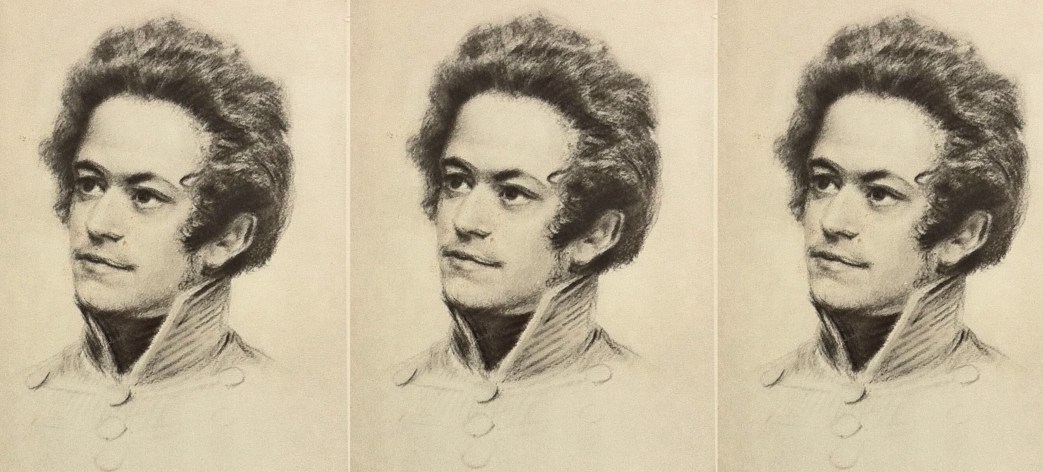
Marx’s youthful concept of alienated labor was virtually unknown by Marxists until the rediscovery and publication of his ‘Economic and Philosophic Manuscripts of 1844‘ in the 1930s. One of the most important essays in first integrating those ideas into the larger understanding of Marx was this by Max Braunschweig for Partisan Review.
‘The Philosophic Thought of the Young Marx’ by Max Braunschweig from Partisan Review. Vol. 3 No. 6. October, 1936.
It is not merely as an introduction to Marx’s major work that the works of his youth are important. There is no doubt that a deep comprehension of Capital is impossible without discovering through the earlier works the road traversed by Marx in his manner of conceiving the social problem, the evolution of his terminology, and the development of his polemics. But the youthful works have an import which surpasses by far their value as preliminary studies: they mark the passage between the old philosophy and the new, they assign to Marxism its position in the history of ideas. Nowhere is seen. more clearly that Marxism was not an “invention,” but rather an organic and historically necessary development of European culture. Marx rests upon the great thinkers of the preceding epoch, and was but the continuator-a masterful continuator, moreover of their work. It is very important to raise this point again. To consider Marxism as a specifically economic doctrine is to narrow it down and to falsify it. It is more than that: a method of thinking, a new aspect of culture in the largest sense, even if its practical consequences do make themselves felt primarily in the economic realm. The tangible proof of this extended meaning of Marxism is to be found precisely in the work of the young Marx. And the manuscripts of the year 1844, recently discovered, show perhaps most appropriately all the fullness of Marx’s thinking.
Let us try to set in relief the principal ideas expressed in these Manuscripts,
The center of young Marx’s reflections was neither economy nor social morality, but man: more precisely, his unnatural situation in actual society. Basically, it is the philosophic problem of the 18th century, and Marx can indeed be considered as the great continuator of French philosophy. But while the latter could only seek to resolve problems with the insufficient means of an idealistic philosophy, Marx, scarcely a century later, could find the solution, thanks to the powerful instrument of materialist dialectic.
Two great currents transmitted to Marx the impulsion given to thought by the 18th century philosophers: that of the French socialist writers of the 19th century (Saint-Simon, Fourier, and above all Sismondi), and that of the German philosophers of the 19th century (Hegel, Feuerbach). In uniting these two powerful currents, Marx summed up in himself a whole century of thought, at the same time that he represented the dawn of a new philosophic epoch.
It is man, then, who is at the foundation of Marx’s considerations; and to be more precise: man “alienated from himself.” This “alienation” (the term is acquired from Hegel and Feuerbach) is, according to Marx, one of the pillars of actual bourgeois society, the center, consequently, from which all his reflections will radiate. The man who works is a stranger to his labor; he performs it only with disgust; likewise, he is a stranger to the product of his toil, since this product belongs to another. And to this other also, to the owner, this product represents an indifferent thing, a commodity, that is, something which has value only because it can be exchanged for money. But the worker who feels his labor and the product of his labor to be something foreign to him, becomes also a stranger to himself. For work, that is to say, the productive transformation of the world, is part of the very essence of man. If man is prevented from working in a natural way, that is, from living naturally, he “alienates himself from himself,” which means that he is no longer a man in the full sense of the word. His existence becomes to a certain extent animal, for he works only in obedience to constraint, to misery.
In affirming this alienation, in laying bare its terrible consequences, Marx arrived naturally at a second point: What is the relation of man to his work under natural conditions, non-capitalist conditions? It is extremely interesting to observe the attitude assumed by Marx towards the problem of work which has confronted the ethic of peoples for thousands of years. Work is for Marx “vital activity, productive life itself.” This is true, of course, only of free and conscious labor, not of the forced and alienated labor of capitalist society. This free labor is for Marx the true form of human existence. The human factor of work consists in the fact that through work man transforms nature, transforms it for himself, that is, makes the world into his own world. In the beginning, the world is composed only of dead and indifferent things: man makes of it, through his labor, his world, his reality. Thus nature is found to be integrated in human life. Being the object upon which man accomplishes his work, it becomes part of his being. “Nature is the inorganic body of man,” as Marx boldly put it. From dead stone, Michelangelo fashions with his chisel an expression of his being. In the same way, by means of all labor, nature becomes part of man, as man becomes part of nature. Each product of free labor incarnates the personality of man. And therefore, this work is a joy, since it is the expression of life. We all recognize it in the exceptional case of the artist, that is, the creative transformation of nature is, according to Marx, the attribute of every man who works, providing he has broken loose from the fetters of “alienation.”
Further: since I do not produce for myself alone, but also for others (who need my product as I need theirs), work is also the true form of social activity; it is the intermediary between one man and another. It is through work that man comes to the realization that he is not isolated, that he is a social being. In each product he receives from another, he receives also part of the personality of the other. This idea is expressed in a very happy terminology in the “Remarks on James Mill”: “Our productions are so many mirrors in which our being is reflected.” This is, then, the Marxist conception of work: a tremendous enlarging of the human personality. The concepts “to work” and “to be a man” recover their meaning.
It is only when one has allowed himself to become impregnated with these images of free labor and the “natural man” that one can measure exactly to what a level the wage-slave of bourgeois society has been dragged down, and what a perverse reversal of natural values the world of “alienated labor” proffers us. It is, in the true sense of the word, an inhuman existence that the worker leads under capitalism.
Under what concrete form does this alienation manifest itself in bourgeois society? Marx responds: “Under the form of private property”: thus precisely designating at the first stroke the practical arena of the class struggle. Private property: here is the form of production and consumption which determines everything. Private property is the negation of the human personality. It is the cause of the alienation. The task which will, consequently, be imposed upon Marx is to undertake a rigorous analysis of private property. This analysis must reveal the laws which regulate it, and must deduce from them the destructive forces which develop within its own being and are prepared to negate the negation, that is, to destroy the capitalist system. It is known that Marx attacked this problem in a special work, Capital, which has become his major work by its content and the time he devoted to it. But the meaning of Capital within the context of Marx’s work will not be understood unless one is aware of the road which led him to pose the problem, the road which I have briefly sketched above.
Evidently, Marx did not wait until the writing of Capital in order to discover and indicate the road of liberation. Already in the Holy Family, almost contemporary with the Manuscripts, he expresses it clearly: “It is the proletariat who will execute the death-sentence which private property has suspend- ed over itself in creating the proletariat.”
The only road is, then, the proletarian revolution. Restored to its place within the context of Marxist thought, this concept acquires a larger meaning that is ordinarily attributed to it. It is not merely a matter of political revolution: it is a question of a total revolution. Suppressing private property, it will suppress the alienation of work and restore to man his true personality. This victorious proletarian revolution will cut in half the history of humanity. It will change the relations between man and the world. What was before private property will become property which is “truly human and social.” And it is only when man is freed of alienation and capitalist servitude that he will be capable of unfolding his truly human qualities.
In the course of these reflections, Marx outlines an anthropology of vast scope. He presents a picture of man and of socialist society which, despite its fragmentary character, is of the highest importance because it represents the original stage of the Marxist conception of culture. Marx thus defines the complete man: he is the man who in his relations with the world is capable of developing all his senses. Marx understands by this term not merely the five senses, but all the faculties which man manifests in his relations with beings or with the inanimate world. In this connection, thought, will, activity, love are senses. In the condition of alienation in which capitalist society has placed him, man is unable to unfurl all the richness of his senses. The only relation which he has with the external world is the relation of possession or of the desire for possession.
“Private property,” says Marx, “has made us so stupid and so limited that an object does not become ours unless we own it.”
In contrast, the relations between socialist man and the external world are infinitely richer and more diverse, for he can be united to it through all of his senses. He “appropriates his multiple existence in a multiple manner, that is, like a complete man.’ Among the relations between man and the world, the relation of ownership occupies a very secondary position. It is replaced by the free activity of all human forms, that is, by the senses. This activity is realized by free labor in all its forms. It is in this sense that Marx still speaks of richness, richness of the socialist individual and of socialist society. The more various the relations of man with his kind and with the material world, the richer he is. The new society produces, to return to Marx’s words, “as a continual reality, man in all the richness of his being, the complete man, perfectly realizing all his senses.”
Marx presents us here with a succinct outline, but of masterful conception, of communist culture. He depicts, if you will, the socialist “ideal.” But it must be observed, and it is necessary to particularly emphasize this point in view of the many false idealistic interpretations of Marx, that even in this realm, where it is not a matter of economic aspects, Marx remains a pure dialectical materialist. He does not project abstract virtues into the new man, but permits him to develop the qualities which he has received from nature, that is to say, his senses. Historical progress consists in the fact that man can now be a natural man, not in the development of a superior “ethic.” What idealism calls an ethic cannot constitute a problem of Marxist philosophy, since the “ethical” attitude towards others flows naturally from socialism and has no need of any norm.
The method here followed by Marx, particularly in the matter of anthropology, can serve as a model for a purely materialistic method of treating extra- economic problems, the problems of the super-structure. It can, let it be said in passing, serve as an example for many good Marxists, who are prevented by a holy respect from touching cultural questions for fear of falling into idealism.
But the image of socialist man supplied by Marx has still another importance. In all pre-Marxist philosophy, the ideal type of man was the contemplative man. Neither the middle ages nor the modern epoch was able to detach itself entirely from the ideal of the Stoa. Even Goethe, whose death (1832) took place but twelve years before the composition of the Manuscripts, had incarnated in his personality the contemplative sage; his human ideal was essentially of an “ethical” nature, in the true sense of the word: a receptive “perception” of the universe. To this Marx opposed his new type of man. Man is man through his work. To be a man means to work, and to work means to transform nature in the image of man, to make nature human at the same time that it makes man natural. Man is no longer static, but dynamic. He is no longer defined by his qualities, but by his activity. This is a tremendous revolution in the history of philosophy. Thanks to Marx, work- meaning free and conscious work- is for the first time placed upon the throne of history. A revolutionary principle even had Marx himself failed to draw the political implications. For man, visualized as an active being transforming the world, ought necessarily to transform also the social world.
Such are, briefly outlined, some of the principal problems dealt with in the Manuscripts. It is possible to see here how large is the base upon which Marxism is founded and how limited it would be to see in it nothing but a purely economic doctrine. Marxism can rightfully claim to be called an integral philosophy: not only does it point out the practical road of social liberation, it also recreates man and his image of the world. Marx often termed his doctrine “realistic humanism.” Man and his liberation constitute the center to which his thought during his entire life ever returned. The Cyclopean labor of Capital, the doctrine of revolution and proletarian dictatorship, all these were intended to forge the weapons of steel with which the worker would free himself from the trap of capitalism in order to achieve at last, after centuries of alienation, his true human dignity. Regarded from this height, does not the bourgeois prejudice which considers materialistic thinking to be a degradation of man seem the most paradoxical of stupidities? Never did religion “sanctify” man and his work as much as atheistic Marxism.
If now, having considered the writings of the young Marx in relation to the philosophy of the preceding epoch, we compare them to his future work we can see that they are but the primitive stage of the latter. No doubt, many of the con- sequences of his thinking are only contained in the later works; many essential assertions concerning the laws of capitalist production can be found only in Capital. But there is, in return, within the work of his youth a broadness of thought, an abundance of original intuitions whose richness is far from having been exploited. The young Marx appears there as the heir of all the culture of his time. He is like a focal point where all the luminous rays of European philosophy are concentrated. And the vigor of his thought has succeeded in drawing into organic unity these heterogeneous and often contradictory elements. Formally, the work of the young Marx is uneven, dislocated, fragmentary (this is the reason, no doubt, why it has been held in such low esteem). But it contains already all the essential elements of his doctrine. They are to be found there, so to speak, still in the state of an incandescent liquid mass, like the flow issuing from a blast furnace, filled with many impurities but also with many rich materials which Marx will use later on in forging the powerful iron rails of Capital. The task he undertook in Capital needed specialization. Many problems of his youth were put aside or at least put off for later periods of leisure which never came. We know from the conversations of Marx himself how much he felt weighed down by his purely economic studies; he dreamed of devoting himself to philosophy once more after the completion of Capital. The gigantic monument which this work became caused this other project to run aground. Thus we are reduced to the philosophic essays of Marx’s youth. But the more we explore the depths of the world of ideas which they reveal, the more surely they retain their integrated value at the side of the later works.
For us especially, they bear a markedly real character. With the advent of a socialist society in the USSR, many of the problems of Marxist culture have passed from the realm of theory to that of practice. The relations between man and work, the multiplicity of the human personality: these are questions of burning reality for the Soviet younger generation. With the absolutely new forms of work which are being born in the USSR, the thoughts of Marx which we have outlined take on the value of prophetic predictions. Socialist emulation, the shock brigades, testify to the fact that in the Soviet Union work has become free and conscious. And at the same time, the world which the Soviet working class is building, its factories, its new cities, its central electric plants, its gigantic agricultural communities -this world has become for the workers a part of their social being; they are joined to it much more closely than the Occidental worker is to his world. Here, nature begins to be, according to Marx’s definition, an extension of the human body. Thus the beginnings of socialist construction confirm already the profound historic reality of what Marx conceived a century earlier.
Let us indicate another remarkable coincidence. In considering the work of the young Marx as a prolongation of the philosophy of his predecessors, it is possible to trace the curve of modern philosophic thought. This thought, freed from the servitude to the Church which characterized it during the entire middle ages, rises in a slowly ascending line, struggling obstinately, until the work of Kant and the German philosophers of the 18th century. Hegel’s powerful thinking takes over the results of his predecessors. But he reflects at the same time the decay of bourgeois capitalist society which he represents: prolonging vertically the line of philosophic thought he loses himself in the clouds of mysticism. He stiffens in a posture of sterile reaction. This pause in his rise is not an accident; it corresponds to the limits of the society which sustains him. Marx picks up the line of his thought; he inflects it sharply and brings it down to the ground: out of mystical idealism emerges revolutionary materialism. Like the giant Anteus who from contact with the sun draws constantly new strength, theory becomes, at the moment when Marx places it in contact with social reality, a force capable of laying hold of the masses.
Now, this curve repeats itself upon the economic and political plane, but with a chronological difference of about 65 years.
Capitalism expands to its full power two generations after it has been bored through and surpassed by Marxist theory. The curve mounts continually and at an ever increasing tempo; it reaches its height in the years before the war. The world war and the Bolshevik revolution violently break its flight. Capitalism enters the stage of decomposition.
To use a metaphor borrowed from music, we can say that the two curves form together the pattern of a fugue: the theory is the first voice, and designs, two generations in advance, the figure which will be repeated later by the second voice-practical experience. And it is no accident that the writings of the young Marx take on such an actual meaning for us: they stand at the breaking-point of theoretical development, just as we stand ourselves, in the realm of concrete experience, at the breaking-point of capitalist development.
Partisan Review began in New York City in 1934 as a ‘Bi-Monthly of Revolutionary Literature’ by the CP-sponsored John Reed Club of New York. Published and edited by Philip Rahv and William Phillips, in some ways PR was seen as an auxiliary and refutation of The New Masses. Focused on fiction and Marxist artistic and literary discussion, at the beginning Partisan Review attracted writers outside of the Communist Party, and its seeming independence brought into conflict with Party stalwarts like Mike Gold and Granville Hicks. In 1936 as part of its Popular Front, the Communist Party wound down the John Reed Clubs and launched the League of American Writers. The editors of PR editors Phillips and Rahv were unconvinced by the change, and the Party suspended publication from October 1936 until it was relaunched in December 1937. Soon, a new cast of editors and writers, including Dwight Macdonald and F. W. Dupee, James Burnham and Sidney Hook brought PR out of the Communist Party orbit entirely, while still maintaining a radical orientation, leading the CP to complain bitterly that their paper had been ‘stolen’ by ‘Trotskyites.’ By the end of the 1930s, with the Nazi-Soviet Pact of 1939, the magazine, including old editors Rahv and Phillips, increasingly moved to an anti-Communist position. Anti-Communism becoming its main preoccupation after the war as it continued to move to the right until it became an asset of the CIA’s in the 1950s.
 Revolution's Newsstand