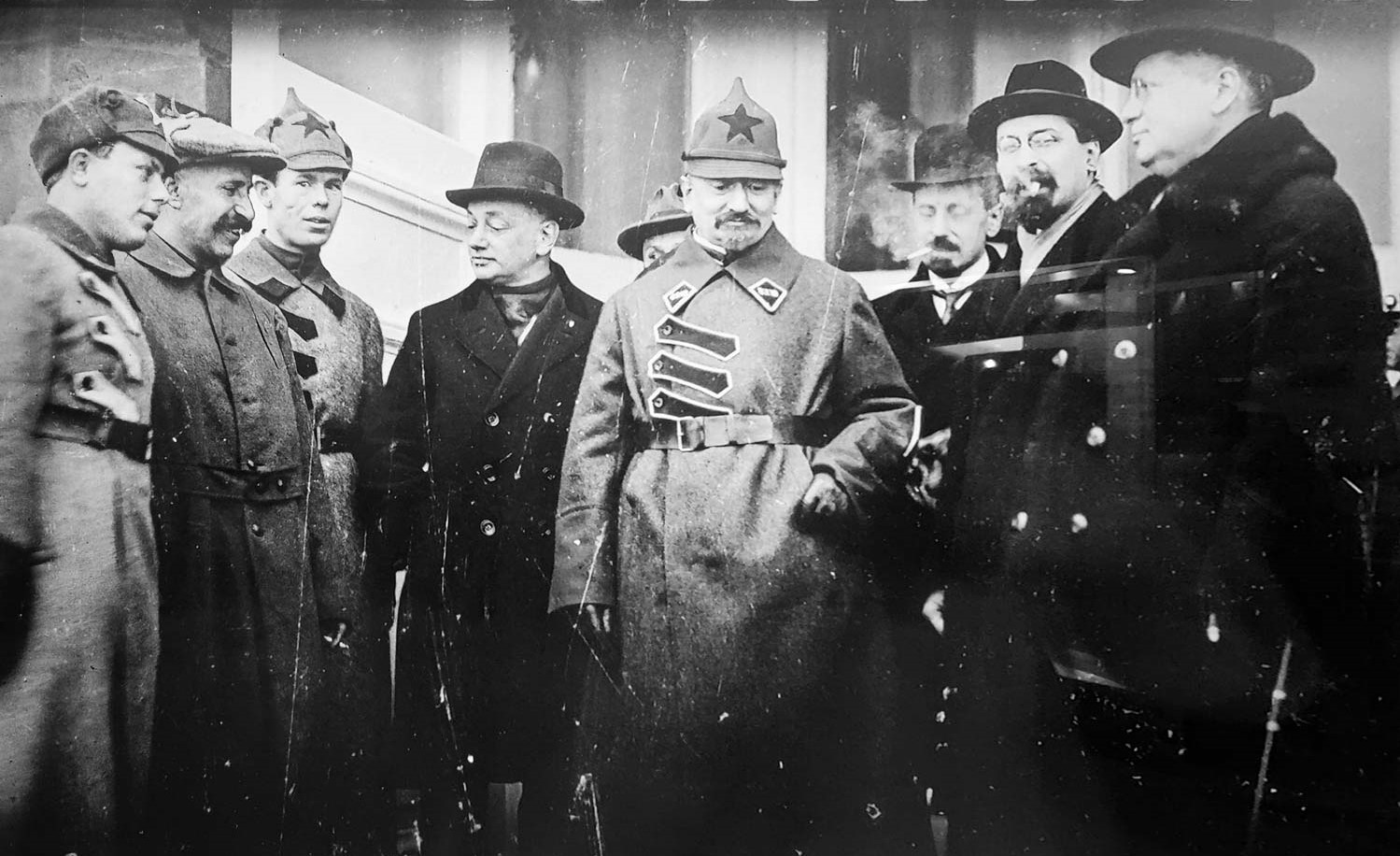
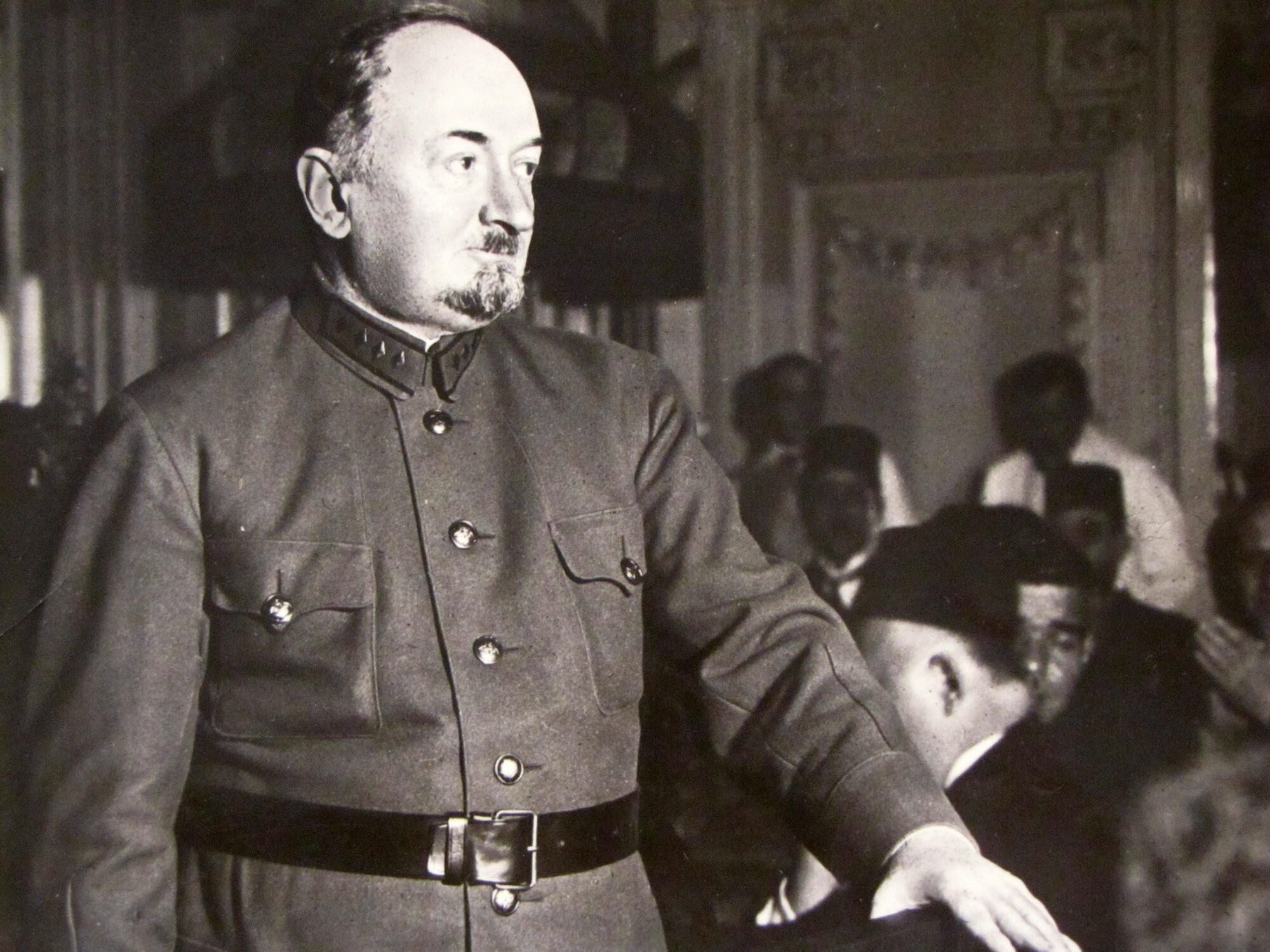
The enigmatic and irreplaceable Commissar of Foreign Affairs, Georgy Chicherin, on the essential role of a strong Red Army in Soviet diplomacy.
‘The Red Army and Foreign Policy’ by Georgy Chicherin from The Communist (‘Old’ Communist Party of America). Vol. 1 No. 6. November 8, 1919.
OUR brave revolutionary Red Army is such a mighty factor in the foreign policy of Soviet Russia that the most resounding epithets for its praise cannot be considered exaggerations. It is needless to prove the simple truth that no matter what is the foreign policy, it cannot be successful unless it can depend upon real might. Those of us who watch our foreign policy closely may each day notice the degree of real influence which the strength of our Red Army has upon our international relations. Every military success immediately influences our foreign standing, just as the defeats, for instance the loss of Perm and Esthonia, immediately are harmful to our diplomatic relations. We may say with certainty that the intervention of the Allied powers would not have taken place if in the Spring of last year we had such a strong and well-organized Red Army as we have now; if the Allied powers had not considered Russia easy bait, which would not cost them much effort to conquer.
As is known, the Czecho-Slovak revolt acted as the indirect excuse for the intervention of the Allied powers. It gave a ready dependent wall in one of the most tender parts of the Russian territory, on the railroad artery which connects European Russia with Siberia. The uprising of the Czecho-Slovaks was itself possible only be cause at that time Soviet Russia was absolutely disarmed and the Czecho-Slovaks had the opportunity to take all those important strategic points and railroad intersections. These were taken without much trouble and thus they stationed themselves near the border of European Russia and Siberia.
All of us who have taken account of our foreign policy after the Brest period remember the hardships we were forced to undergo, when month after month the life of the Soviet Russia hung on a hair, when our safety and independence hinged upon the good will or caprice of the German victor, upon the calculations of German capitalists who would rather cheat us in a peaceful manner than at the cost of a war of ruin, upon the desire of the German militarists not to divide their forces and not to take upon themselves the responsibility for all the complexities to which the occupation of vast foreign lands would lead. We all felt every moment that the wall which separated us from foreign occupation and incalculable misery for the people, with crushing blows to the Russian revolution, was very thin and weak. We recall those dangers as they were called forth by all sorts of new moves of the German armies within the bounds allowed, by literal understanding of the Brest treaty, to the German occupation.
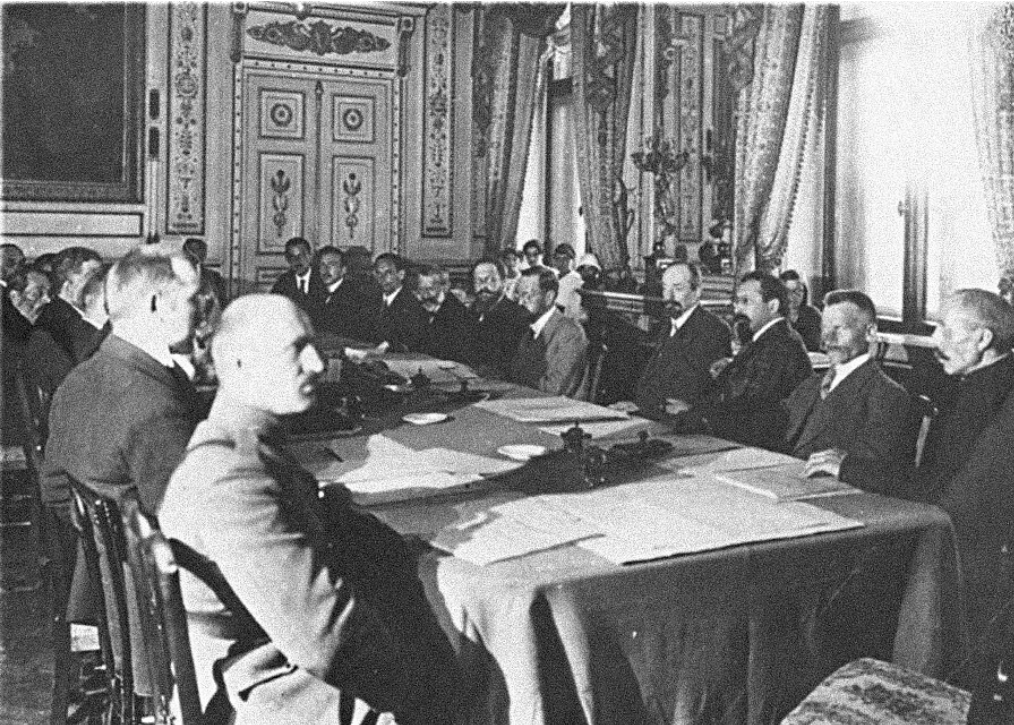
We experienced and felt then what the sword hanging over the head of Damocles really means. But out of these hardships Soviet Russia came forth with the mighty arms of youthful strength and hope- and with the ventures of the Red Army. The organization of the Red Army had a great indirect influence upon the minds of Western Europe, making them respect not only the strength of Soviet Russia but the Soviet power itself, which was capable so quickly notwithstanding all sorts of hardships, to organize a strong and well-disciplined new army. The representatives of the German official circles admitted to us that the organization of our army was to them an amazing surprise, revealing to them the moral strength of the Bolsheviki. It had a great propaganda significance; it proved to the entire world the seriousness, depth and internal might of the people’s revolutionary Russia and the outlook for the future development of the worker-peasant Soviet regime. Facts are more salient than words and the existence and heroic deeds of the Red Army were mightier propagandist factors than the countless leaflets and brochures. The pathos of its organization in the midst of untold hardships, of the new-born regime fighting against countless foes supplied with the latest instruments of military technic and with full equipment of first class armed power, deeply impressed millions of the onlookers of the entire world as something coming out of the Russian revolutionary hearth.
Our good Red Army, heroically battling against pillagers making an effort to crush the liberty of the working masses deeply stirred the imagination of the laboring masses of all lands. They began to take joy. in it and to learn to love it as the vanguard leading them in their fight for power, fighting for them. The fight which we have to wage against the entire ideology of the old bourgeois, militarism and patriotism, which mark the strengthening of the power of the ruling classes over the peoples, is made most effectively through the pathos of the workers revolution fighting for its own salvation. It is made in the psychology of the Red Revolutionary Army, the power upon which the worker-peasant revolution in Russia depends to ward off the attacks of world counter- revolution from all sides.
Being the uncompromising foe of militarism to the end, we distinguish ourselves from the bourgeois pacifists, such as the English Quakers, in that we wish to put the bourgeois army out of existence, as the enemy to the working class, and to put in its place a workers’ revolutionary army.
Looking over foreign newspapers we see that Soviet Russia is a great power in the world arena, occupying the minds and awakening the wonder and hopes of one side and the unbounded hatred of the other. And in the first place, in the centre of the historic process which Soviet Russia chose, are to be found those who lead the struggle for the historic fortunes of Russia with their heroic deeds and death on the field of battle, those whose courage and revolutionary ardor lights up one country after another with the foreign policy, i.e., in the historic effort of fire of revolutionary enthusiasm. In our Soviet Russia in world events, one of the most powerful elements of her historic activity is the glory and pride of Soviet Russia, our young, heroic Red Army.
Emulating the Bolsheviks who changed the name of their party in 1918 to the Communist Party, there were up to a dozen papers in the US named ‘The Communist’ in the splintered landscape of the US Left as it responded to World War One and the Russian Revolution. This ‘The Communist’ began in September 1919 combining Louis Fraina’s New York-based ‘Revolutionary Age’ with the Detroit-Chicago based ‘The Communist’ edited by future Proletarian Party leader Dennis Batt. The new ‘The Communist’ became the official organ of the first Communist Party of America with Louis Fraina placed as editor. The publication was forced underground in the post-War reaction and its editorial offices moved from Chicago to New York City. In May, 1920 CE Ruthenberg became editor before splitting briefly to edit his own ‘The Communist’. This ‘The Communist’ ended in the spring of 1921 at the time of the formation of a new unified CPA and a new ‘The Communist’, again with Ruthenberg as editor.
PDF of full issue: https://www.marxists.org/history/usa/pubs/thecommunist/thecommunist3/v1n06-nov-08-1919.pdf
 Revolution's Newsstand