‘Engineering Workers Under Capitalism’ by J.I. Obsky from The Daily Worker Saturday Supplement. Vol. 2 No. 144. September 6, 1924.
AMONG the skilled workers the Engineering workers (draftsmen, designers, inspectors, supervisors, engineers, architects, chemists, etc.) occupy the most important strategic positions in the class-divisions in all capitalist countries, and most especially in America. They supply the paid brain workers, the producers of intellectual commodities, who are in no small part responsible for the great and rapid expansion of the bourgeois technique and with it- bourgeois influence. It must be remembered that it is not the fancy of a few brainy super-engineers, but the great mass of pen and pencil pushers who are collectively responsible for the rapid growth of engineering achievements under capitalism (it is well known in the profession that bourgeois favorites for “Great Engineers” seldom if ever have real greatness in them.)
The engineering work, exactly the same as that of any other sphere, is subdivided into a great number of specialized branches. The only difference between engineering and other branches of work is that the elementary tasks of an operator in the tailor shop, a ledger clerk in a large office, for instance, are so simple that they require little preliminary preparation, while the most of engineering tasks, no matter how simple, require theoretical preparation of one sort or another.
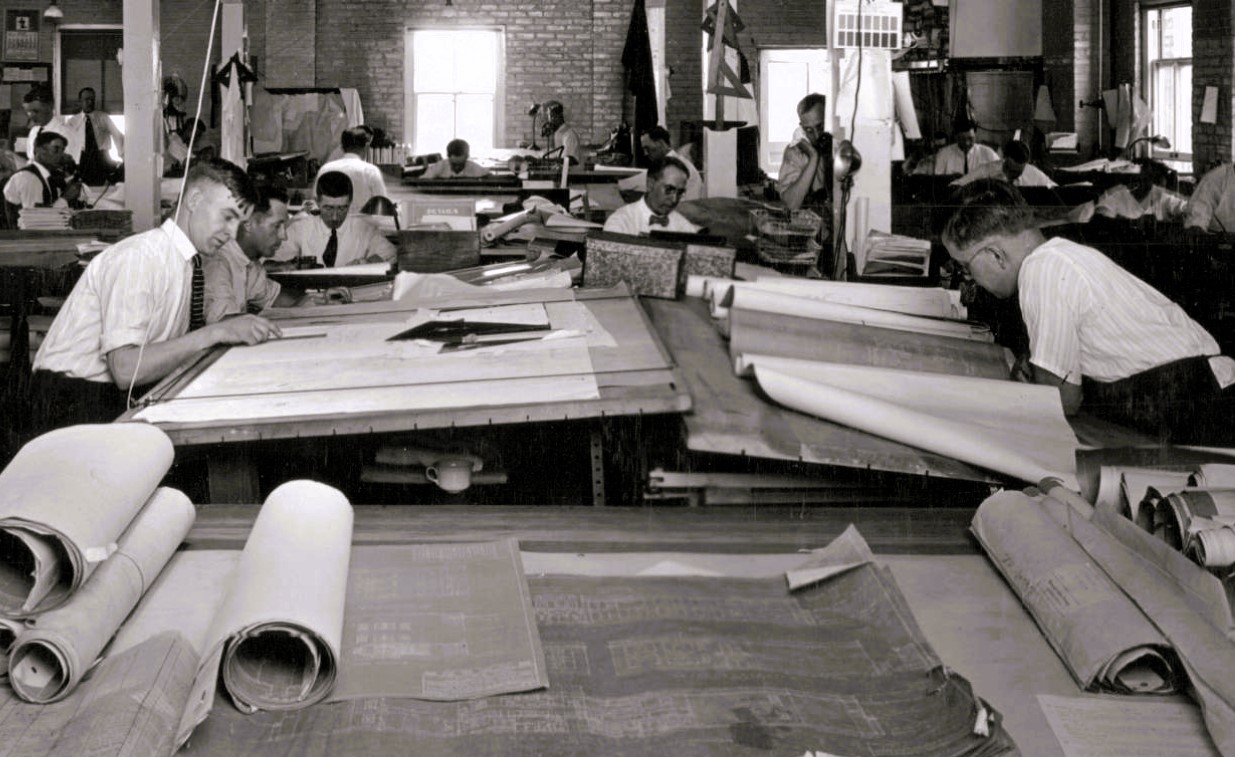
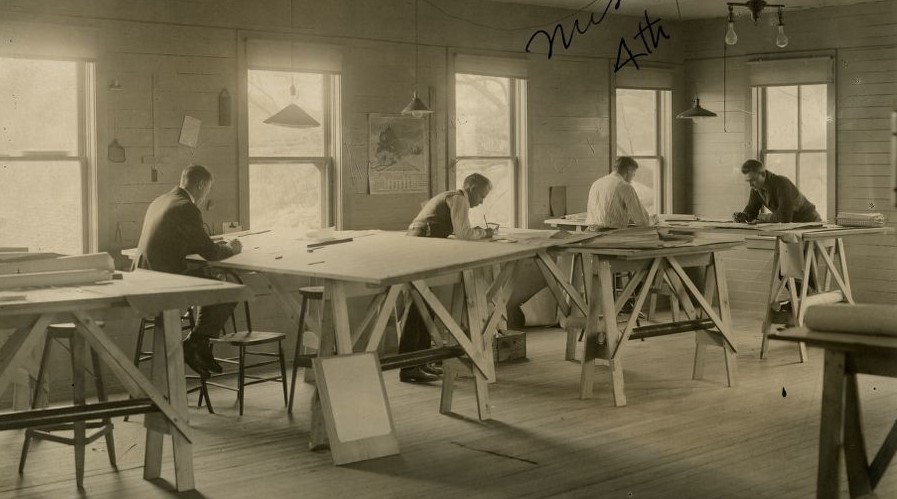
The great mass of engineering workers bent over tens of thousands of drawing boards in engineering offices, or concentrating their energies on various problems have long ago been brought down to the level of wage-earners in every respect. The average wage, called salary- to add weight to it, is no greater than that of a skilled laborer and indeed less than that of the most well organized laborers who never gave a whoop about technical training.
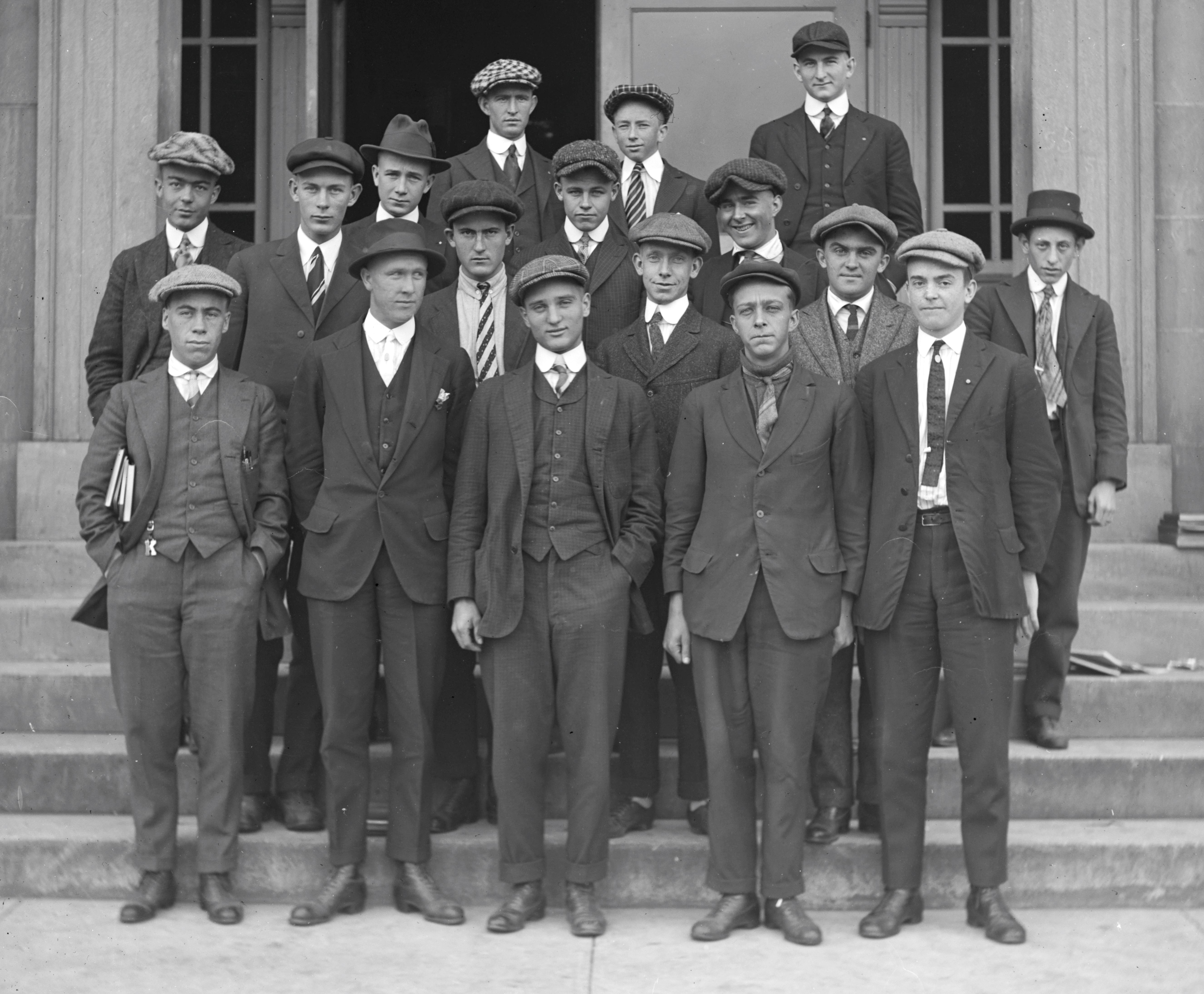
The technical worker is, on par with the unorganized unskilled laborer, entirely at the mercy of the will of the bosses. He is in every way fully dependent on the boss and in the case of the corporation on the long chain of cunning, treacherous and for most part stupid bosses. He is surrounded by a veil of hypocrisy of such degree that its odor smells in the heavens. He is “free” to chose his job. That means that in case a draftsman is needed the usual procedure is that the firm will have all available applicants fill out application blanks (as there always is a “reserve army” of unemployed men in the profession sometimes as many as 50 applications are submitted.) Now, as to the form of the blanks. The applicant must give full information about his education, professional experience record, state what employers he worker for, give reasons for leaving each employer, name and address of each employer; must give good references; also nationality, religion, height, weight, place of birth, citizenship, or intention in regard to same; he must state what salaries he has been getting in every other place and also what salary. he expects to get. The “freedom” in the choice is obvious, unfortunately not for the one seeking employment…The individual bargaining reduces itself to the simple formula: the single little experience of an individual is matched against the organized force of engineering bosses. (Of course, in the eyes of the capitalist, that is justice, fairness and what not, while Unionism is “hideous, low, vulgar, and common.”)
There are two kinds of agencies that “help” men find engineering employment. The first is the creature of the most reactionary and fossilized bosses in the country. It is a direct appendix of the United Engineering Society (Society of Civil, Mechanical, Electrical and Chemical Engineers.) The second consists of a string of private agencies; the biggest of them have agreements with the great corporations, utility companies, etc., and in reality are also the bosses’ medium for more efficient and cheaper engineering labor-power.
There is not a single organization in the entire field which would take it upon itself to really take the side of the technical worker in helping him secure work. The American Federation of Labor organized a Technical Men’s Union. However, that organization at present plays no part whatever in the life of American technical men.

Such is the present situation in the engineering field. The American technique is expanding, growing enormously, huge million dollar corporations have sprung up overnight and the men who have been producing and continue to produce this colossal wealth are getting a miserable wage are at the full mercy of the bosses and in the most humiliating position. No wonder the profession is despised by 90 per cent of those who enter it and the usual talk of the technical man who is frank is that he’d rather be a carpenter, or printer.
The capitalist mode of production based on anarchy in production and on innumerable contradictions inherent in it makes for greed, graft, impotency and criminal wastefulness; bright intellect and ability are neglected and annihilated, creative energy is destroyed. The small business by virtue of its position works its men to death, in hunt for the dollar, and the big business is a scene for the play of politicians, ignorant but willing tools, without ingenuity, creative, or in most part even executive ability, even without adequate knowledge of their duties.
There are enough spies in every big organization, so that anyone who may feel the sting of the present situation is forced to either lose employment, or keep his mouth shut. Boss controlled associations of employees are to be found in practically every big establishment; however, altho it is unofficially made clear to the new employee that it is the desire of the heads of the corporation that every employee belong to the organization and be active in it, the workers take very little interest in such organizations.
The men themselves are very keen in each particular case to one or another injustice done to them, comparing their well-being with that of their neighbors; they are aware of the fact that they are underpaid as compared with organized skilled trade workers, but go no further. Not only do they lack a shred of class-consciousness, but they do not even feel the necessity of struggling for improvement in their condition in some way other than the accepted one (the way of their masters). They don’t seem to grasp that the so-called “individual” bargaining is not individual bargaining at all, but rather a method whereby the organized capitalists in the engineering industry are marshalling their united forces against the divided insignificant strength of the individual members of their technically trained slaves. They do not see that in order to get out of the present morass, in order to amount to something they have to build up an organization of their own, and give up the idle hope that the present boss-controlled organizations will protect their interests. A straight road to this conception and in the proper direction for engineering workers has been paved by the organized workers of other industries, such as the metal trades, printers, building trades, tailors, painters, etc., etc.
Practically all skilled workers are organized and are meeting the assaults and greed of the employers as collective bodies. Regretfully, one of the most important sections of the skilled workers, the engineering profession, presents to us a pitiful sight. All grading and classification of its ability as well as regulation is left entirely in the hands of the employers. The engineering profession has not as yet learned the elements of modern collective organizations, their economic advantages, colossal strength and potential possibilities.
The employees in the engineering field are facing the elemental problem of education as to the advantages of collective agreements and urgent necessity of real employees’ organizations. Once built up, such organizations would no doubt become formidable factors in the class-struggle of the workers in America, greatly improving their own condition as well as marking a mile-stone in the development of the slumbering huge potent forces of strength.
It is a most difficult task, but it must be performed; the duty to begin the work of organization of the technical men rests with those of them, who have grasped its importance and significance to the labor movement in general and the immediate advantages it offers to the entire profession in particular.
Concrete ways and means have to be devised and a campaign of preparatory educational and agitational work must be developed.
The men in the profession have to be rallied and organized. The methods of approach must be given a most thoro and elaborate study.
To the task, comrades!
The Saturday Supplement, later changed to a Sunday Supplement, of the Daily Worker was a place for longer articles with debate, international focus, literature, and documents presented. The Daily Worker began in 1924 and was published in New York City by the Communist Party US and its predecessor organizations. Among the most long-lasting and important left publications in US history, it had a circulation of 35,000 at its peak. The Daily Worker came from The Ohio Socialist, published by the Left Wing-dominated Socialist Party of Ohio in Cleveland from 1917 to November 1919, when it became became The Toiler, paper of the Communist Labor Party. In December 1921 the above-ground Workers Party of America merged the Toiler with the paper Workers Council to found The Worker, which became The Daily Worker beginning January 13, 1924.
PDF of full issue: https://www.marxists.org/history/usa/pubs/dailyworker/1924/v02a-n144-sep-06-1924-DW-LOC.pdf
 Revolution's Newsstand