
Veteran labor activist Samuel T. Hammersmark offers advice born of many years activity. Born in 1872 and radicalized in the aftermath of the Haymarket episode, Hammersmark would be a founding member of the I.W.W. who became an early, and consistent, co-worker with William Z. Foster, following him into the Syndicalist League, through the 1919 Steel Strike, and later into the Communist Party and T.U.E.L.
‘How to Win Support in Your Union’ by Samuel T. Hammersmark from Labor Herald. Vol. 1 No. 10. December, 1922.
THERE is something wrong with the person who is always lamenting that he can get nowhere in his union. The labor movement is in dire need of real leaders, and if you have any capacity in that direction it will be ready to receive you provided you are not too anxious to lead.
The trouble with those pessimistic militants who find themselves in a perpetual minority is, that they have not taken the trouble to study their union, and to find out what it really needs. They have been content to sit around and criticize. When they learn the few simple lessons of how to work effectively in their local unions, they will lose their grouch.
Here are some of the things about working in the unions, points which have been learned through the experience of a great number of men, all of whom have really gotten results in their unions:
Have a constructive program. There are plenty of real issues which the workers are interested in. When you speak in your union take up one or more of them, such as Amalgamation, Independent Political Action, Red Trade Union International, the Federated Press, Class-war Prisoners, the Labor Defense Council, Workers’ Education, etc.
Do your talking in your meeting hall, but know where you stand at all times. Plan co-operated action with other similar-minded unionists for constructive battles before the issue is presented.
It is not necessary to take the floor on every subject. The member who is always on the floor wastes his power and influence, and has less weight when the more important questions arise.
Be aggressive-but agreeably so. To be grouchy or cynical plays into the hands of your opponent. Calling your officials crooks and trimmers is the lazy man’s way of fighting. Your opponent, instead of meeting your argument, wins on his agreeableness and tact.
Have a sound reason of your own for taking a position on any issue. Do not be in the opposition on every question, just on general principles. That may satisfy your own emotions, but it will not increase your influence with the rank and file. You must take time and energy enough to study out all the consequences of each policy and issue you speak on.
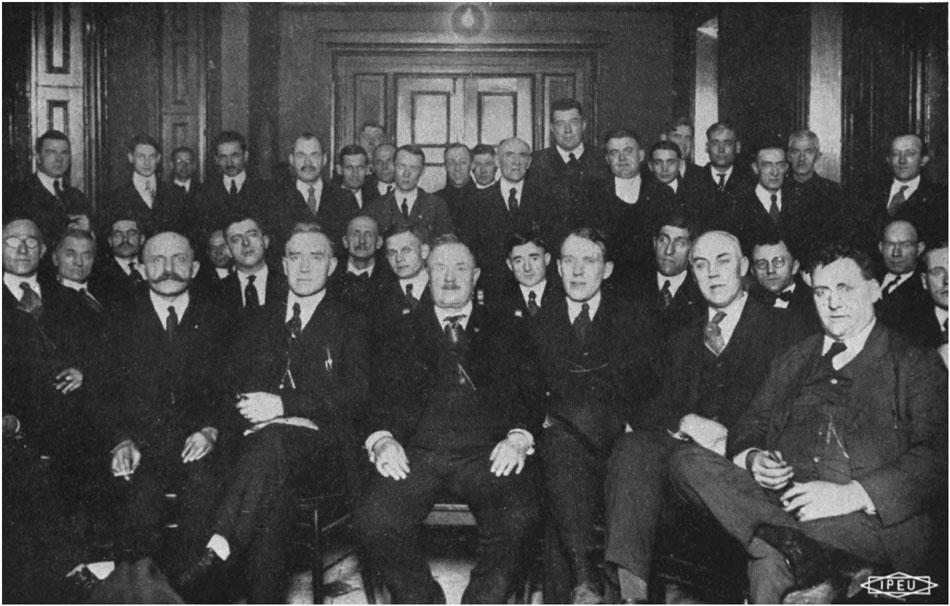
If your union is not alive to the burning questions before the labor movement, it is up to you, with your fellow workers who do understand, to wake them up. Get them busy, and not only pass resolutions, but also plan constructive programs, and help to put them into effect. If you keep it is the most effective way of showing up the big questions before your union you will find that mis-leader and reactionary. These dead-weights of the labor movement will gradually destroy their standing, by their own actions and talk- by being on the wrong side of the issues which the rank and file members gradually learn to be interested in.
Every militant union man can increase his power and influence within his organization by just thinking over these simple tactical lessons. None of us knows it all yet, and all of us must be ready to learn new ways of reaching the millions of Organized Labor with our message. Tactful understanding will remove mountains of difficulty, and open up unknown avenues for education.
The Labor Herald was the monthly publication of the Trade Union Educational League (TUEL), in immensely important link between the IWW of the 1910s and the CIO of the 1930s. It was begun by veteran labor organizer and Communist leader William Z. Foster in 1920 as an attempt to unite militants within various unions while continuing the industrial unionism tradition of the IWW, though it was opposed to “dual unionism” and favored the formation of a Labor Party. Although it would become financially supported by the Communist International and Communist Party of America, it remained autonomous, was a network and not a membership organization, and included many radicals outside the Communist Party. In 1924 Labor Herald was folded into Workers Monthly, an explicitly Party organ and in 1927 ‘Labor Unity’ became the organ of a now CP dominated TUEL. In 1929 and the turn towards Red Unions in the Third Period, TUEL was wound up and replaced by the Trade Union Unity League, a section of the Red International of Labor Unions (Profitern) and continued to publish Labor Unity until 1935. Labor Herald remains an important labor-orientated journal by revolutionaries in US left history and would be referenced by activists, along with TUEL, along after it’s heyday.
Link to PDF of full issue: https://www.marxists.org/history/usa/pubs/laborherald/v1n10-dec-1922.pdf
 Revolution's Newsstand