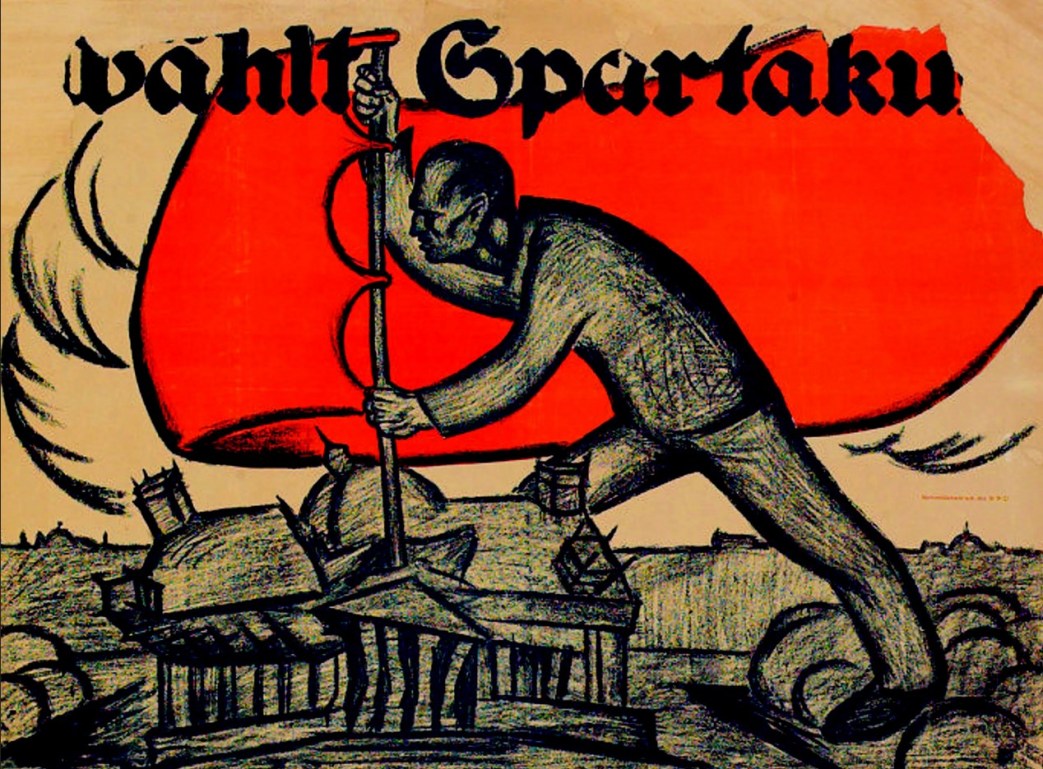
‘On the Death of Karl Liebknecht and Rosa Luxemburg’ by the Spartacus Union from Communist International. Vol. 1 No. 1. May, 1919.
PROLETARIANS, COMRADES!
WE call to you in the bitterest hour, we turn to you in grievous pain. We appeal to you at a time when we deplore the greatest loss that could have come to us.
Karl Liebknecht and Rosa Luxemburg are no more.
French comrades, do you remember that day when you were deprived of Jean Jaurès? It was blind madness, bloody fanaticism, that directed the assassin hand of a frenzied scion of the bourgeoisie. The bourgeoisie needed a victim, it had to push aside the last obstacle standing between it and the war of its desire. So it singled out the man whose word was the mightiest to maintain peace. And what a wave of horror passed through the entire International! A cry of dismay so loud that it outvoiced even the hoarse howling of the wolves of war. And here in Germany, those Socialists who had already sealed a covenant with the Kaiser, who had already in secret conferences accorded their cooperation to Prussian militarism and German imperialism–how they lifted up their voices over the death of that Jaurès, whom they were in the very act of betraying, how indignant were they over the violation of right and justice, over the outrage to humanity!
And yet the crime that was committed then was small in comparison to the one perpetrated now. Then it was the bourgeoisie that did the deed, like so many thousand others, for the sake of its profits; then it was our enemy who slew our best comrade, but we knew that we have nothing better to expect. But now it is a Socialist Government, a Government lifted to the helm of State by a revolution, by the revolutionary energy and force of workmen and soldiers, that has had assassinated the foremost champions of that revolution.
Yes, workers, comrades, before you, before the International, before the whole world, before Time, before History, we accuse:
The Ebert-Scheidemann-Noske Government of having consciously and willfully caused Karl Liebknecht and Rosa Luxemburg to be murdered.
It has incited the murderers to the deed, and shielded them after the deed.
Proletarians, comrades!
Remember the situation we were in. From the end of October, 1918, it was clear that a revolution in Germany was inevitable. The bourgeoisie trembled. It knew that the revolution would be a judgment on it for all its crimes. But it knew as well that it had only one reliable bodyguard the Ebert-Scheidemann party. This party had, during the last four years, undertaken to justify every rascality of the militarist party, every roguery of diplomacy, every brutality of the bourgeoisie, in the eyes of the proletarians. To this bodyguard, then, the bourgeoisie turned in its need. And Ebert, Scheidemann, and their men joyously undertook the task of defence. They spared no efforts to put the rising spirits to sleep again, and, should the storm break loose, at least to take the edge off it. When, on November 3, the first sailor riots broke out in Kiel, it was Noske, the same Noske that now sits in the Cabinet, who was sent to Kiel to smother the movement. Up to November 9, the day the unrest spread to Berlin, Ebert, Scheidemann, and their followers worked against the revolution; and only when they saw that, in spite of all efforts, it was not to be averted, did they put themselves at the head of the movement, to lead it to the end that continually was before their eyes saving the bourgeoisie in its dire need.
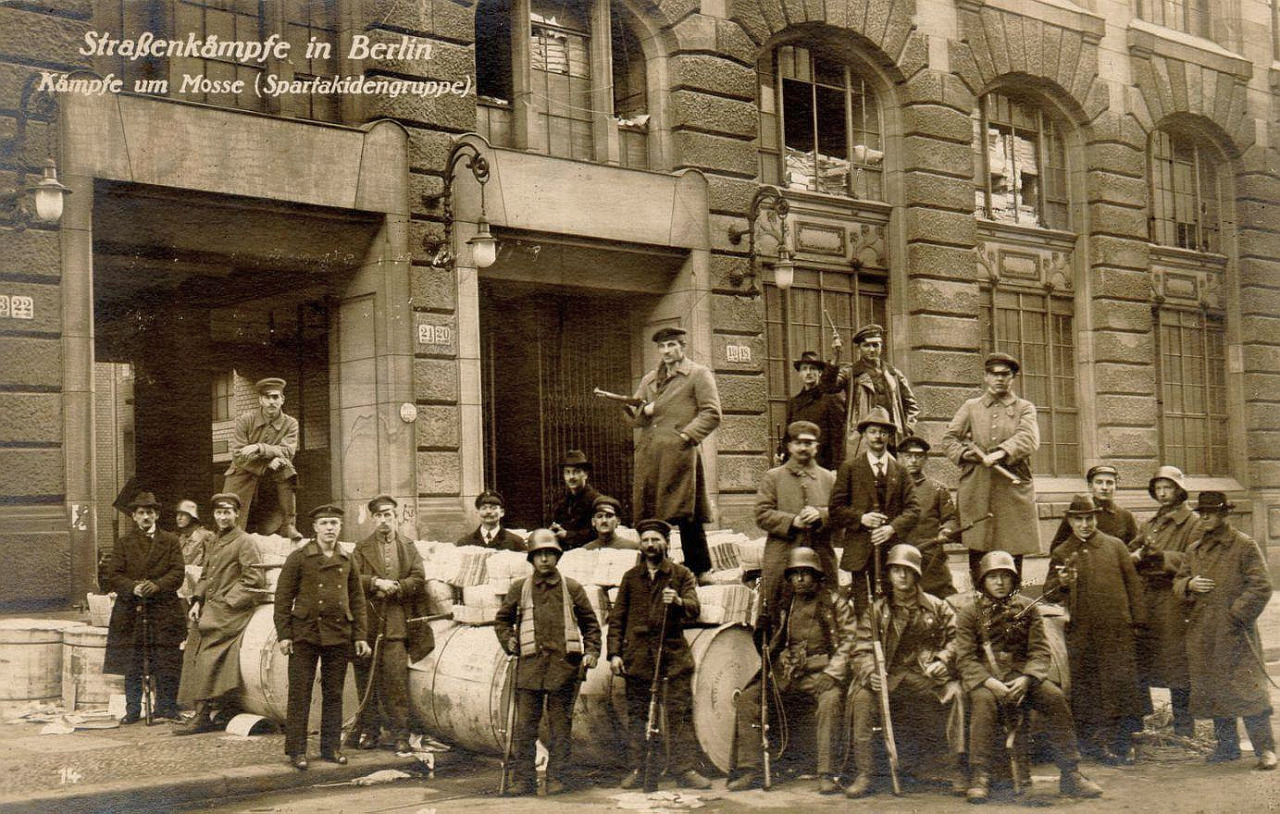
All their actions since November 9 have served this end. One of the first was the declaration of the inviolability of private property. The business world was given the most reassuring promises. The old state of affairs in the organisation of administration and jurisdiction, in the matter of duties and taxes, was re-established. The authority of the officers that had been destroyed by the soldiers was set up again. All the accomplices and casual employees of William the Second, from Hindenburg and the Foreign Office down to the last night-watchman, were confirmed in their offices. The soldiers were deprived of weapons, while they were left to the officers. The workers were exhorted to keep the peace, and their just demands in the matter of wages were answered by “the needs of the fatherland”–in other words, of the bourgeoisie.
The Ebert-Scheidemann Government clearly recognised that it could attain its aim, the saving of the bourgeoisie, only by the sharpest struggle against the representatives of proletarian revolution in general, and against the now murdered comrades, Rosa Luxemburg and Karl Liebknecht, in particular.
And so they began, in the first weeks following the revolution, a campaign of calumny against the Spartacus Union and these two comrades, the like of which is not to be found in history. As early as November, in Berlin, leaflets and street-posters incited the assassination of Karl Liebknecht and Rosa Luxemburg, under the very eyes of the Government. A price was even set on their assassination. The Ebert-Scheidemann Government moved not a finger. Everybody knew perfectly well from whom these summons came. Yet they were left undisturbed. The whole pack of the bourgeois Press took up the catchword, and gave tongue. The Vorwärts, the organ of Ebert and Scheidemann, took the lead in the baiting. Counter-revolution appeared more and more impudently and insolently the Ebert- Scheidemann Government itself summoned counter-revolutionary troops to Berlin. It was clear to all the leader of counter-revolution, the bitterest enemy, of the proletarians, ready to drown the revolution in a sea of blood, was the Ebert-Scheidemann Government.
The month of January, 1919 brought their plans to maturity. Ebert and Scheidemann prepared to strike a new blow. The Chief of the Berlin police, elected by the revolutionary authorities, and who had discovered the impudent plots of counter-revolution, was to be got rid of. The proletariat of Berlin did not intend to stand this, and attempted to ward off the attempt. The Ebert-Scheidemann Government had no troops to back it. In this hour of need it threw off the mask of revolution, and showed its real face. It armed the university students, formed battalions exclusively consisting of officers, dealt out weapons to bankers’ sons and professional men, summoned a few unenlightened regiments consisting of 18-19-year-old lads-and these blood- stained butchers of Finnish and Ukrainian revolution did their bloody work in Berlin. Proletarians were put against walls without judgment. Parlementaires were flogged to death. Proletarians were arrested, their houses broken into and plundered. The Ebert-Scheidemann gang wanted to show that they could do as much in Berlin as Ludendorff and Co. had done in Belgium and Northern France. They wanted to show themselves the worthy successors of Gallifet and Co., the butchers of the French Commune.
It was clear that, should the leaders of the Spartacus movement, Comrades Liebknecht and Luxemburg, fall into the hands of this gang, their life was forfeit. Every child knew it in Berlin. The Ebert-Scheidemann Government knew it, too. They did not think of stopping their bands. The Vorwärts encouraged them every day. And so the horrible came to pass.
When Karl Liebknecht and Rosa Luxemburg were seized, they were knocked down with rifle butts, shot at, murdered. Ebert and Scheidemann did all that was in their power to shield the murderers they themselves had encouraged. They spread the clumsiest lies in order to exculpate themselves; thus, that Karl Liebknecht was shot while attempting flight. The untruth of this was obvious to all. They said that Rosa Luxemburg had been killed by the mob. It is positive that she was knocked down by soldiers standing in readiness for the purpose, on leaving the military building from which she was to be transferred to prison. To cover up the crime, the dead body was made away with. It had been stolen, said Ebert and Scheidemann. A body, knocked down by soldiers, transported by a military patrol, stolen! Fourteen days passed without the bodies being found. The inquiry was trusted to a military court, of which every child knew that it had but one interest: to let the culprits escape. A proposal to confide the inquiry to an impartial tribunal was refused by the Government. The inculpated officers, heavily compromised by their own words, have been left at liberty. Important witnesses were spirited away.
Proletarians of all countries!
This murderous deed will find other judges. We turn to you, comrades. It is for you to pronounce judgment. It is for you that these comrades so ignominiously murdered laid down their your lives. They were your guides and your friends.
Proletarians, lift up your voice! Shame, eternal shame to the murderers! They must not find room for themselves among comrades, wherever they go. The butchers of the new Commune, may they perish together with their Capitalist masters!
In this dreadful hour we call to you. Do not allow these our dead to have died in vain. Their last thoughts were for you and for your liberation. Take up the fight, then, against oppressors, each in his own country.
On the day when capitalism and its henchmen, loaded with curses, sinks to its grave, on that day will our dead arise again. Not the trumpet of the Day of Judgment will wake them, but the cry rising from millions of throats: Workers of the world, unite!
THE COMMUNIST PARTY OF GERMANY (Spartacus Union).
The ECCI published the magazine ‘Communist International’ edited by Zinoviev and Karl Radek from 1919 until 1926 irregularly in German, French, Russian, and English. Restarting in 1927 until 1934. Unlike, Inprecorr, CI contained long-form articles by the leading figures of the International as well as proceedings, statements, and notices of the Comintern. No complete run of Communist International is available in English. Both were largely published outside of Soviet territory, with Communist International printed in London, to facilitate distribution and both were major contributors to the Communist press in the U.S. Communist International and Inprecorr are an invaluable English-language source on the history of the Communist International and its sections.
PDF of full issue: https://www.marxists.org/history/international/comintern/ci/old_series/v01-n01-1919-CI-grn-goog-r2.pdf
 Revolution's Newsstand