
I am sure current Postal employees will recognize much in their workplaces today from this 1911 article by ‘One of Them.’
‘Squeezing the Postal Employees’ by One of Them from the International Socialist Review. Vol. 12 No. 1. July, 1911.
WITH a blare of trumpets we read W recently that the Post Office Department had wiped out the deficit, and all credit was conceded to Frank H. Hitchcock, the present postmaster general.
Now WHO PAID the DEFICIT?
Some few years ago Congress passed a bill making the wages of carriers in first class cities $1,200 a year after five years’ service, making a $200 yearly increase. But we did not get it all at once as the officials construed the bill to read that $100 be allowed with the fiscal year beginning after the passage of the act and the other $100 the year following. We do not know yet whether we will get the increase or not so hedged about with regulations is it.
To go back a few years. A candidate for a job as letter carrier who successfully passes the civil service examination is put upon the eligible list to wait his turn for appointment and when appointed becomes a substitute at NO SALARY whatever, just taking his chances on making something. At one time all substitutes were paid, quarterly, the enormous sum of $1.00 a year, but this has been wiped out by the economizers, which saves $3,000 or $4,000 yearly.
After a substitution period of three or four years the carrier may be appointed a regular carrier at the munificent wage of $600 per annum. At the end of one year his wage is increased to $800 and after another year to $1,000. He was reasonably sure of getting these increases, but note the difference under the Economizer.
Unless the substitute is now appointed on the first day of the quarter, his wage increase will not begin until the following quarter. For instance: Suppose a carrier were appointed January 2d, or the second of July, October or April, under the old regime his wage increases would come one year from any one of these dates. But the Economy Plan forces him to wait until the beginning of the next quarter. This saves a considerable sum for the department.
In many ways they contrive to offset the wage increase, such as reducing wages of men $200 for simple offenses, as happened to a carrier who stopped in a restaurant to buy a cup of coffee. As the requirements force the men to rise at 4 a.m. they naturally become hungry at 8:30 or so.
Roosevelt promulgated an order specifying that any carrier absenting himself from the service for 90 days resign or be dismissed. The writer knows several cases where carriers have slipped on the ice or snow, while in discharge of their duties, and broken an arm or leg or had some serious accident that necessitated their going to a hospital. Where their injuries were so serious that they could not be out inside of three months they were dismissed with no more consideration than the throwing away of an old glove.
I know many men, too, who have spent twenty-five or thirty years in the service, becoming ill and unable to report in three months, be dismissed and thrown onto the scrap heap. A man who has worked thirty or thirty-five years at one thing is too old to learn any other.
Were the carriers hired to kill their fellow men would receive a pension in such a case, but we are only the Army of a Peaceful Occupation.
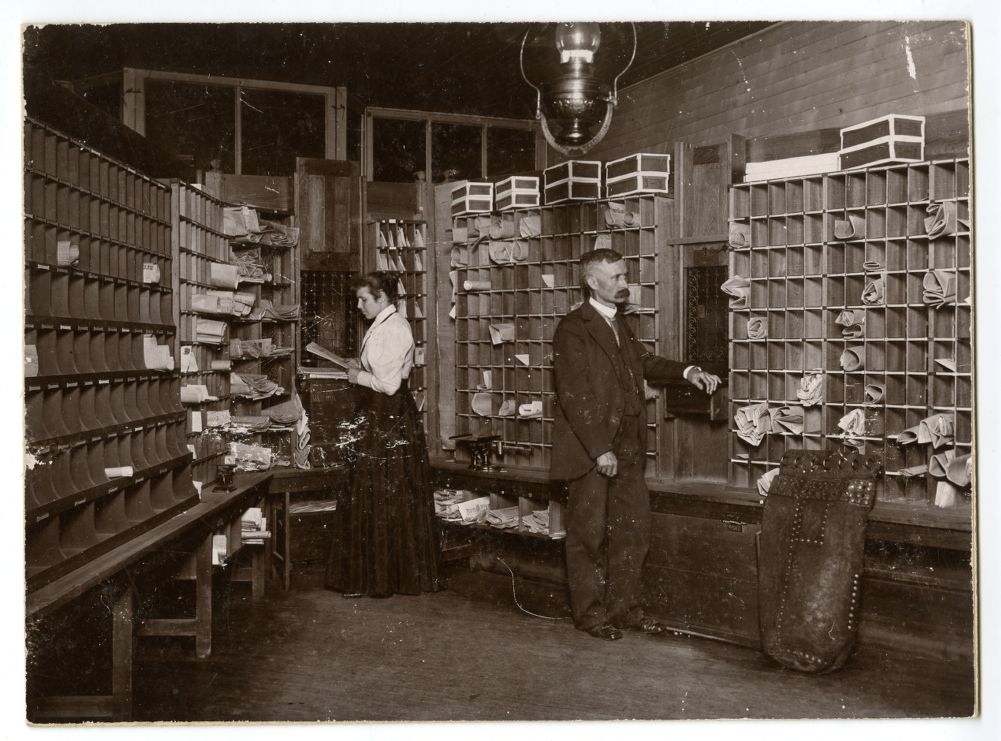
The Post Office Department has undergone a new speeding up process like other big businesses. This serves as an excuse for letting out the older men and putting in younger ones, who may not only be able to work faster, but who GET A MUCH LOWER WAGE. The older carrier will probably be receiving $1,200 a year, while the new young man gets only $600. Carriers are now docked for any days they may be absent, no matter what the cause may be.
Previous to the abolition of Sunday work if a man scheduled to work Sunday was ill, his partner might take his place and save the day’s pay for him. But the Economists order the partner to work and dock the other man anyway, thereby getting back a full days pay.
The man who is absent Saturday and Monday is docked THREE days’ pay whether scheduled to work on Sunday or not.
The Economy Plans fairly shine during the vacation season, for usually the men remaining have to perform all the work of their absent comrades. And much money is saved—all at the expense of the poor wage slave.
With fifty millions for the poor railroads and a few more for the pneumatic tube service, it is no wonder they can’t pay the substitutes anything. It is only natural that they order us to be saving with the TWINE we use.
The Department SAYS it wants to make the service attractive, but in some locations it now has to ADVERTISE FOR—MEN.
But this is not all. They would steal our very skins if it would save a nickel to the Department, but they are determined we shall not tell anybody about it. Here is the edict of William, The Fat:
“All officers and employees of the United States of every description serving in or under any of the executive departments and whether so serving in or out of Washington are hereby FORBIDDEN, either directly or indirectly, individually or through association to solicit an increase of pay, or to influence or to attempt to influence in their own interest any legislation whatever, either before Congress or its committees, or in any way in which the on penalty of instant dismissal from the government service.”

What do you think about that, you postal employees? Talk about the Land of the Free and the Dear Old Flag and Our Country! You dare not even BEG FOR A RAISE! How long are you going to permit such a thing? Be sure it will stop the minute we have sense enough to stand together and DEMAND a sure and living wage.
We have the Carriers’ Association with a membership of over 20,000 men, sending a representative to beg the postmaster general to mitigate some of the evils he is inflicting, when BY UNITING WITH THE WORKERS IN OTHER LINES OF INDUSTRY WE COULD HAVE ANYTHING WE WANTED.
We have imagined that we were provided for, that the hardships of the working class were not our own. But we have held ourselves aloof from the other toilers far too long. Now we are fast learning that we shall have to join forces with the workers in the various industries.
We find that we cannot hope for anything from the old political parties, and we are beginning to turn to the only party of the working class, and to study its aims and purposes.
In the office where I work there were only two socialists a few years ago. Now, there are twenty, and more coming every month.
Now, you Carriers, you are all dissatisfied. You have been imposed upon by your Government, just as other wage workers are exploited by their bosses. Why not take your organization and reorganize it along industrial lines; take in the office clerks, railwaymail clerks, telephone operators, telegraphers and ALL MEN AND WOMEN connected with the Department to form ONE BIG UNION, and then join the rest of our fellow workers to wrest control of the industries from those who have stolen it, and return them to the rightful owners—the workers, who have built and operated them.
Taft says it is all right for us to ORGANIZE. But he does not want us to ask for anything.
Fifty charters have been granted to the office and railway mail clerks from the A.F. of L., but this only means that we are being DIVIDED instead of being UNITED. The Industrial Workers of the World is an organization that will help you to form ONE BIG UNION.
Socialists do not propose to pit a young man of twenty-five against a man of sixty-five, and expect the old man to keep the pace of the young one.
We must have control of all the industries and then we can choose our superintendents and chief clerks from among ourselves, and if they don’t fill the bill, we can bounce them, and put in those who will.
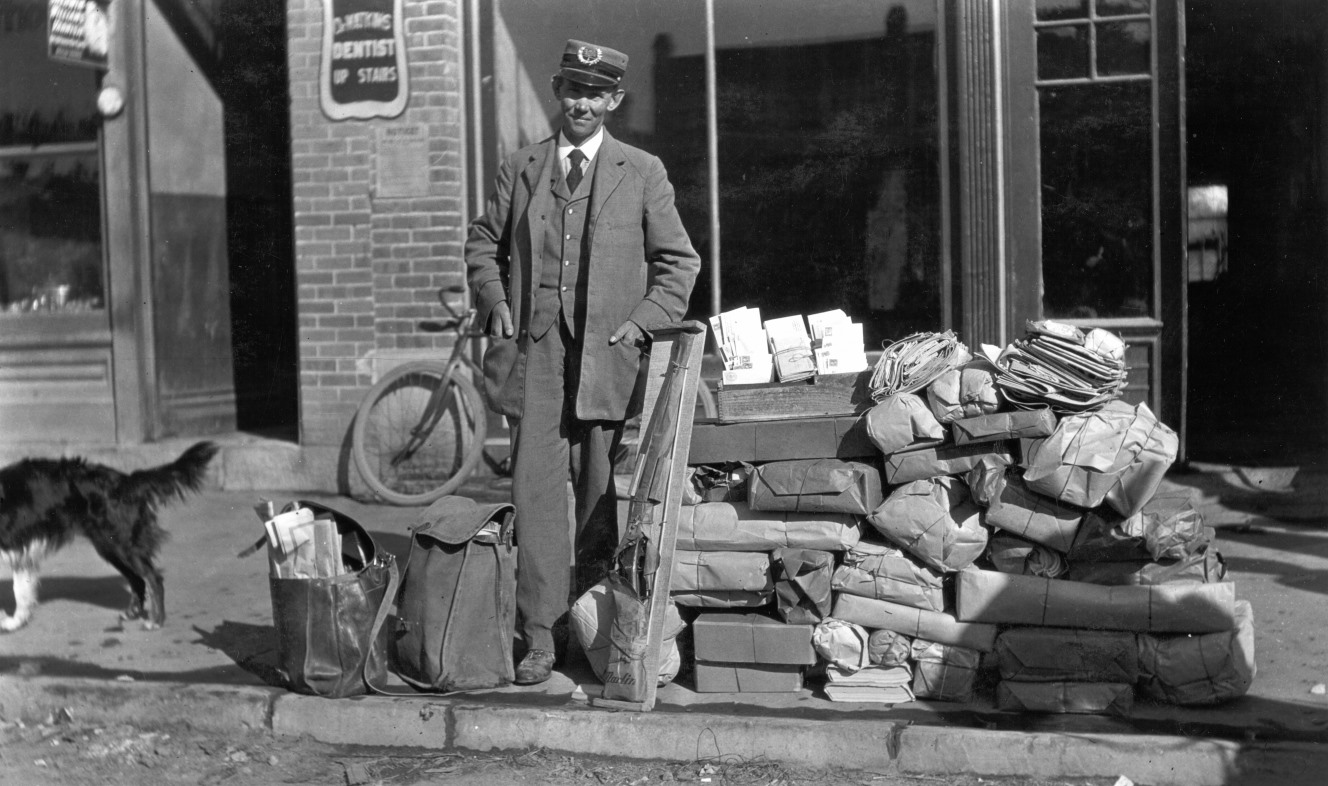
Now get some literature on Socialism and on Industrial Unionism. Read it; study it, and pass it along to your fellow carrier an everlastingly agitate and organize.
Take out a red card in the Socialist Party organization and help pay for some of our excellent propaganda. Help us to elect our own men to office, who will protect us when we want to organize and to fight.
There is nothing else will help you or me. We have got to fight. The old parties and the old unions cannot and will not help us. We shall have to stand together on purely working class lines and make a victory for ourselves.
The International Socialist Review (ISR) was published monthly in Chicago from 1900 until 1918 by Charles H. Kerr and critically loyal to the Socialist Party of America. It is one of the essential publications in U.S. left history. During the editorship of A.M. Simons it was largely theoretical and moderate. In 1908, Charles H. Kerr took over as editor with strong influence from Mary E Marcy. The magazine became the foremost proponent of the SP’s left wing growing to tens of thousands of subscribers. It remained revolutionary in outlook and anti-militarist during World War One. It liberally used photographs and images, with news, theory, arts and organizing in its pages. It articles, reports and essays are an invaluable record of the U.S. class struggle and the development of Marxism in the decades before the Soviet experience. It was closed down in government repression in 1918.
PDF of full issue: https://www.marxists.org/history/usa/pubs/isr/v12n01-jul-1911-ISR-H-GR-ocr.pdf
 Revolution's Newsstand