‘Child Labor–A Modern Pestilence’ by H.M. Wicks from the Daily Worker Saturday Supplement. Vol. 2 No. 11. January 24, 1925.
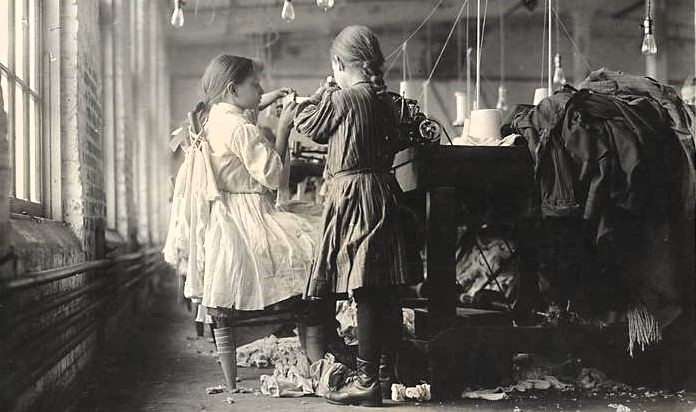
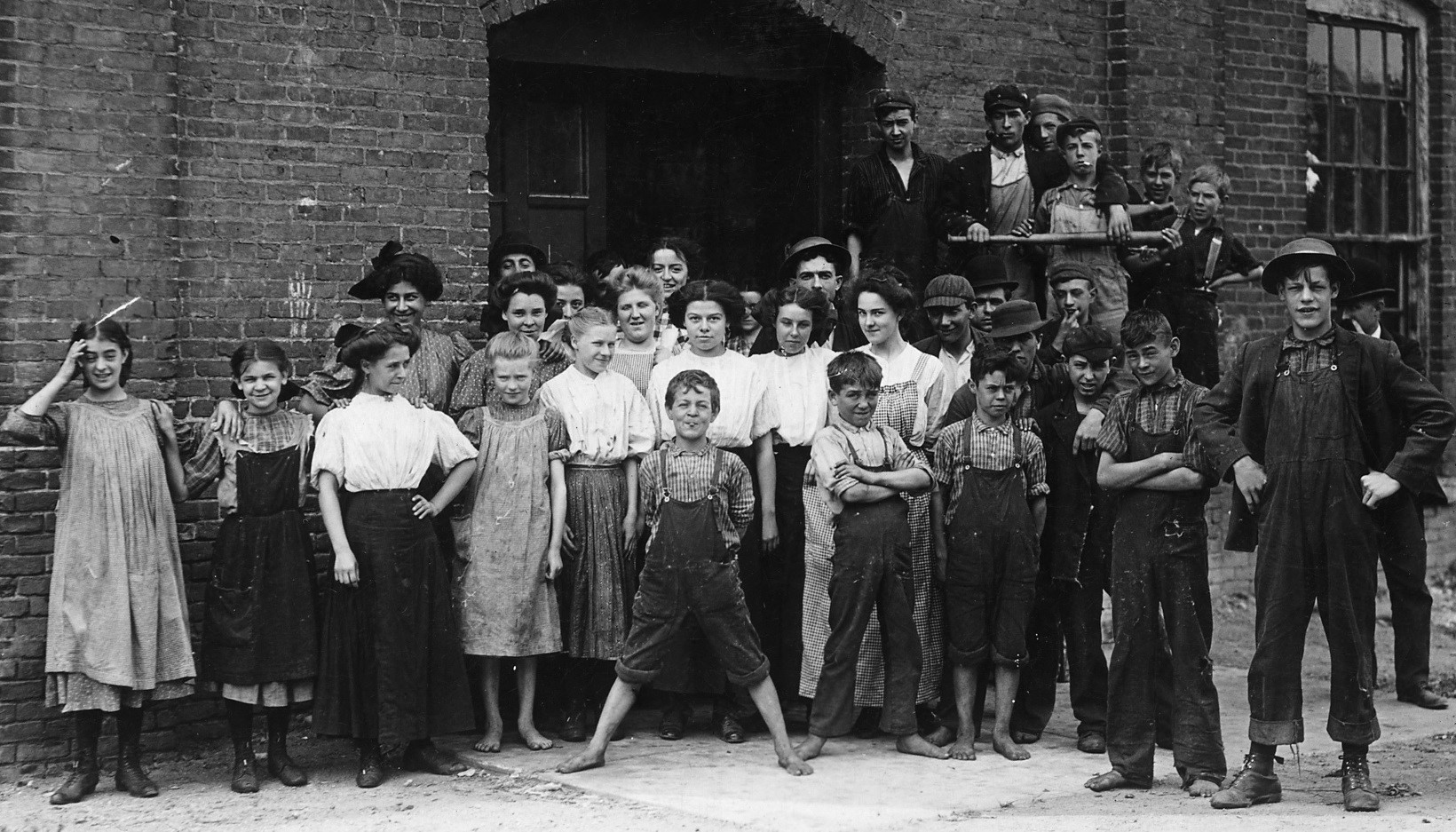
INCREDIBLY ghastly in its ravages labor has become a blight that menaces every human being in the nation. There are two types of child labor in the United States today; the open employment of children in factories mills, mines, department stores and in agriculture; and the furtive slavery of children within the confines of the hovels they call homes. It is the second category that merits close investigation, because it is more carefully concealed.
Dry statistics from the last census conducted by the U.S. government (1920) inform us that there were a that time 1,090,858 children between the ages of 10 and 15 years “gainfully employed” throut the country. Equal y vague are the figures regarding the division of this group between industries and agriculture. The same government report presents tables of statistics to prove that child labor has decreased since the census of 1910 Like all government reports, this one requires further investigation. It is poor policy to take the statements of a capitalist government at their face value, especially when they deal with the devastation caused by capitalism Granted that the figures were accurate they do not prove a decline of the number of child slaves, for the simple reason that the 1910 census was taken in a period of so-called “prosperity,” while the 1920 survey was taken at the beginning of a period of unemployment and at a season of the year when employment, especially in agriculture was at the lowest point. The additional fact that the federal child labor law was at that time on the statute books must be taken into consideration. It was the supreme court decision declaring this law unconstitutional in 1922 that necessitated a constitutional amendment to give congress the power to enact a federal child labor law. So our glorious constitution that the one hundred per centers profess to uphold does not even permit congress to legislate for the protection of helpless children from the jackal pack of capitalism.
A Tale of Two Pest Holes.
The census of 1920 informs us that in New York City there are 32,383 children between 10 and 15 years 01 age “gainfully employed,” and that in Jersey City, N.J., there are 2,735. But like the national total, these figures are inadequate to convey the real facts regarding child slavery. Nothing is said here about those miserable half-starved and half clothed, prematurely aged children UNDER TEN years of age that slave from morning until night in the most revolting surroundings–their homes! Hearing re. ports of the conditions in certain districts. I, accompanied by other trade unionists, investigated some of them both in New York and Jersey City and was staggered by the appalling conditions existing in a supposedly civilized country.
In New York City, in three different sections–the Bronx, the lower East Side and Brooklyn–we found children, both boys and girls, working on beaded gowns. There are designs drawn on these gowns and the children have to sew bright colored beads on the designs, for which they are paid according to the whim of the employers, who deliver the dresses and beads at the “homes” of the workers and call for them when finished. Whole families and even children as young as six and seven years do this work. Sitting in one position hours, at a time, straining their baby eyes to get each bead in its proper place, browbeaten by filthy, brutal, illiterate parents, there is surely no more pitiable creatures on earth than these children. One little Italian girl had some sort of infection in her eyes that caused steady discharge, which she constantly wiped with the back of her hands and every one of these victims of the inordinate greed of capitalism appeared warped and stunted—with the bodies of children in stature, their face bore ghastly marks of agonizing toil far worse than the puny slaves of the cotton mills of the south.
Slaving their lives away in vile, unsanitary, dark, cold and damp tenements in order that the indolent, debauched, extravagant kept women of the bourgeoisie may bedeck themselves in beaded gowns and attend charity balls where their feigned concern for the poverty of the workers is a pretext for the gorgeous displays. A short time ago, in an address before the Woman’s Trade Union League one of the members who had investigated this very condition, stated that no woman with a spark of humanity knowing how beaded dresses are made, would ever wear one of them.
Having occasion to be in Jersey City, where child slavery in “homes” of workers is rampant, a hasty survey was made there. The horrors of New York City were duplicated, if not surpassed.
There were found children of both sexes sewing bags for tea. One house investigated is typical of them all. There was no electric light and the dingy halls were in total darkness. Inside the rooms, where people were huddled, one and sometimes two families in one room, whole families were engaged in the business of sewing little pieces of cloth into tea bags.
There were the same signs of occupational deformities that were observed in New York. This work is so arduous and requires so much speed to earn the merest pittance that the ends of the children’s fingers constantly bleed from being stuck with needles, some of them are infected and exude puss.
During a survey conducted two year ago, Wassernann blood tests were taken of some of these children and many of them registered positive some of them “four plus.” Indicating 100 per cent syphilitic infection.
The tea bags, when finished, are thrown in heaps upon the floor, around which the family sits in a semi-circle. And when they are removed from these home manufacturing establishments they are stuffed with tea and placed upon the market WITHOUT EVEN BEING WASHED in ordinary water, say nothing of being disinfected.
Menaces Everyone.
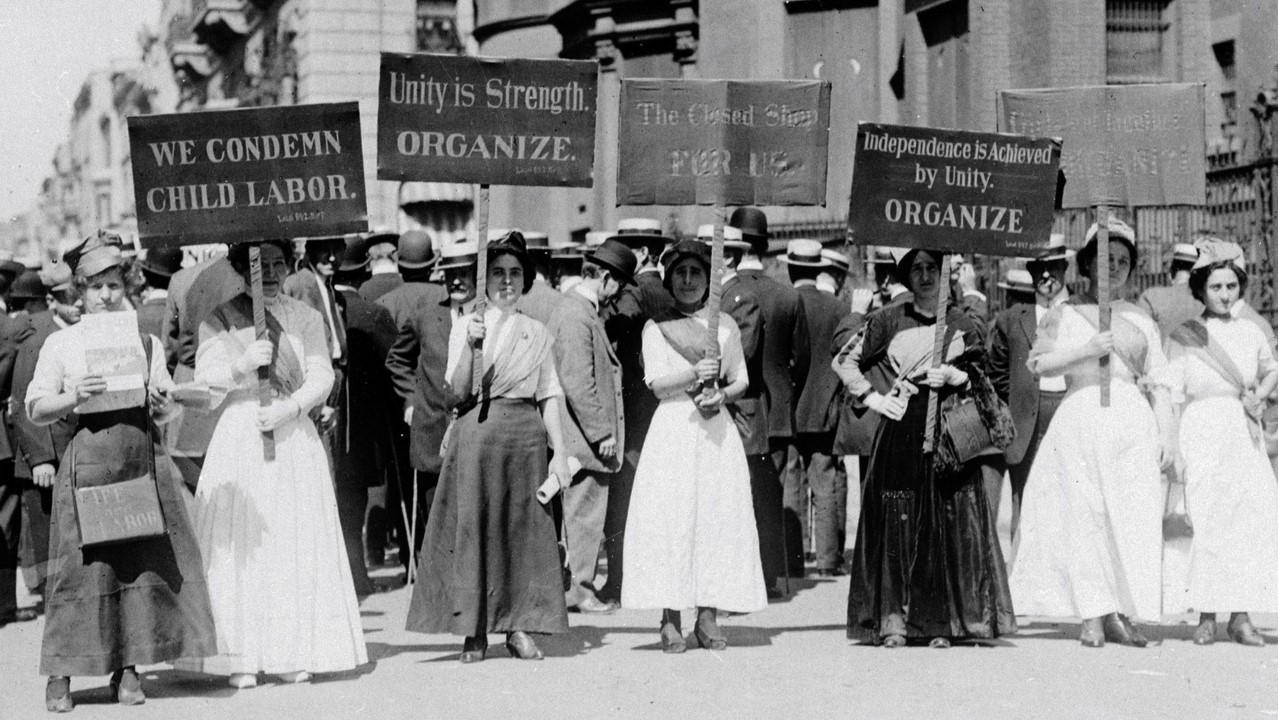
Clearly child labor ought not to be a problem exclusively concerning the working class, tho, of course, it Is only the working class that will ever abolish it. It is not only a blight upon the childhood of the nation, but it menaces every person that patronizes a grocery store, or buy clothing or of any manner moves in this society. If the pest-holes of the Bronx, the lower East Side, Brooklyn, Jersey City and hundreds of other places throughout the nation could be visited by intelligent workers they would rise in their might and scourge from the face of the earth the contemptible scoundrels of capitalism that dare propose a continuation of this foul plague. If the facts regarding child labor were once known It would not be a question of parliamentary discussion, of state referendums or of imploring state legislators to act against it; no one would DARE defend it.
The elegant grande dames of the plutocracy do not know when they drape themselves over their antique chairs at afternoon teas but that the slimy trail of child labor will wreak a loathsome vengeance upon them–that is, those of them that are not already infected thru indulging in the favorite pastime of the ruling class seducing each others’ wives and husbands.
But those who distill the blood of children into profits are not concerned about such abstract considerations as the welfare of society. Speak to them of the ghastliness of child slavery and they reply with the bourgeois philistine shibboleth: “There is no sentiment in business.”
The Economics of Child Labor.
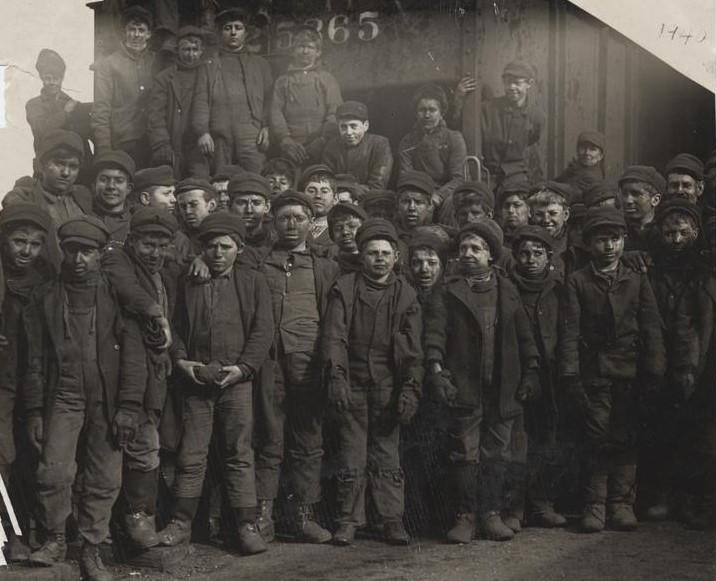
While the working class cannot escape the effects of the spread of disease emanating in the foul holes where children slave, it must face another menace equally as dangerous. The spread of child labor will inevitably result in wholesale reductions in wages of adult workers because it fosters a condition where the whole family must work in order to earn sufficient to enable it to exist.
Under capitalist production the value of labor power, the one commodity the worker has to sell, is determined by the value of the necessaries of life required by the average family–that is, the father’s wage (price of labor power) should be sufficient to support his wife and children. Unless this condition prevails there is a violation of the very laws of capitalist production itself; the plain economic fact that the worker must not merely produce sufficient to maintain himself, but that his wage must enable him to support a family so that another generation of wage slaves may be able to step into the places of the present one.
When other members of the family are thrown upon the labor market the result is the spreading of the value of the labor power of the husband over the whole family, thus depreciating his own labor power. Proof of this effect of child labor can be obtained by even a cursory examination of the wages of men in industrial centers where child labor prevails. In the cotton mills of the south this is so glaring that the so-called “poor white trash” that furnishes child slaves for the mills actually measure their prosperity by the number of children they have to send into the slave pens. If the number of children is greater than the average, the family income is larger–the parents are so devoid of that which the bourgeoisie like to parade as the parental instinct that they look upon their own children only as adjuncts of machines to be put in operation at the earliest possible moment. Many of these parents were child slaves themselves, marrying in their early teens-many girls become mothers at fourteen in these districts, and deprived of even the rudiments of an education, so they are utterly incapable of properly raising children. As soon as possible after childbirth, these pathetic mothers go back to the looms, while neighbors’ children, not yet old enough to go into the mills, take care of their offspring.

This blight upon the family is not confined to the cotton mill states, but is gradually spreading thruout every part of the country. Even the skilled industrial workers of New York are forced to send their children into offices, stores or industries at an early age in order to meet the demands of the cost of living. If such workers were alive to their own interests they would prepare to struggle against the spread of child labor. For if the labor movement of this country does not take drastic steps to wipe out this menace, the conditions now existing in child labor territory will become the condition of the working class of the whole country.
The enemies of labor, in their fight against the abolition of slavery of children, talk about the sacredness of the “home,” in order that they may continue to ravage the homes of the working class.
Trade union officials of the reactionary type, which is the predominant type today, are incapable of waging a real fight against child labor, first because of their political alliances with the politicians who exist by virtue of the patronage of the exploiters of labor, and, secondly, because of their notorious ignorance of everything pertaining to economics. No matter what their intentions might be, they are not equipped to lead a struggle of this character.
It is only the Communists who can analyze the system that produces child labor and it is only the Communists who are capable of taking the lead in mobilizing the workers for united action in defense of the elementary interests of labor. We fight today for ratification of the proposed amendment, thereby proving that we engage in every struggle that affects the working class, but we know full well the limitations of parliamentary reform and to the extent that workers in large numbers engage in such struggles to that extent will they came to realize that the constitution, the congress of the United States, the various state legislatures, in fact the whole government apparatus exist only for the purpose of perpetuating slavery. This is part of a struggle that can only end when the workers of the United States, under the leadership of the Workers (Communist) Party, smash the state power of the capitalist class and establish a workers’ republic.
“There is no sentiment in business!” say the Philistines. All their sycophants re-echo this part of the litany of capitalism. Very well, we revolutionists should see that the workers remember this assertion and mobilize our power relentlessly to scourge from the face of the earth these despoilers of the human race.
The Saturday Supplement, later changed to a Sunday Supplement, of the Daily Worker was a place for longer articles with debate, international focus, literature, and documents presented. The Daily Worker began in 1924 and was published in New York City by the Communist Party US and its predecessor organizations. Among the most long-lasting and important left publications in US history, it had a circulation of 35,000 at its peak. The Daily Worker came from The Ohio Socialist, published by the Left Wing-dominated Socialist Party of Ohio in Cleveland from 1917 to November 1919, when it became became The Toiler, paper of the Communist Labor Party. In December 1921 the above-ground Workers Party of America merged the Toiler with the paper Workers Council to found The Worker, which became The Daily Worker beginning January 13, 1924.
PDF of full issue: https://www.marxists.org/history/usa/pubs/dailyworker/1925/1925-ny/v02b-n011-supplement-jan-24-1925-DW-LOC.pdf
 Revolution's Newsstand