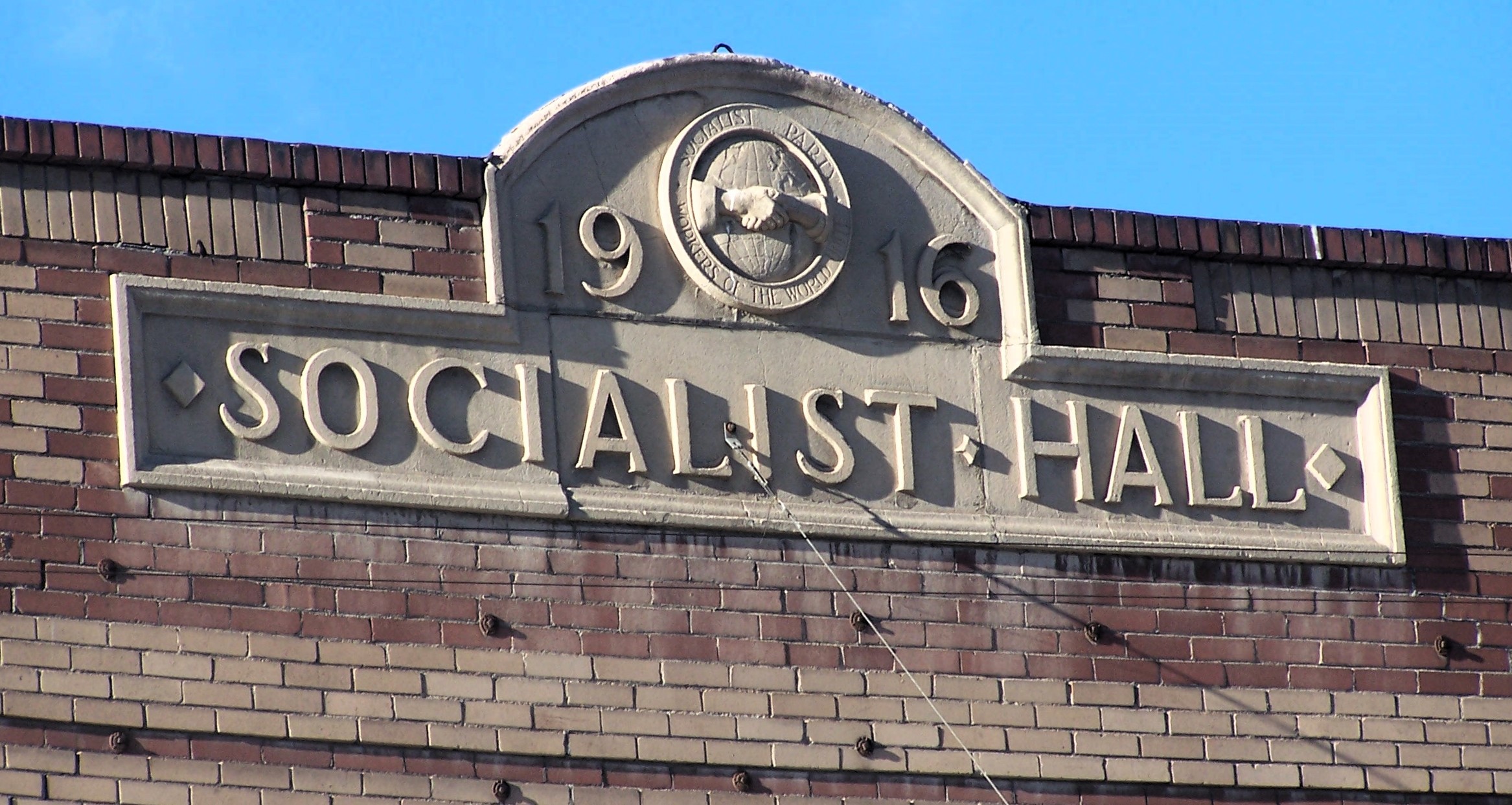
Butte, Montana had one of the most left-wing administrations of any city in U.S. history. Frank Bohn reports.
‘The Butte Socialists’ by Frank Bohn from the International Socialist Review. Vol. 13 No. 3. September, 1912.
Butte is a place that a Socialist worker visits and investigates with a degree of satisfaction which is simply inspiring. The Socialist administration seems to have accomplished a maximum of results under a capitalist system of government of the state and with the backward form of municipal government now obtaining everywhere in America. The work lately described in the Review by the mayor, Lewis J. Duncan has been continued with unvarying success. On July 4th, 1911, there were sixty cases of contagious diseases in Butte. On July 4th, 1912, there were but two cases. In every matter which comes before the government of the city of Butte this question is asked, “Will it benefit the working class?” And their every policy is outlined and pursued with that alone in view.
When conducting their campaigns, the Socialists of Butte have never wavered a moment in their loyalty to principle. The Socialist speakers and writers there went to the working class and said that they ought to carry the city because it would be “a step in the right direction.” If they could carry the city now they could carry the state in two years. By carrying the state they would be putting a great political weapon in the hands of the industrial organized working class.
The men of the Butte Miners’ Union are industrial unionists in a town which is industrially organized as is no other city on earth. These men saw the present benefits of Socialist political propaganda as a means of working class education and its future benefits in waging the class struggle with the most powerful of trusts they were keen to realize.
During a long day’s tramp with Comrade Duncan along the banks of the Yellowstone river, I went with him most carefully into this whole matter of the party’s work in Butte. Inevitably I came to the personal questions, “How did it happen that you, a clergyman, and near fifty years of age when you came into the movement, should come ‘clear through?’” I could understand how a keen student might forget his theology and how a strong character may overcome his individualism. “But how did you come to understand Socialism from the point of view of the industrially organized men of the Western Federation of Miners?”
“When I came into the Socialist movement,” replied Duncan, “I did not come to teach and preach, but to learn and work. I went to those men and asked, “What does Socialism mean to you? What do you wish to do with yourselves, with me and with the country?” I did not even say that I had a point of view. I just listened and learned.”
The scholarly young lawyer, Comrade Maury, now serving the Socialist Party as City Attorney, speaks in the same vein. These men have burned their bridges behind them and have avoided the mistakes both in the party and in their work as public officials which have ruined so many well-meaning professional men who have tried to be of service in the Socialist Party and failed.
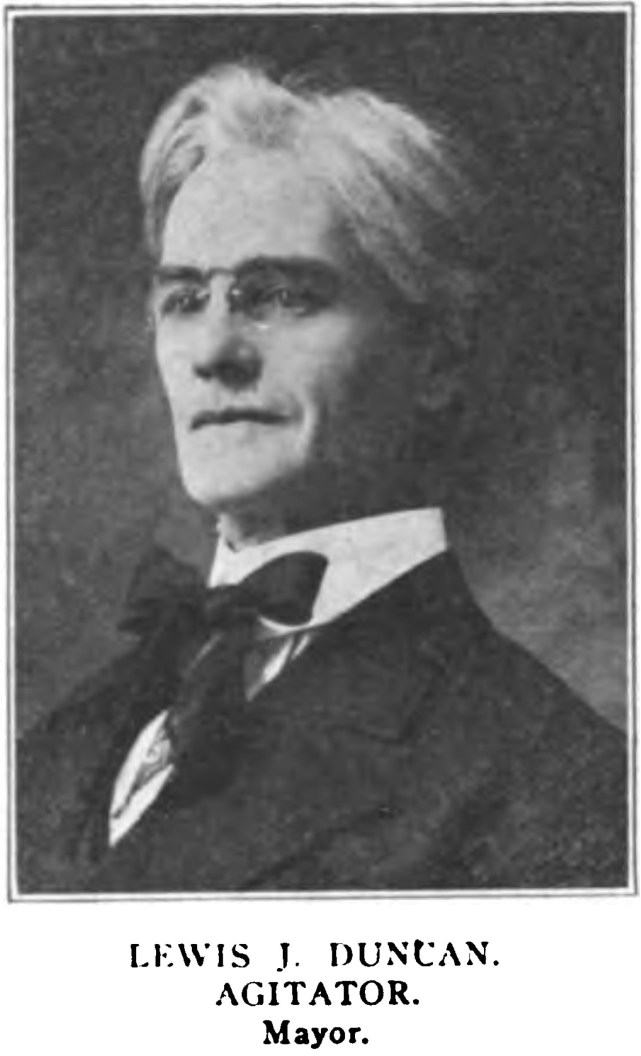
The working class of Butte knows exactly what kind of Socialist propaganda and what kind of an administration they want and they got it. They didn’t say, “We will refuse to employ this man Duncan because he is a preacher and this man Maury because he is a lawyer.” But finding that Duncan and Maury understood the working class and the Socialist movement from the point of view of the working class, the proletarian Socialist party local of Butte said, “Duncan and Maury are able and valuable comrades in whose honesty of purpose and strength of character we have every confidence. They couldn’t use us if they wanted to. We are going to use them for all they are worth.” And so they do.
Another interesting public official in Butte is the City Treasurer, Comrade Clarence Smith, sometime secretary-treasurer of the old-time American Labor Union. Different from many another labor leader, Smith left that office poor in pocket, but rich in experience. Butte comrades told me that to Smith more than anyone else is due the soundness of the movement in Butte and specifically the harmony which has obtained between the industrial and political movements of the working class. Smith knew what to expect and what not to expect from the political movement. “When the Socialist officials took office in Butte, the party membership had not been lead to expect that Socialism would be installed the next day. There are no disappointed Socialists in Butte. And there are no factions in the Socialist party in Butte. When the views of individuals do not obtain in the local those individuals know how to be good losers, even if they happen to be the mayor, the city attorney or the city treasurer. The Socialists of Butte know how to run a local and how to run a city chiefly because they know how to run themselves. As late as last year these same city officials were members of an economics class, which used as a text book a work which ever: Socialist thinks he understands, but which very few have read—“Capital,” by Karl Marx. Think of it! Real Socialist city officials meeting with the officials of the biggest and most successful labor union in the world and studying Marx’s “Capital.” How old fashioned and theoretical!
Thorough industrial organization, revolutionary political propaganda, study classes in Socialist economics, a kindly fraternalism and joy in the service of the movement and an unwavering faith in one another which makes factionalism impossible, unthinkable—such has been the spirit of the movement in Butte and Montana generally. Montana will be carried by the Socialist Party in 1912.
The International Socialist Review (ISR) was published monthly in Chicago from 1900 until 1918 by Charles H. Kerr and critically loyal to the Socialist Party of America. It is one of the essential publications in U.S. left history. During the editorship of A.M. Simons it was largely theoretical and moderate. In 1908, Charles H. Kerr took over as editor with strong influence from Mary E Marcy. The magazine became the foremost proponent of the SP’s left wing growing to tens of thousands of subscribers. It remained revolutionary in outlook and anti-militarist during World War One. It liberally used photographs and images, with news, theory, arts and organizing in its pages. It articles, reports and essays are an invaluable record of the U.S. class struggle and the development of Marxism in the decades before the Soviet experience. It was closed down in government repression in 1918.
PDF of full issue: https://www.marxists.org/history/usa/pubs/isr/v13n03-sep-1912-ISR-gog-ocr.pdf
 Revolution's Newsstand