
With sections on India, Korea, China, Japan, and the then Dutch East Indies, this report by Varsenika Kasparova, head of the Eastern Department of International Women’s Secretariat (IWS) of the Communist International, is a goldmine of information on the period. Kasparova was an ‘Old Bolshevik’ and exiled since 1904 in Switzerland with Lenin, whom she worked closely with. She returned in 1917 and became the lead Political Officer in the Red Army, working as Stalin’s personal secretary, whom Kasparova would later accuse of treachery in that period. After the Civil War she focused her work in the Comintern’s Women’s Secretariat while also becoming one of the leading women in U.S.S.R., a member of the Central Executive Committee of the Soviets. An Oppositionist early on, she would be expelled in from the Party in late 1927 and sent to internal exile. Recanting in 1935 she was released from exile, but arrested the following year. She was shot on September 11, 1941 along with many surviving figures of the Oppositions in the Medvedevsky executions. She was ‘rehabilitated’ in 1961.
‘The Women’s Movement in India and in the Far East’ by Varsenika Kasparova from International Press Correspondence. Vol. 4 No. 27. May 1, 1924.
INDIA.
101 million men are employed in production in India. The middle of the XIX century witnessed the development of a female industrial proletariat. To every hundred men workers there are, on an average, 38 women workers. The textile (weaving) industry alone employs 1,767,193 women. The spinning and cotton preparing industries employ 1,915,714 women to 1,921,977 men. In other industries there are 41 women to 100 men. On tea plantations 91 women to 100 men, on coffee plantations 79 women to 100 men, and in the mines 38%. Throughout the factories there are 6,011,763 women among the 17,515,920 workers and clerical staffs. In 1911 the number of people employed in agricultural work in India was: 19,139,438 peasant women and 51,956,508 men peasants, 42,720,585 women agricultural labourers and 13,158,684 men agricultural labourers.
Before the world war Indian industries owed their development to British capital, which relentlessly exploited the native wealth of the country, as well as the native labour. The result of the penetration of British capital in India was the development of an Indian proletariat and the participation of the Indian women in industrial production. During the world war Indian national industries received an impetus together with the growth of the native bourgeoisie. In 1914, there were 150 textile factories in Bombay, Madras, and in the Central provinces. In 1920 there were 2777 factories. In proportion to this increase, was the increase in the number of women factory workers.
The wages of Indian working women in all branches of industry are extremely low and are twice or three times lower than men’s wages. In 1920 wages were increased by 50%, but the cost of living increased by 150 to 200%.
Previous to the Washington Conference (1919) and to the development of the workers’ movement, laws for the protection of female and child labour were practically non-existent, although according to the law of 1911 an 11 hour working day for women and a six hour working day for children (from 9 to 14 years) were established.
As a consequence of such miserable pay, Indian working women live in appalling conditions and partake of food only once a day. There is an excessive mortality among working women and children in India. Until the end of the last century there existed in several parts of India the custom of killing newly born girls. The pitiful economic position of working women in India is intensified by their dependent position in the family, which is an age long institution connected with the division of Indian society into strictly separate castes. Factory workers, male and female, come from the lowest castes (Suhr and Pariah).
According to the “Mamu” laws, a woman in India has no personal life. Widows are not allowed to re-marry. Until a few decades ago the custom of early marriages for girls (from the age of 5) prevailed among Hindus.
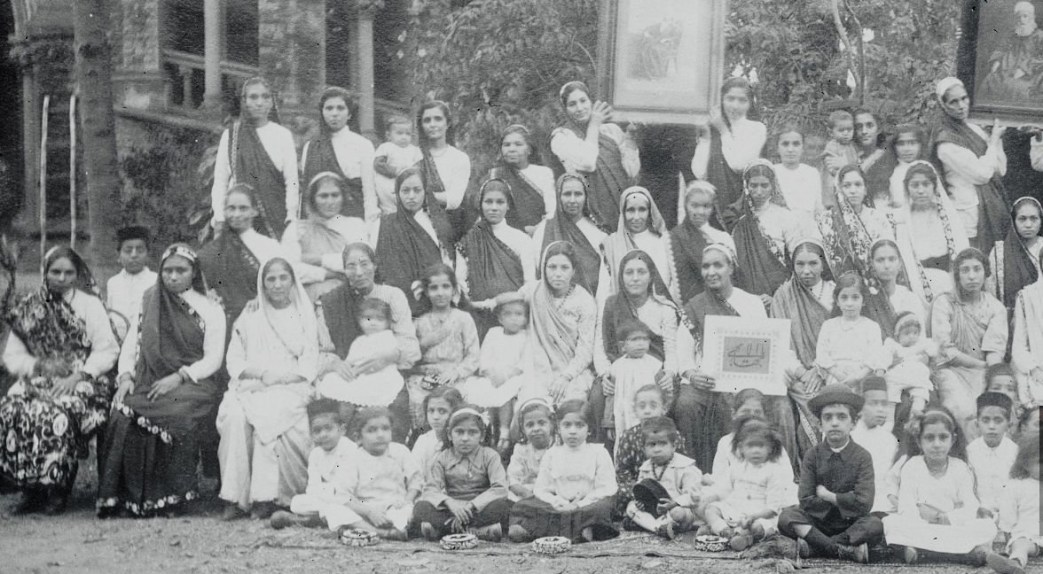
According to the 1911 census, there were 302,425 married women of the age of 1-5, and 17,703 widows of the same age. In 1911 there were 2,219,778 married women from 5 to 10 years of age, and 94,970 widows of the same age.
The conquest of India by the Mongols 800 years ago intensified the enslavement of women by the introduction of seclusion for women in “Zenanhs” (separate apartments for women) and the covering of women’s faces in the presence of men by the “Purdah” (veil). But the latter custom was only adopted by Mohammedans and not by Hindus. In Northern India there are 70,000,000 Mohammedans. The development of industrial capital and of the national bourgeoisie in India brought with it a change in the position of women. The transition to the capitalist structure of society called forth a woman’s movement in India. The penetration of foreign capital into India not only brought into being a working class, but it was also the primary incentive to the development of the native bourgeoisie, and with it the nationalist movement. But the women’s movement in India for equality of rights was, from its very inception, under the direct or indirect influence of the English women’s movement. Many of the best known women engaged in political work in India are either of British descent or were educated in England, as for instance Annie Besant, the founder of the Women’s League of “Home Rule” for India, and others. Not only was the liberation and bourgeois Women’s Movement in India under the influence of the ideology of the British women intellectuals, but even the workers movement in India, which developed after the war, showed signs of the ideological influence and even of the forms of organization of the British Women’s Labour Movement. This applies to the “League of Social Activities,” established in Madras in 1920 for the application of the decisions of the Washington Conference and to the trade unions for working women in India, which became federated in 1923. The secretary of the latter is Mill Enson. By its relentless exploitation of the working class in India, British Capitalism is digging its own grave, having aroused the class consciousness of the workers and brought into being a revolutionary movement not only among the male, but also among the female population.
The question of the emancipation of the Mahommedan women of India from the “Zenanah” and from the “Purdah” was broached at the first All Indian Mohammedan Conference in 1919. The Conference convened by the woman ruler (Begum) of the native State of Bopal, rallied thousands of Mohammedan women around the question of family and social emancipation of women, and of Mohammedan girls’ education. In 1919 and 1920, when many nationalist public meeting were held, Mohammedan women attended these meetings, but they were veiled and listened to the speeches from a secluded part of the hall. In 1921 the wife and the mother of the political agitator Mahomed-Ali spoke openly at public meetings and discarded the “Purdah”.
The question of the education of women became very acute after the war, in connection with the necessity for women’s economic independence. In 1922, in the town of Alahabad a special women’s university was established. The Begum (woman ruler) of Bopal is the chief secretary of the Moslem University in Aligari.
One of the pioneers of Indian revolution is Sarala Bela Devi, the niece of the poet Rabindranath Tagore, who was educated in the Calcutta University which was the initiator of the society of Physical Culture for the young. This society became subsequently a revolutionary organization.
Already in the pre-war period women participated in the revolutionary national movement in India. The most prominent among these women were Sarala Devi, Saroidina Naidu, Bos, Ragava and the famous old Indian revolutionary Rusham Shama who is now a communist.
The years 1918-19 witnessed the birth of an Indian women’s mass movement. During the last three or four years, Indian women of all classes participated in the national revolutionary movement, in the boycott of English goods, as well as in the “passive resistance,” led by the political agitator Gandhi, and also in the manufacture and popularisation of “Khaddara” (local fabric).
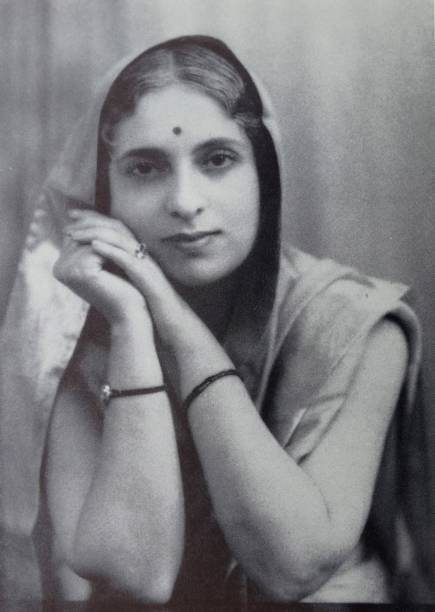
As in all capitalist colonial countries, so in India, the national-revolutionary movement is the precursor of the class struggle. The leaders of the national movement against Great Britain, recognizing the importance of women’s cooperation in this struggle, are carrying on an energetic agitation among the latter. In this movement the mothers, wives and sisters of these national revolutionary leaders play an important role in the work among women. Such women are: Srimata Supita, Suradzananin Naidu, Madigalla, Neru and others, prominent among Mohammedan women are the mother and the wife of Mohamed-Ali, the sister of Abdul Karin, the wife of Dr. Kiaulu and others.
Parallel with the national-revolutionary movement in India there was a simultaneous development of the women’s patriotic movement for equality of rights. This movement is under the leadership of the women intellectuals and of several political workers, for instance, Boz. The most prominent feminists are: Mackenzie, Roy Kumidiny, Gos, and Lotika Gos in Bengal, and among Moslem women the Begum, Haider and others.
Already in 1920 Indian women (of the upper and middle classes) participated in national congresses. Two women participated in the All Indian National Congress in 1917 (one of them was Annie Besant). Among the candidates of the national congress of 1921 were two women. Sarajeni Naidu is the president of the District Congress of the United Capital Provinces (Faru Khabeda).
To facilitate the agitation of the national movement, the whole of India was divided into 50 districts in 1921. In every district a Women’s Section was established (in addition to the Men’s Section), for agitation among working and peasant women and for the organization of volunteer corps. Numerous women’s meetings are held throughout the country addressed by women speakers. Women’s “Swaraji” organizations (for home rule), are being established throughout the country. Not only women intellectuals and traders, but also working, artisan and peasant women participate in this movement. After the closure of the Akhmedavad Session of the Congress, an All Indian Women’s Conference was held. This Conference adopted the resolution calling upon all Indian women to enlist in the Women’ Volunteer corps for the struggle against Great Britain. In the same year (1921) women’s meetings and street demonstrations took place in Lucknow, Calcutta, Pana and Lahore. In 1922 the women’s national movement became still more revolutionary. More women’s demonstrations took place in the Punjaub, in Lahore and in Julletchre. In Delhi hundreds of women are joining the volunteer corps. In Madras women are burning foreign garments, and in Cuntuga they are agitating for non-payment of taxes. Even prostitutes are drawn into the national agitation. The Women’s agitation received the support of the working class population, which also enlists volunteer corps. The women intellectuals on their own support the strikes of the women coolies on the English plantations in Bengal.
But towards the end of 1922 the national-revolutionary movement in India began to make room for the rapidly developing workers’ and peasants’ class movement. The native bourgeoisie, alarmed at the prospects of a national revolution, arrived at an understanding with British capitalists on the basis of mutual concessions. The initiation of a purely working class movement was accompanied by a class movement among Indian working women. The first women’s strikes took place in 1920 in the cotton mills of Madras in connection with the non-application of the decisions re protection of labour adopted by the Washington Conference. Women textile workers play a leading role in the women’s working class movement. The struggle for women’s political rights developed in India parallel with the national movement. At first, the sole aim of Women’s Societies was- the liquidation of illiteracy and education among women. In 1917 three women’s conferences were held on questions of education among women. In 1918 the All Indian Moslem Wo- men’s Conferences issued a proclamation against polygamy and for the amendment of marriage laws. Women’s schools were opened. The Indian Women’s Association concentrated during the last two years on an agitation against early marriages.

Numerous women’s papers have made their appearance in Akhmedbas, Madras and Bombay.
The proletarian women’s movement in India was initiated in 1916, after the strikes in the cotton weaving mills in Bombay and Akhmedbad. The organization of workers’ trade unions in India dates from that period. The first trade union congress was held in 1920 in Bombay and was attended by representatives of 600,000 organized workers. After the Madras strike the trade union of women textile workers was established in Madras. The second trade union congress, held towards the end of 1921, bore witness of the rapid growth of class consciousness among working men and women. Working women take a very active part in all working class demonstrations and meetings.
In the coolie strike in the tea plantations in 1921, many wo- men were arrested for agitation. In the peasant Moplah rising on the coast of Malabah at the end of 1921 women made common
cause with the men. There were occasions when Indian working women showed a greater revolutionary spirit than the men. For instance, a large number of women were arrested during the strike in the Bombay China Factory in 1922, and in the same year during the Gunshura disorders.
In March 1922, after a women’s meeting held in Bombay, the All India Working Women’s Union was established. Under the influence of the trade union leaders in India, this union joined the Amsterdam Trade Union Federation. Mill Enson is the secretary of the organisation. One of the most prominent leaders of the women’s movement is the Hindoo woman Anna Begush.
The Far East.
COREA.
Similarity of economic conditions inevitably results in similarity of political events, even under very different geographical, cultural and racial conditions. It happens in the history of man- kind that similar political events take place simultaneously in countries distant from one another. During the post-war period there were simultaneous outbursts of nationalist revolutionary struggle in the West, in Ireland against British Imperialism, and in the Far East, in Corea against the imperialism of Japan. Without enlarging on the numerous almost identical conditions and phases of the struggle, we would like to point out the similarity between the activity of Irish and Corean revolutionaries in the heroic struggle for the independence of their respective countries.
Corea has a population of 15 million, in which the peasant element prevails. Since 1910, viz., since the forcible annexation by Japan, Corea has been oppressed and exploited in the most brutal manner by Japanese capitalists and government officials. The peasantry has become proletarised during the last few years and is obliged either to emigrate or to seek work in Japanese ports and Japanese factories in the capacity of unskilled labourers. The impoverished middle class of Corea in part accepts Japanese service, and in part joins the revolutionary movement. A general Nationalist movement has sprung up in which women and the youth take an active part. In 1919 the Corean rising broke out, and since then the revolutionary struggle is rapidly growing more intense. The starting point of the 1919 rising was a patriotic demonstration of the male and female students of the missionary schools. After the failure of this rising, the numerous arrests and the ill-treatment and torture practiced in the prisons, the revolutionary struggle assumed a more systematic form. Numerous revolutionary organizations (legal with educational aims and secret terrorist organizations) sprang up throughout the country. Among the most active of these organizations is the patriotic league of Corean women, which has several branches. Two of the most revolutionary of these branches are headed by women. The membership of this League includes 40% of the peasant element. In 1920-21 the patriotic league of Corean women had in its ranks hundreds, nay thousands of Corean women engaged in the struggle for the independence of the country. These leagues were also partly of a feminist and partly of a purely educational character. Corean women gave proof of great self abnegation in this struggle, many young girls and women succumbing to the brutal treatment meted out to them by the Japanese police in the prisons.

In 1921 this general nationalist movement gave rise to the workers class movement, which led to the establishment of the Communist Party. The impoverished peasantry and the working class of Corea look upon Soviet Russia and the Communist Party as the only means of their salvation. The centre of revolutionary and communist agitation is Shaghai, and Corean women are enthusiastically welcoming the new ideas.
Already at the end of 1921, there were 35 class conscious women members in the Corean Communist party, at the congress of the workers of the East held in Moscow in January 1922, there were five revolutionary Corean women among the delegates.
The class struggle of Corean working men and women is rapidly developing. In the early summer of 1923 a strike of working women broke out in the rubber factory at Saoul. Japanese workers declared a sympathetic strike in support of the Corean women’s strike.
In the general class struggle Corean working women joined Japanese working women. Together, they demonstrated in the streets of Japan. Corean working women’s unions form part of the Japanese Confederation of Labour. At one of the recent meetings of the women’s union of Japanese clerks, a Corean woman took first place among the speakers.
Thus, international working class solidarity establishes a fraternal union between the male and female workers of hostile States in the struggle against Capitalism.
The exploited Japanese working and peasant women, who are deprived of social and political rights, are taking an ever- growing part in this struggle.
CHINA.
China has a considerable female proletariat. Although China is still in the main an agricultural country with a feudal order and handicraft production, it possesses also big industrial centres, such as Shanghai, Hong Kong and Canton. The big Chinese factories employ 250,000 women to 800,000 men. In the small workshops there are 400,000 women to 300,000 men. Women are mostly employed in the textile, cotton spinning, silk, tobacco, Chinese tea, matches, clothing and embroidering industries. working women, especially in big factories, are mostly drawn from the ranks of the proletarised peasantry and live in abject poverty. All of them are illiterate. The decisions of the Washington Conference concerning woman and child labour were not put into practice until 1923, and only after manifestations of working class ferment, strikes and the decision of the Shanghai Chamber of Commerce.
The exploitation of female and child labour in China frequently assumes monstrous forms. The worst forms of exploitation are to be found in the silk factories of Shefu in the vicinity of Shanghai and of Tsien-Tsin.
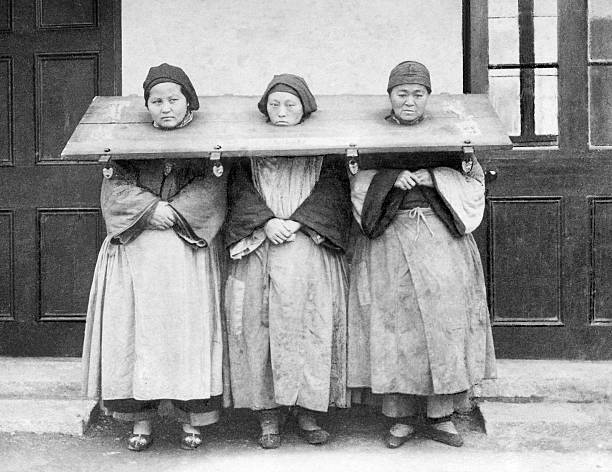
Chinese women are still deprived of all rights in the social and family life of the country.
But since the revolutionary movement in China in 1920, a definite women’s movement has come into being. Moreover, some Chinese women intellectuals participated in the national movement of China in 1906. In 1920 the national anti-Japanese movement broke out in connection with the Shantung question. Peking women students took an active part in this movement.
Recent years saw the growth in China of a women’s movement for women’s franchise, for the amendment of the marriage laws and for women’s economic emancipation.
The women’s organizations, which consist mainly of women intellectuals, teachers and students of Peking, Shanghai and Canton, pursue mainly educational and social aims: struggle with prostitution, liquidation of women’s illiteracy, establishment of schools etc.
In 1921 there existed already in all the big Chinese cities, Chinese women’s organizations federated into “leagues for women’s rights”, “leagues for political rights”, etc.
But hitherto the movement has not been centralized and active enough. Women’s periodicals of a social character are being published in Shanghai and Peking.
In 1921 during the separate government in the South of China in Canton, women succeeded in obtaining electoral rights (though for a short time) in the Canton parliament which had two women members, one of them a socialist. There was a socialist circle among the women students in Peking. Women did not succeed in obtaining their franchise in Peking.
During the last two years communist propaganda among women was initiated in China. Its centre is the working class districts of Shanghai. The big strike movement, which convulsed China during the last few years, bore witness to the significance of Chinese working women in the class struggle. But hitherto Chinese working women, if organized at all, were organized into separate women’s trade unions, which greatly impeded the general working class movement.
In 1923 the first attempt at a women’s day (March 8th) campaign was made in Shanghai, but unfortunately it coincided with the breaking out of the railway strike.
In connection with this the Chinese Communist Party issued a proclamation addressed to the Chinese students.
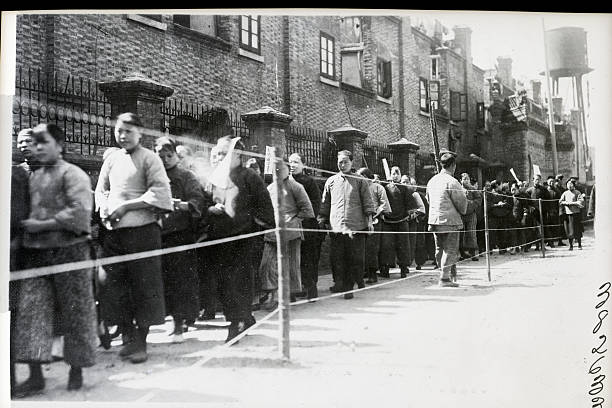
At the last conference of the Chinese Communist Party much attention was paid to agitation among women and to the struggle against British imperialism.
Shanghai is the centre of the biggest movement among working men and women. The Labour Secretariat resolved to establish a special section for propaganda among women. Special courses are being established for the training of women propagandists and organizers.
The resolution adopted at the Conference concerning agitation and propaganda among women includes a decision concerning the necessity of drawing working women into the general trade unions and concerning sex solidarity in the class struggle.
The resolution also pointed out the existing political movement for women’s franchise among Chinese women and laid down communist women should participate in that movement under suitable slogans. For the purpose of centralising the women’s movement and conducting it in a systematic manner, it was proposed that a central women’s committee be formed and a paper be published.
JAPAN.
In the Far East, Japan is a semi-industrial and capitalist, and a semi-agricultural country. Out of the approximately 30,000,000 female population of Japan, 13,000,000 are working women.
Agriculture absorbs 8,600,000 of them, and the factories and mines 1,000,000, while 3,000,000 women are engaged in social service and in various professions. There are in addition 70,000,000 female domestic servants. Approximately one third of the entire female population of Japan (70% of the total number of Japanese women workers) is engaged in agriculture. In the silk industry most of the workers are women, about one and half million. The tea industry employs about 500,000 peasant women.
Factories employ 760,000 working women, and 1,250,000 women are employed throughout all the branches of industry. Women form 50% of the entire industrial proletariat. Japanese factory women workers are mainly employed in silk spinning and silk weaving factories. Many women are also employed in the lace, tobacco and match industries.
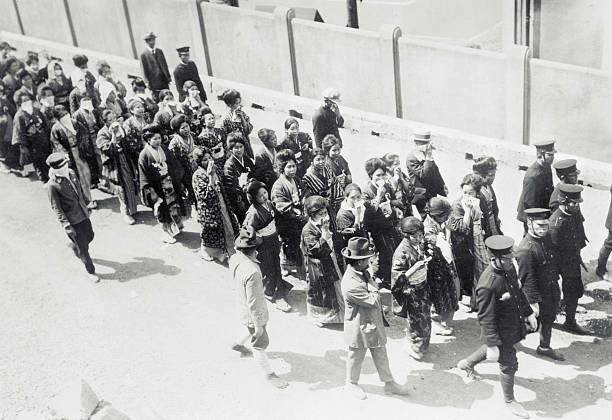
In the mining industry of the Kin-Sin and Hak-Kido districts, women constitute 20% of all workers engaged in mining. There are in Japan 1,500,000 women employed in the post, railway and telegraph services, and also as chauffeurs, conductors and clerks.
There are about 120,000 women doctors, midwives and teachers. The social position of Japanese working women is far from satisfactory. Women’s wages are very low, many of the women factory workers are victims of the living in system, feudal relations prevail in the family life and no independent women’s trade unions exist in Japan. Nevertheless, the development of the workers’ movement in Japan is affecting the women who are beginning to take an active part in strikes and demonstrations and to join the general trade unions. The Japanese imperialist government is doing its utmost to prevent this active participation of working women in the labour movement. Thus, the government has established the national “Japanese Union of Peasant Girls” (Shoipkai). Owing to the recent industrial crisis in Japan and to unemployment, there has been a diminution of women textile workers in the trade Unions. With the assistance of the Yu-ai-Kai (Confederation of Labour) a waitresses’ union was established last year in Osaka, which was subsequently closed down. In March of last year there was a big strike in one of the spinning mills of the same town. This strike, in which 500 women participated, lasted 10 days but ended in failure.
The Japanese women intellectuals have already been active for several years in the field of cultural and educational work. The Association of Japanese Socialist Women has been in existence several years. The most revolutionary women’s society carrying on agitation among working women is the so-called “Red Wave” society or, as it is sometimes called, “The Union of Red Waves” which joined the Communist Party already in 1922. This union took an active part in the May Day celebrations. The following women are the leaders of the communist women’s movement in Japan: Kikua Yama-Kava, Magara, Sakai
and Tayo-Takatsu. In March of last year Japanese women communists organized a Women’s Day campaign. An Inter- national week (March 1-8) was organized, and it was decided to hold meetings on March 8th in the five biggest towns of Japan: Tokio, Osaka, Kiato, Khobe and Nayala. The following three leaflets for women were published: “Rosa Luxemburg”, “Clara Zetkin”, and “March 8th”.
The first public meeting was convened in Tokio and was attended by over 1,000 people. But the meeting was broken up by Japanese fascists (Kokusuikai) and was closed by the police during comrade Hetsu Tanabo’s speech in which she was com- paring the position of the Japanese working women with that of the women of Soviet Russia. In other towns the meetings were prohibited by the police, and only in one town was it possible to celebrate Women’s Day on March 8th.
The Women’s Section of the Japanese Communist Party has only recently been established. Among the women candidates to the Communist Party there are several women students of the Women’s Medical School, who contemplate getting access to the wide masses of Japanese working and peasant women in their medical capacity.
In addition to the Communist organization, the following women’s political organizations exist in Japan: Shin-sin-Fujio-Kiokai (New Woman’s Society) and the Women’s Section of the Kakushin Party, known as the Women’s Franchise League. In February of last year the League participated in the franchise demonstration in Tokio.
The leader of the Japanese Women Communists (The writer Yama-Kava) was recently arrested for agitation.

The Women’s Section of the Japanese Communist Party is called “Yoko-Kai” (the Party of the 8th Day) and is the reorganized society of “Sekiran-Kai” (Red Wave). “This society works among the female proletariat. Recently a women’s trade union organization came into being which published a printed organ “Shokughio-Fushi” (The Woman Trade Unionist).
In April of last year the Japanese women communists carried on a propaganda campaign among the women of the Ashio copper mines, and the Women’s Section of the Communist Party is organising the women textile Workers in Tokio.
THE DUTCH INDIES.
The Dutch Indies consist of five fertile islands: Java, Sumatra, Borneo, Tselebess and New Guinea. Until 1900 these were preeminently peasant in character (95%) with a patriarchal social order. The Malays, who constitute the population of the country, are mostly Mahommedans and supply the international market with tea, coffee, sugar, tobacco, cocoa, rubber, oil, iron, silver, gold and diamonds. Since 1900, with the advent of European Dutch capitalism, the Malay peasantry has been proletarized to the extent of 95% and the peasants and their families have become hired labourers on capitalist plantations. In the towns the importation of European goods dealt a death blow to handicrafts and production on a small scale.
In 1907 the national Malay movement sprang up, mainly in Java, and formed itself into the national party “Sirikatum-İslam”. Women also participated in this national movement.
The Women’s Proletarian Movement in the Dutch Indies was a direct consequence of the changes in the economic system of the Malay people. There appeared among the Malay women, women advocates of women’s rights whose chief aim was women’s education on a wide scale and freedom of work.
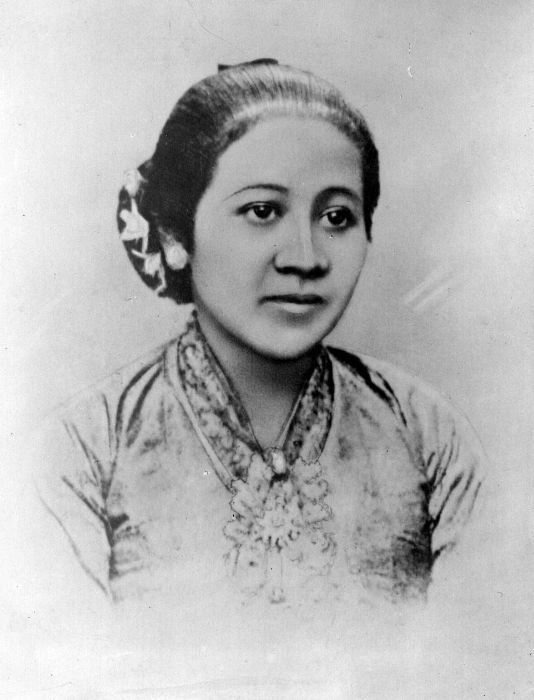
The best known of these women propagandists was Kartini who died a few years ago.
In the trade union movement Malay working women enjoy equal rights with men and take part in strikes, as for instance in the general printers’ strike in Semaranga in 1920. The Communist group, which established the section for work among women, is an outcome of the people’s nationalist part “Sarikum-Islam” In 1919 the women members of the Sarikum-Islam Party demonstrated publicly against the arrest in Semaranga of the leaders of the party by the Dutch Government.
International Press Correspondence, widely known as”Inprecorr” was published by the Executive Committee of the Communist International (ECCI) regularly in German and English, occasionally in many other languages, beginning in 1921 and lasting in English until 1938. Inprecorr’s role was to supply translated articles to the English-speaking press of the International from the Comintern’s different sections, as well as news and statements from the ECCI. Many ‘Daily Worker’ and ‘Communist’ articles originated in Inprecorr, and it also published articles by American comrades for use in other countries. It was published at least weekly, and often thrice weekly.
PDF of full issue: https://www.marxists.org/history/international/comintern/inprecor/1924/v04n27-may-01-1924-inprecor.pdf
 Revolution's Newsstand