‘Art as a Weapon’ by Robert Minor from The Daily Worker. Vol. 2 No. 216. September 23, 1925.
THERE HERE are two magazines lying on the table. One is the Saturday Evening Post, published in Philadelphia, Pa., U.S.A. The other is Bezbozhnik, published in Moscow, Union of Socialist Soviet Republics.
Each of these papers is the finest technical product of its kind that modern mechanical invention can produce. Hundreds of men and women are giving their entire working lives to produce these two publications–expert printers and engravers, highly developed intellectual specialists, corps of business employes and managers, and artists.
Centuries of slowly developed culture lie behind each of these men and women of the pen and brush. Into each of them has been poured something of the cultural accumulation from the forgotten ages of the men who carved images of the buffalo on the walls of their cave-dwellings, of the golden ages of Egypt, Assyria, China, Greece, Carthage and Rome, of the Middle Ages and of Modern times.
In the great and powerful United States, all of this cultural accumulation that can be adapted to the purpose is drawn out of these culture- bearers and fitted into the pages of the great and typical journal of this civilization–the paper which lies on my table. In the very printing of its title, “Saturday Evening Post”–is expressed every possible device for the maximum of effect.
On the other hand lies this other journal with the strange Russian characters spelling out the word “Bezbozhnik.” The very title of it is startling; it means “The Atheist.” The pictures and words thruout the pages are startling, and marvelously beautiful as well as ingenious. Equally here, every device of human ingenuity is used for technical perfection; the technical craft of Moscow in this respect seems to be even better than that of the American city. And also here all of the cultural accumulation of past ages–and of modern times–that could be adapted to the purpose, is poured out in blazing brilliance of the artists. Only, it seems that to the purposes of this magazine vastly more of the cultural accumulation of mankind has been adaptable. In theme and execution the work of the artists has a thunderous boldness, destructive as, fire and sword to the current standards of thought and the concept of life that we find in The Saturday Evening Post.
Two sets of artists are at work. An enormous gulf is between them. In the days before the revolution that made the Union of Socialist Soviet Republics, and made such as Bezbozhnik in its present magnificent form possible, there existed revolutionary papers, as there are revolutionary papers now in capitalist countries. And artists wrote and drew for revolutionary papers and for capitalist papers. From the beginning of modern times there was a gulf between the work that was done for the capitalist press and that which was done for the revolutionary workers’ press. The gulf widened in proportion as the class struggle developed.
Nothing is clearer today than the fact that Communist society is the legitimate heir to the cultural accumulation of the ages which finds lodgement in the artist, just as the Marxian science is the unbroken continuation of the trunk of scientific development of all the past. The effort to preserve capitalism in permanence, constitutes a perversion and constriction of science, on the field of political economy. Also art in all of its phases is perverted and constricted within the frame of capitalist society. “The bourgeoisie has stripped of its halo every occupation hitherto honored and looked up to with reverent awe. It has converted the physician, the lawyer, the priest, the poet, the man of science, into its paid wage-laborers.” And it has “left remaining no other nexus between man and man than naked self-interest, than callous cash payment.'” It has resolved artistic talent no less than personal worth “into exchange value.” Quotations from the Communist Manifesto).
In capitalist society the cultural accumulation of the ages is subjected to the test of its value as a means of enrichment, preservation and defense of capitalist society and of individual capitalists. The capacities of the artist are sifted out, and only that portion of those capacities which are adaptable to the interests of capital are developed into the artists’ professions.
The more sensitive the more able artists tend to chafe under this restriction, this prostitution.
The workers’ revolutionary movement has not the same interests to preserve–but the reverse. For this reason the workers’ revolutionary movement has always exercised, a magnetic influence upon artists. The definitive character of the artist is in that he to a high degree responds to and expresses in harmonious, unifying form the stimuli of life’s experience. The impulse of the artist is the hunger to bring incoherent things into focus with a unifying concept. Capitalism, incites necessity to shut off, smother and obscure the meaning of life, becomes a nightmare to the artist. Communism, which has no such necessity, becomes a beautiful prospect to the artist who dares to look upon it.
In order to obtain the cash payment that enables him to live (and which may even exalt him into luxurious wealth), the artist in capitalist society must subject himself to a process of elimination of artistic qualities, comparable to the process thru which a street-walker is subjected by long practice of her profession of mock-love. The prostituted artist becomes sleek and witty, but nevertheless remains a flatulent mock-artist.
Look at these two magazines on the table again, and you will see the laborious, unjoyfull, tensely skillful work of the mock artists in the Saturday Evening Post; and you will see on the other hand the comparatively leased and happy vigor of the true artist in the Bezbozhnik. (This is comparative. The Communist artists have not yet been free long enough to attain full power. I have chosen these two magazines only as examples; you will find the same to be true in more or less tangible degree of all the capitalist and the Russian Communist press.)
BUT the great proportion of the world is not liberated Russia.
We must have the workers’ Communist press in the capitalist countries. In these it is necessary to struggle against the conditions of all sorts which hamper the development of the workers’ press.
It is clear that there comes a competition between the powerful capitalist press and the impoverished, precariously–living revolutionary press. This is in a certain degree (tho this must not be misunderstood as the liberals misunderstand it) a competition in effective expression. Its horde of prostituted artists is a powerful army of capitalist society. It becomes absolutely necessary to obtain the greatest possible degree of artistic expression in the workers’ revolutionary press.
The Communist press in a capitalist country cannot offer the artist the easy prosperity, nor the finest technical service of reproduction, which the capitalist press can offer. But the Communist press, with all these disadvantages in the competition for the artist’s loyalty, has something of supremely high value-outweighing all else for the most sensitive artists–the freedom from prostitution, and the positive value of a “Weltanschauung”–a unifying concept of the universe, a thing which is destroyed in the choking process to which capitalist service subjects all artists. Capitalist society cannot give any but a lame and patched-up “Weltanschauung”–a pitiful beggar of a god who must hide his sores behind tinsel rags.
The artists who serve the capitalist press are propagandists. Any expression of a concept of the universe when there are two concepts in rivalry, becomes propaganda. The propaganda of the capitalist press (in fiction, poetry, pictures, all) is a propaganda against all that is compatible with a thriving art. But because they go “with the stream” the artists who do the capitalist propaganda every day imagine that they are “not propagandists.”
The artists who serve the workers revolutionary press are also propagandists, of course. All unperverted art, in the face of perverted art, is propaganda for a unified concept of the universe. In the Communist press, of course, the needs of battle compel the artist to bring his work down to less glorified proportions, But, the satisfaction is great enough to attract a considerable and increasing number of artists to whom prostitution is impossible.
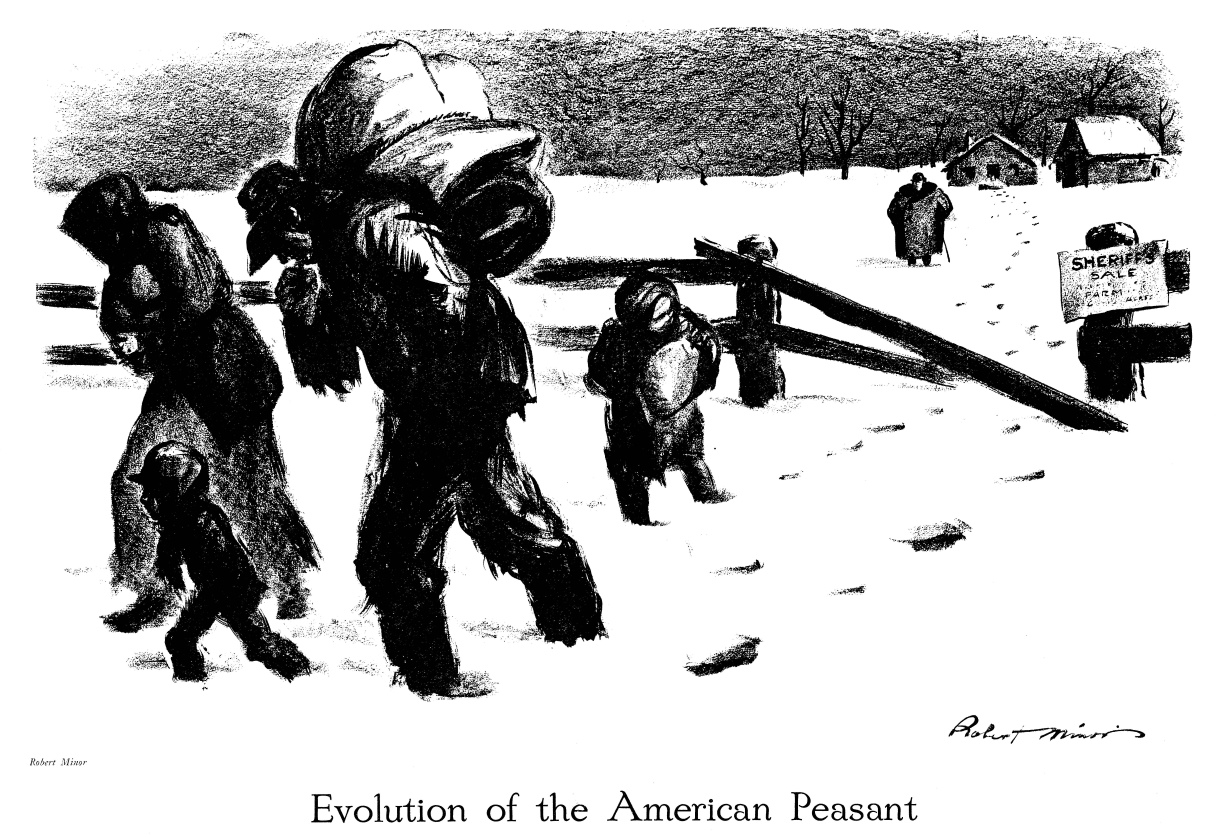
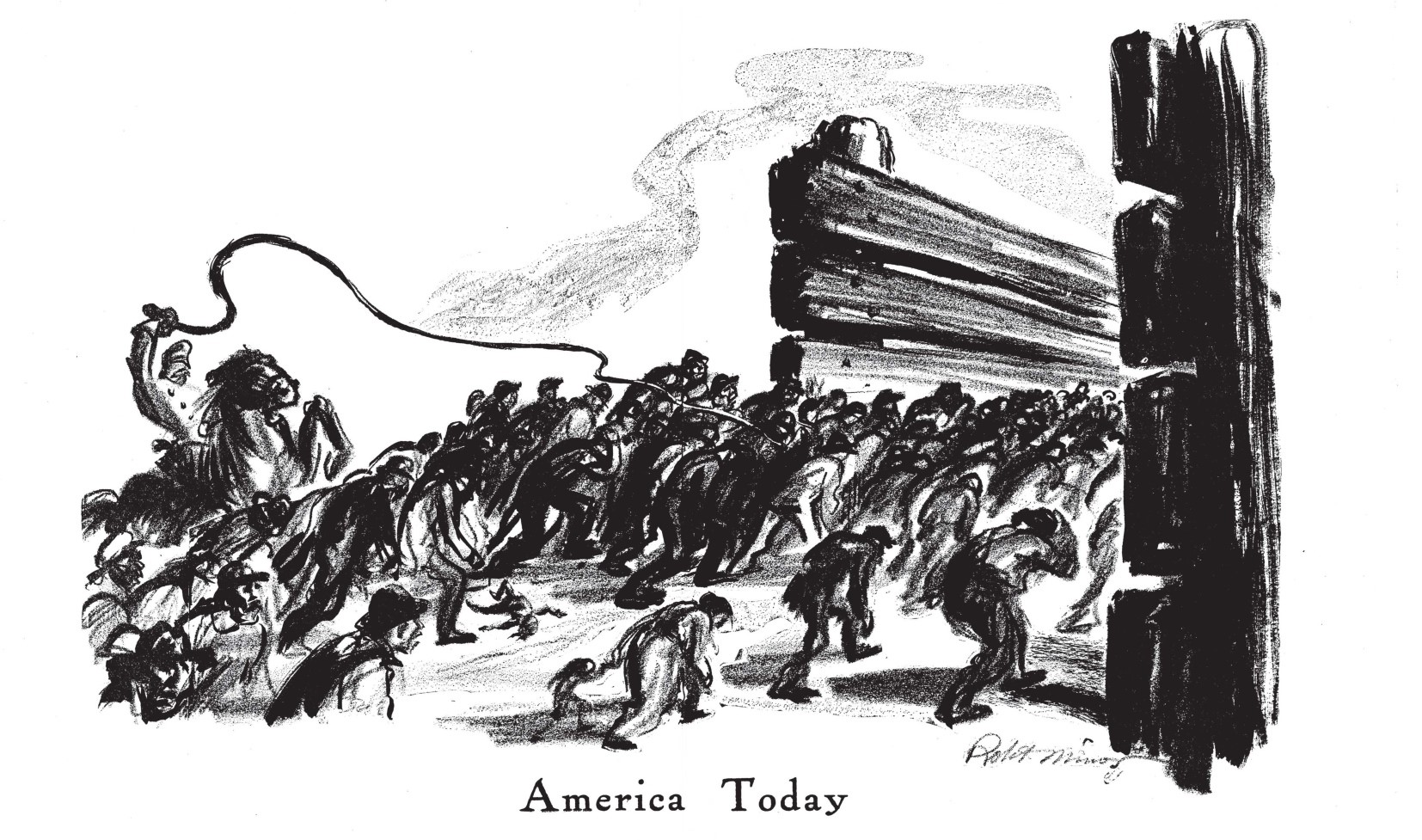
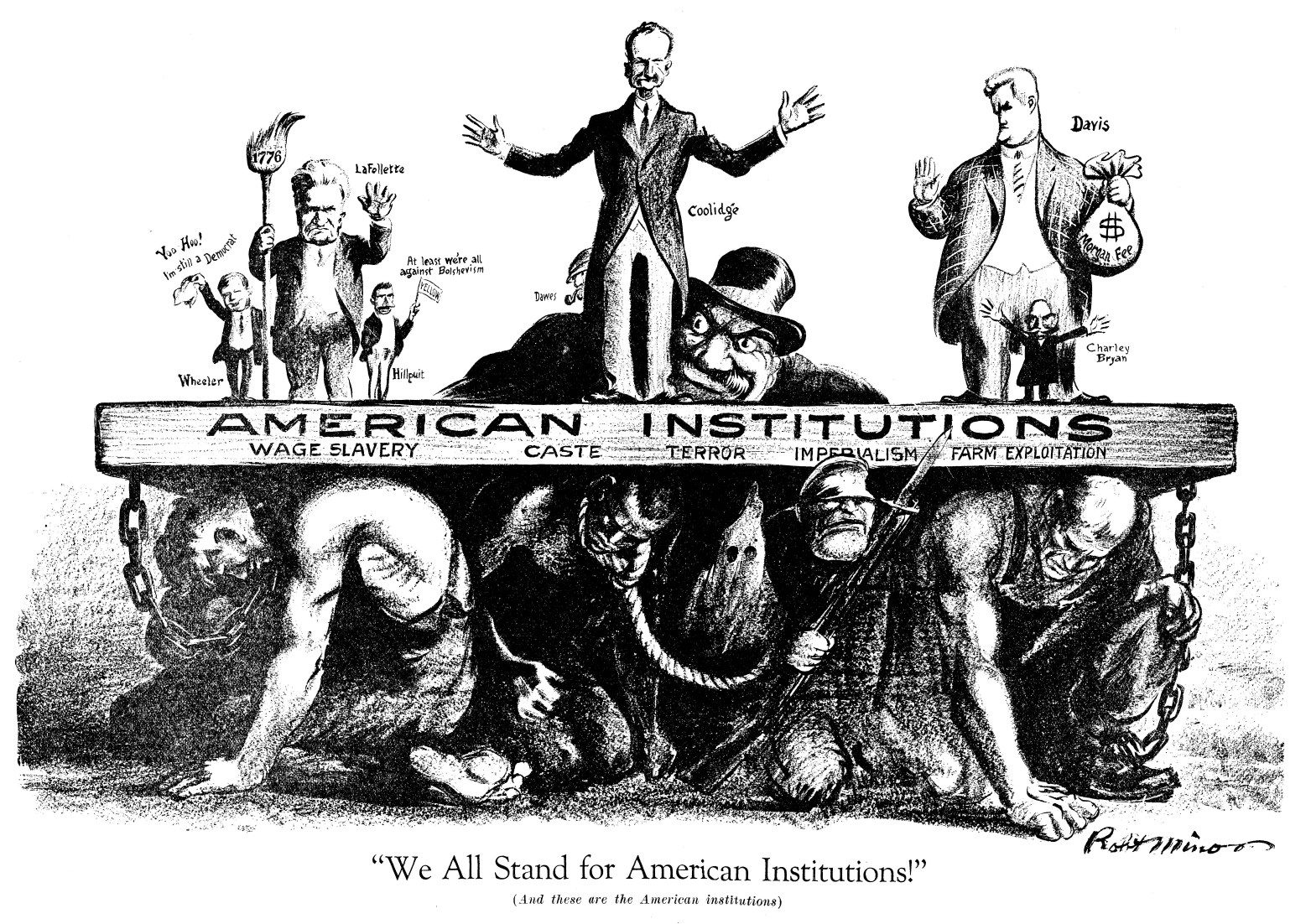
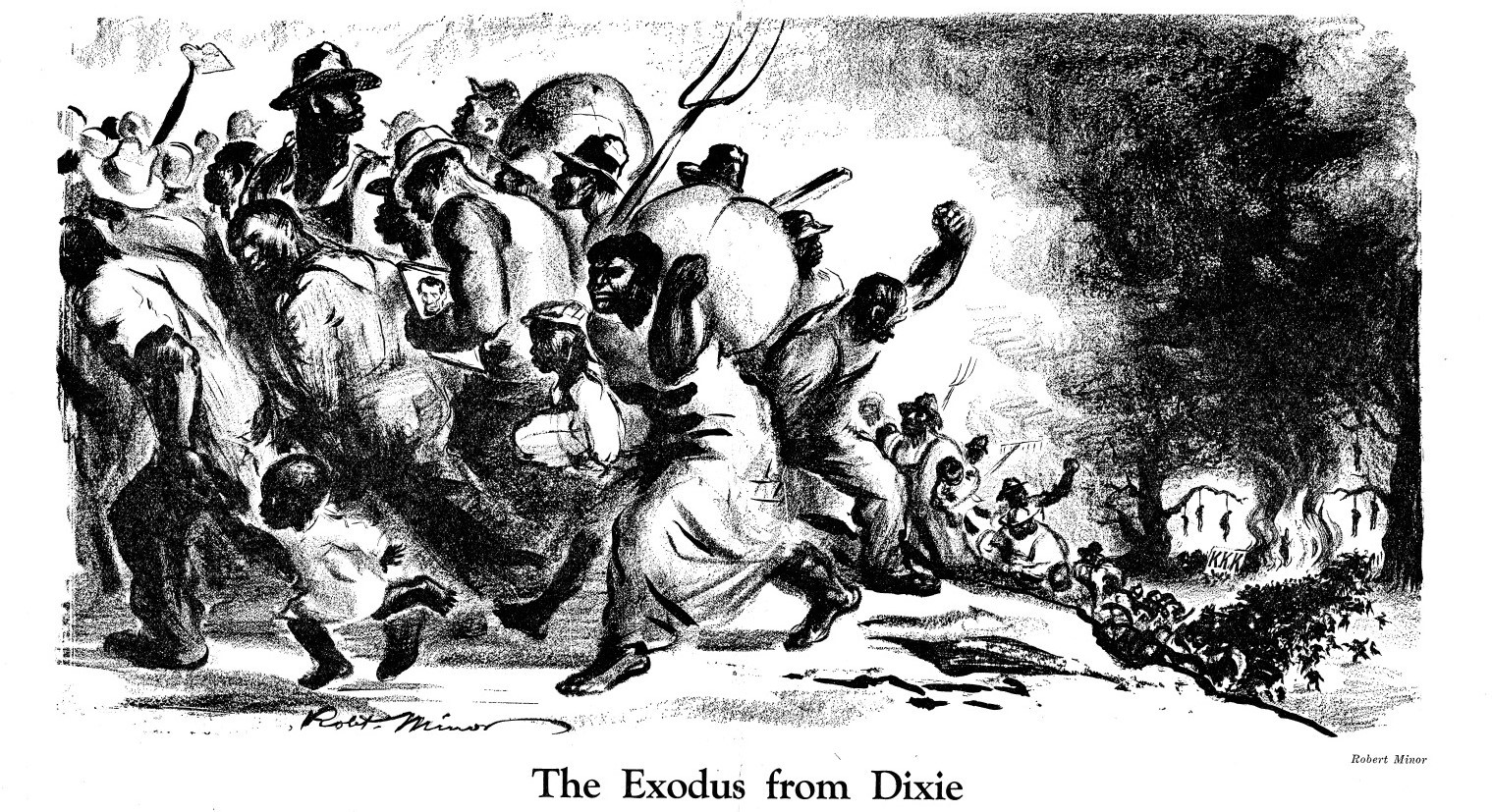
Art is an indispensable weapon in the class struggle–on both sides.
The Communist press must develop a clearer appreciation of this. Experience shows that the workers give a value to art which is far greater than the “cultured” classes give except in some special fields. The hunger–the absolute necessity of the working class for art, is something which, under the influence of American philistinism, Communists are likely to forget. The immense power of the prostituted art propaganda for the capitalist “Weltanschauung”–as shown by picture shows, magazines, etc.–is evidence of a compelling sort. But we, like the prostituted artists, are likely to forget that it IS propaganda. We slip into the habit of considering the capitalist press, movies, etc., as a neutral agent, as to the class struggle, to which the Communist press need but add a specialized corrective influence. If so, we are already poisoned.
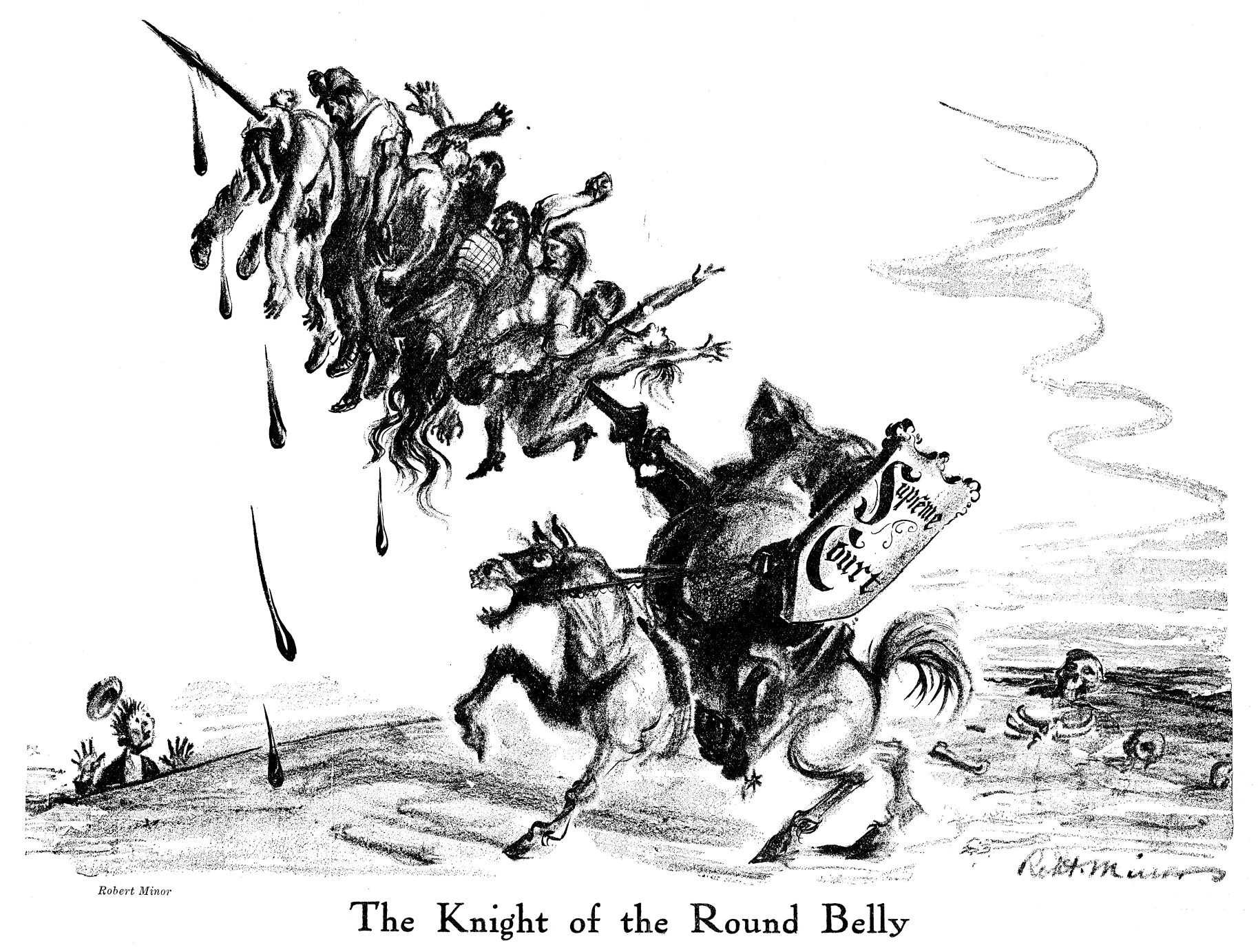
The Communist press must become deeply, powerfully, artistic enough to make us understand this.
To make an effective Communist press-and to give a sounder “Weltanschauung” to the membership of the revolutionary party of the workers are these not important parts of the process of Bolshevizing our party? The essential characteristic of true art is exactly this: That it brings an incoherent mass of fact into a unified concept. Even the smallest good cartoon or verse does this!
Let us speak a word for a higher development of art in the service of the Communist press!
The Daily Worker began in 1924 and was published in New York City by the Communist Party US and its predecessor organizations. Among the most long-lasting and important left publications in US history, it had a circulation of 35,000 at its peak. The Daily Worker came from The Ohio Socialist, published by the Left Wing-dominated Socialist Party of Ohio in Cleveland from 1917 to November 1919, when it became became The Toiler, paper of the Communist Labor Party. In December 1921 the above-ground Workers Party of America merged the Toiler with the paper Workers Council to found The Worker, which became The Daily Worker beginning January 13, 1924. National and City (New York and environs) editions exist.
PDF of full issue: https://www.marxists.org/history/usa/pubs/dailyworker/1925/1925-ny/v02b-n216-NYE-sep-23-1925-DW-LOC.pdf
 Revolution's Newsstand