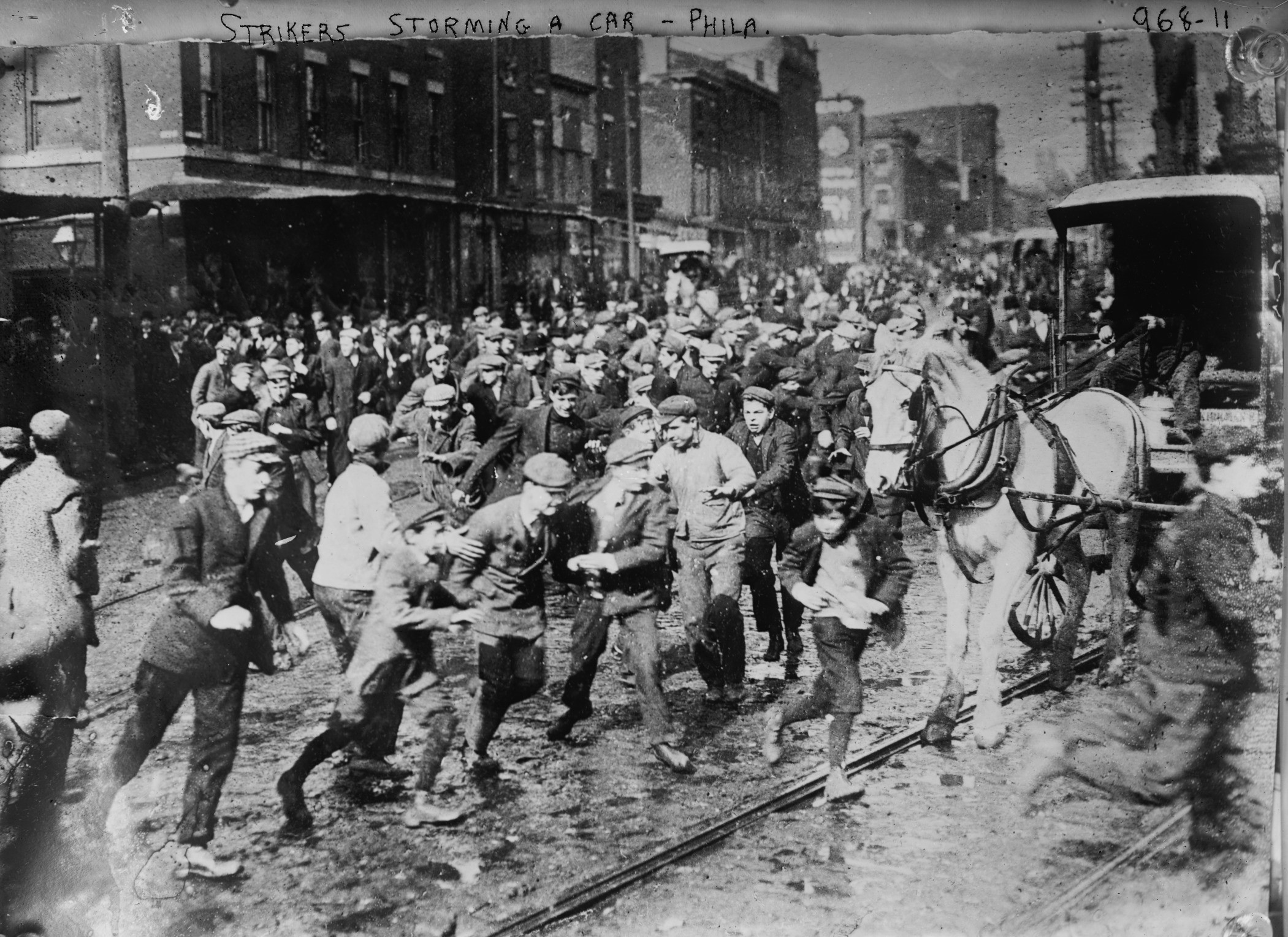
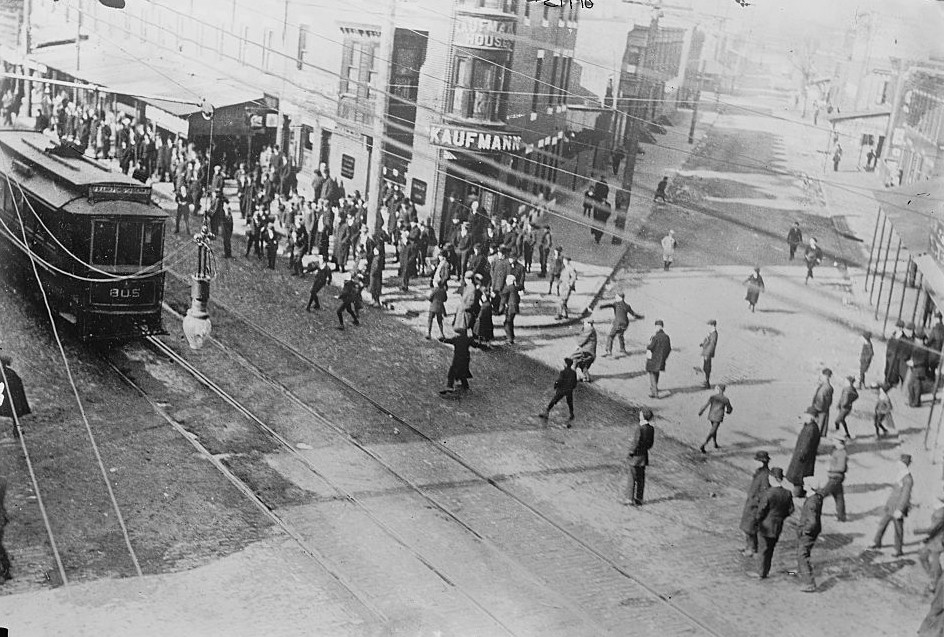
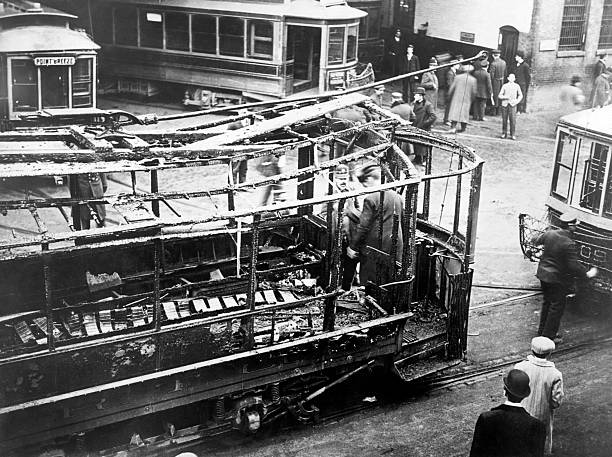
Talking ‘labor theory of value’ was absolutely central to the propaganda of most Socialists organizing in the decades before World War One, and ISR is full of workers applying it to their own experiences and workplaces. Here, comrade James W. Hughes employs some Marxist categories in analyzing the strike of Philadelphia street car employees.
‘Application of the Laws of Value to the Street Car Situation in Philadelphia’ by James W. Hughes from The International Socialist Review. Vol. 10 No. 1. July, 1909.
THE Street Car situation in Philadelphia presents to the mind of an engineer, if you will pardon the technical analogy, a “triangle of forces in equilibrium.” Now let me explain: when three forces act about a point in such a way as to neutralize each other, the triangle of forces is said to be in equilibrium and no motion takes place; such seems to be the condition today of the street car affairs in Philadelphia.
On one corner of the triangle we find the public trying, of course, to go as many miles as possible for its miserable little nickel, on another corner is the company trying to get as many nickels as it can for its miserable little rides, and on the third corner we find the downtrodden employes trying to better the conditions of their miserable little jobs. And thus we have it: the public rides the cars, the company rides the public, and both ride the employes.
The public or the people of Philadelphia think they are being robbed, they think they are not getting the value of their “nickels” in street car rides, but “what they think,” as Marx would say, “does not alter facts,” nor does it make the amount of social labor time necessary to produce the street car ride, more or less than the amount of social labor time necessary to produce the “nickel.”
The people are at present in sympathy with the striking employes, because like the employes themselves, they are in sympathy with their pocket books and the two are thus drawn together on account of their common enemy, the company, who would rob both if it could, but who must rob, continually, their employes, in order to exist, as the very existence of these parasites, who own and control the company, depends entirely upon the surplus value extracted from the sweat, agony and toil of the employes, who design, build, construct and operate every particle of the equipment constituting the great street railway system of the city.
And while the company is making its laws and rulings against its employes and the public, the public is trying to retaliate by trying to secure laws against the company through the law making bodies owned by the company itself. Neither seem to realize that they are trying to do impossible things, as neither seems to have brains enough to attempt to pass a single law congruent with that great economic law to which all other things will have to inevitably bow, sooner or later, namely to the law which holds that all exchange values must and will settle themselves independently and automatically, all gang laws, desires and public demands notwithstanding.
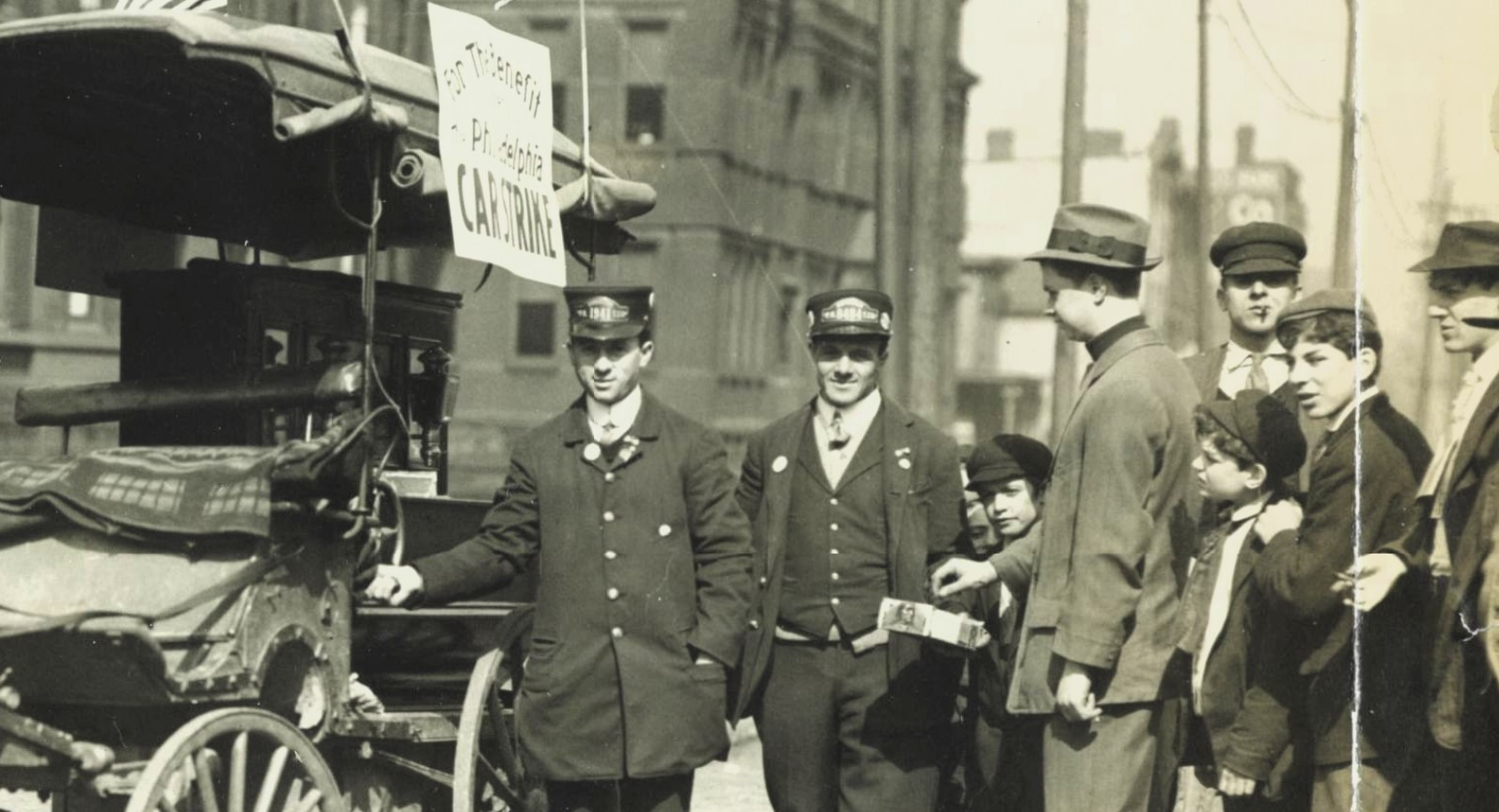
To express it more forcibly than eloquently, I trust it will be pardonable to say that both the company and the public are as yet too Gamn dumb to realize that exchange value cannot be made, regulated or altered by either public protest, company ruling or legislative enactment.
With the triangle of forces thus arrayed against each other as for the time being, it is easy for one, with a clear conception of the Marxian law of value, to predict with some considerable degree of certainty, the logical outcome of the street railway situation in Philadelphia and that, too, without the slightest degree of fantastic prophecy.
It is along these lines that I wish to discuss this subject, but before going at length into the necessary details of the laws of value, I will state briefly what appears to me to be the logical if not the inevitable outcome of the street car affair in this city, after which I will try to set forth the reasons for the conclusions I have arrived at, which conclusions are as follows:
1st. The price of the street car fare, which was recently advanced by the Street Railway Company will not be reduced again shortly or at least until the economic conditions will permit it.
2nd. The wages of the employes will be bound to advance in spite of all the company, or politicians, can do, which if not won by the result of the strike, will be allowed voluntarily by the officials of the company themselves.
3rd. The strike will most likely be broken by the company, the city authorities, and “Ten Per Cent Day,” who after they have been forced later on by the inexorable laws of economics, to grant that which the employes unsuccessfully struck for, will then pose before the public as the guardian angels of their dear and beloved employes.
I shall now proceed to set forth my reasons for arriving at the foregoing conclusions and will open up by saying it seems almost inconceivable, how of late the Socialist press in general, as well as many prominent Socialist writers who are supposed to be Marxian scholars, have been ranting about how the “Street Car Trusts” have been “robbing” the public through the five cent fares.
Before shrieking too loudly about this “street car fare robbery,” had we not better first try to ascertain roughly whether or not the value of a street car ride is more or less than the value of the money paid for same? To do this it is necessary to look a little more closely into the nature of value.
In the first place a dollar is the unit of value in the United States and is equal to the value of 25.8 grains of gold 9-10 fine; or in other words, the dollar as a unit of value is equivalent to the amount of social labor time necessary to produce 25.8 grains of gold 9-10 fine, and will purchase just as much of any other commodity as can be produced with the same amount of social labor that it takes to produce 25.8 grains of gold 9-10 fine. Now it is self-evident that to express the value of gold in dollars and cents would mean nothing, because the value of dollars and cents are expressed in gold, and since the values of dollars and cents are expressed in gold, it is also self-evident that the value of gold expressed in dollars and cents will always remain the same no matter how cheaply gold may be produced, or how much labor time it takes to get it.
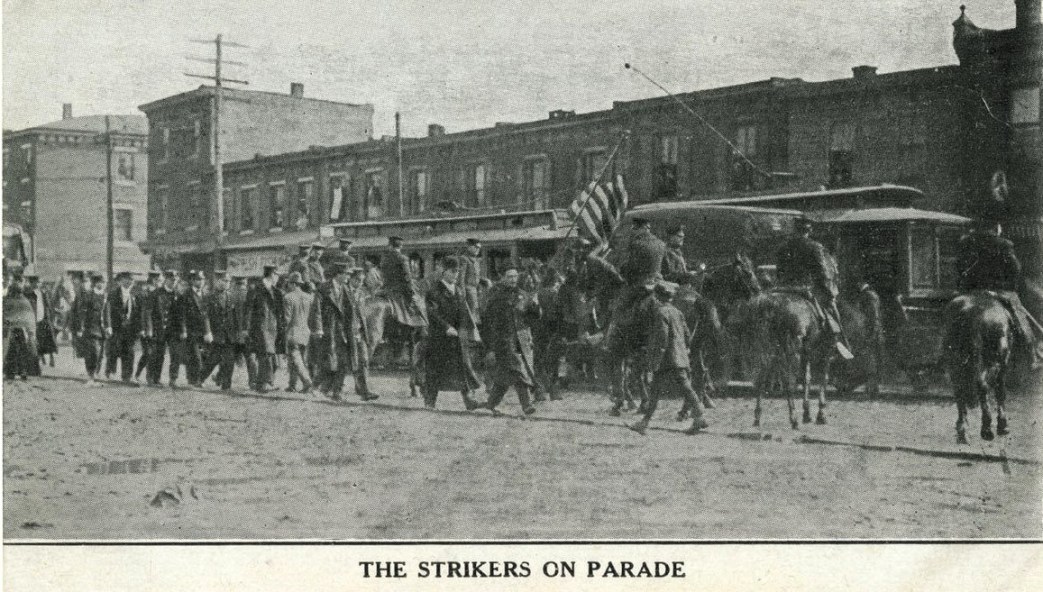
For example: Suppose that we should suddenly find some means of producing gold at the rate of 25.8 grains per second or even a ton per minute, then it is evident that the purchasing power of the gold would amount to almost nothing, while still the value of a dollar would be expressed by 25.8 grains of gold and would purchase just as much of any other commodity as could be produced with the same amount of social labor time that it took to produce the 25.8 grains of gold under the new conditions.
Hence it is plain to be seen that if it took only one second to produce 25.8 grains of gold, then the dollar would only purchase as much of any other commodity as could be produced in one second of social labor time.
Could we then expect to buy as much of other commodities as we formerly did? Hardly!
What would then be the effect on the price of commodities? An enormous general rise in price of all commodities, though their real value would remain the same. What would be the effect on the price of street car rides? The same as that on other commodities. Could you expect as many rides as you formerly got for your dollar? Certainly not. The question now arises, is the value of gold less today than it formerly was? To which we can answer “most assuredly,” in accord with the following reasons:
1st. Since a cheapening of gold as we have seen would cause a general rise in price of all commodities, except those commodities which have been correspondingly cheapened, then it stands to reason that a general simultaneous rise in all commodities would merely indicate that gold was being produced cheaper than it formerly was unless you can prove that all those commodities suddenly required more social labor time to produce them than formerly. But to assume that all commodities are harder-to produce today with all of our improved machinery, than they formerly were, is an absurdity hardly worthy of consideration, while to say that with the new and improved machinery for the production of gold, gold has been made proportionally cheaper than other commodities, would be most reasonable and logical.
Now since a general rise in prices of commodities must be due to either a simultaneous increase in the value of all commodities or else a decrease in the value of gold, and since the former condition is proven an absurdity and the latter a logical conclusion, it stands to reason that the present general high prices of commodities are due to the fact that gold has grown cheaper in value due to the increased production of gold with a given amount of social labor time: and are not due to the rulings of any company, the artificial fixing of prices by any set of men or the fantastic force of “supply and demand.”
Now let me say a few words here for the benefit of those who are still floating in the mystic clouds of the “supply and demand” illusion.
If given a certain article how would you proceed to determine its value by “supply and demand?” In fact what is the unit of demand? Or in other words, how many demands are worth one dollar? How many things do you know of that could not be sold at all if produced at a high price or big value, while if the same thing is produced at a smaller price or smaller value, the demand for the same is increased almost infinitely? In such a case does not the price and value determine the demand? In fact in all cases is not the demand first determined by the price and value? How then can you hope to determine the value or price of a thing by the demand?
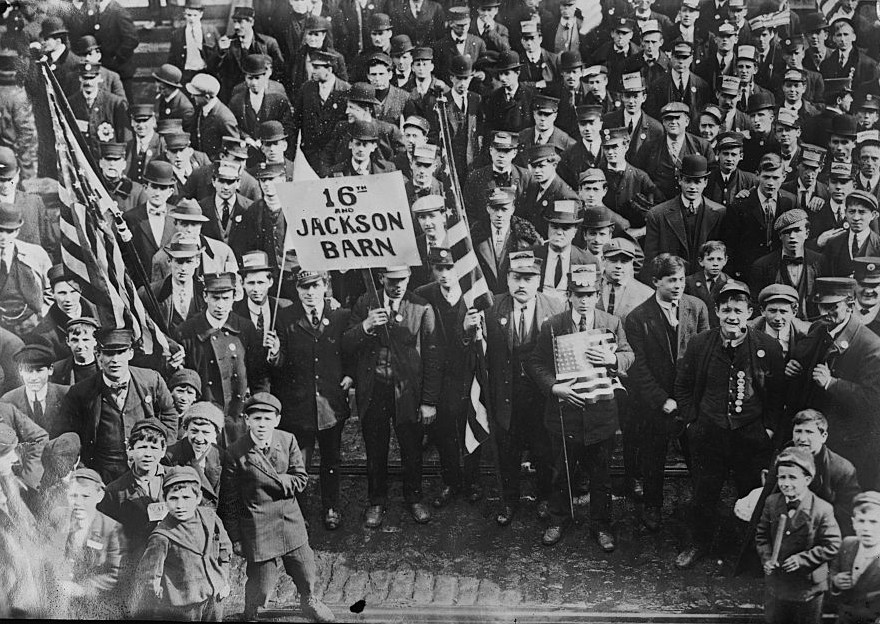
As a matter of fact “supply and demand” are merely shadowy forces determined by the exchange value of a thing, which is predetermined by the amount of social labor crystallized in that commodity, and the most that supply and demand can possibly do is to cause prices to fluctuate about the real values on a whole or about points slightly above or below the real values in accordance with conditions.
The Marxian law of value holds good in all cases and whenever we know the total amount of social labor expended on a particular kind of commodity and the total amount of that commodity produced we can accurately and scientifically determine the value and price of that commodity. But some seem to be bewildered at the application of this law to the products of agriculture; they seem to think that the fluctuation of seasons which so greatly affect the products are the determining factors and that this undermines the Marxian law of value.
Now let us examine this proposition: Inasmuch as the total amount of social labor expended annually on a given farm product, and the total amount of the product that is produced are hard to determine accurately, people are too wont to fall back on the “supply and demand” business, which first makes itself apparent. But let us take for example the following illustration:
Suppose that in a certain community a thousand farmers are engaged in producing farm products and among others wheat. Now suppose that they crystallize on an average one hundred hours each in their production of the wheat (it matters not whether one gives only one hour to the production of wheat or ten thousand hours so long as the total averages one hundred hours each), then there would be a total expenditure in the production of wheat one hundred thousand hours of social labor time. Now suppose that the total crop of wheat should be on a normal season one hundred thousand bushels of wheat, then it is clear to see that the value of the wheat on that year would be equivalent to one hour of social labor time for every bushel of wheat produced.
Now suppose that on the following year that the same number of farmers are still engaged in the production of wheat, spending as they naturally would approximately the same amount of labor ‘on the wheat crop as they did the year previous, that is to say, a total amount of one hundred thousand hours of social labor time, and suppose that owing to a drought, the season brings forth only ten thousand bushels of wheat, then it 1s evident, that ten hours of social labor time has been expended on an average on every bushel of wheat produced, or the value of a bushel of wheat will then be ten times as great as it was the year previous. And this law will settle all prices automatically without the aid of man, all laws, wishes and human desires notwithstanding.
We have seen how the general rise of the prices of commodities as a whole signifies that the value of gold has gone down and this is amply verified by the U.S. Treasury Reports all along which show the enormous increase of the production of that metal, I will not here burden you with the figures as you can easily scan them over for yourself through the tables found in these reports which are easily obtainable at any public library. The points I now wish to make are these:
1st. Inasmuch as gold has grown cheaper, all commodities in order to sell at their true values must advance in prices as expressed in gold.
2nd. Human labor power, like all other commodities, must also advance in price in order to sell at its real value, namely, the amount of social labor necessary to reproduce it.
3rd. The street car rides, like all other commodities, in order to sell at their real value; must advance in price and will not come down to accommodate our desires or public sentiment.
4th. The working public can only better its condition under the present system by fighting for a raise in the price of wages and salaries in order to bring them up to their normal value, as all our petty protesting against the rise of street car fares and flour will avail us little or nothing.
5th. As the value of gold depreciates the value of labor-power must also depreciate if the price of that commodity does not rise in proportion, and as the value of the street car employes’ wages has already been reduced to the point of starvation a further reduction is impossible, hence an advance in the price of their labor power or wages must ensue.
6th. While the Street Car Company is at the present, for the gory greed of gold, trying to hold back the rise of its employes’ wages and crush them beyond redemption, in a short while the officials of the Rapid Transit Company will be forced to realize that; as it does not pay a teamster to work a half starved horse, so it will not pay their company to work half starved slaves, and they will be compelled for their own salvation to raise the wages of their slaves, whether they would like to or not.
In the present struggle of the street car company’s employes my heart and hand go out to one and all, and how I wish them good deliverance: but when I think of the brutality of the powers that be, the police force, “Ten Per Cent Clay” et al., my reason and my wishes are at war and I can not help foreboding the worse, yet win or lose their wages must advance.
But whatever may be the outcome of the street car situation in Philadelphia and other similar ones that are likely to follow, what is to be the position of the Socialist Party and press in regards to such matters? Shall we try to gain public favor by siding with public feeling, worked up over a natural rise in the price of a car fare? Hardly! Can we expect to gain anything by telling the public that they are “robbed” by the natural increase in the price of car fares, when if we know anything at all about economics we know it is not so and that sooner or later we shall have to take “back water?” Certainly not.
What then should be our position on these questions? Had we not better point back to where the real robbery occurs, to where the surplus value is extracted from our labor as we toil in the cycle of production?
Had we not better strive to show how we are at present not only being robbed of the surplus value created by our toil, but are also being robbed by selling our labor power below its real value due to the constant depreciation in the value of gold. And if we succeed in doing this the result is obvious; for if people will revolt when they think they are robbed of a few pennies in car fare, what would they do if they should know they were being robbed of 80% of the entire product of their toil? It is safe to say that on the following election day they would wipe completely out of existence this infernal system of capitalism with all its profit making and poverty, graft and greed, cruelty and crime, with its avarice and anarchy, and would establish in its place a new and sane order of society, known as an “Industrial Republic,” where man will step out for the first time in history “lord of nature, his own master—FREE!”
[This article was written on June 1, while the strike was still in progress.]
The International Socialist Review (ISR) was published monthly in Chicago from 1900 until 1918 by Charles H. Kerr and critically loyal to the Socialist Party of America. It is one of the essential publications in U.S. left history. During the editorship of A.M. Simons it was largely theoretical and moderate. In 1908, Charles H. Kerr took over as editor with strong influence from Mary E Marcy. The magazine became the foremost proponent of the SP’s left wing growing to tens of thousands of subscribers. It remained revolutionary in outlook and anti-militarist during World War One. It liberally used photographs and images, with news, theory, arts and organizing in its pages. It articles, reports and essays are an invaluable record of the U.S. class struggle and the development of Marxism in the decades before the Soviet experience. It was closed down in government repression in 1918.
PDF of full issue: https://www.marxists.org/history/usa/pubs/isr/v11n01-jul-1910-ISR-gog-Corn-OCR.pdf
 Revolution's Newsstand