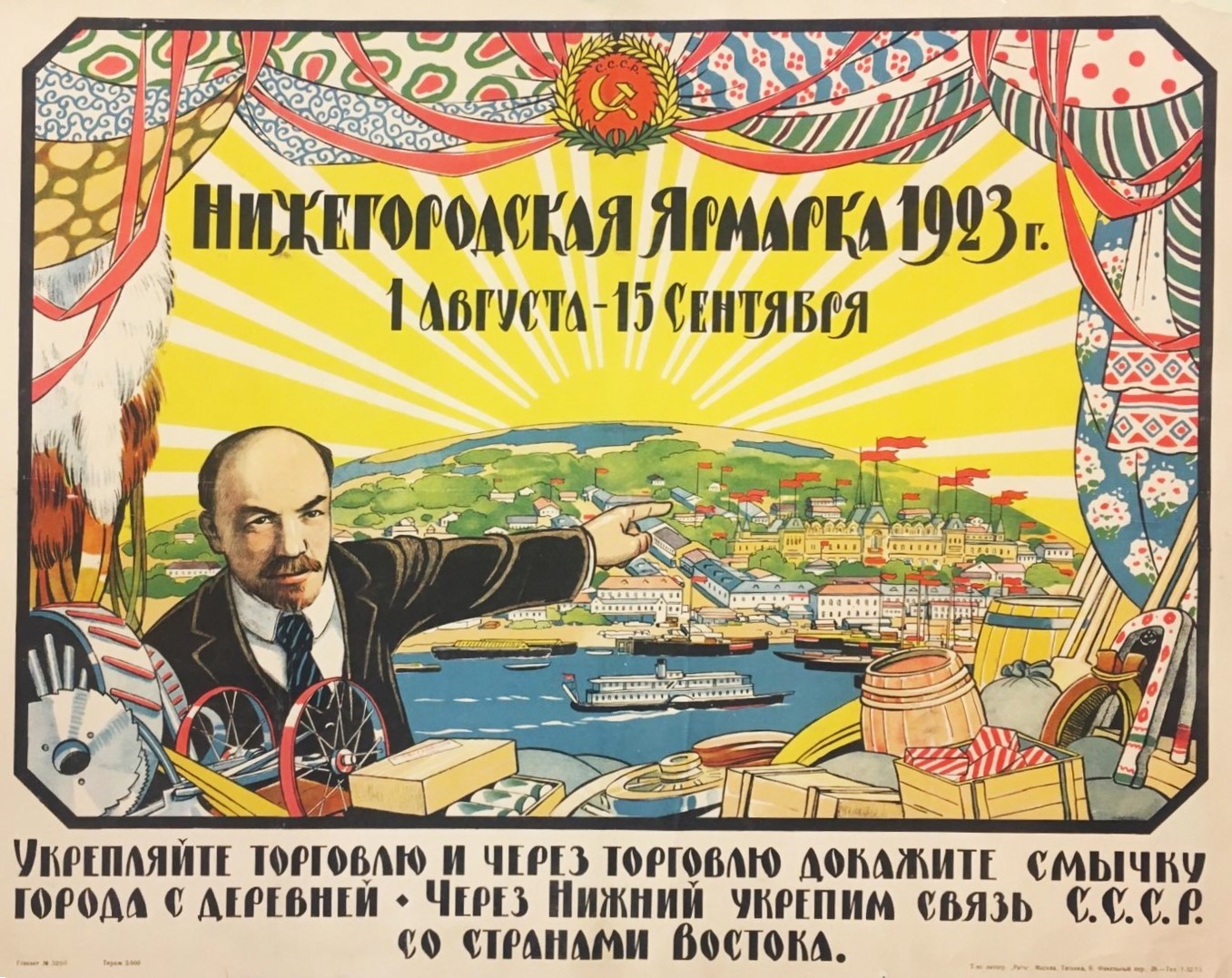
On the eve of the October Revolution a sharp debate in the Bolshevik Party over changes to the Party’s program took place. In the section of a longer article, ‘Revision of the Party Programme‘ published by the C.I. some years later as it was debating a change in program Lenin argues with ‘Left Communists’ of the time Nikolai Bukharin and Vladimir Smirnov, against deleting the ‘minimum program’ from the Bolshevik arsenal.
‘Transitional Demands’ (1917) by V.I. Lenin from Symposium on the Programme Question. Published by the Communist International, 1924.
FROM the general or theoretical part of the programme we pass on to the minimum programme. Here we come across a ‘‘very radical”? (at a cursory glance) but quite baseless proposal of Comrade N. Bukharin and V. Smirnov to delete it altogether.” They state that the division of the programme into maximum and minimum is ‘‘obsolete.’’ What is the use of it since we are speaking of the transition to Socialism? No minimum programme is required. What we require is a programme of transitional measures towards Socialism!
Such is the proposal of the two comrades mentioned. They did not for some reason or other propose an alternative draft, despite the fact that the question of revising the programme, being on the agenda of the next party congress, obliges them to do so. It is possible that the authors of this seemingly “radical”? proposal hesitated in doing so. However it may be, we must consider their opinions.
All countries have been forced by the war and destruction to turn from monopolist-capitalism to State monopolist-capitalism. This is the objective position. In revolution, however, State monopolist-capitalism directly leads to Socialism. One cannot advance in a revolution without coming to Socialism. Such is the objective position created by the war and revolution. The April conference took this into consideration in putting forward its slogans. The “Soviet Republic “? (the political form of the dictatorship of the proletariat) and ‘” Nationalization of Banks and Syndicates”? (the principal measure of all transitional measures to Socialism). Up till now all bolsheviks have been in agreement among themselves, and unanimous. But Comrade Bukharin and Smirnov wish to go further and delete the minimum programme altogether. This is in contradiction to a very wise counsel in a very wise proverb which says:
“Do not boast when going to the war, but boast when coming from the war.”
We are going to the war; that is to say, our party is struggling for political power. This would be the dictatorship of the proletariat and poorest peasants. In taking power we would not be afraid to go beyond the limits of the bourgeois system. No! We say clearly, directly, and definitely in the hearing of all that we will go beyond these limits, that we will fearlessly go to Socialism, and that our path lies in the Soviet Republic, the nationalization of banks and syndicates, in workers’ control, general labour conscription in the nationalization of the land, the confiscation of landowners’ inventory, and so forth. In this respect we have given a programme of transitory measures.
But we must not brag in going to the war. We must not delete the minimum programme, for this would be equivalent to empty bravado; “we do not wish to ‘demand anything from the bourgeoisie,’ but do everything ourselves; we do not wish to worry with details in the bourgeois state.”
This would be nothing else but boasting, because, first of all, we must gain power (which we have not done yet). We have yet to realize in deeds these transitory measure to Socialism, we have to conduct our revolution to the victory of the international revolution, and only after, in “coming from the war,” can we throw overboard the minimum programme as being of no further use. But have we any guarantee that it will be of no further use? Most decidedly not, for the simple reason that we have not yet acquired power, have not achieved Socialism, and have not lived even to see the beginning of the world revolution. We must go firmly towards this goal, but it would be vain to consider it reached when we know that it is still unachieved. Throwing out the minimum programme now is equivalent to stating that “we are already victorious”—pure bravado!
No, my dear comrades, we are not yet victorious. We do not know whether we will be victorious tomorrow or a little later. (I am inclined to think, “tomorrow” (I am writing this on the Sixth of October, 1917), and believe that we may delay in seizing power. But tomorrow is still tomorrow, and not today.) We do not know how soon after our victory the revolution will come in the west. Whether there will be any temporary periods of reaction or victories of the counter-revolution we cannot tell. Nothing is impossible; and we must dig a “treble line of trenches” after our victory to guard against this possibility.
We do not know all this, we cannot know it. No one can. It would be foolish to delete the minimum programme which is necessary as long as we live under a bourgeois system. It is still necessary while we have not yet broken the framework of the bourgeois order, while we have not done what is essential for the transition to Socialism, while we have not broken, and having broken, destroyed our enemy, the bourgeoisie. All this will be done, perhaps much sooner than many think (I am inclined to believe that it must begin tomorrow), but it has not been done yet.
Take the minimum programme in the political sphere. It is calculated on a bourgeois republic. We add to it the statement that we do not confine ourselves to its limits, but will immediately fight for a higher type, the Soviet Republic. We must do this. We must strive for this new Republic with unrestrained courage and decision, and I am sure that we will struggle for it in this manner. But we cannot by any means delete the minimum programme, because, firstly, we have no Soviet Republic yet; secondly, there is the possibility of “attempts at restoration”; we must survive and defeat them; thirdly, in the transition from the old to the new, there is the possibility of temporary “combined types” being necessary (as the “Workers’ Path” truly mentioned a few days ago), such as a combination of the Soviet Republic and the Constituent Assembly. Let us survive all this, and then we will have time to throw out the minimum programme.
The same position holds good in the economic section of our programme. We are all agreed that the ”fear” of going towards Socialism is the greatest poltroonery and treachery to the proletariat. We are all agreed that the principal steps to be taken in this direction must be the nationalization of banks and syndicates. Let us first of all accomplish these and similar tasks, then our future tactics will be clearer, and our horizon will be immeasurably widened by practical experience, which is a million times better than the best of programmes. It is possible, and even probable, that we will not be able to dispense with combined types. For example, we shall not be able to nationalize small enterprises employing one or two wage workmen immediately, or even subject them to a real control by the workers. Even supposing the part they will play will be minute; suppose even that they will be tied hand and foot by the nationalization of banks and syndicates, nevertheless they will still be tiny threads of middle-class relations. Why then throw overboard the minimum programme? As Marxists, fearlessly going to the greatest revolution in world history, and at the same time soberly taking into account all facts, we have not the right to throw away the minimum programme. By deleting it now, we would prove that we have lost our heads before we have taken power. We must not lose our heads either before, during, or after victory, for if we lose our heads, we lose everything.
Symposium on the Programme Question. Published by the Communist International, 1924.
Contents: Programme of the Russian Communist Party (1919), The Programme of the Communist Party of Germany, Draft Programme of the Communist Party of Bulgaria, Draft Programme of the Communist Party of Japan, Draft Platform for a Proletarian Party (Written April 10, 1917. Published in September, 1917) by V.I. Lenin, Transitional Demands by Lenin.
PDF of full book: https://archive.org/download/symposium-on-the-programme-question-ci-1924/Symposium%20on%20the%20Programme%20Question%20CI%201924.pdf
 Revolution's Newsstand