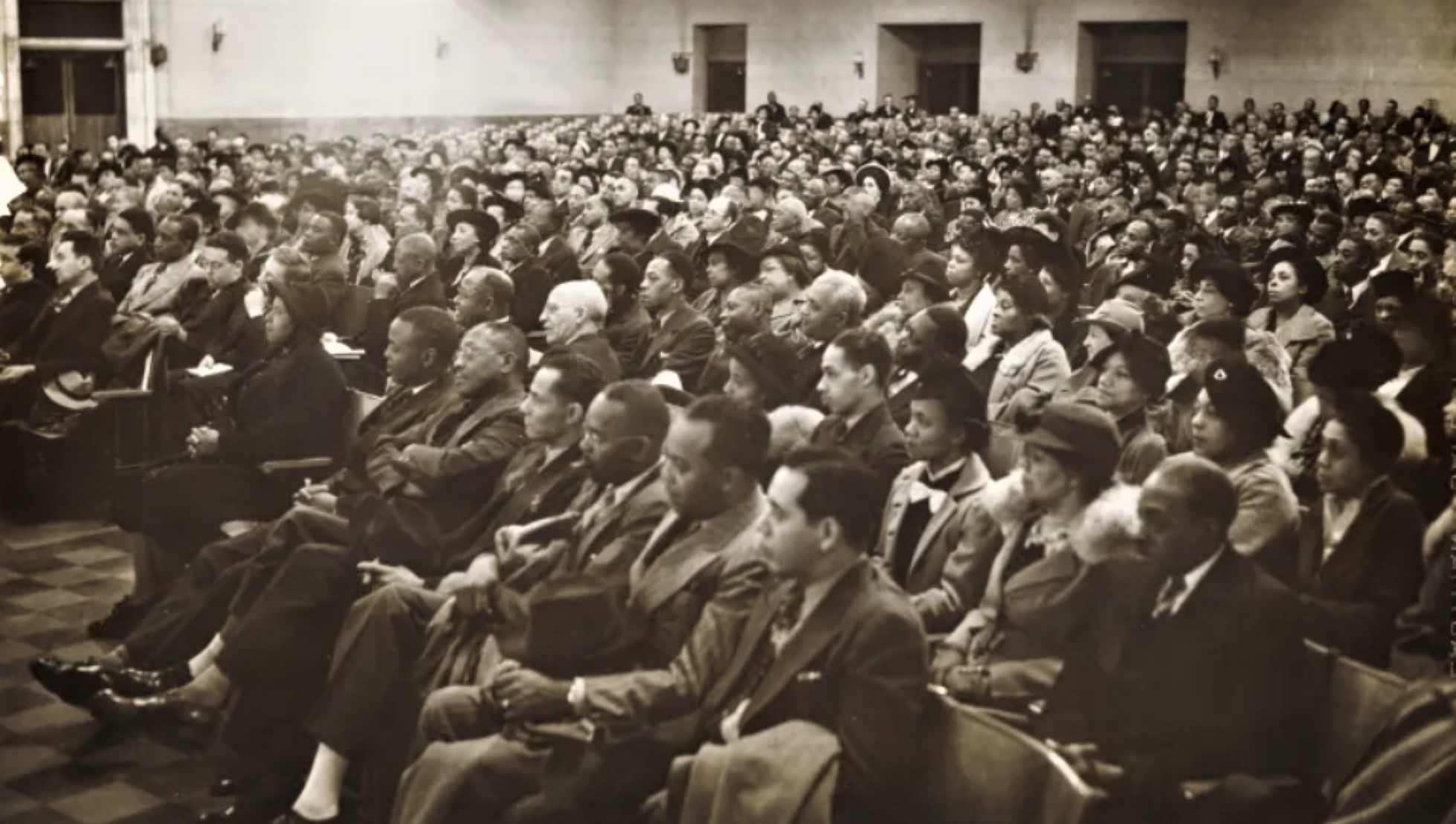
One of Black labor’s greatest struggles, the establishment of the Brotherhood of Sleeping Car Porters led by A. Philip Randolph launched in 1925.
‘Pullman Porters Fighting for a Real Union’ by Arthur C. Johnson from Labor Unity. Vol. 1 No. 8. April 15, 1927.
THE United States Railway Mediation Board created by the Watson-Parker Law now has before it for decision the case of the Brotherhood of Sleeping Car Porters. The claim of the Porters’ Brotherhood involves the recognition of their new, union, the right to represent the porters and maids on the American railways in matters of wages, hours and working conditions, instead of the “Employes Representation Plan”, or company union, of the Pullman Company.
The fight of the porters against the company’s union and for organizing themselves into a bona fide trade union has extended over a period of several months and is being carried through all the formalities and the cumbersome machinery get up by the Watson-Parker Law for the handling of such matters.
National Organization Campaign
The porters organization campaign began over a year ago under the leadership of A. Philip Randolph. General Organizer, with headquarters in New York. Local organizers and committees were selected In the larger railroad centers in different parts of the country and the drive for unionization was conducted on a national scale.
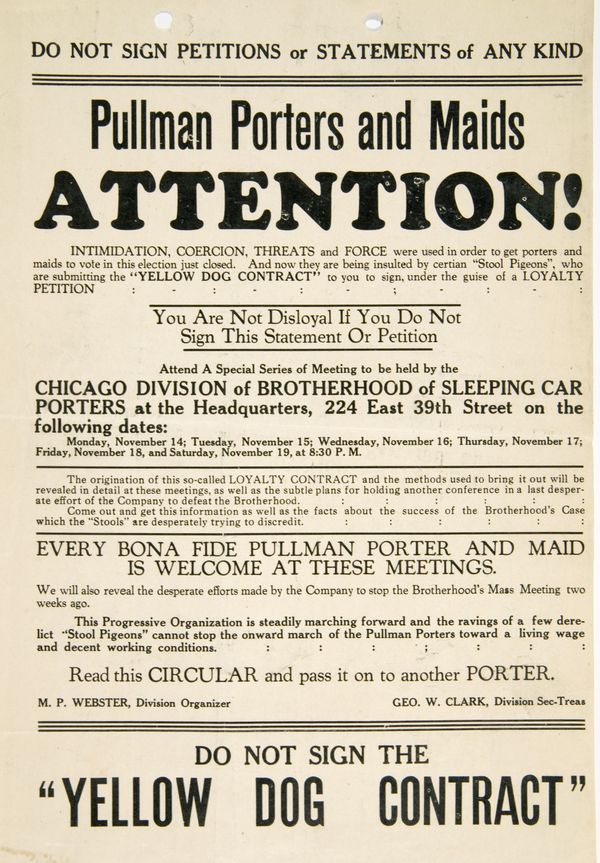
Every obstacle was placed in the way of the organization campaign by the Pullman Company. Slander, libel and subterfuge were resorted to by the company in order to sow dissension in the ranks of the new organization. Prominent organizers in the Pullman service were threatened and some of them actually dismissed by the company, and every pressure brought to bear In block the building of the Brotherhood. Despite this fact the new union has made remarkable progress, and long before its case was submitted to the mediation board it represented 75 per cent of the 12,000 porters and maids on the railroads.
Deplorable Working Conditions
An analysis of the wages and working rules shows the deplorable conditions under which this class of railroad workers is employed.
Low Wages
Wages paid by the Pullman Company range from a minimum of $72.50 per month to a maximum of $104.00, depending upon the class of work and the length of time in the service. The wages average $78.00 a month.
From this meagre wage the porters are compelled to pay regular expenses such as meals in a Pullman diner, living expenses at terminals when away from home, buy polish and other equipment with which to clean the shoes of passengers, pay for their uniforms for the first ten years in the service. etc. These miscellaneous expenses amount to approximately $34.00 monthly, leaving an actual wage of $44.00 per month. The average not monthly income of porters on good runs, including they generous tips from the travelling public, is about $100.00.
Long Hours
In order to earn this miserable wage Pullman porters are compelled to work excessively long hours, 343 hours is the average time put in each month. This amounts to an 11 1/2-hour day and a seven-day week. About 50 hours a month is spent in preparation time at the beginning and end of runs, for which absolutely no pay is allowed by the company. They must cover 11,000 miles, or an equivalent of 366.6 service hours per month, before they earn overtime.
Union Fighting Such Conditions
The goal of the Brotherhood of Sleeping Car Porters is to abolish such conditions. Among its demands, in addition to complete recognition of the new organization, are higher wages, shorter hours, better working conditions, pay for overtime, pay for “preparation” time, abolition of “doubling out”,” abolition of tipping system, conductor’s pay for conductor’s work, when in charge, and manhood rights.
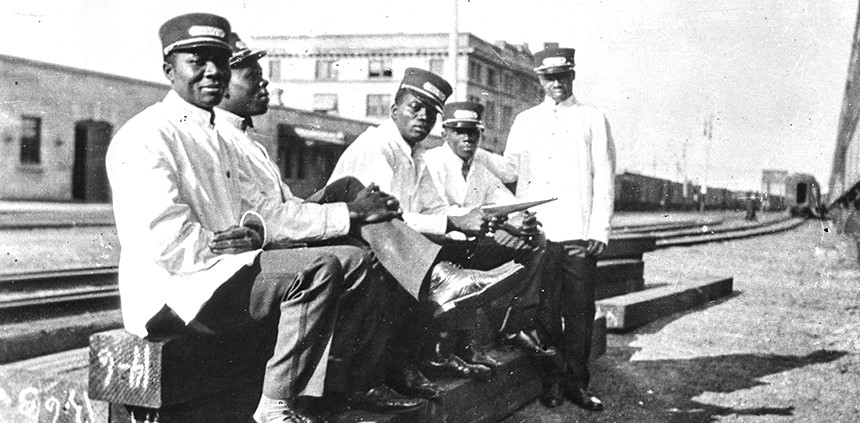
The Brotherhood is asking for a living wage of $150.00 per month and a 240-hour basic month, including preparatory terminal time.
Company Makes Huge Profits
The records of the Pullman Company discloses the tremendous growth of the company from an original capitalization of $36,000,000 to its present capitalization of $125,000,000. The 1926 net profits amounted to $16,000,000. These huge profits were made possible by the long hours and starvation wages paid to its 12,000 employes. They also indicate that the company can well afford to grant the demands of the Porters’ Brotherhood.
Railroad Labor Must Support Them
The success attained in organizing the Pullman porters is one of the brightest spots in railroad unionism today. The porters are making a heroic effort to eliminate one of the company unions on the railroads and to build their own organization. This campaign demonstrates what can be accomplished when a determined effort is made to organize and calls for the full support of the sixteen standard railway unions.
Labor Unity was the monthly journal of the Trade Union Educational League (TUEL), which sought to radically transform existing unions, and from 1929, the Trade Union Unity League which sought to challenge them with new “red unions.” The Leagues were industrial union organizations of the Communist Party of the United States (CPUSA) and the American affiliate to the Red International of Labor Unions. The TUUL was wound up with the Third Period and the beginning of the Popular Front era in 1935.
PDF of full issue: https://www.marxists.org/history/usa/pubs/labor-unity/v1n08-apr-15-1927-TUUL-Labor-Unity.pdf
 Revolution's Newsstand