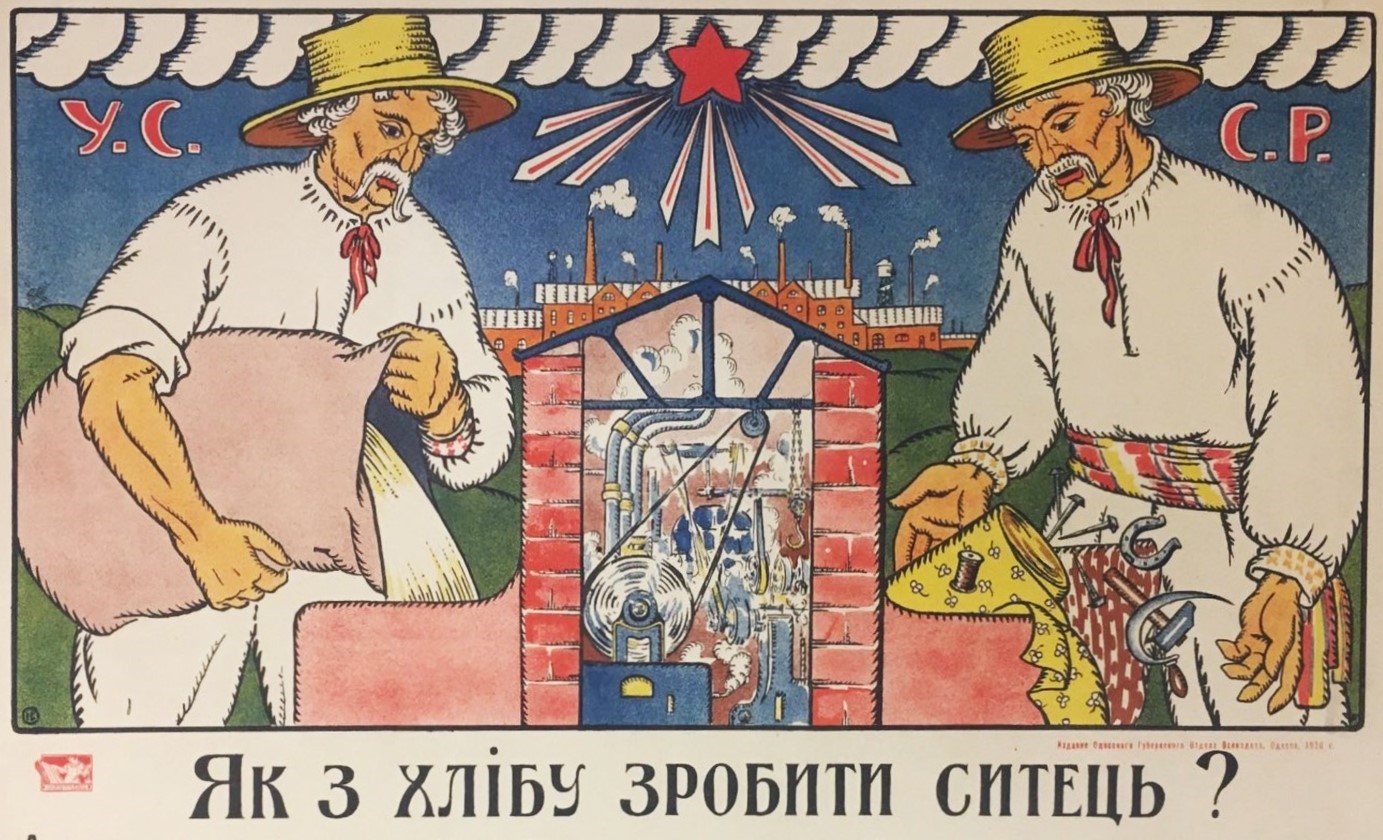
Written in December, 1920 as the Soviets faced the urgent and complicated task of economic reconstruction after the Civil War, replacing a largely ad hoc War Communism. Trotsky promotes the ‘single economic plan’ which would be embodied in the State Planning Committee (Gosplan) formed in February, 1921. The following month, March 1921, the New Economic Policy was introduced. I am not aware of this being online.
‘The Single Economic Plan’ by Leon Trotsky from Soviet Russia (New York). Vol. 4 Nos. 10 & 11. March 5 & 12, 1921.
I. The Various Industrial Commissariats should be United
CAPITALISM runs the industries of a country without a plan. But society cannot exist without a certain unity in production. This unity, continuously broken and reestablished is maintained under capitalism by the law of supply and demand, by the rise and fall of prices, by the ebbs and flows of the “free” market.
The Socialist organization of industry begins with the liquidation of the market and, in consequence, suppresses the “free” play of the law of supply and demand, which is the regulator of the market. The result aimed at, to carry on production in accordance with the needs of society, must be achieved by the singleness of the economic plan, in principle embracing all branches of industry.
One of the first acts of the Soviet Government was the creation of the Supreme Council of National Economy. The original ideal was to concentrate in this council the entire economic life of the country including production as well as distribution.
Commissariats of Supply, Agriculture, Ways and Communications, Finance, and Foreign Trade, were to be sections of this council. The organization of this Supreme Council was planned and partly carried out in accordance with these all-embracing problems. However, the object aimed at has not been achieved owing to economic as well as formal organizational reasons.
Had we taken over the capitalist mechanism in working order, our problems in matters of organization and technique would have been incomparably easier. We should have had a relative equilibrium between the main branches of industry. Production, which is the main lever of economic progress, would have passed into our hands in the process of its “normal” development. The growing predominance of industry in the economic life of the country would have found its natural expression in the organization of the Supreme Council of National Economy. Taking the interdependence of the various branches of industry bequeathed by capitalism as a foundation, the Supreme Council could have elaborated the single economic plan, the chief part of which would be the energetic and uninterrupted development of industry. But the sheer mar events, the class war, and the needs of the Russian revolution, placed this hypothetical eventuality out of the question. We took over the capitalist heritage after the war in a state of great disorder. The war industry had disturbed the relative and unstable proportion established by capitalism between the various branches of industry through the interplay of the free market. The proletarian revolution, having assumed the form of civil war, has withdrawn the workers from industry at the most critical period, and in its turn, contributed further to the demolition of the old industrial relations and ties and even of technical bases, such as whole industrial centers, various workers with their equipment, etc.
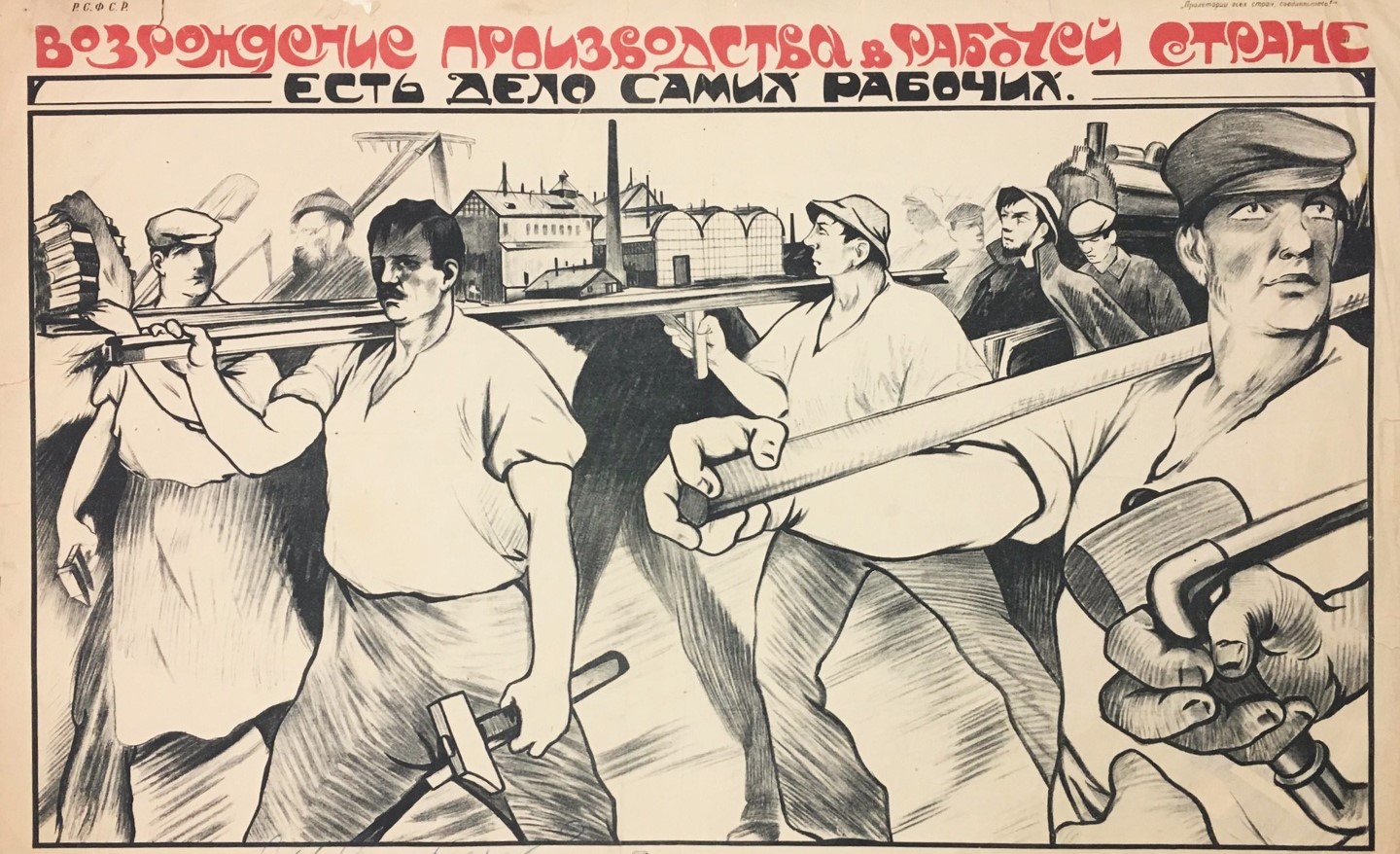
We were thus denied the possibility of building our economic plan as a continuation of the economic process (introducing corrections, more exactness and unification) which, with all its capitalist anarchy, nevertheless managed to maintain some unity. We could not base our practical measures on the calculations of private capitalist business and the industrial statistics of the capitalist state because the economic heritage received by us did not correspond to the situation as reflected in the old statistics.
Thus the material as well as the organizational conditions needed for the elaboration of a single plan embracing all the branches of economic life, were lacking. Therefore the original plan of the one center embracing the whole of the economic life of the country was doomed to failure. Moreover, there was the danger that, in the absence of an economic plan and of the conditions necessary for the same, such a single center might bring about a soulless bureaucratic centralization.
The elaboration of the single economic plan progressed much more slowly, more deviously, and in greater zigzags than it was previously imagined. Before the supremacy of industry could be established over the other branches of economic activity, it was necessary to create some more or less efficient and centralized organization of food supply. The same applied to agriculture, finance, railway, water transport, and foreign trade. Finally, and this is the most important, industry itself, before it could subordinate the departments of transport, food supply, etc., to its needs, had to get together its disjointed parts first of all and have them registered, i.e., it had to create its own machinery of centralized administration.
It was impossible to speak seriously, during this period, of the single economic plan, and still less of the leading role of the Supreme Council of National Economy in respect to food, agriculture, transport, finance, and foreign trade. The Commissariats for Food, Ways and Communications, Agriculture, Finance, and Foreign Trade have built up their organizations and elaborated their methods of management quite independently of the Supreme Council of National Economy. And now, when the work of centralized construction has been completed in rough outline, we are faced by the fact that the Supreme Council of National Economy has actually become the Commissariat for Industry, (existing side by side with the Commissariat for Food, Ways and Communications, etc.). True, in the composition of the Supreme Council of National Economy there still remain some “Centers” (Centro-Textile, Centro-Leather, etc.), and institutions which protrude from this Commissariat for Industry, like so may broken pieces of the original and incompleted plan, and which look like casual outhouses or…a sort of ruins. It would be radically wrong to assume that the transition from the period of “Centrocracy” (i.e., the rule of “Centers” centralized on vertical lines, badly coordinated in all their work, and not fully linked up organizationally), to Socialist centralization, i.e., to an economic system based on a single plan, will bring us back to the original idea of the Supreme Council of National Economy. The problem appears now in a radically different aspect. It must be stated first of all that the centralization of the different branches of industry, in production as well as in distribution, has already found expression in the separate Commissariats. Within the Supreme Council of National Economy, which is the Commissariat of Industry, certain branches, such as textile, metal, fuel, etc., have developed into independent centralized centers, the coordination of whose work is as yet to a large degree a problem of the future.
The machinery of management of industry (the Supreme Council of National Economy) must be simplified and all the cumbrous growths and additions removed from its body.
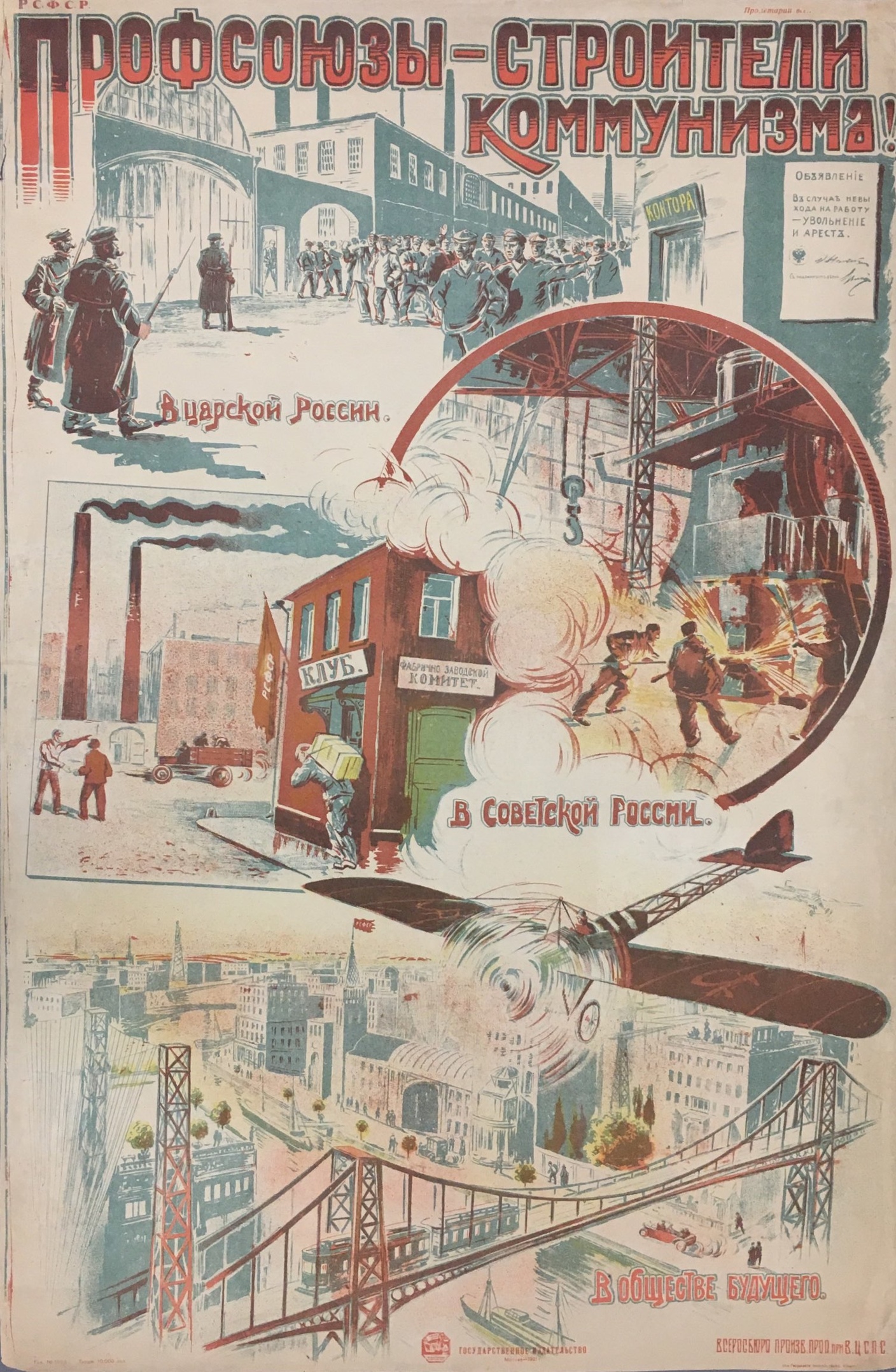
Unity of management must be assured in respect to all the Economic Commissariats.
II. The Positive and Negative Sides of “Centrocracy”
The spread of “Centrocracy” was a necessary stage in the development of the Socialist industrial order. Much is being said about Soviet bureaucracy, its vices, and the necessity of combating it; “Centrocracy” has undoubtedly developed many vicious features of bureaucracy; a soulless formalism, procrastination, etc. But it must not be forgotten, and this is the essence of the matter, that the Commissariats and the Centers which we have created and are creating, however clumsy they may be in many respects, are not something casual and harmful, but something necessary. I mean the administrative Soviet bureaucracy without which no state, so long as it continues to be a state, can exist, i.e., during the transition stage to Communism. Bureaucracy has not only negative but also positive features: as for instance, a closer acquaintance with particular branches of management and industry, a clearly defined grade of interrelations, definite methods of work acquired by long practice, etc. This apparatus of Soviet bureaucracy (party or non-party) has taken the place of home-made methods, and of primitive chaos, and therefore represents a necessary stage in the development of our state.
This is not understood by many of our comrades, particularly by those who, out of hatred for “bureaucracy”, are against general organizational contact between, and complete amalgamation in, particular branches of the administration of the water transport and that of the Commissariat of Ways and Communication. Some of these comrades say that by such means the machinery of the Centro-Water-Transport is being bureaucratized. This reproach, when used in the sense indicated, ceases to be a reproach. The centralized organization of the railway transport remains so far a model which has not been attained in water transport even during its capitalist period, when it was utterly disconnected and disjointed. The problem of creating and evolving a good bureaucratic apparatus (proper building up of departments, sections, etc., accuracy and promptitude on the part of the staff, good connections, proper bookkeeping, and office work), has not yet been solved. The reproach we hear so often that the Soviet institutions have become “infected” by the vices of the old bureaucrats, (formalism, delay, etc.), does not touch the root of the matter. So far, we suffer not so much because we have acquired the bad points of bureaucracy, but because we have not acquired its good points.
Procrastination, captious formalism, and organizational helplessnesss are not the outcome of the bad habits acquired by the Soviet institutions, but have their root much deeper, in the temporary structure, in the transition stage of our industries and their administration. “Centrocracy” is a necessary stage of development, but it creates desperate situations and exceptional difficulties in matters of organization which only outwardly assume the form of departmental procrastination, but in reality are the result of the lack of coordination not only between the various centers and departments, but also within each of them. We steer our course towards the single economic plan, but this single plan is not here yet. Moreover, we have not even the machinery for the elaboration or for the carrying out of such a single plan.
We have centralized (so far very incompletely) various individual branches of industry, but none of these can live and develop without the others. Their interdependence, locally and at the center, is inseparable, and any break in this connection creates the greatest difficulties. The more or less well thought out, regular, uniform organs needed to secure the smooth cogwheel working of the services, the various branches of industry mutually feeding one another, are almost lacking. However imperfect our Economic Commissariats are at the center, nevertheless everyone of them covers its ground and keeps a register of the component elements of its industry, a register which, however slow, is constantly improving. The most acute organizational difficulty, with consequent procrastination, begins as soon as there is a question of coordinating the work of various economic departments and securing the necessary contact between them.
Here we have not passed yet from the experimental stage of creating auxiliary, temporary, and extraordinary organs, collegiate as well as individual.
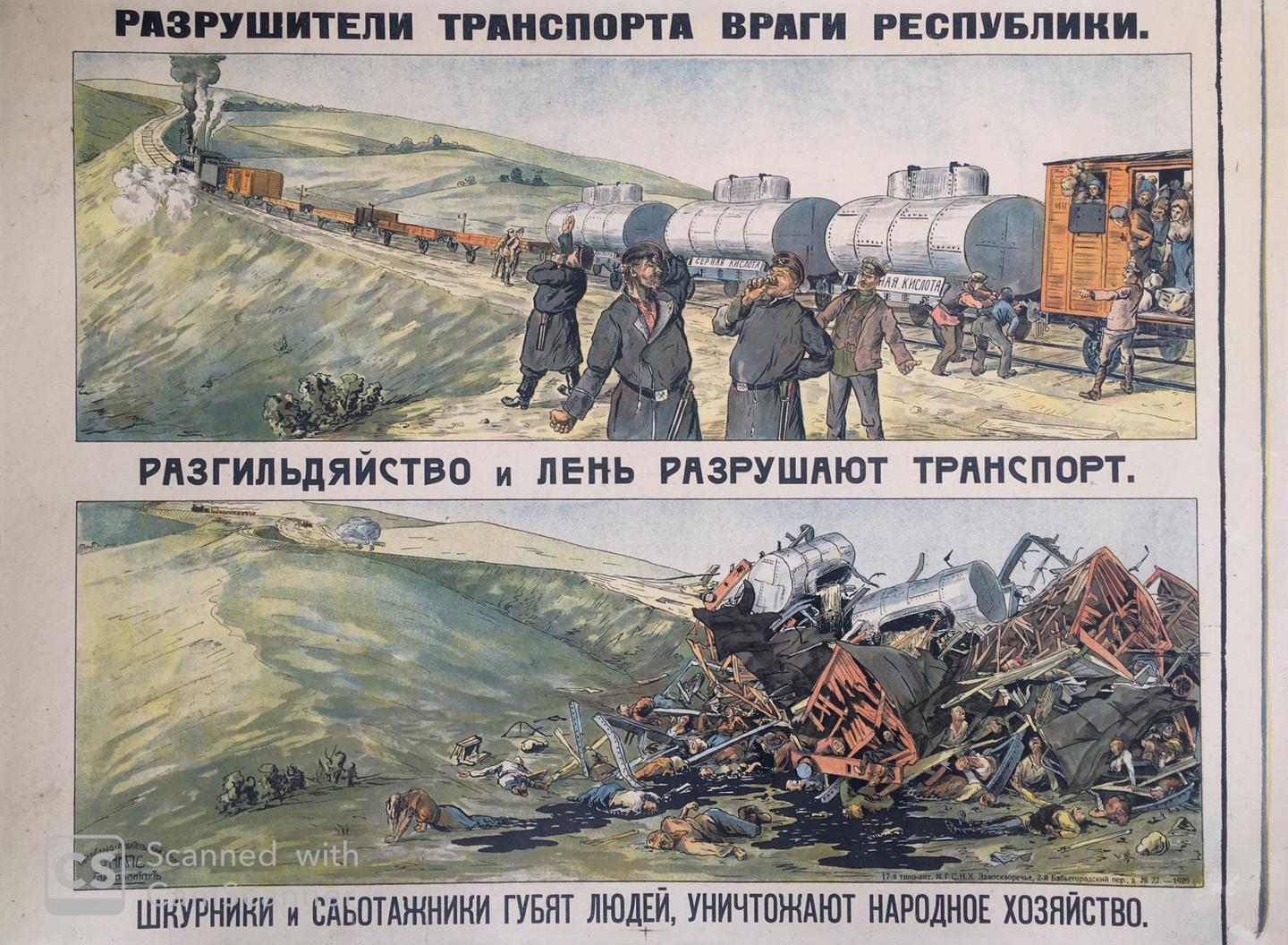
For the purposes of securing the necessary labor power for the economic organs, a new interdepartmental organ has been created—the Centro-Labor, which is immediately subordinated to the Labor and Defence Council; this in its turn represents a combination of the military and administrative departments formed with the object of removing the more acute differences arising in their current work. For the purposes of providing the Red Army with ammunition and clothing, it was found necessary to create a new extraordinary organ, incorporating it with the Revolutionary Military Council of the Republic. A similar organ has been created for the Food Supply of the Army, called the Centro-Army Supply. To coordinate the claims of various departments upon our transport, an interdepartmental Supreme Council for Freight and Carriage was established under the Commissariat of Ways and Communications. The Principal Transport Committee was established for the purpose of fully coordinating the work of the railway workshops, etc., under the authority of the Supreme Council of National Economy, with those of the Commissariat of Ways and Communications. This Principal Transport Committee subsequently formed auxiliary organs. A number of interdepartmental committees, with a varying degree of authority, were formed under the Supreme Council of National Economy. There is a permanent committee for supply to workers at the Commissariat for Food. These auxiliary organs (of contact, coordination and regulation), which make the current daily work at all possible, provide the necessary link between the isolated Centers and the Commissariats.
The Commissariats and the Centers were obliged to take stock, however roughly, of their property, and put matters in order in every branch. Thus work was accomplished without which one could not speak seriously of Soviet economy. The interdepartmental institutions and the temporary organs of coordination have proved very valuable material for the elaboration of more regular and permanent methods of coordinating the work of the various departments and consequently for the elaboration and carrying into effect of the Single Economic Plan.
Now at last we have the possibility of coming into close grips with this problem.
III. The Unification of the Economic Departments and the Workers’ and Peasants’ Inspection
The fight with bureaucracy and procrastination has become, as I have already said, a very popular cry in our ranks, where bureaucracy is now regarded as an epidemic introduced from outside, which is to be fought by vigorous measures. Procrastination is not infrequently ascribed to sabotage. However, to formulate the question in this way means not to see the question at all. There can be no two opinions as to the necessity of applying strong measures against people guilty of sabotage. But to say that procrastination, slovenliness, and negligence on the part of the Soviet organizations is nothing but malicious ‘sabotage or, putting it mildly, bureaucratic indifference to business in hand, betrays a complete failure to understand the very essence of our difficulties. The absurdity of the theory, which lays the blame of all our miseries upon “experts”, becomes obvious when we call to mind how often complaints come in about bureaucracy and procrastination prevailing in the Party and trade union organizations. In reality, what we are dealing with is not a disease contracted from without, or mere sabotage on the part of the officials, but something far deeper, viz., the acute pains of adolescence.
The Smolny period of our Revolution was characterized by improvision and arbitrariness in all branches. The Kremlin period is one of regular organization and Soviet law. Soviet law, with its system of trustified and nationalized industries, food levies, and card system of distribution, with the repair of engines according to order No. 1041, etc., means the deep and thorough-going regulation of our economic life. However, the Soviet machinery of organization, and the actual work of the departments lag cruelly behind the Soviet decrees pointed out above. To get practical results out of a decree, it is necessary, as a rule, especially for local organs, to ascend the ladder right up to the top of a center, then go down, ascend again to the top of another center, and so on. This is procrastination which, in essence, is bred and maintained by the lack of coordination between the economic work proper, the machinery of State, and the Soviet decrees. Sabotage, which may shelter itself in the crevices of this lack of accord, is only aggravating the evil, but is not the cause of it. There is no other way of breaking this front of procrastination except by violating or circumventing the decrees. But to observe Soviet law is just as important as the necessity to fight bureaucratic procrastination. When we investigate carefully the work of any Soviet institution dealing with things material, such as cloth or labor, we are forced to the conclusion that its work proceeds within the pretty narrow limit of procrastination on the one hand and arbitrariness on the other.
The Tsarist State Control was transformed by us into the Workers’ and Peasants’ Inspection, mainly for the purpose of assuring us victory over a criminal pair: viz., most lawful procrastination and most lawless arbitrariness. If it had to deal with intentional crime or vices introduced from outside, the Workers’ and Peasants’ Inspection might very likely have accomplished the task set before it. But the fact is that we are dealing here not with conviction and prevention of crime, but with the building up of an economic organization operating on a correct and coordinated basis. And that is why the methods of the Inspection proved ineffective. Procrastination springs from the fact that the ruins of the capitalist institutions are interlaced with the incomplete and badly coordinated socialist institutions. To defeat procrastination, it is necessary to build up socialist production so that it works smoothly.
The educational problem facing the Inspection, namely, to get the working masses interested in the business of controlling the work of departments and institutions, has, so far, not quite been solved; final judgment cannot be passed on this point before we have had indications from experience. However, with regard to the main problem interesting us; namely, the work of controlling the various departments with a view to ensuring efficiency and coordination, one thing may be said definitely: The Workers’ and Peasants’ Inspection has proved absolutely unequal to this task. It is utterly impossible to create a special department which should embody in itself all the wisdom of the State and really be able to control the other departments, not merely from the point of view of the conscientiousness and the business-like manner in which the work of each of them is carried out, but also from the point of view of the general efficiency, suitability, and regularity of the work as such. Every department knows that when a change of policy or the introduction of serious reforms of organization become necessary, it is useless to apply for advice to the Workers’ and Peasants’ Inspection. Moreover, the Inspection itself looks like a victim of the incongruity between the decrees and the apparatus for carrying them out, and in its turn serves as a potent factor of procrastination and arbitrariness.
To throw light upon the question, let us approach it on its simplest side. One might have thought that the functions of financial control by the Inspection were very clear. But even here, the Workers’ and Peasants’ Inspection falls into most difficult contradictions from which the work suffers greatly. Our accountancy offers one of the most glaring examples of the discord and incoordination obtaining between the various branches of the Soviet State and the industries. We continue to measure the expenditure of all departments, which is the expenditure of human labor in the various branches of our construction, in terms of rubles which, however, long since have ceased to be the measure of anything. The credits asked for various works are often calculated by complicated methods, but the practical value of such calculations is more often than not, nil. It is perfectly clear, that in this respect, the widest avenues are open for bureaucratic pressure, connivance, arbitrariness, and downright sabotage, because the Inspection may demand from the departments complete “proof” in justification of the figures submitted in estimates or accounts. The formal criterion of control gives no guidance here. Even an energetic and experienced worker, say, in the food supply, or in the forestry business, or in the business of buying horses, may, after he has taken into consideration his recent transactions, fix the approximate sum which he requires for his operations, and making due allowance for locality and time, his figures may err, say, 50 or 100 per cent, or even more. But the representative of the State Control has no empirical criterion derived from experience. We have no index of prices to which one can refer and we cannot have such an index. The consequence is that the controller will either let things pass, attaching his signature to each and every estimate and assignment, thus easing the responsibility of the heads of the departments without improving matters; or he will combine delay with arbitrariness, be exacting, and demand elaborate reasons for estimated items which, however, cannot be given, and will impose prohibitions in cases when the nature of the business is not understood by him. The more cautious controllers who steer between the Scylla of controller’s bureaucracy and the Charybdis of controllers’ arbitrariness are straining at a gnat and swallowing a camel.
The position of the Workers’ and Peasants’ Inspection is yet incomparably more difficult when it passes from questions of formal control to those of the general estimate of the work of the department as such, from the point of view of its advantage to the State and to industry. Taking the work of a department, the following typical offences may be observed: (1) Extraordinary delay in consequence of inner departmental and interdepartmental friction and difficulties; (2) Infringement of decrees and of the rights of other departments in order to get through urgent business in time; (3) Carrying through smoothly, in accordance with the law, without any delay or arbitrariness, business that may be in itself unsuitable. Further, one may come across various combinations of these three faults.
If out of the activity of any large department, we pick out cases where precious time was lost on account of strict adherence to the letter of the law, any department might be represented as an organized center of arbitrariness. The question naturally arises: Why does the Workers’ and Peasants’ Inspection let such cases pass? The reply would probably be, that the controllers of a given department were convinced that delay arose from outside difficulties, such as lack of commodities and in coordination of the organization, and that the circumvention of decrees was in most cases caused by the necessity to achieve practical results without inflicting any injury upon some higher interests.
It is much easier to pick out a dozen or so of sins of omission or discrepancies than to estimate properly the work of institutions and departments from the point of view of efficiency aa expediency. For such estimates a broad statesman’s outlook is required, a much broader one than the outlook of the people who do the work. It is necessary that the controller should have a clear idea of the general trend of the work of the given department, of the nature of the difficulties which he has to overcome, and in this connection should be able to estimate the results achieved. This is an exceptionally difficult task due to the lack of coordination and proportion in the work of the various departments; the most energetic and intelligently guided efforts in metallurgy may be reduced to naught in consequence of insufficient or badly coordinated work of the organs of food supply or transport; on the other hand, the well-organized work of engine repairs may be paralyzed by the low productivity of the metallurgical works, or by the lack of clothes for the workers. It would be naive to assume that the Workers’ and Peasants’ Inspection is capable of occupying a position above all the other departments, from which height it may review all their faults and shortcomings, apportion the value of each of them in the general scheme and in the perspective, and draw from this all the practical conclusions. This would actually mean to assume that the Workers’ and Peasants’ Inspection, standing above the departments, is in possession of precisely that single economic plan, which the ordinary departments have not yet been able to create. This is, of course, impossible. An independent organ which stands outside of the economic departments cannot unite and direct the work of the latter. This can only be done by the combined efforts of the economic departments themselves.
Soviet Russia began in the summer of 1919, published by the Bureau of Information of Soviet Russia and replaced The Weekly Bulletin of the Bureau of Information of Soviet Russia. In lieu of an Embassy the Russian Soviet Government Bureau was the official voice of the Soviets in the US. Soviet Russia was published as the official organ of the RSGB until February 1922 when Soviet Russia became to the official organ of The Friends of Soviet Russia, becoming Soviet Russia Pictorial in 1923. There is no better US-published source for information on the Soviet state at this time, and includes official statements, articles by prominent Bolsheviks, data on the Soviet economy, weekly reports on the wars for survival the Soviets were engaged in, as well as efforts to in the US to lift the blockade and begin trade with the emerging Soviet Union.
PDF of full issue: https://www.marxists.org/history/usa/pubs/srp/v4-5-soviet-russia%20Jan-Dec%201921.pdf
 Revolution's Newsstand