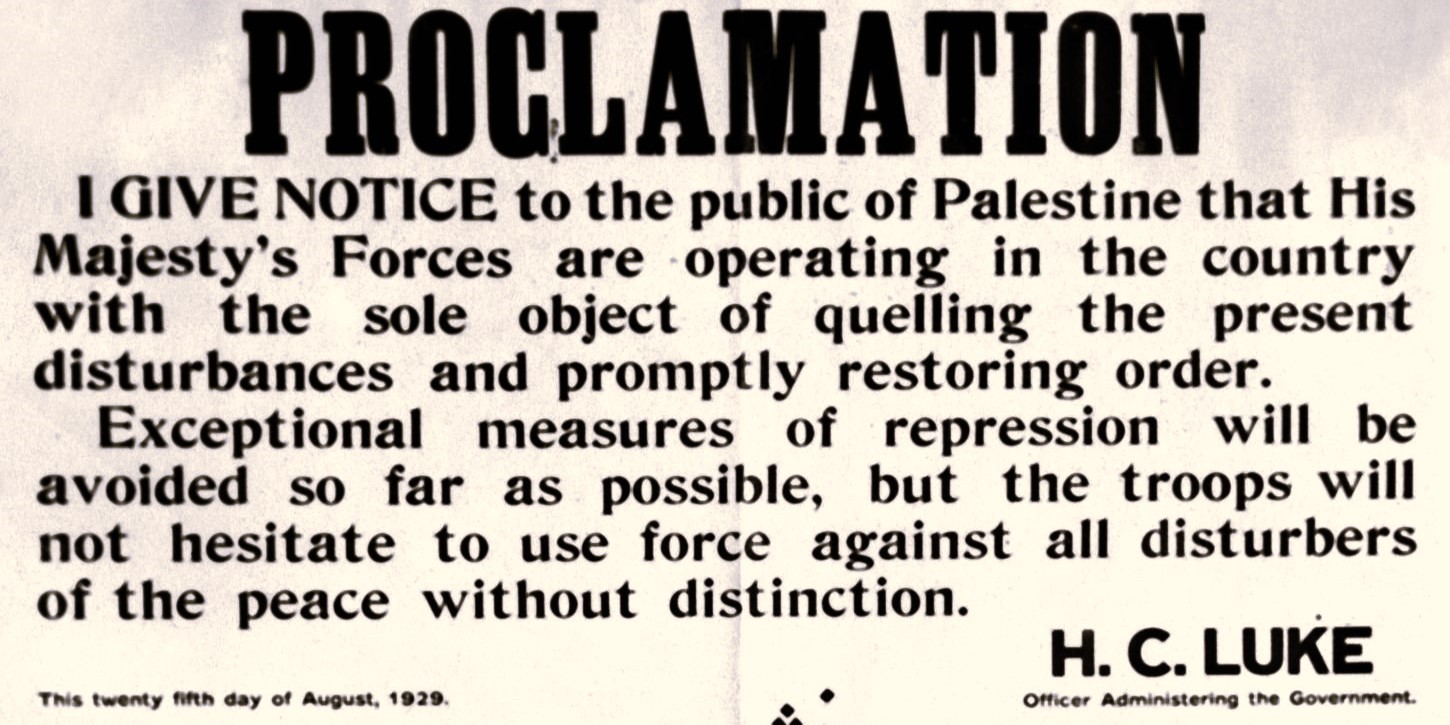
A substantial Comintern article looking at the background to 1929’s ‘Arab Revolt’ and the role of imperialism, Zionism, and class divisions in Palestine. While no author is attributed, my assumption is that it was written by Comintern Near East Secretary Joseph Berger. We can not say we were not warned.
‘The Revolutionary Outlook in Palestine’ from Communist International. Vol. 6 No. 22. October 1, 1929.
The Social-political background of the recent events
THE recent events in Palestine have drawn the attention of almost the whole world to this small country. It is true that we are not yet in possession of sufficient data to draw clear conclusions in connection with these events. Bourgeois correspondents and reporters are talking nonsense in their very terminology, in their evaluation of what has happened. Some portray it as an “Arab pogrom” against the Jews (American version), others as a Zionist-Fascist attack” against the Arabs (German version), others as “mob rioting” (English version). But the bourgeois papers cover over and efface the real meaning of these events. Nevertheless, even from these scanty reports, carefully sifted by the British censorship, the national importance and character of the events are clear.
“But it is precisely this that gives to events the character of a revolution” (Lenin). It is just this that shows that we have before us not simple “riots,” not a pogrom, but a fairly serious movement of the Arab masses against imperialism.
In essence, the Palestine events are only another link in the chain of important manifestations which show that the Arab revolutionary movement is developing. We have had a whole series of symptoms of the rise of a new revolution wave in the Arab East. In this connection we can cite the following happenings during the last few months: the conference of Syrian revolutionaries at Nabek; the meetings of Arab youth at Haifa and Jaffa; the emergence of the Central Committee of the Arab opposition in Transjordania; and finally, the presence of fairly important groups of Arab nationalists, especially of the revolutionary youth, at the Second Congress of the League against Imperialism in Frankfurt. If we add to these the constant agitation, small encounters in Irak, the movements of revolt in Arabia, opposition activities (demonstrations, manifestoes) of the Arab youth in Damascus, we get some idea of the revolutionary background of the Palestine events.
Palestine, a small province of the former Ottoman Empire, as a result of the war became an English colony. Its area is only 23,000 square kilometres, on which small area lives a small population of some 900,000 persons. Nevertheless, in the past it has been the object of imperialist struggles. Germany, France, Britain and Tsarist Russia tried to get hold of it. It was not only its material wealth that drew the attention of the imperialists to Palestine; the main point for the imperialist powers was its strategic and political position. Palestine lies on the main routes of European imperialism.
Palestine’s proximity to the Suez Canal, the link from the Mediterranean to the Indian Ocean which connects Britain with its Eastern colonies, makes Palestine specially valuable for the defence of the Suez Canal against attacks from the East. In the event of Anglo- Egyptian relations becoming strained, in the event of a serious threat to Suez from the Egyptian revolutionary movement, the British armies and aeroplanes in Palestine could easily be mobilised and set in motion. A reserve base and a cover for the Suez Canal, Palestine is at the same time a link in the chain of British possessions in the Mediterranean. According to the plans of the British Admiralty, the naval base at Haifa is to complete the transformation of the Mediterranean into a British inland sea. It gives Britain another war base for her Mediterranean fleet, in the series Gibraltar-Malta-Cyprus-Suez.
This base also has considerable importance because of the fact that overland routes for British trade pass through Palestine to the Persian Gulf and the Sudan. Palestine links the Mediterranean zone with India; through Palestine will pass the Haifa-Baghdad rail- way, which will form a section of the great British line Cape Town-Cairo-Calcutta, and will at the same time enable British imperial- ism to establish its control over the Arabian deserts. deserts. At the present time, motor and air routes cross the desert (Beirut, Damascus, Palmira, Baghdad, Aman-Baghdad) connecting London with India.
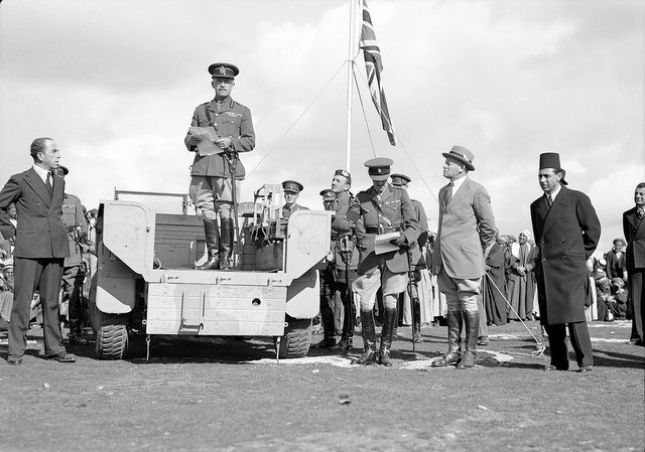
And finally, Palestine serves as a barrier, separating French Syria from the British Suez Canal.
After the war, British imperialism made use of the Zionist movement as its agent in definitely securing for itself this most important strategical base. The Zionist movement, which took its rise in the imperialist epoch (end of the nineteenth century), is a counter-revolutionary movement of the Jewish big bourgeoisie, and has been able to draw in considerable numbers of the scattered and op- pressed Jewish petty bourgeoisie, giving effect both to its own and to their desires to colonise. These colonising tendencies were concentrated by the Zionist movement, at whose head were the financial magnates and bankers of Germany, France, Britain, and in recent years, America. The leaders of the Zionist movement shoved their noses into every diplomatic office and ante-chamber of the Powers, pushing forward their colonisation plans, and offering the Jewish masses to them as suitable material for imperialist designs. And in the end the Zionist leaders succeeded in selling this plan to British imperialism, and the European banker Rothschild with the English Lord Balfour together established Zionism as the open agency of British imperialism.
Under the pretext of creating a “national Jewish home” in Palestine, British imperialism got possession of the country and transformed it into a British colony. The Zionist movement was in many ways useful for the British designs. With the help of the Zionists a Jewish base was created in Arabia: the Zionist immigrants into Palestine drove a Jewish wedge into the heart of Arabia. United ethnographically and historically, the Arab provinces were torn apart by “Jewish Palestine.” Of course, the Jewish population in Palestine was not intended by the British imperialists to become a compact mass, economically and politically independent. It was to be a minority, closely dependent on its British guardians, and therefore a tool of British interests. Finally, Britain built up through the Jews a fairly effective military police apparatus in Palestine. The Zionist immigrants drained the swamps, and turned the country into a suitable strategical base for British imperialism. And besides, the Zionist immigrants, the Jewish settlements, were to serve and have served as lightning conductors, towards which, in case of need, British agents could direct the revolt of the Arab masses against the occupation regime. And in fact, at the time when France was obliged to maintain in Syria a permanent garrison of forty to forty-five thousand colonial troops, Britain was content with 800 soldiers in Palestine. The British officials in Palestine skilfully manœuvred, setting one section of the population against the other, and in this way were able to hold the political balance of power in the country. On every occasion when symptoms of a rising revolutionary movement was observed, British agents in Palestine provoked national massacres, pogroms, and by this means paralysed, even though only for a time, the revolutionary movement in the country. Such pogroms took place in 1920 took place in 1920 and in 1921. As a result, during the period when revolutionary risings were constantly sweeping over Syria (to some extent also Transjordania), in Palestine all was “peaceful and orderly”—except for the pogroms and nationalist collisions.
Such was the significance of Palestine for Britain, such was the role of Zionism in British imperialist policy.
The recent events in Palestine provide the completion of the political system, of the British colonial régime. They were undoubtedly organised by British agents, provoked by the Zionist-Fascist bourgeoisie, and arranged by the Arab-Mahommedan reaction. It is true that the organisers and instigators did not fully succeed in carrying out their aims. What happened went beyond the limits assigned by the British imperialists, and over the heads of the Zionist-Fascists and the Mahommedan feudal chiefs there arose a wide- sweeping revolutionary wave in all the neighbouring Arab provinces. A little incident on a religious matter at the “Wailing Wall” developed into an Arab national movement of revolt.
Why was Britainm and particularly a Labour Government, interested in provoking a national collision in Palestine just at that particular time? For several reasons. If we do not accept the version that the British Commissioner, Chancellor, to please the Tories, wanted to cause trouble for MacDonald, there are, nevertheless, a whole series of more substantial motives and causes. the first place, the Labour Government, forced to conclude a political treaty with Egypt, was faced with the awkward question of safeguarding the Suez Canal. According to the Henderson proposal, in its treaty with the Egyptian Government, Britain will undertake to evacuate Egypt (even though only in form). This fact drives the Labour Government to strengthen the reserve base for its military forces on the other side of the canal, that is, in Palestine. It was necessary to create a justification for the arrival of new British armies in Palestine, it was necessary to justify in the eyes of the British working masses and of the Labour ministers the fresh enormous costs of the fortifications on the Sinai peninsula and of maintaining a large garrison in Palestine. Protection of the Jews from Arab pogroms was the most suitable pretext for the strengthening of the military régime by the British Labour ministers.
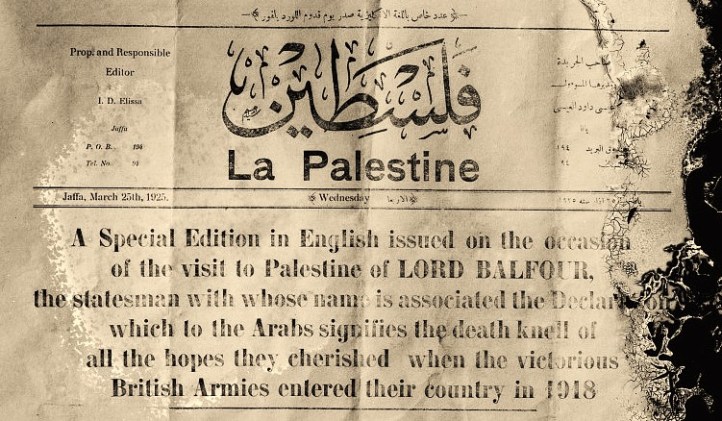
Secondly, Britain definitely wants to win over, in the interests of its imperialist policy, the Jewish bourgeoisie. The Jewish bourgeoisie began to demand from Britain the fulfilment of the obligations undertaken by the Balfour declaration. The Zionist importunities are becoming inconvenient, all the more so because the Zionist leaders are openly treating with American capital. Only recently, at the Zionist Congress in Zurich, a Jewish agency was established, an organisation formed jointly of Zionists and of non-Zionist, chiefly American, capitalists. At the first meeting of this agency a resolution was adopted, asking the British Government to adhere to the carrying out of the Balfour declaration. At the moment there is a sharpening of the Anglo-American contradictions, which are not confined to the Far East but appear in their clearest form in the Near East (the Irak incident, the conflict between the American Consul and the British Chamber of Commerce in Cairo, American policy on the question of customs reform in Egypt, etc.). At this moment the penetration of American capital, even in the veiled form of Zionist colonisation in Palestine, is extremely unwelcome for the British imperialists. It was necessary to find some pretext which would “force” the Labour Government to make concessions to the Arab bourgeoisie and to quench the flame of Zionist fantasies; and for such a purpose the pogrom is a method for which there is no substitute.
Thirdly, in Palestine itself important social processes are taking place, of which we speak below. Here we need only note that the social-economic conflicts which have de- which have developed in Palestine during the recent period have affected not only the Jewish advance guard but also fairly wide masses of workers and peasants. The imperialists wanted to stop or delay by some means or other the growth of solidarity between the Jewish and Arab working masses.
CLASS DIFFERENTIATION IN PALESTINE.
Zionism has not justified itself. In the fifty years of its colonising activity it has only succeeded in settling on the land some 7,500 people, working only 83,000 hectares of land. More than £20,000,000 has been sunk in this colonisation, while the town industries established are very insignificant. The position of the Jewish emigrant-colonists is extremely bad. In the new Jewish centre at Tel-Aviv, of 40,000 inhabitants 30,000 are in receipt of public relief in one form or another; unemployment is on a scale unheard of in such countries. Instead of the intended immigration of large numbers (30,000 to 40,000 a year), there is evidence of a substantial emigration from the country.
Hand-in-hand with its economic bankruptcy, has gone the political bankruptcy of Zionism. The British Government was anxious lest an old “Jewish Ghetto” might be founded in the new “Jewish National Home.” British officials turned the Jews out of the State institutions; and they are practically not admitted to the army and the police. Such difficulties were placed in the way of the assumption of Palestine nationality by Jewish emigrants, that in spite of immense expenditure by the Zionist organisation in this connection, the number of Jews who have taken out Palestine citizenship papers is insignificant. The Jewish immigrants are loaded with heavy taxation, while at the same time the schools and hospitals have to be maintained at the cost of the Jewish population itself. The British Government definitely did nothing to help. The Jewish language, the colloquial language of the Jewish masses, is in practice not the official language. The ancient Jewish language, formally recognised by the Government, is not known and is even pushed aside by the British officials. So the boasted Jewish national autonomy in Palestine has been turned into a national group without rights in a British colony. The town council of “the first Jewish town,” Tel-Aviv, became subordinate officials of the British commandant in Jaffa.
A deadly blow was dealt against Zionism by the successful colonisation of the Jewish masses in the U.S.S.R. Zionists are looking for some way out of the situation they have created. They make agreements with American capitalists, to whom they sell their Zionist ideals in exchange for financial credits and support; they pass from wide national colonisation to the narrow exploitation of concessions, to the simple business of orange plantations, etc. But with this change of aim there has also gone a sharp change in the economic position of the Jewish workers. Previously the Jewish worker had been put in a privileged position by the Zionist organisations. The wages paid to the Jewish workers were several times higher than the wages of the Arab workers. But now the protected Zionist economy is disappearing. The workers’ guilds and co-operatives, which were supported by Zionist capital and carried out great economic constructive work, are tumbling down like houses of cards. The wages of the Jewish workers are falling and approximating to the Arab scale. Along with this economic levelling, there is taking place a political levelling. Class-consciousness of the need for solidarity between the Jewish and Arab proletariat is growing. More and more frequently the Jewish workers are coming out in defence of the Arab peasantry, against the Jewish kulak colonists and exploiters of the colonists.
A great change is also taking place among the Arabs. Thanks to the compilation of the land register, and with the help of the British officials, the native Arab gentry is expropriating the land from the peasants by means of trickery and extortionate transactions, and concentrating in its hands immense areas. The immense sums which have passed through Zionist channels into the pockets of the Arab Effendi have hastened the infiltration of capitalist elements into Arab agriculture. The area of orange plantations is extending, and the capitalist resources and forms of Arab agriculture are increasing. The native Arab gentry is fusing with the plantation capitalists, and is being transformed into a landowning and trading capitalist class. Its interests are bound up with the foreign market. Britain is the chief market for Palestine oranges. This bourgeoisie is at the head of the reformist tendencies in the Arab national movement, which has now entered the path of agreement with European imperialism. Last year, at the Seventh Arab Congress in Palestine, the consolidation of the trading bourgeoisie and the planters was carried through, on the general basis of reconciliation with European imperialism. The trading and landlord groups, which were formerly distinct by birth and dynasty, are now drawing together on the general platform of fighting their Zionist competitors and coming to agreement with British imperialism. Their only demands are the limitation of the rights of the Zionists and the summoning of Parliament.
The penetration of capital relations into the Arab village has resulted in the destruction of former economic forms and the stratification of the peasantry. The landless, expropriated peasantry is growing in numbers, increasing the reserve army of labour in the towns; while the British imperialists are establishing in the villages a hitherto unknown type of Arab kulak. The expropriation of the peasantry is proceeding in two directions: the buying of land by the European colonisers, and robbery by the Arab landlords. These expropriations are producing great agrarian conflicts and the sharpening of class relations in the Arab village.
As a result, we have the development, both quantitative and qualitative, of the Arab town proletariat. The position of the workers is extremely bad. Female and child labour, hitherto almost hitherto almost unknown in Palestine, is spreading, and is displacing male adult labour (at the Mabruk tobacco factory in Haifa 250 children are employed; a special workshop for women has also been built).
The hard conditions of the workers in general, and of the Arab workers in particular, find expression in a whole series of strikes and other economic conflicts. We must note as something absolutely new the comparatively large number of strikes of Arab workers, and especially their stubborn character. The strike of the Arab bakers in Jerusalem, the strike at the Mabruk factory in Haifa, and a whole series of smaller strikes of Arab building workers are to be noted; there have even been cases of strikes among the Arab agricultural labourers.
There have been a great number of agrarian disorders in the villages, arising not only between the Arab peasants and the Zionist colonists, but there have been many cases also of disputes between the Arab peasants and the Arab landowners. In recent months there have been important agrarian conflicts at Ein- Kerem, Adi-Havaras, Kar, etc. In all of these. conflicts collisions took place with the British police, and they ended with arrests and massacres of the participants.
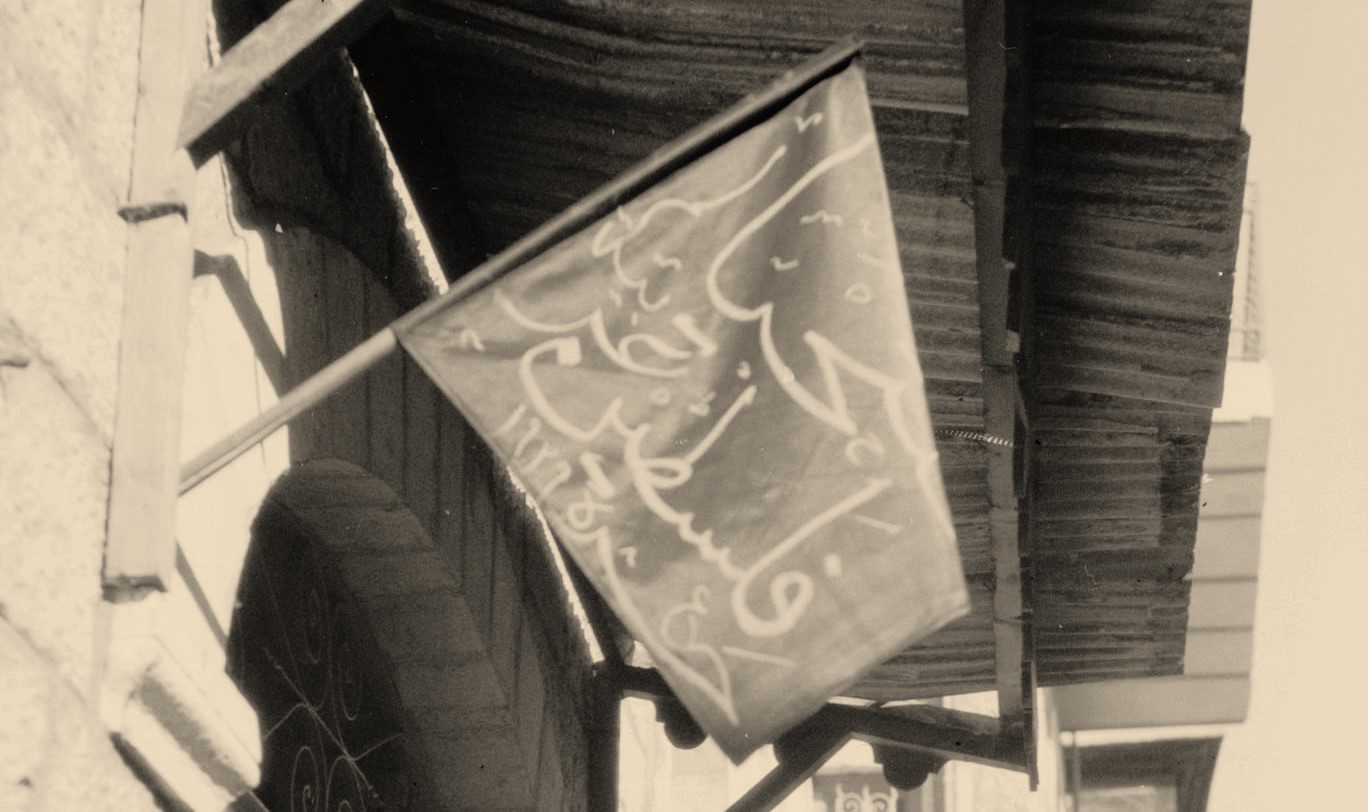
The social basis of the Arab Congress is being undermined. The Arab peasants no longer trust their leaders of the Arab Central Committee, the Islam Mejliss, the highest Mahommedan council. A new movement is beginning, headed by the radical intelligentsia. It is true that this movement has been captured by the Pan-Islamic reaction. It is necessary to note that Pan-Islamism is a fairly extreme opponent of European imperialism, both in Egypt and in other Arab areas. Throughout the country the Mahommedan youth clubs are increasing and multiplying, and are assuming greater and greater significance. At the same time, revolutionary tendencies are growing among the Arab workers. The influence of the agitation and propaganda carried out by the Palestine Communist Party is rapidly spreading. International Jewish- Arab workers’ clubs have been started, and on the initiative of the Communist Party a number of international meetings and conferences have been held. Communist literature printed in Arabic is being widely spread, and is getting a greater and greater circle of readers. The Y.C.L., workers’ fractions, the International Red Aid, and the Communist Party are the most active factors in the Arab working class. The imperialists, Jewish fascists, and the Mahommedan reactionaries have opened a raging campaign against Communist “sedition,” but without result. The workers’ movement among the Arabs is on the increase. The peasant demands are assuming threatening dimensions. We can note the workers’ demonstration in Jerusalem, the peasant demonstration in Jaffa, the huge demonstration in Jaffa against the land brokers and speculators, and finally the international demonstration of Jewish and Arab workers on August 1st.
The Arab bourgeoisie, particularly the gentry of the Mahommedan aristocracy, feels the ground slipping from under its feet. needs somehow to rehabilitate itself in the eyes of the Arab masses; it must somehow stop or paralyse the growth of solidarity be- tween the Arab and Jewish workers. British imperialism comes to its aid with the provocation in connection with the “Wailing Wall.”
Husseini, the Mufti of Jerusalem, hoped with the help of a pogrom to re-establish his revolutionary renown among the Arab masses. The Zionist Fascists, for whom it is particularly necessary to stop the growing influence of the Communists and the drawing together of the Arab and Jewish workers, rattle their sabres, organise provocative demonstrations, and hurry forward the moment for the clash. British agents, according to the Manchester Guardian, allow Arab fanatics and Jewish chauvinists to arrange demonstrations at the same place and at the same time. The result is a bloody battle, a national massacre. But the British agents, together with the Jewish fascists and Arab reactionaries, have made an error in their calculations: the wind they raised was stronger than its makers. The little conflict in Jerusalem spread to Gaza, Jaffa and Haifa. The echoes of the Palestine events have already been heard in Syria. The Bedouins and the Druses mobilised great forces to help their Arab brothers in their struggle against British imperialism and its Zionist helpers.
We are undoubtedly faced with a rapidly-growing revolutionary movement of the Arab masses. This movement cannot in one moment find its correct revolutionary path and methods of struggle. It is possible that the official leaders, national-reformists of the type of the Mufti of Jerusalem or petty-bourgeois nationalists of the type of the leaders of the Mahommedan clubs, were able to control the movement in time, directing it on to the wrong, reactionary path, even playing the game of the opposite imperialist camp, and they may again betray to British imperialism the interests of the Arab working masses. But the significance of these events must not be judged by the successes or defeats of the mass attack, but by the immense revolutionary educational part which they will play and are playing in the Arab East. After the treachery of the Arab nationalists in Palestine and Syria, after the treachery of the Egyptian bourgeoisie, it would have seemed to the British imperialists, and along with them to the social-democrats, that the imperialist position in the Arab East was firm and durable. The recent rising of the Arab masses in Palestine has torn to shreds this confidence in the firmness and durability of European imperialism.
The British Labour Government wanted to save itself from a mass rising, and to avoid any unpleasant interference from the United States in such a business. And so the Arab-Jewish massacres in Palestine were staged. The Zionist agents of imperialism and the Mahommedan reaction inflamed the nationalist instincts and religious fanaticism, in order by these means to gain for themselves the possibility of exploiting the masses; they sealed with the blood of Jewish and Arab workers their union with British imperialism.
The Second International has organised in practically every country of Europe and America Zionist-Socialist committees to co- operate with the Zionist adventure in Palestine. The sections of the Second International in Palestine carry on an openly chauvinist provocative policy, their slogans take the land, get work–being the direct expression of their participation in this bloody massacre.
The Palestine reformists, in agreement with the leaders of the Labour Party, organised fascist bands which played an active provocative part in the recent events in Palestine.
As against the bloody adventurers, the Zionist bourgeoisie, the Pan-Islamists, the British agents, the Arab chauvinists, the hypocritical demagogues of the Second International, the Communist Party of Palestine is the only group which has honestly and sincerely fought against the imperialist reaction and the national chauvinists. For several years the Communist Party of Palestine has been conducting a loyal fight against the Zionist adventurers and a campaign to expose the bourgeois Arab nationalists and the Mahommedan reactionaries. The Party has mobilised the Arab and Jewish working masses under the international banner of revolutionary proletarian class solidarity. It must be noted that even in these nightmare days the spark of class solidarity was not extinguished. Even the bourgeois correspondents mentioned the fact that even in the heat of the religious-chauvinist upheaval in Jerusalem, the Arab workers with great self-sacrifice sheltered and saved the lives of their Jewish worker comrades (the builders engaged on the Rockefeller museum in Jerusalem). The E.C. of the Palestine Party issued an appeal in Jewish and Arabic, calling for class solidarity, for fraternisation, for the uniting of their forces in a common front directed against the permanent enemies–British imperialism and the Arab and Jewish bourgeoisie.
The MacDonald Government showed that it was continuing the colonial policy of British imperialism. This government not only does not lighten the burden of the colonial peoples, but in subtle forms it loads on them new chains, a new burden of subjection and slavery. The Palestine events brought to light a refined policy of violence and robbery on the part of British imperialism and the Premier MacDonald. Before the Communist advance guard in the Arabian East, and in the first place, before the Communist Party of Palestine, lies the historical task of leading the working Arab masses into a wide anti-imperialist stream and to direct it along the course of the agrarian movement. The first chief task is to expose the imperialist role of the MacDonald Government. And the immediate object must be to co-operate with the mass peasant movement in a mighty protest against British imperialism, and to transform this movement into an anti-feudal, anti-theocratic and anti-capitalist movement, freed from the control of the Pan-Islamists, sheiks and feudal landowners.
It is necessary to set up everywhere peasant committees to control the elemental partisan movement and to recover the land from the feudal Effendis and large Jewish colonists. The united revolutionary front of all workers, without distinction of nationality or creed, against imperialism, Zionism and Arab feudal-bourgeois reaction-this is the general slogan which the Party must bring to the Arab and Jewish working masses. The Party must carry on a determined fight against the Right elements, who are against the slogan of a workers’ and peasants’ Palestine, against the slogan of the agrarian revolution. And at the same time it is necessary to fight in the same resolute manner against the ultra-Left tendencies, which find expression in the completely non-Communist slogan of ejecting all the Jews from Palestine. This slogan brings water to the mills of Pan-Islamic reaction, nationalism and chauvinism. The Jewish proletariat should, together with the Arab workers, form a single general revolutionary organisation to fight for Communism. It is necessary to organise joint meetings of Jewish and Arab workers to protest against British imperialism and bourgeois-reactionary Zionism, against social-fascism, which is supporting Zionism, against the clerical-feudal-bourgeois factions, which exploit the national and religious prejudices of the masses and capitulate to imperialism.
It is necessary to organise widely representative conferences of Arab workers in the sur- rounding countries-Syria, Irak, etc.—and to give them general political and social-economic tasks. The slogans of the war against British imperialism, and the agrarian revolution, should inspire all appeals and actions of the Palestine Communist Party.
At the same time, the Communist Parties of the imperialist countries, and especially of France and Britain, must develop a wide anti-imperialist campaign against their own imperialist governments. The British Party must expose the policy of MacDonald, who is protecting the mandate of British imperialism in Palestine with the aim of subjecting the Arab working masses with the help of the Jewish bourgeoisie and Arab feudalism, with the aim of suffocating the national-revolutionary movement of the Arab masses. It is necessary to organise demonstrations and meetings on a large scale to demand the recall of the British armies from Palestine. The French Communist Party must open a wide campaign among the French proletariat for the liberation of Syria from the French imperialist yoke. The American Party must agitate against American imperialism and the Jewish bourgeoisie which is helping American imperialism to strengthen its influence in Palestine, against the subjugation of the Arab masses by imperialism.
The workers of the whole world, in particular of the imperialist States concerned, should organise a powerful movement of protest against the British-Zionist adventure. The peasants and workers of Palestine are making heroic efforts to rise to the height of their revolutionary tasks, to free themselves from the tutelage of the Islamic sheiks and the Jewish Zionists, from the yoke of Labour imperialism, but by themselves they cannot withstand the imperialist attack. The advance guard of the European proletariat must respond to the call of the revolutionary Arab masses, it must help them to find their way to the victorious path of revolutionary struggle.
PDF of full issue: https://www.marxists.org/history/international/comintern/ci/vol-6/v06-n22-oct-01-1929-CI-grn-riaz.pdf
 Revolution's Newsstand