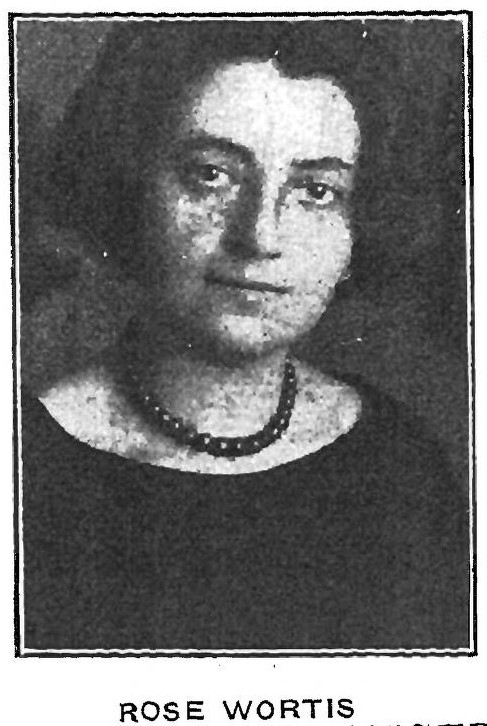
Rose Wortis reports on the surge of textile worker organizing that developed in the late 1920s, with the Communist Party responding with the formation of the Needle Trades Workers Industrial Union.
‘Women Needle Trade Workers Among Most Militant Fighters’ by Rose Wortis from Working Woman. Vol. 1 No. 2. May, 1929.
The Needle Trades Workers Industrial Union, organized three months ago after many years of bitter struggle against the treacheries of the reactionary officialdom of the American Federation of Labor, has come to the forefront and fought its first successful battle in the dress trade, which employed a large percentage of women workers.
Just as in 1909 when the waist and dress makers, the vast majority of whom were women, were the first to go out on strike and give the signal for the revolt of the workers against the sweatshop system in the other branches of the needle trades, resulting in the birth of the old needle trades unions, so in 1929 the dressmakers were again the pioneers to blaze the path for the new Needle Trades Workers Industrial Union. Just as in 1909 the old union fought its first battle in the dress trade, the stronghold of women workers, so did the new union in 1929 choose as its first battle ground the section of the industry which employs the largest portion of women workers.
The dressmakers were confronted with a great task. On the success of the dress strike depended to a very large extent the future of the new union. The bosses and the company union recognized the importance of this first open struggle undertaken by the new Union and they left not stone unturned in their vain attempt to break the strike. But just as in 1909, the dressmakers stood the acid test.
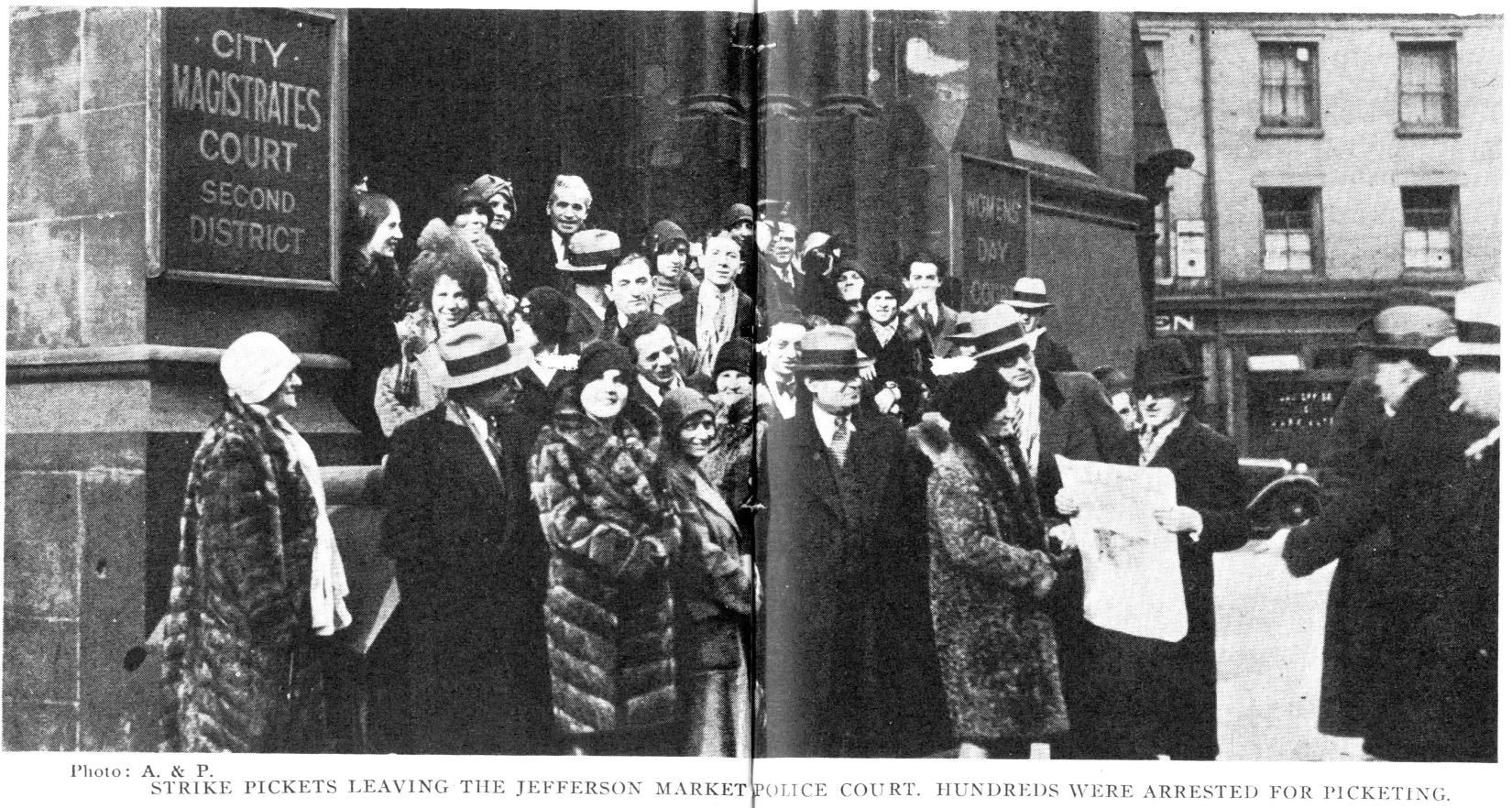
At the call of the new Union, ten thousand workers–Jews, Italians, Americans, white and negro–responded to the strike and marched in solid ranks to the halls. Those who had doubted stood in awe at the sight of these marching ranks. The leaders of the company union and the bosses were disheartened and could no longer sneer and ridicule the idea of a general strike in the dress trade. It was a living fact which foretold the coming day when the ten thousand will be swelled by additional thousands, and when the sweat-shop system, maintained by the bosses and the company union, will be wiped out and union conditions once more established in the trade.
It was not an easy job to carry through the strike of the dressmakers. The chaos that existed in the trade throughout the two years of the vicious attack on the Union by the unholy alliance of the bosses, the old officialdom, the gangsters, the police, and the courts, had had its demoralizing effect on the minds of the workers. The enemies of the new union had for weeks in advance mobilized all their forces. Schlesinger, the chief of the company union, openly invited and secured the aid of the police in his strike-breaking activities. The Central Trades and Labor Council, which pretends to represent the labor movement of New York City, protested that the violence of the police was insufficient and called upon them to intensify their brutality against the strikers. The bosses, realizing the menace of a strong dressmakers union, resorted to every possible means to break the strike of the dressmakers.
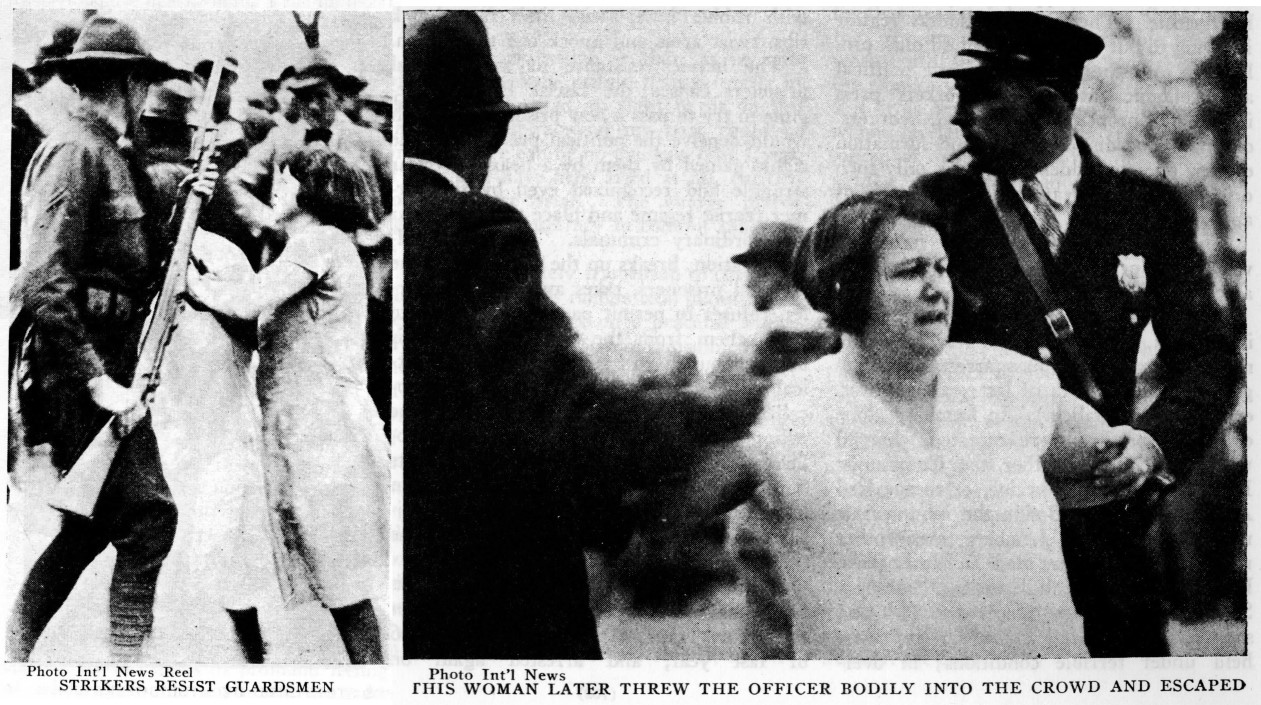
But these efforts of the combined forces of the enemy failed. The onslaughts of the police were met with mass picketing demonstrations by the strikers, in which the women’s battalion took a leading part. The wholesale arrests, fines and imprisonment were met with a spirit of defiance and failed to terrorize the strikers. No sooner than they left the prison cells, they were out on the picket line again, fighting for their rights, fighting for their freedom from the sweat-shop system. The ranks of the strikers were swelled by the wives and women folk of the men strikers who contributed their share to this historic struggle in the needle trades.
The women dressmakers did not merely distinguish themselves for bravery on the picket line. The women dressmakers, as the advance section of the women workers, took an active part in the strike leadership. They helped to formulate the policies of the Union and participated in great numbers on the General Strike Committee, the Executive Board of the General Strike Committee, on the various Sub-Committees, were hall chairmen and hall secretaries and were found generally capable and efficient, thus proving more clearly than any amount of propaganda that the women workers once they are awakened to their responsibilities to their fellow workers can fight as well as men for the interests of their class.
The 1929 strike of the dressmakers, though successful, has not as yet accomplished the organization of the dress trade. There are still thousands of workers who are suffering under the sweat-shop system, undermining the conditions of those workers who had fought heroically in the strike. However, the dressmakers strike laid the foundation for a strong union and gave courage not only to the workers in the dress trade, but to the workers in other branches of the industry. The cloakmakers and the furriers inspired by the example of the dressmakers, are now preparing for a decisive struggle to re-establish their union. Already the women fur workers are on the job mobilizing their forces not only for special work among the women of the trade, but for active participation in the general struggle.
In the Amalgamated Clothing Workers the women workers, though small in numbers, are. taking a leading part in the struggle against the bureaucracy and the bosses. Anna Fox, having been chosen as the first victim by the reactionary Hillman machine, was thrown off her job because of her militant struggle against the speed-up system and the terrorism of the amalgamated clique.
In the Cap and. Millinery Workers Union, Local 43, composed exclusively of women, is the most active and militant local in the entire International. The local has survived the treacherous attacks of this officialdom and the bosses and is today preparing to make a fight for its reinstatement at the coming convention of the Cap and Millinery Workers Union. The old officialdom of this union, which is pledged to a policy of hearty co-operation with the bosses against the workers, will no doubt approve the expulsion of Local 48 and before long the millinery workers will become an integral part of the Needle Trades Workers Industrial Union, and as a result of their experiences in their struggle for the past two years will add a vital force to the growing strength of the Industrial Union.
Everywhere, in all branches of the needle trades, in New York, Boston, Philadelphia, Los Angeles, San Francisco, etc., the activities of the women are an important factor in the work and leadership of the new Union.
The accomplishments of the women in the needle trades can and should serve as an inspiring example to the women in the other industries to assume their rightful place in the ranks of the fighters for freedom of all workers from capitalist exploitation.
The Working Woman, ‘A Paper for Working Women, Farm Women, and Working-Class Housewives,’ was first published monthly by the Communist Party USA Central Committee Women’s Department from 1929 to 1935, continuing until 1937. It was the first official English-language paper of a Socialist or Communist Party specifically for women (there had been many independent such papers). At first a newspaper and very much an exponent of ‘Third Period’ politics, it played particular attention to Black women, long invisible in the left press. In addition, the magazine covered home-life, women’s health and women’s history, trade union and unemployment struggles, Party activities, as well poems and short stories. The newspaper became a magazine in 1933, and in late 1935 it was folded into The Woman Today which sought to compete with bourgeois women’s magazines in the Popular Front era. The Woman today published until 1937. During its run editors included Isobel Walker Soule, Elinor Curtis, and Margaret Cowl among others.
PDF of full issue: https://www.marxists.org/history/usa/pubs/wt/v1n02-may-1929-WW.pdf
 Revolution's Newsstand