
Then S.L.P. National Organizer, Frank Bohn surveys the working class scene in an Ohio city famous for its ‘dark, satanic mills.’
‘Youngstown, The Pittsburgh of Ohio’ by Frank Bohn from The Weekly People. Vol. 14 No. 18. July 30, 1904.
Striking Social Contrasts–Two-Thirds of Organized Labor Unemployed–Seven National Fakirs Lead a Local Strike of Twenty-one Firemen–Socialist Prospects Good
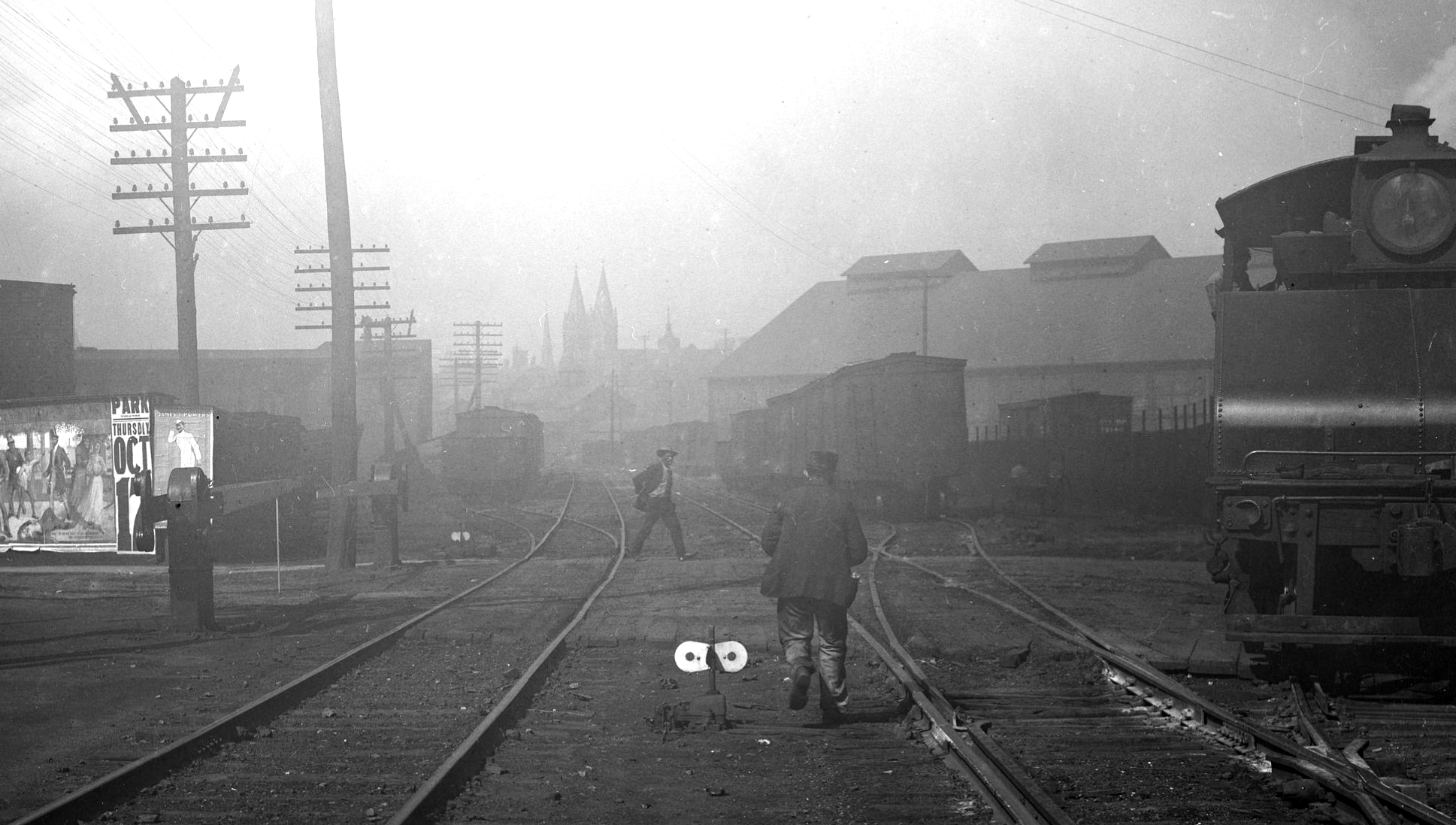
Youngstown, O., July 24. On coming to Youngstown, the gaseous fumes of capitalist industry strike one about three miles from the city. After being a guest of this second Pittsburg for an hour, a plunge in the river, clothes and all, appears to be the only adequate cleansing process.
Lost in the cloud of smoke, 8,000 union men feed a hundred furnaces, night and day in twelve hour shifts. The millionaires, I thought, who own this city and live in New York, have surely made all preparations for perfect misery on the part of the working class. Here there is no clean nor beautiful thing–not one.
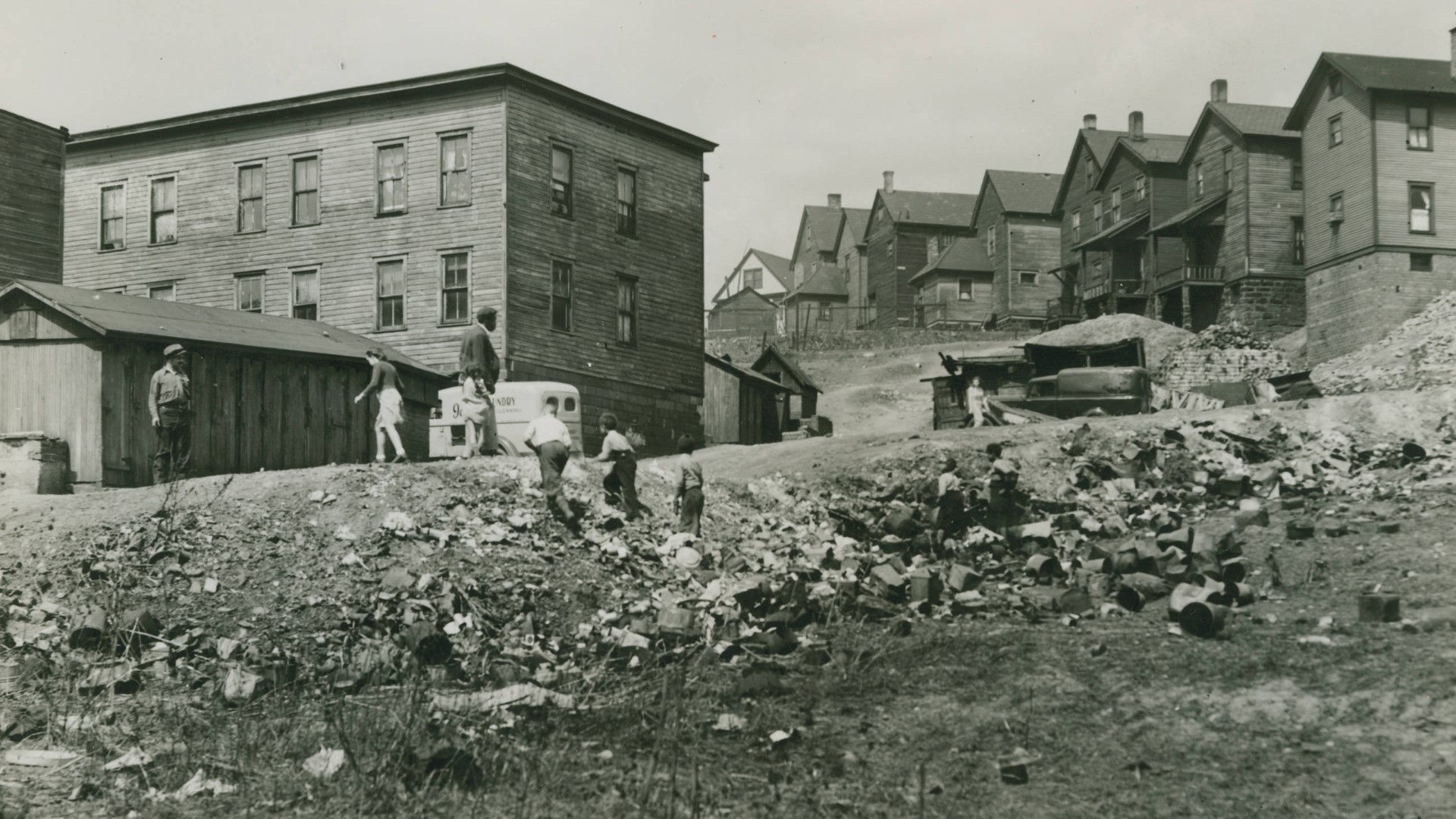
Imagine my astonishment, then, after being here five days, when I discovered the “other side of town.” I had forgotten that all cities like all debatable propositions, have two sides. The number of grand old colonial homes and stately religious edifices is quite as marvelous as the large area of dark, dingy hovels; and between them is the business portion of the town, of course. I will add that the wind, as if by special order, seems always to blow the smoke away from the plate glass and tall elms.
We have said that there are 8,000 union men in this city of 55,000. The editor of the “Labor Advocate” told me that two-thirds of them were out of work or would be, shortly. I have discovered exactly one man who loves the unions. In answer to one of my questions at an open air meeting, this particular slave replied that he received fourteen cents an hour, and when I opened up on the Gompers pirates he became angry and slunk away.
I have spoken five times but the talk devoted entirely to the trades union question was best received by the crowd. The fakirs are absolutely at the end of their string here.
Last week twenty-one firemen in the power house were called out to resist a cut. A prominent trades unionist (not a fakir) informed me that exactly seven grafters came to town TO LEAD THE TWENTY-ONE TO DEFEAT. The salaries of the seven men were from four to six dollars per day. Everyone on the streets knows this. The crooks are “all in,” and the working class is only too ready, could it see its way clear, to “screw the cover down” on them. Now nearly every worker one meets thinks that Socialism is the only refuge of his class. But “how in the world is the beautiful dream to be realized.” And here is the really important matter of this epistle. Six hundred copies of the “Appeal to Reason” come into this fakir-ridden town each week. That means several thousand readers. And the idea of Socialism one runs up against in talking to even bright young workingmen. shows how ruinous has been the effect of this miserable sheet. How can one be patient? Thousands of our class in this city read what the old eighteenth century fakir has to say, and then show by their conversation that they have never received a hint concerning the organization and tactics which must be the means of victory. In cities like Youngstown, where there is no vigorous S.L.P. to expose this shameful exploitation of Socialist sentiment, the harm done by the worthless substitute for ideas peddled about by the profit-seeker from the Kansas village is incalculable.
We are to have a section here. Inability to secure a proper meeting place Sunday and other unforeseen difficulties have prevented its organization at once, which we had desired as a climax to the week’s work. But two old warriors of the S.L.P., Comrades Covert and Williams, supported by five or six first- class new members, will get the movement under way in a short time. The members of the Debs party here may properly be ranked with their progressive comrades of Omaha, Chicago and a number of other Western towns. Several of them were found anxious to take the Weekly People, and many of them attended our agitation meetings and purchased a plentiful supply of our literature. Every one I spoke to was found to be sound on the trades union question platform, etc. Just how this situation here will work itself out remains to be seen. They have a group of strong, vigorous young men, who will, we fancy, after more study, make strange companions of the Hanford-Carey crowd on the one hand, or the Wilshire Comedy Club on the other.
For two weeks I shall work largely among the mining districts of this part of the State. August 8th, I may be expected at Cincinnati, and then at Columbus, Hamilton and the Northern towns.
Never was the time so ripe for our teaching. Let the S.L.P. of Ohio not disappoint the comradeship of other States. “Now is the appointed hour.” Out and after a subscriber or a new member. We desire stronger sections at Cincinnati, Columbus, Toledo and other cities. New sections in smaller towns may be organized. I sincerely hope that the roof may fall in on any S.L.P. man who stays at home evenings or Sundays.
Fraternally,
Frank Bohn, Organizer.
New York Labor News Company was the publishing house of the Socialist Labor Party and their paper The People. The People was the official paper of the Socialist Labor Party of America (SLP), established in New York City in 1891 as a weekly. The New York SLP, and The People, were dominated Daniel De Leon and his supporters, the dominant ideological leader of the SLP from the 1890s until the time of his death. The People became a daily in 1900. It’s first editor was the French socialist Lucien Sanial who was quickly replaced by De Leon who held the position until his death in 1914. Morris Hillquit and Henry Slobodin, future leaders of the Socialist Party of America were writers before their split from the SLP in 1899. For a while there were two SLPs and two Peoples, requiring a legal case to determine ownership. Eventual the anti-De Leonist produced what would become the New York Call and became the Social Democratic, later Socialist, Party. The De Leonist The People continued publishing until 2008.
PDF of full issue: https://www.marxists.org/history/usa/pubs/the-people-slp/040730-weeklypeople-v14n18.pdf
 Revolution's Newsstand