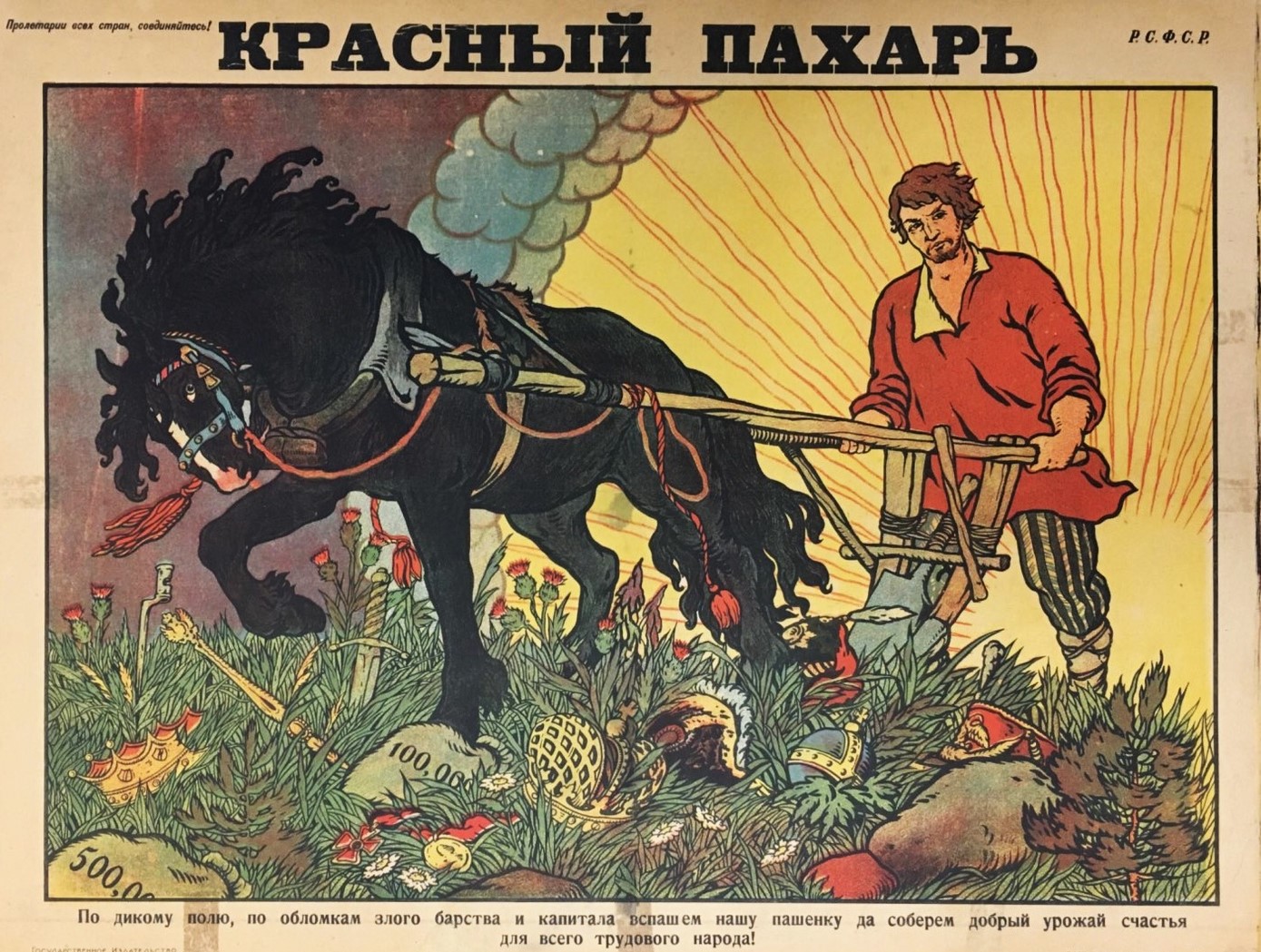
Original translation of Lenin’s message to the country on the fourth anniversary of the Revolution, a year which saw the the end of direct imperialist intervention, victory in the Civil Wars, and introduction of the New Economic Policy.
‘Achievement and Promise’ by N. Lenin from Soviet Russia (New York). Vol. 5 No. 6. December, 1921.
(From Petrograd “Pravda”, October 20, 1921)
NOVEMBER 7 is the fourth anniversary of the Russian Revolution. The farther this great day departs from us, the clearer becomes the meaning of the Proletarian Revolution in Russia, the more we realize also the practical experience of our work as a whole.
This meaning and experience can be described briefly as follows:
One of the direct immediate problems of the Russian Revolution was the bourgeois-democratic problem: to destroy the remnants of medievalism, to eradicate them, to liberate Russia from this barbarism, from this disgrace, from this heaviest drag upon any culture or progress in our country.
We have a right to be proud that we accomplished this cleansing more resolutely, more rapidly, more bravely, and more successfully, from the standpoint of influencing the masses of the people, than did the great French revolution more than one hundred and twenty-five years ago.
The Two Revolutions
Both the Anarchists and the petty bourgeois democrats (the Mensheviks and Social Revolutionists are the Russian representatives of this international social type) spoke and continue to speak much nonsense concerning the relation of the bourgeois democratic revolution to the socialist proletarian revolution. The correctness of our understanding of Marxism on this point, of our interpretation of the experience of previous revolutions, has been fully confirmed in these four years. We, as no one else, carried the bourgeois democratic revolution to completion. We are advancing, consciously, resolutely and ceaselessly toward the social revolution, knowing that it is not separated by a Chinese wall from the bourgeois democratic revolution, knowing that only the struggle will decide how far we shall ultimately advance, what part of the tremendous task we shall accomplish, what of our victories will remain intact. We shall see. But even now we can see that prodigies have been accomplished—for a ruined, exhausted. and backward country—in the socialist transformation of society.
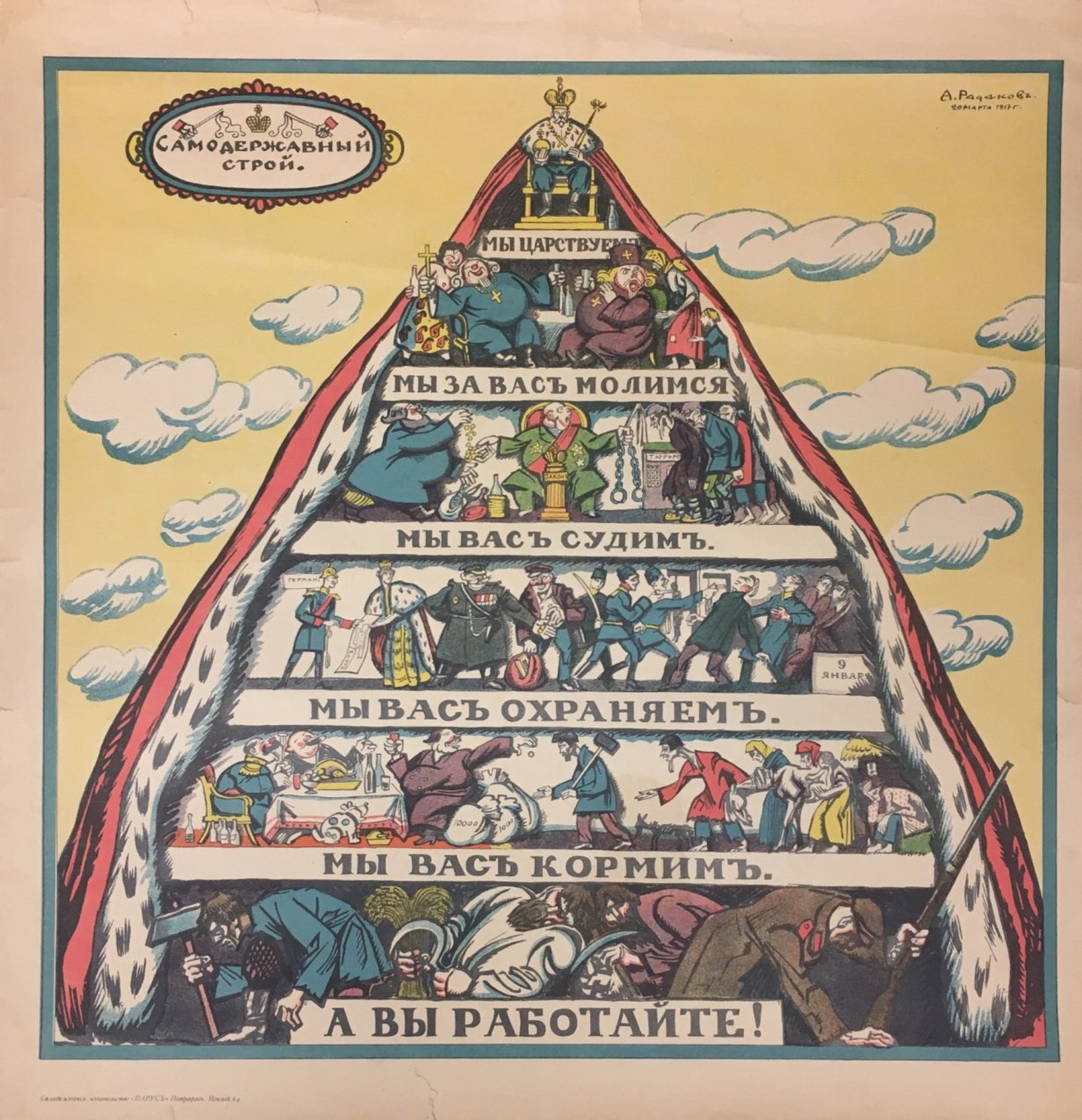
Let us define the bourgeois democratic element in our revolution. It should be clear to the Marxists. As illustrations we must take only concrete examples. The substance of a bourgeois democratic revolution consists in the liberation of all the social institutions of a country from medievalism, serfdom and feudalism.
A Herculean Task
What were the main manifestations and remnants of serfdom in Russia in 1917? Monarchy, nobility, land tenure, land exploitation, the position of woman, religion, oppression of nationalities.
Let us take any of these Augean Stables left uncleansed by all the civilized governments in their bourgeois democratic revolutions 125 or 250 years or more ago (1649 in England); take any of these —you will see that we have swept them clean. In some ten weeks, from November 7, 1917, to the dissolution of the Constituent Assembly, we accomplished a thousand times more in this field than did the bourgeois democrats and liberals (Cadets), and the petty bourgeois democrats (Mensheviks and Social Revolutionists) during the eight months of their power.
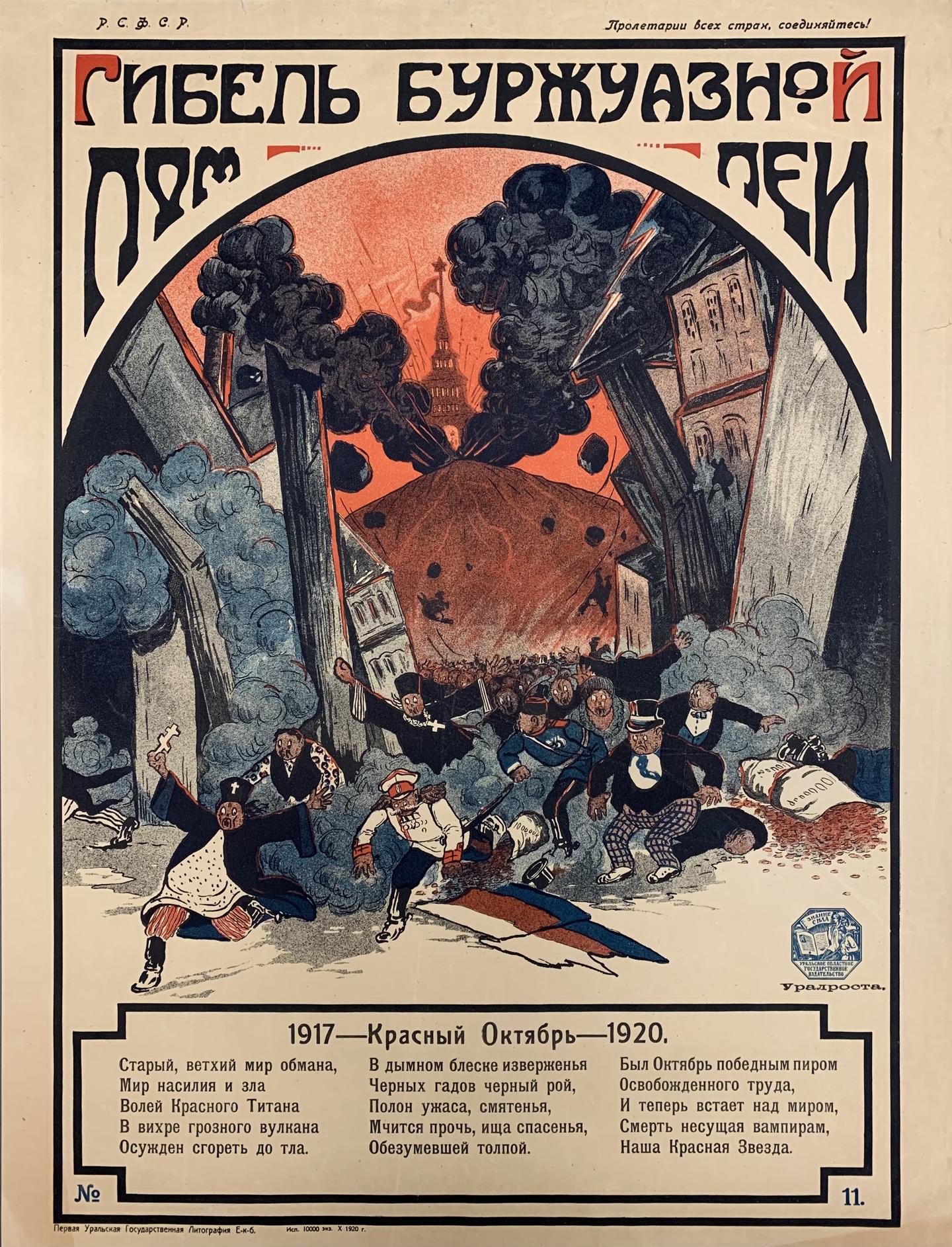
These cowards, babblers, self-admirers and puny Hamlets waved a paper sword and did not even destroy monarchy! We threw out the whole monarchist rubbish as no one ever did before. We left not a stone standing of the ancient structure of nobility. The most advanced countries, such as England, France, Germany, are not even yet rid of traces of “nobility”. The more deep-seated roots of nobility, such as the remnants of feudalism and serfdom in landholding, we eradicated completely. It “may be argued” (there are scribblers enough abroad, Cadets, Mensheviks and Social Revolutionists, who have time for such arguments) what will be the “final outcome” of the land policy inaugurated by October Revolution. We do not care to waste time now over such arguments; we are settling this argument and numerous other related arguments in actual struggle. But it cannot be denied that the petty bourgeois democrats “co-operated” for eight months with the land holders who retained the traditions of serfdom, whilst we, in a few weeks, swept from Russian soil both the landlords and all their traditions.
The Accomplishment
Take, for example, religion, or the disabilities of women, or the oppression of non-Russian nationalities. These are all problems of the bourgeois democratic revolution. The wretched petty bourgeois democrats chattered about these things for eight months. Not one of the advanced countries has been able to solve these problems completely by bourgeois democratic means. With us they were solved by the legislation of the October revolution. We have fought religious superstition, and are still fighting it effectively. We have given to all non-Russian nationalities their own republics or autonomous districts. We have no such hideous baseness in Russia, no such archaic rubbish as disfranchisement or inequality of women, this outrageous relic of medievalism, perpetrated by the greedy bourgeoisie and the stupid petty bourgeoisie of all other countries,
This is more than the bourgeois-democratic revolution could accomplish. One hundred and fifty or two hundred and fifty years ago the advanced leaders of this revolution promised the people liberation from the medieval privileges, from the inequality of women, from state-endowed churches, from oppression of nationalities. They made many promises, but fulfilled none. They could not fulfill them, for their “respect” for the “sanctity of private property” interfered. In our Proletarian Revolution there was no such “respect” for these cursed medievalisms, nor for this sacred “private property”.
Reforms as Byproducts
But in order to strengthen the victories of the bourgeois-democratic revolution, we had to go farther, and we did go farther. We solved the problems of the bourgeois-democratic revolution in the course of our main proletarian revolutionary task. Reforms, we have always said, are by-products of the revolutionary class struggle. Bourgeois-democratic changes, we said, and proved by deed, are by-products of the proletarian socialist revolution. The Kautskys, Hilferdings, Martovs, Chernovs, Hillquits, Longuets, MacDonalds, Turatis, and all the rest of the heroes of “two and a half” Marxism, cannot understand this relation between the bourgeois-democratic and proletarian-socialist revolutions. The first grows into the second. The second incidentally solves the problems of the first. The second reinforces the work of the first. Struggle and struggle alone decides how successfully the second can outgrow the first.
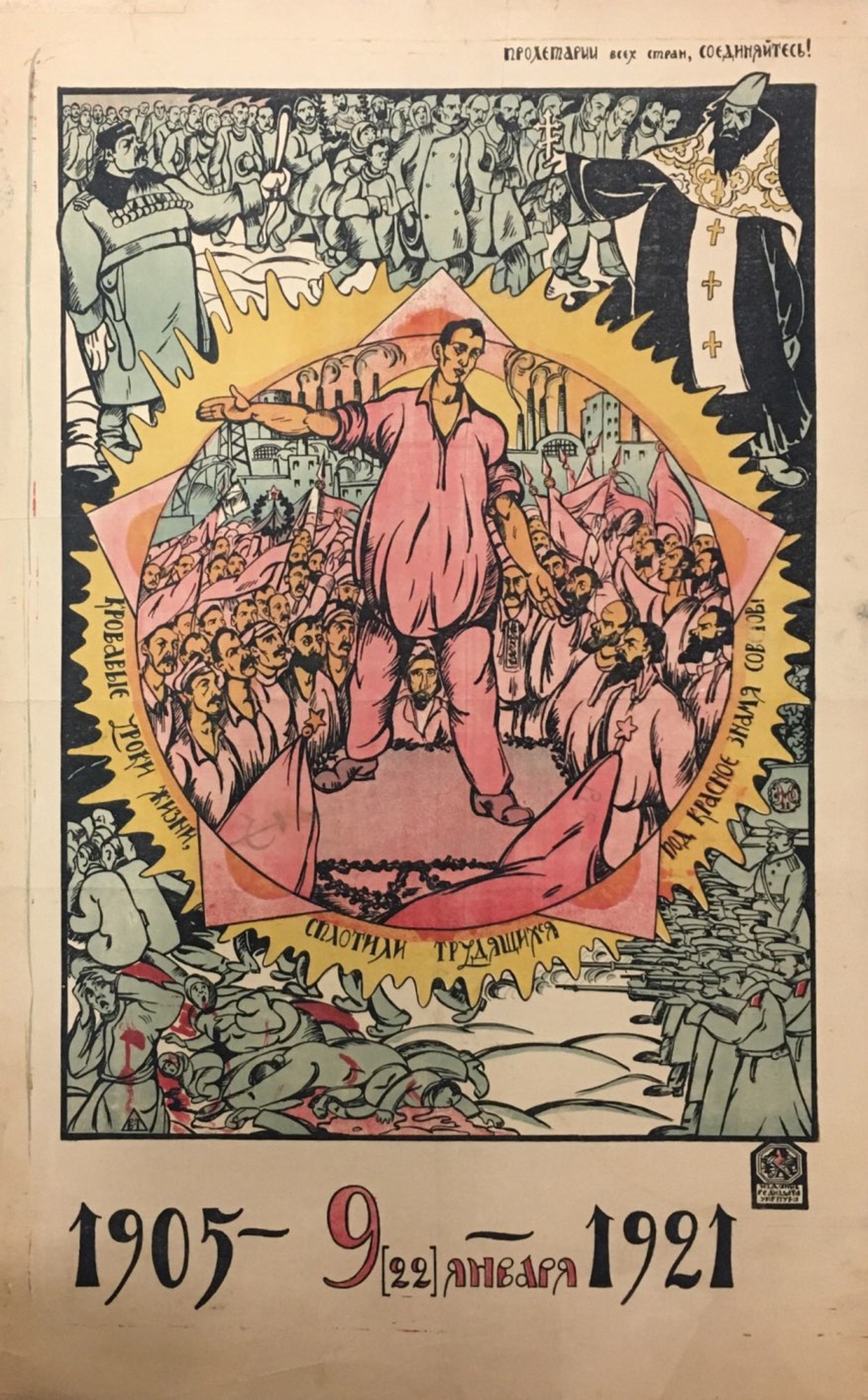
The Soviet order is the living fact and evidence – of this outgrowth of one revolution from another. The Soviet order is a maximum of democracy for the workers and peasants and at the same time it represents a break with bourgeois democratic ideology and the appearance of a new, universally significant type of democracy: proletarian democracy, or the dictatorship of the proletariat.
Let the curs and swine of the dying bourgeoisie with its petty bourgeois democratic hangers-on heap upon us abuse, imprecation, and derision for our mistakes and mishaps in the construction of our Soviet order. We do not for a moment forget that there have been many mishaps and mistakes. How could a task of such world significance as the creation of an absolutely new type of government order be accomplished without mishaps and mistakes? We shall strive steadfastly to overcome our failures and our mistakes, to improve the application, still far from perfect, of Soviet principles. But we have a right to be proud, and we are proud that to our lot fell the good fortune to begin the construction of a Soviet State, to begin this new epoch of history, the epoch of the domination of a new class, oppressed in all capitalist countries, but everywhere heading toward a new life, toward victory over the bourgeoisie, toward the dictatorship of the proletariat, toward the deliverance of humanity from the yoke of capitalism and imperialistic wars.
The True Slogan
The question of imperialistic wars, the question of the present world rule of financial capital, which inevitably creates new imperialistic wars, promotes unexampled national oppressions, robbery and plunder, and the strangling of the weak, backward and small nations by a handful of “advanced” powers; since 1914, this question has been the fundamental problem in the policy of all countries. It is a question of life and death to tens of millions of people. It is the question whether, in the next imperialist war, resulting from capitalism, which the bourgeoisie is preparing before our very eyes, 20,000,000 men will be killed instead of the 10,000,000 killed in the war of 1914-1918, in addition to those killed in the “small” wars not yet ended. It is the question whether in this coming war, which is inevitable if capitalism endures, 60,000,000 men will be wounded, instead of the 30,000,000 wounded in the war of 1914 1918. With this question our October Revolution opened a new epoch of world history. The hirelings of the bourgeoisie, the Social Revolutionists, Mensheviks, and all the petty-bourgeois, so-called “socialist” democracy of the world, scoffed at the slogan of the “transformation of the imperialist war into civil war.” But this slogan proved to be the only true slogan; unpleasant, of course, and harsh, but nevertheless true, amidst the darkness of the most subtle, chauvinist and pacifist lies. These lies are collapsing. The Brest-Litovsk Peace has been exposed. The significance and consequences of that peace still worse than Brest-Litovsk,—the Versailles Peace—are daily being still more mercilessly exposed. In the sight of millions and millions of thinking people, seeking the causes of the war of yesterday and the causes of the inevitable war of tomorrow, there looms with increasing clarity and certainty this terrible truth: that it is impossible to escape the clutches of the imperialist war and its inevitable imperialist peace;1 it is impossible to escape from this hell by any other course than through a Bolshevik struggle and a Bolshevik revolution.
The Answer of the Slaves
Let the bourgeois and the pacifists, the generals and the petty bourgeois, the capitalists and the philistines, and all the faithful Christians and all the knights of the Second and the Two and a Half International, furiously curse this revolution. With no flood of malice, calumny and lies can they drown the historical fact that for the first time in hundreds and thousands of years the slaves have answered the war between slave-holders with an open proclamation of the slogan: We shall turn this conflict between slave-holders over their spoils into a war of the slaves of all nations against the slave-holders.

For the first time in hundreds and thousands of years this slogan has grown from a vague feeble expectation into a clear, definite political program; into an active war of millions of the oppressed under the leadership of the proletariat; into the first victory of the proletariat, the first victory in the work of ending wars, the victory of the allied workers of all countries over the allied bourgeoisie of various countries, the bourgeoisie which makes peace and conducts war at the expense of the slaves of capital, at the expense of hired workers and peasants and all the toiling masses.
The Work Is Begun
This first victory—not the final victory—was won by our November Revolution against the most extraordinary odds, with unheard of sufferings, and in spite of tremendous failures and mistakes on our part. As if it were possible for one backward nation to defeat the imperialist attacks of the most powerful and the most advanced countries of the world without suffering defeats and making mistakes! We are not afraid to admit our mistakes, and we shall look at them soberly in order that we may learn to correct them. But the fact remains a fact, that for the first time, in hundreds and thousands of years, the promise to answer the war between slave-holders with a revolution of the slaves against all slave-holders has been fulfilled and is being fulfilled in spite of all difficulties.
We have started this work. As to when and in what period of time and where the proletariat will complete this work, is a question of little importance. What is important is that the ice has been broken, that the road is open, that the trail is blazed.

Continue your hypocrisies, Messrs. Capitalists of all countries, “defend your fatherlands”, Japanese against Americans, Americans against Japanese, French against English, and the rest!
Knights of the Second and the Two and a Half Internationals, with all the pacifist gentry and Philistines of the world, you may continue to hide under fine writing, in new “Basel Manifestos” the truth about the conflict against imperialist wars. (On the style of the Basel Manifesto of 1912!) It was the first Bolshevik revolution that liberated at a single stroke the first hundred million people from the jaws of imperialist war and imperialist peace. The revolutions to come will rescue from such wars and such peace all humanity.
The Present Task
The last, the most important, the most difficult, and the most incomplete portion of our work is economic construction, the laying of the economic foundation for the new socialist structure in place of the destroyed feudal and half-destroyed capitalist structures. It is in this most important and most difficult task that we have made the most failures and mistakes. As if it were possible to begin such a new world task without failures and mistakes! But we have begun it. We are doing it. We are correcting now by our “new economic policy” a number of our mistakes, we are learning how to continue without these mistakes the building of the socialist structure in a country of small peasants.
The difficulties are immense. We are used to contending against immense difficulties. It is not for nothing that our enemies have called us hard as rock and have said that we were the representatives of a “break neck” policy. But we have learned also—at least to some extent—another essential art in revolution, the art of flexibility, the ability to change our tactics rapidly and radically, to reckon with changed general conditions, taking a new road for the accomplishment of our aim, if the old road proves, for the moment, inexpedient or impossible.
The Necessary Transition
We thought that by awakening first the general political and then the military enthusiasm of the masses we should also be able to solve immediately, by this enthusiasm, the equally great economic problems. We thought, perhaps we expected without sufficient reason, to solve, by means of direct decrees of the Proletarian Government, the questions of state production and state distribution of products on a communist basis in a country of small peasants. Life has shown our mistake. It was necessary that we pass through a number of transition stages: State capitalism and state socialism, in order to prepare—by many years’ hard work—for the transition to Communism. Not alone by enthusiasm, but on a basis of self interest and by economic calculation, with the aid of enthusiasm created by the great revolution, in a country of small peasants you must build strong bridges through state capitalism to socialism; otherwise you will not reach communism, otherwise you will not bring tens and tens of millions of people to communism. Thus we have been taught by experience. Thus we have been taught by the general course of the revolution.
The New Policy
And we, who during the period of four years have learned somewhat how to take sharp curves (when sharp curves are demanded), begin to learn diligently, attentively, and assiduously (though not sufficiently attentively, diligently and assiduously) the new curve, the “new economic policy”. The Proletarian state must become a more careful, more zealous, more efficient, “boss”, a wise wholesale merchant; otherwise it cannot put a country of small peasants economically on its feet. There cannot be any other transition to communism under the present conditions, when we have beside us the capitalist—at least for the present capitalist—west. The wholesale merchant, as an economic type, would appear as far removed from communism as is the sky from the earth. But it is just such a paradox that leads in real life from small peasant economy through state capitalism to socialism. Personal interest increases production. We must first of all have at any cost an increased production. Wholesale trade binds millions of small peasants together in common economic interest, leading them to the next step, to various forms of common action and unity in industry itself.

We have already begun the necessary reconstruction of our economic policy. We have already achieved in this field some partial, it is true, but undoubted successes. We are already finishing, in this field of education, the preparatory class.
Learning with perseverance and assiduity, testing every step by practical experience, not fearing to change many times the work begun, not fearing to correct our mistakes, attentively considering their significance, we shall enter the next class. We shall complete the “course”, even though the conditions of world economy and world politics have made it longer and harder than we desired it to be. No matter how hard the sufferings of the transition period, no matter what the pain, hunger and destruction, we will not, at any cost, lose courage and we will bring our task to a victorious end.
NOTE.
- Here Lenin interjects parenthetically in the Russian, “If we had the old spelling I would write two words with their two meanings.” There is one word in Russian, “mir”, for “peace” and “world”, distinguished in spelling, but not in pronunciation, by the old orthography.
Soviet Russia began in the summer of 1919, published by the Bureau of Information of Soviet Russia and replaced The Weekly Bulletin of the Bureau of Information of Soviet Russia. In lieu of an Embassy the Russian Soviet Government Bureau was the official voice of the Soviets in the US. Soviet Russia was published as the official organ of the RSGB until February 1922 when Soviet Russia became to the official organ of The Friends of Soviet Russia, becoming Soviet Russia Pictorial in 1923. There is no better US-published source for information on the Soviet state at this time, and includes official statements, articles by prominent Bolsheviks, data on the Soviet economy, weekly reports on the wars for survival the Soviets were engaged in, as well as efforts to in the US to lift the blockade and begin trade with the emerging Soviet Union.
PDF of full issue: https://www.marxists.org/history/usa/pubs/srp/v4-5-soviet-russia%20Jan-Dec%201921.pdf
 Revolution's Newsstand